Titanomachy: The Ancient Greek War That Created Olympus
The Titanomachy was the great war between the Titans and the Olympian gods in ancient Greek mythology. More than a mythological battle, it explained how Zeus and the Olympians overthrew the older cosmic order and established a new system of divine rule over the universe. In Greek tradition, this conflict became the foundation of Olympian authority and the beginning of the world ruled from Mount Olympus.
At the center of the Titanomachy was a struggle over succession, power, and cosmic stability. Cronus had once overthrown Uranus, but his own reign was shaped by fear and prophecy, creating another cycle of instability among the gods. Zeus eventually challenged that order, leading a rebellion that reshaped the structure of the cosmos itself. After the war, the universe was divided between the Olympian rulers, creating the hierarchy that defined nearly every major Greek myth that followed.
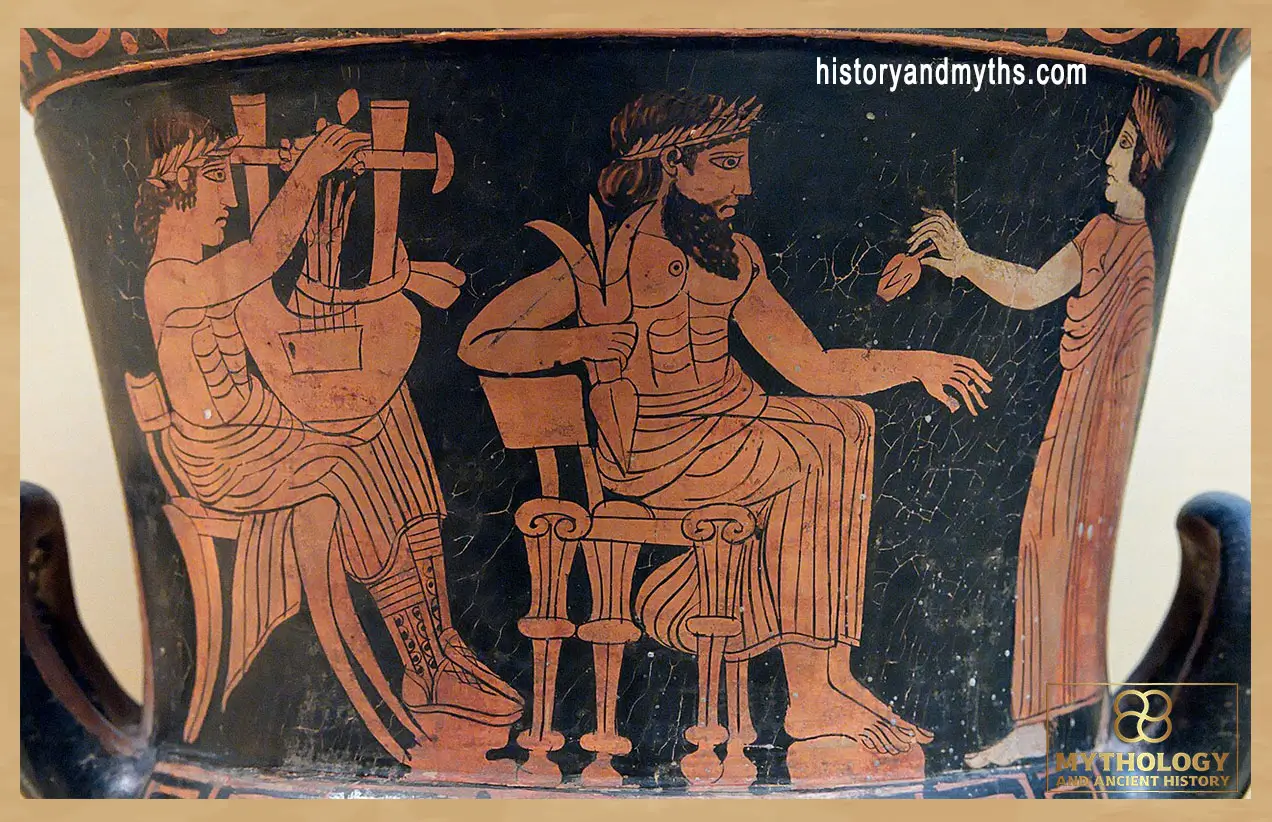
What Was the Titanomachy in Greek Mythology?
The Titanomachy was the great war between the Titans and the Olympian gods led by Zeus. In Greek mythology, the conflict marked the fall of the older Titan rulers and the rise of the Olympian order that would dominate the Greek cosmos afterward. Most surviving accounts come from Hesiod’s Theogony, where the war appears as a decisive struggle over divine succession and control of the universe.
The roots of the conflict began with Cronus himself. After overthrowing Uranus, he ruled in fear of a prophecy that one of his own children would eventually remove him from power. To stop that future, Cronus swallowed his children at birth. Zeus survived only because Rhea hid him in secret until he was old enough to challenge the Titans directly.
Once the rebellion began, the divine world split into opposing sides. Most Titans remained loyal to Cronus, while Zeus gained powerful allies who had been imprisoned under Titan rule, including the Cyclopes and the Hecatoncheires. Their release changed the balance of the war. The Cyclopes forged Zeus’s thunderbolt, while the Hecatoncheires became devastating forces during the final battles against the Titans.
Greek tradition describes the Titanomachy as a cosmic conflict rather than a conventional war. The struggle shakes the heavens, burns the earth, and threatens the structure of the universe itself. The scale of the violence reflects the meaning behind the myth: the destruction of one divine order and the creation of another.
After the Titans were defeated, Zeus and the Olympians became the new rulers of the cosmos, while the defeated Titans were imprisoned in Tartarus. The victory established the Olympian hierarchy that shaped nearly every major tradition in Greek mythology afterward.
| Aspect | Titanomachy |
|---|---|
| Main Conflict | War between the Titans and the Olympian gods led by Zeus |
| Central Theme | Divine succession and the transfer of cosmic authority |
| Main Opponent | Cronus and the Titan generation |
| Key Olympian Allies | Cyclopes and Hecatoncheires |
| Outcome | Rise of Zeus and the Olympian order |
| Cosmic Result | Division of the universe into Olympian domains |
| Symbolic Meaning | Transition from unstable primordial rule to organized divine hierarchy |
Why the Titans Lost Control of the Cosmos
The defeat of the Titans was not presented in Greek mythology as a simple military failure. The Titan regime had already become unstable under Cronus long before the war reached its final stage. Greek succession myths repeatedly connect power with fear, and Cronus ruled with the same anxiety that had defined the reign of Uranus before him. Both rulers tried to stop the next generation from rising against them, and both ultimately created the conditions for their own downfall.
Cronus maintained power through suppression rather than loyalty. By swallowing his children and imprisoning dangerous forces such as the Cyclopes and the Hecatoncheires, he attempted to freeze the cosmic order in place. The strategy protected his authority temporarily, but it also isolated him from potential allies and turned divine power into something defensive rather than stable. In Greek mythology, rulers who governed through fear rarely remained secure for long.
Zeus approached power differently once the conflict began. Instead of ruling through isolation, he built alliances across different generations of divine beings. He freed imprisoned powers that the Titans had tried to contain and brought them into his side of the war. That difference mattered. The Olympian victory was not based only on strength. It came from Zeus creating a broader coalition while the Titans remained tied to an older system centered almost entirely around Cronus himself.
The Titanomachy also reflects a larger pattern inside Greek mythology: younger gods repeatedly replacing older cosmic powers. Uranus fell to Cronus, and Cronus later fell to Zeus. The myths suggest that divine authority could not remain fixed forever. Any ruler who tried to prevent succession completely eventually became part of the same cycle of overthrow that had once allowed him to gain power.
By the end of the war, the Titans represented a collapsing order that could no longer adapt to the structure of the cosmos developing around it. Zeus did not simply defeat the Titans in battle. He replaced a system built on containment and fear with one capable of organizing divine authority on a larger scale.
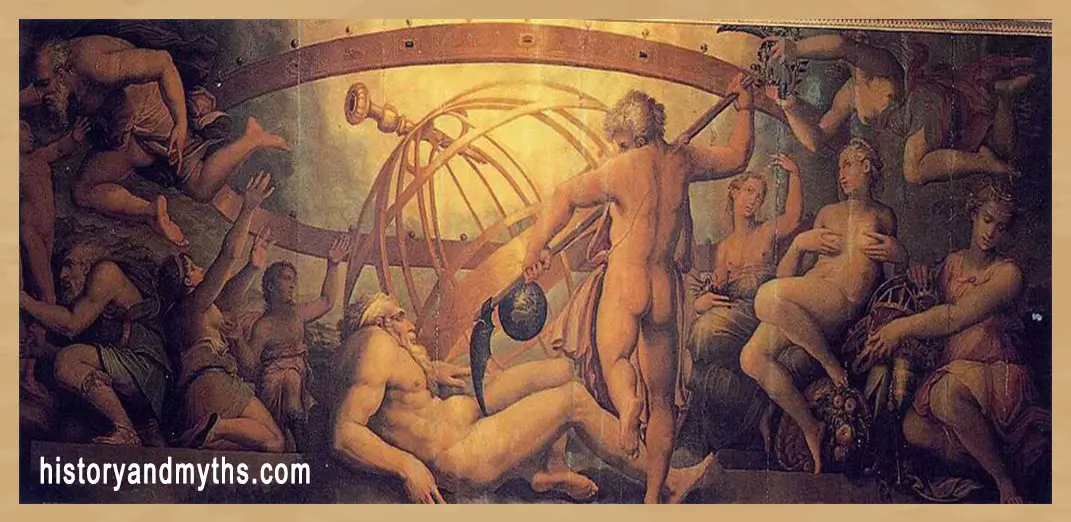
Zeus and the Rise of a New Divine System
Zeus did not become ruler of the gods simply because he defeated Cronus. In Greek mythology, his rise mattered because it introduced a different model of divine authority. The Titan order had concentrated power around a single fearful ruler, while the Olympian system redistributed authority across a structured hierarchy of gods with defined roles inside the cosmos.
One of Zeus’s most important decisions during the Titanomachy was the release of the Cyclopes and the Hecatoncheires from Tartarus. Earlier rulers had treated these beings as threats that needed to be contained. Zeus treated them as forces that could be integrated into his coalition instead. The choice reflects a recurring pattern in Greek mythology: successful rulers are often the ones who know how to organize power rather than simply suppress it.
The alliances formed during the war later shaped the structure of the Olympian world itself. After the Titans were defeated, authority was divided instead of remaining concentrated in one figure alone. Zeus ruled the heavens, Poseidon governed the sea, and Hades controlled the underworld. Other Olympian gods gained specialized domains connected to wisdom, war, agriculture, hunting, craftsmanship, or law. The result was a cosmic hierarchy built around distribution, balance, and function.
Greek mythology still presents Zeus as capable of anger, violence, and punishment, but his rule differs from that of Cronus in one important way: the Olympian system remains stable after victory. The gods compete, argue, and challenge one another throughout later myths, yet the structure created after the Titanomachy does not collapse into another full generational war. That stability became one of the defining features of the Olympian age.
The Titanomachy therefore marks more than the triumph of Zeus as an individual god. It marks the creation of a new model of cosmic rule in which divine power became organized through hierarchy, alliances, and specialized authority rather than fear alone.
The Titanomachy as a Cosmic Succession Myth
The Titanomachy belongs to a larger pattern that runs through Greek mythology: the repeated transfer of power between generations of gods. Uranus was overthrown by Cronus, and Cronus was later overthrown by Zeus. These myths are not random conflicts placed beside one another. Together, they form a succession cycle that explains how cosmic authority changes hands and why no divine ruler remains completely secure forever.
In each generation, the ruling god attempts to prevent succession before it can happen. Uranus imprisoned his children to stop potential rivals from emerging. Cronus swallowed his own offspring for the same reason. Greek mythology repeatedly connects absolute control with paranoia, suggesting that rulers who try to freeze power permanently eventually create the rebellion that destroys them.
The Titanomachy becomes especially important within this cycle because Zeus is the first ruler who successfully stabilizes succession instead of endlessly repeating it. Earlier cosmic rulers depended almost entirely on force and suppression, but Zeus builds a system capable of surviving internal tension without collapsing into another universal war. Conflicts still exist among the Olympians, yet the mythology no longer presents the cosmos as trapped in constant generational overthrow after the Titanomachy ends.
This succession structure also explains why the war became central to Greek cosmology. The myth does not only answer who rules the universe. It answers why the Olympian age appears more stable than the eras that came before it. The Titanomachy represents the moment when divine authority moves from recurring instability toward a more permanent cosmic framework centered on Olympus.
Many ancient cultures preserved myths about younger gods replacing older divine powers, but Greek mythology gives unusual attention to the psychological side of succession. Fear of replacement drives nearly every major ruler before Zeus. The Titanomachy transforms that fear into a foundational event that reshapes the entire structure of the mythological universe.
The Titanomachy as a Myth of Cosmic Transition
The Titanomachy was not simply a battle between older and younger gods. In Greek mythology, it functioned as the mythological explanation for how divine authority became organized under the Olympians after a period of instability and succession conflict.
- It explained why Zeus became ruler of the gods.
- It connected the fall of Uranus, Cronus, and the Titans into one succession cycle.
- It established Mount Olympus as the center of divine authority.
- It transformed cosmic power from isolated rule into a structured hierarchy of specialized gods.
- It created the framework behind later Greek myths involving Olympus, Tartarus, prophecy, and divine punishment.
© historyandmyths.com
How the Olympian Order Was Created After the War
The end of the Titanomachy did not simply remove the Titans from power. It reorganized the structure of the cosmos itself. After the war, the Olympian gods established a new hierarchy in which authority was divided across different realms and functions rather than concentrated in a single ruler. This division became the foundation of the Olympian world that appears throughout later Greek mythology.
According to Greek tradition, Zeus, Poseidon, and Hades divided control of the universe after victory. Zeus took the heavens and became king of the gods, Poseidon ruled the sea, and Hades governed the underworld. The earth itself remained a shared space influenced by multiple divine powers. This arrangement reduced direct competition over absolute control and created a more balanced structure than the earlier Titan regime.
The Olympian system also introduced clearer specialization among the gods. Athena became associated with wisdom and strategy, Demeter with agriculture and fertility, Apollo with prophecy and music, Artemis with hunting, and Hephaestus with craftsmanship and fire. Divine authority was no longer defined only by raw power. It became connected to function, responsibility, and control over specific parts of existence.
Mount Olympus symbolized this new order. Unlike the isolated rule of earlier cosmic figures, the Olympians operated as a divine court with relationships, rivalries, negotiations, and shared decision-making. Zeus remained the highest authority, but the mythology consistently presents the Olympian gods as part of an interconnected system rather than extensions of a single ruler’s will.
This structure helped explain why the Olympians became so central to Greek religious life. The gods governed different aspects of nature, society, and human experience in ways that mirrored the organization of the cosmos itself. The Titanomachy therefore did more than establish new rulers. It created the framework that allowed Greek mythology to organize divine power into a lasting and recognizable system.
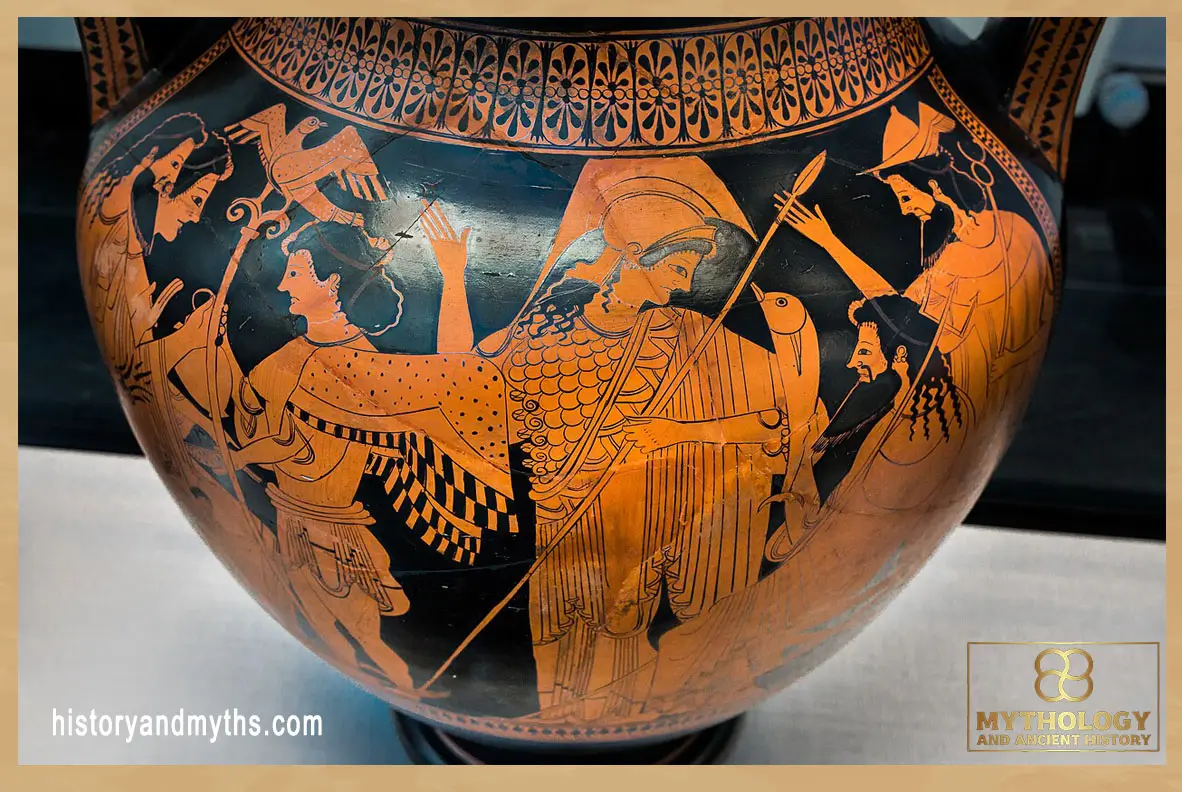
Why the Titanomachy Became Central to Greek Mythology
The Titanomachy became one of the most important myths in the Greek world because it explained the origin of Olympian authority. Nearly every major god worshipped across ancient Greece belonged to the order created after this conflict. Without the Titanomachy, the dominance of Zeus and the Olympians would appear disconnected from the earlier generations of divine beings described in Greek cosmology.
The myth also gave structure to the Greek understanding of the universe. It connected the age of primordial forces, the rise of the Titans, and the later Olympian world into a continuous narrative of cosmic development. Rather than presenting the gods as timeless and unchanging, Greek mythology portrayed divine rule as something shaped by conflict, transition, and reorganization across generations.
The influence of the Titanomachy extended beyond literature into religion, art, and political symbolism. Ancient Greek artists repeatedly depicted battles between Olympians and older chaotic forces because these scenes represented the victory of order over instability. In many contexts, the myth carried cultural meaning as well. The triumph of the Olympians could symbolize civilization overcoming disorder, law replacing violence, or structured society prevailing against destructive power.
The story remained influential because it established the background for later myths without needing to be retold in full every time. Conflicts involving Zeus, Olympus, Tartarus, prophecy, or divine punishment all operate within the cosmic framework created after the Titanomachy. The war stands at the beginning of the Olympian age, shaping the mythology that follows even when it is not directly mentioned.
Titanomachy vs Gigantomachy: What Is the Difference?
The Titanomachy and the Gigantomachy are often confused because both myths describe large-scale wars involving the Olympian gods. In Greek mythology, however, they represent two different conflicts with different meanings and opponents.
The Titanomachy was the war between the Olympians and the Titans, the older generation of gods led by Cronus. Its purpose within Greek cosmology was to explain how Zeus and the Olympians gained control of the universe and replaced the previous cosmic order.
The Gigantomachy took place later and involved the Giants rather than the Titans. Unlike the Titans, the Giants were not former rulers of the cosmos. They represented violent and chaotic forces that challenged Olympian authority after it had already been established. The Gigantomachy therefore focuses less on succession and more on defending the stability of the Olympian world against destructive threats.
The two myths also differ visually in ancient Greek art. Titans are usually portrayed as divine beings similar to the Olympians themselves, while Giants are often shown as monstrous figures associated with chaos and excessive force. Greek artists and writers used both conflicts to explore cosmic struggle, but the Titanomachy remained the more important myth for explaining the origin of Olympian rule.
The Titanomachy was more than a war between divine generations. In Greek mythology, it marked the transition from an unstable cosmic order ruled through fear into a structured Olympian system centered on hierarchy, alliances, and divided authority. The conflict established the foundations of the mythological world that later Greek religion, literature, and art would continue to build upon.
Its importance comes from what it explains. The myth gives context to the power of Zeus, the authority of Olympus, the imprisonment of the Titans, and the organization of the cosmos itself. Rather than treating divine rule as eternal, Greek mythology presents it as something created through conflict, succession, and transformation. The Titanomachy became the turning point that defined the beginning of the Olympian age.
Key Takeaways
- The Titanomachy was the war between the Titans and the Olympian gods led by Zeus.
- The conflict explained how the Olympians replaced the earlier Titan order.
- Cronus lost power partly because his rule depended on fear and suppression.
- Zeus built alliances that helped create a more stable divine system.
- The myth belongs to a larger Greek pattern of cosmic succession between generations of gods.
- After the war, the universe was reorganized into Olympian domains ruled from Mount Olympus.
- The Titanomachy became foundational to later Greek mythology and religious symbolism.
Frequently Asked Questions
What was the Titanomachy in Greek mythology?
The Titanomachy was the war between the Titans and the Olympian gods led by Zeus. It ended with the defeat of the Titans and the rise of Olympian rule.
Who fought in the Titanomachy?
The conflict involved the Titans under Cronus against Zeus and the younger Olympian gods, along with allies such as the Cyclopes and Hecatoncheires.
Why did Zeus fight Cronus?
Zeus fought Cronus because Cronus had swallowed his children to prevent a prophecy that one of them would overthrow him.
How long did the Titanomachy last?
Greek tradition commonly describes the Titanomachy as lasting ten years before the Olympians achieved victory.
What happened to the Titans after the war?
Many of the defeated Titans were imprisoned in Tartarus after the Olympian victory.
What is the difference between the Titanomachy and the Gigantomachy?
The Titanomachy was the war against the Titans, while the Gigantomachy was a later conflict between the Olympians and the Giants.
Why was the Titanomachy important to Greek mythology?
The myth explained how the Olympian gods gained authority over the cosmos and established the divine order centered on Mount Olympus.
Sources & Rights
- Hesiod. Theogony. Translated by M. L. West. Oxford University Press.
- Homer. Iliad. Translated by Richmond Lattimore. University of Chicago Press.
- Apollodorus. The Library of Greek Mythology. Translated by Robin Hard. Oxford University Press.
- Pausanias. Description of Greece. Translated by W. H. S. Jones. Harvard University Press.
- Aeschylus. Prometheus Bound. Translated by David Grene. University of Chicago Press.
- Burkert, Walter. Greek Religion. Harvard University Press.
- Burkert, Walter. Structure and History in Greek Mythology and Ritual. University of California Press.
- Kirk, G. S. The Nature of Greek Myths. Penguin Books.
- Kirk, G. S. Myth: Its Meaning and Functions in Ancient and Other Cultures. Cambridge University Press.
- Graf, Fritz. Greek Mythology: An Introduction. Johns Hopkins University Press.
- Hard, Robin. The Routledge Handbook of Greek Mythology. Routledge.
- West, M. L. The East Face of Helicon: West Asiatic Elements in Greek Poetry and Myth. Oxford University Press.
- West, M. L. Hesiod: Theogony and Works and Days. Oxford University Press.
- Buxton, Richard. The Complete World of Greek Mythology. Thames & Hudson.
- Buxton, Richard. Imaginary Greece: The Contexts of Mythology. Cambridge University Press.
- Dowden, Ken. The Uses of Greek Mythology. Routledge.
- Eliade, Mircea. Myth and Reality. Harper & Row.
- Vernant, Jean-Pierre. Myth and Society in Ancient Greece. Zone Books.
- Vernant, Jean-Pierre. The Origins of Greek Thought. Cornell University Press.
- Detienne, Marcel. The Creation of Mythology. University of Chicago Press.
- Nilsson, Martin P. A History of Greek Religion. Oxford University Press.
- Edmonds, Radcliffe G. Greek Myth. Routledge.
- Morford, Mark, and Robert Lenardon. Classical Mythology. Oxford University Press.
- Csapo, Eric. Theories of Mythology. Wiley-Blackwell.
- Rose, H. J. A Handbook of Greek Mythology. Routledge.
- Gantz, Timothy. Early Greek Myth: A Guide to Literary and Artistic Sources. Johns Hopkins University Press.
- Hamilton, Edith. Mythology. Little, Brown and Company.
- Segal, Robert A. Myth: A Very Short Introduction. Oxford University Press.
- Calasso, Roberto. The Marriage of Cadmus and Harmony. Vintage Books.
- Graves, Robert. The Greek Myths. Penguin Books.
Written by H. Moses — All rights reserved © Mythology and History

![Cerberus-Blake.William Blake – Pen, ink and watercolour over pencil and black chalk (NGV 6) – National Gallery of Victoria, Felton Bequest, 1920 – Credit line: user: Raul654 – Source/Photographer: [1] from [2]](https://www.historyandmyths.com/wp-content/uploads/2025/03/Cerberus-Blake-480x340.jpeg)