Why Greek Heroes Fought Monsters in Greek Mythology
Greek heroes fought monsters because monsters represented more than physical dangers. In many myths, these creatures threatened cities, blocked important journeys, guarded forbidden places, or embodied forces of chaos that stood outside the normal human world. Defeating them was not simply a display of courage—it was a way of restoring order and making the world safe for human society.
This idea explains why monster-slaying became one of the defining features of Greek heroism. Heroes such as Heracles, Perseus, and Theseus were remembered not merely because they were strong, but because they confronted dangers that ordinary people could not overcome. Their victories protected communities, removed obstacles, and reestablished the balance between civilization and the unknown.
By examining why Greek heroes fought monsters, we gain a deeper understanding of how the Greeks viewed heroism itself. These stories were not just adventures filled with strange creatures. They were narratives about order and chaos, fear and security, and the role of exceptional individuals in defending the human world against forces that threatened to overwhelm it.
Why Monsters Were Everywhere in Greek Mythology
Monsters appear throughout Greek mythology because they served an important narrative purpose. They gave physical form to dangers that people feared but could not easily control. Some threatened cities, others haunted remote regions, guarded sacred places, or disrupted the normal order of life. By turning these fears into creatures, myths transformed abstract problems into challenges that heroes could confront.
Their presence also helped define the boundaries of the human world. Greek myths often draw a contrast between civilization and the unknown. Cities, laws, and communities represent order, while monsters usually exist beyond those boundaries—in wildernesses, mountains, caves, distant islands, or the edges of the known world. The further a hero traveled from ordinary society, the more likely he was to encounter something unnatural.
Not all monsters represented the same threat. Some embodied chaos and destruction, while others acted as guardians preventing access to forbidden places or valuable objects. A few tested intelligence rather than strength. What united them was their role as obstacles standing between people and the stable world they wished to preserve.
For Greek audiences, monsters were therefore more than frightening creatures. They were a way of exploring the forces that challenged human security and order. Their constant appearance in myth reflects the belief that civilization was never guaranteed. It had to be defended, protected, and sometimes reclaimed from dangers that seemed larger than ordinary human capabilities.
| Monster Type | Role in Myth | What the Hero Restored |
|---|---|---|
| Chaos Monsters | Threatened stability and order | Balance and security |
| Guardian Monsters | Protected sacred places or treasures | Access and progress |
| Testing Monsters | Challenged intelligence or character | Knowledge and understanding |
| Boundary Monsters | Guarded borders between worlds | Movement and order |
| Hybrid Creatures | Represented disorder and imbalance | Natural and social harmony |
Heroes as Defenders of the Human World
Greek heroes are often remembered for their individual achievements, but their actions usually served a larger purpose. When a hero confronted a monster, the goal was rarely personal glory alone. The creature typically threatened a community, blocked an important route, terrorized a region, or prevented normal life from functioning. The hero stepped in because ordinary people could not solve the problem themselves.
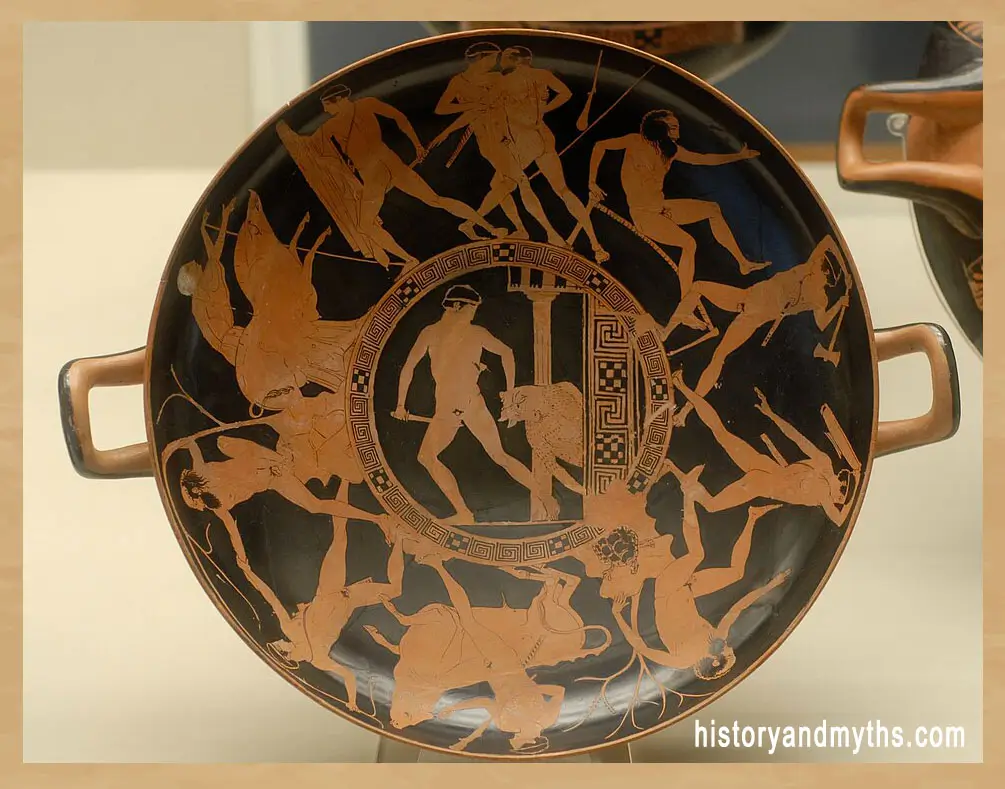
This pattern appears throughout Greek mythology. Theseus freed Athens from the burden associated with the Minotaur. Perseus saved Andromeda from a sea monster. Heracles completed labors that removed dangerous creatures from the world of humans. Although the stories differ, they share the same underlying idea: heroes act where society has become powerless.
The importance of these victories goes beyond physical survival. A monster’s defeat often allows trade, travel, settlement, or daily life to continue. The hero is not merely killing a creature; he is restoring conditions that make civilization possible. His success benefits an entire community rather than just himself.
This helps explain why monster-slaying became such a central part of Greek heroism. Heroes were admired not simply because they were strong, but because they used their abilities to protect the human world from forces that threatened its stability. Their battles symbolized the ongoing effort to preserve order in a world that remained vulnerable to danger and disruption.
Monsters as Symbols of Chaos
Many Greek monsters represented more than physical danger. They embodied forces that disrupted the normal structure of the world. This is why they often appear in places where order has broken down or where human control is weak. Their existence signals that something is wrong and that balance has been disturbed.
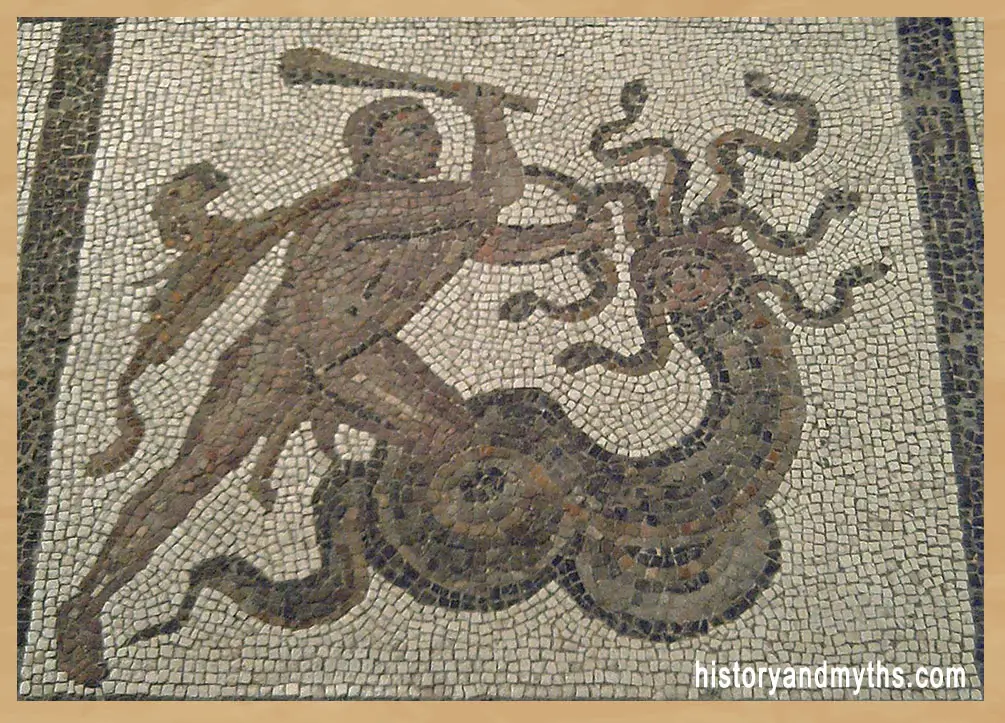
Typhon is one of the clearest examples. He does not threaten a single city or traveler. He threatens the entire cosmic order established by the gods. The Hydra creates a similar problem on a smaller scale. Cutting off one head only produces more, turning a simple fight into a symbol of a problem that grows when confronted incorrectly.
What makes these creatures significant is that they cannot be understood as ordinary animals. They are exaggerations of disorder itself. Their unusual forms, destructive behavior, and resistance to normal solutions separate them from the natural world. They exist to show what happens when chaos is allowed to challenge established order.
This symbolism helps explain why heroes are repeatedly sent against monsters. The battle is not merely between a person and a creature. It is a conflict between stability and disruption. When the monster falls, the victory represents the restoration of a world that can once again function according to recognizable rules.
Monsters That Guarded Boundaries and Forbidden Places
Not every monster in Greek mythology existed to destroy. Some served a different function: they guarded places, objects, or boundaries that were not meant to be crossed easily. Their role was to prevent access, forcing anyone who wished to proceed to prove that they were worthy, powerful, or clever enough to continue.
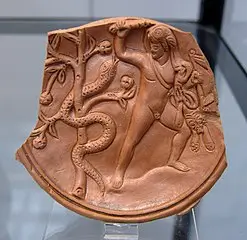
Ladon, for example, guarded the golden apples in the Garden of the Hesperides. Cerberus stood at the entrance of the Underworld, preventing the dead from leaving and the living from entering freely. The dragon that protected the Golden Fleece performed a similar role, ensuring that a valuable and sacred object could not be taken without extraordinary effort.
These creatures reveal an important aspect of Greek mythology. Some boundaries were considered necessary for the proper functioning of the world. The separation between life and death, the protection of divine treasures, and the restriction of sacred spaces all helped maintain order. The monsters guarding these places acted as enforcers of those limits.
For heroes, overcoming such creatures was not simply a demonstration of strength. It was a test of whether they could cross a boundary that ordinary people could not. Their success marked them as exceptional individuals capable of entering spaces that lay beyond the normal human experience.
Why Some Monsters Tested Intelligence Instead of Strength
A common assumption is that Greek heroes succeeded because they were stronger than everyone else. Yet several myths suggest that intelligence could be just as important as physical power. Some monsters were designed in ways that made brute force ineffective, forcing heroes to rely on observation, strategy, or problem-solving.
The Sphinx is the clearest example. Travelers could not defeat her simply by attacking. Survival depended on answering a riddle correctly. The challenge was intellectual from the beginning. Victory came through understanding rather than combat.
The Minotaur presents a different version of the same idea. Killing the creature was only part of the problem. The greater challenge was escaping the Labyrinth afterward. Without Ariadne’s thread and a plan for navigating the maze, defeating the monster would have accomplished little.
These stories reveal that Greek heroism was broader than physical courage alone. Heroes were expected to adapt to the nature of the challenge before them. Some enemies required strength, while others demanded intelligence. Success depended on recognizing the difference.
This lesson appears repeatedly throughout Greek mythology. The greatest heroes are not those who rely on a single ability, but those who understand when force is necessary and when a problem requires a different approach. In that sense, wisdom becomes another heroic weapon, every bit as important as a sword or spear.
The Real Purpose of Monster-Slaying
Greek heroes did not fight monsters simply to prove their strength. Monsters often represented threats to civilization, order, sacred boundaries, or human progress. By defeating them, heroes restored stability and made the world safe for human communities.
- Monsters symbolized dangers beyond ordinary human control.
- Heroes acted when communities could not protect themselves.
- Some monsters guarded boundaries and sacred spaces.
- Others embodied chaos, disorder, or destruction.
- Not all victories depended on physical strength.
- Heroism was measured by service to society, not personal glory alone.
© historyandmyths.com
Why Defeating a Monster Made Someone a Hero
In Greek mythology, defeating a monster was one of the clearest ways to prove heroic status because it demonstrated abilities beyond those of ordinary people. Anyone could participate in daily life, but only a hero could confront a danger that an entire community had failed to overcome. The challenge itself set heroes apart.
What mattered was not simply the act of killing a creature. The monster usually represented a problem that affected many people. A city might live in fear, a sacred route might become unusable, or a region might suffer from constant danger. When a hero removed that threat, the achievement benefited others rather than serving a purely personal goal.
This helps explain why monster-slaying became such an important measure of greatness. Greek society valued courage, but courage alone was not enough. A hero had to use his abilities in a way that changed the world around him. The defeat of a monster provided visible proof that he could accomplish what ordinary individuals could not.
The stories also reinforced an ideal of responsibility. Heroes were often expected to face dangers precisely because they possessed unusual strength, intelligence, or divine favor. Their abilities created an obligation to act. A person became heroic not merely by having exceptional qualities, but by using those qualities to confront threats that others could not handle.
Restoring Order: The Real Purpose of Monster-Slaying
When Greek heroes defeated monsters, the result was often the restoration of normal life. A dangerous region became safe again, a blocked route reopened, or a community was freed from fear. The victory mattered because it allowed society to function as it should.
This pattern appears across many myths. The monster creates a disruption that prevents people from living securely. Trade, travel, religious practice, or political stability becomes difficult or impossible. The hero’s task is to remove that disruption and restore balance. The story therefore ends not with the monster’s death itself, but with the return of order.
This helps explain why monsters are so frequently connected to isolated locations, borderlands, caves, mountains, and other spaces beyond ordinary human control. They occupy places where order is weak. Heroes enter those spaces, confront the threat, and bring them back within the sphere of human civilization.
Seen from this perspective, monster-slaying is less about violence and more about repair. The hero acts as a figure who restores stability when the normal structures of society are no longer sufficient. The monster may be the visible enemy, but the deeper goal is always the same: rebuilding a world in which people can live without fear.
What These Battles Revealed About Greek Society
The monsters of Greek mythology tell us as much about Greek society as they do about the heroes who fought them. The dangers chosen for these stories reflect the concerns, values, and fears of the communities that created them. By examining what monsters threatened, we can better understand what the Greeks considered worth protecting.
Many myths place monsters in opposition to civilization. They attack cities, disrupt travel, guard important resources, or challenge the authority of gods and rulers. In contrast, heroes are associated with protection, stability, and the restoration of social order. The conflict therefore reflects a broader cultural belief that security and civilization require constant effort to maintain.
The stories also reveal how the Greeks viewed exceptional individuals. Heroes were not expected to live ordinary lives. They existed on the boundary between the human and the extraordinary, facing challenges that most people could never confront. Their achievements provided models of courage, intelligence, perseverance, and responsibility.
Perhaps most importantly, these myths suggest that the Greeks saw order as something fragile rather than permanent. Chaos could emerge in many forms—through violence, disorder, ignorance, or forces beyond human control. The hero’s role was to respond when those threats appeared. In that sense, monster stories were not merely entertainment. They were reflections on how societies survive, what they value, and why certain individuals become remembered as heroes.
Why Heroes Had to Leave Civilization First
Greek heroes rarely encountered monsters inside the center of ordinary society. The creatures usually lived in remote regions, mountains, caves, islands, or wilderness areas beyond normal human control. To confront them, heroes had to leave the safety of civilization and enter spaces associated with uncertainty and danger.
This journey was part of the heroic process itself. By moving beyond familiar boundaries, heroes faced the forces that threatened the human world and then returned with order restored. Their travels symbolized a temporary descent into chaos followed by a successful return.
Monsters as Obstacles to Human Progress
Many monsters did more than terrorize people. They blocked access to something valuable. Some guarded sacred objects, others controlled important routes, and some prevented people from reaching places that held wealth, knowledge, or opportunity.
In this sense, heroes often removed barriers rather than simply killing enemies. Their victories opened paths that had been closed, allowing movement, exploration, and human achievement to continue. The monster represented an obstacle; the hero represented progress.
Why Heroes Rarely Fought Ordinary Animals
Greek heroes were not celebrated for hunting ordinary creatures. What made monsters different was that they existed outside the normal rules of nature. They possessed unnatural forms, extraordinary powers, or symbolic connections to chaos and disorder.
As a result, defeating a monster carried a deeper meaning than defeating a wild animal. The battle represented a confrontation with forces that threatened the structure of the world itself. Heroes became famous because they overcame dangers that were viewed as fundamentally different from the challenges of everyday life.
Greek heroes fought monsters because monsters represented challenges that threatened the stability of the human world. Some embodied chaos, others guarded forbidden places, and some tested intelligence rather than strength. Although their forms differed, their function was often the same: they stood in the way of order, security, and human progress.
This explains why monster-slaying became such an important feature of Greek heroism. Heroes were not celebrated simply for their ability to win battles. They were remembered because they confronted dangers that ordinary people could not overcome and restored conditions that allowed communities to thrive. Their victories protected cities, reopened boundaries, and reestablished balance when it had been disrupted.
The myths also reveal a deeper idea about how the Greeks viewed the world. Order was valuable but never guaranteed. It could be challenged by forces both human and supernatural. Heroes mattered because they acted when that order was threatened, using strength, intelligence, courage, or determination to restore it.
Seen in this light, Greek monster stories are about far more than fantastic creatures. They are stories about the defense of civilization itself. The monsters provided the challenge, but the real subject was always the struggle to preserve order in a world where chaos was never far away.
Key Takeaways
- Greek monsters represented threats to order, safety, and civilization.
- Heroes were expected to confront dangers beyond the abilities of ordinary people.
- Monster-slaying often restored stability rather than serving personal ambition.
- Some monsters symbolized chaos, while others guarded sacred boundaries.
- Intelligence could be as important as strength when facing certain creatures.
- Heroes frequently left civilization to confront dangers beyond its borders.
- Defeating monsters became one of the clearest markers of heroism in Greek mythology.
Frequently Asked Questions
Why did Greek heroes fight monsters?
They fought monsters because these creatures threatened communities, disrupted order, or represented forces of chaos that endangered the human world.
Did Greek monsters symbolize anything?
Yes. Many monsters symbolized chaos, disorder, danger, forbidden knowledge, or threats to civilization.
Who were the most famous monster-slaying heroes?
Heracles, Perseus, Theseus, Jason, and Oedipus are among the best-known heroes associated with overcoming monsters.
Were all Greek monsters evil?
No. Some acted as guardians of sacred places, treasures, or important boundaries rather than purely destructive creatures.
Why were monsters often located far from cities?
They usually occupied wilderness areas, caves, mountains, and remote regions associated with uncertainty and danger.
Did heroes always defeat monsters through strength?
No. Some victories depended on intelligence, strategy, or problem-solving rather than physical power alone.
Why was killing a monster considered heroic?
Because it protected communities and restored order where ordinary people could not solve the problem themselves.
What do these myths reveal about Greek society?
They show the importance the Greeks placed on order, courage, responsibility, and the defense of civilization against disruptive forces.
Sources & Rights
- Homer. The Iliad and The Odyssey. Translated by Robert Fagles. Penguin Classics.
- Hesiod. Theogony. Oxford World’s Classics.
- Apollodorus. Bibliotheca. Loeb Classical Library.
- Pausanias. Description of Greece. Loeb Classical Library.
- Burkert, Walter. Greek Religion. Harvard University Press.
- Graf, Fritz. Greek Mythology: An Introduction. Johns Hopkins University Press.
- Buxton, Richard. The Complete World of Greek Mythology. Thames & Hudson.
- Hard, Robin. The Routledge Handbook of Greek Mythology. Routledge.
- Gantz, Timothy. Early Greek Myth. Johns Hopkins University Press.
- Johnston, Sarah Iles. The Story of Myth. Harvard University Press.
- Dowden, Ken. The Uses of Greek Mythology. Routledge.
- Vernant, Jean-Pierre. Myth and Society in Ancient Greece. Zone Books.
- Kirk, G. S. The Nature of Greek Myths. Penguin Books.
- Edmonds, Radcliffe G. Greek Mythology: A Reader. Hackett Publishing.
- Nilsson, Martin P. A History of Greek Religion. Oxford University Press.
Written by H. Moses — All rights reserved © Mythology and History