Gigantomachy: The Ancient Greek War Between Olympian Gods and Giants
The Gigantomachy was the war between the Olympian gods and the Giants in ancient Greek mythology. Unlike the Titanomachy, which established Olympian rule, the Gigantomachy threatened the stability of that new order after Zeus and the gods had already taken control of the cosmos. The myth became one of the clearest Greek stories about the constant danger of chaos returning against divine authority.
According to Greek tradition, the Giants rose against Olympus after the fall of the Titans, often through the anger of Gaia, the primordial earth goddess. These enemies were different from the Titans. They were not rival rulers seeking succession, but violent forces that challenged the structure of the Olympian world itself. In several versions of the myth, even Zeus could not secure victory alone, forcing the Olympians to fight beside Heracles during the final stages of the war.
Over time, the Gigantomachy grew beyond mythology and became a powerful symbol in Greek art and political thought. Greek temples, sculptures, and public imagery repeatedly used the battle to represent order resisting destruction and instability.
What Was the Gigantomachy in Greek Mythology?
The Gigantomachy was the war between the Olympian gods and the Giants in ancient Greek mythology. The conflict took place after the defeat of the Titans, when the Olympians already ruled the cosmos under Zeus. Instead of a struggle over succession, the Gigantomachy represented a violent challenge to the authority and stability of Olympus itself.
In many Greek traditions, the Giants emerged from Gaia after the fall of the Titans. Their rebellion was tied to the imprisonment of the older powers beneath the earth and the growing dominance of the Olympian gods. Unlike the Titans, the Giants were not former rulers of the universe. Greek writers and artists usually portrayed them as destructive forces connected to the earth, chaos, and uncontrolled violence.
One of the most unusual parts of the myth is that the Olympians could not win the war alone. Several ancient traditions state that the Giants could only be defeated with the help of Heracles. The battle therefore became more than a conflict between divine beings. It linked the survival of Olympian order to cooperation between gods and mortal heroism.
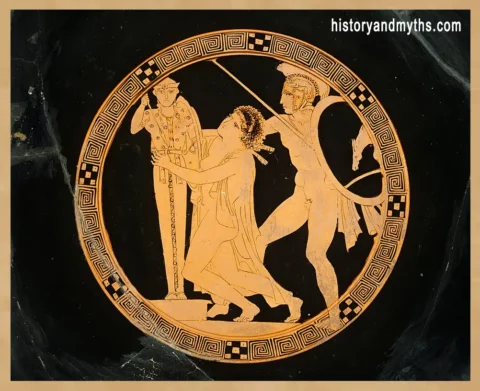
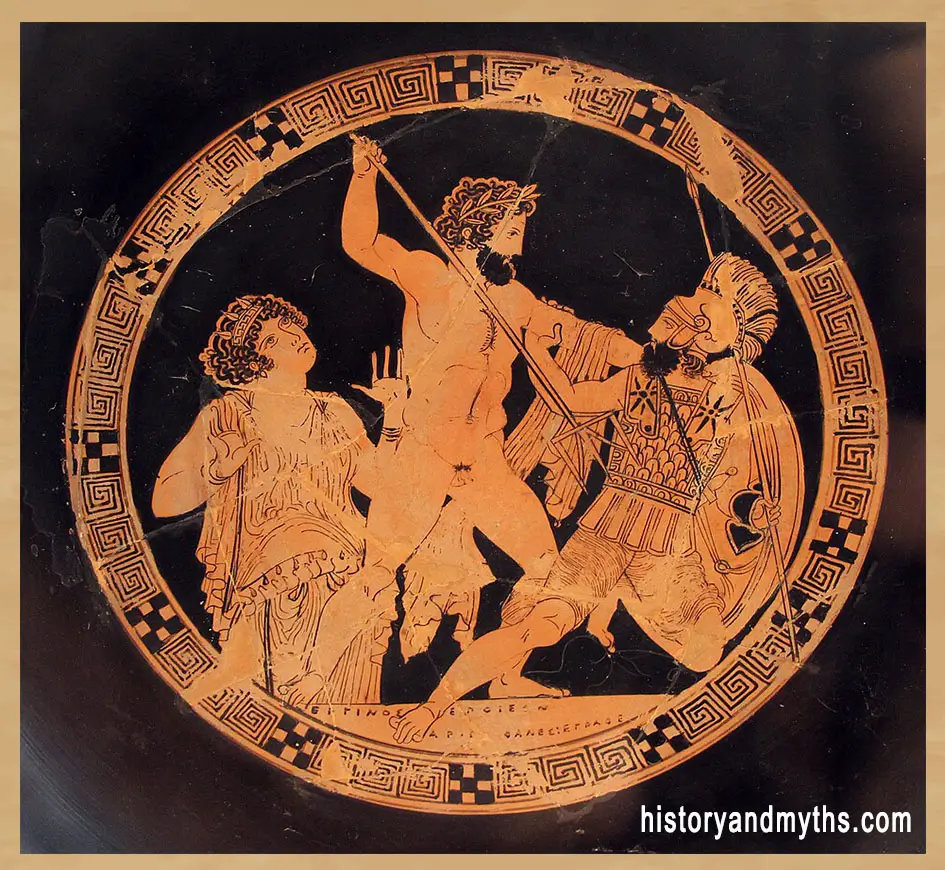
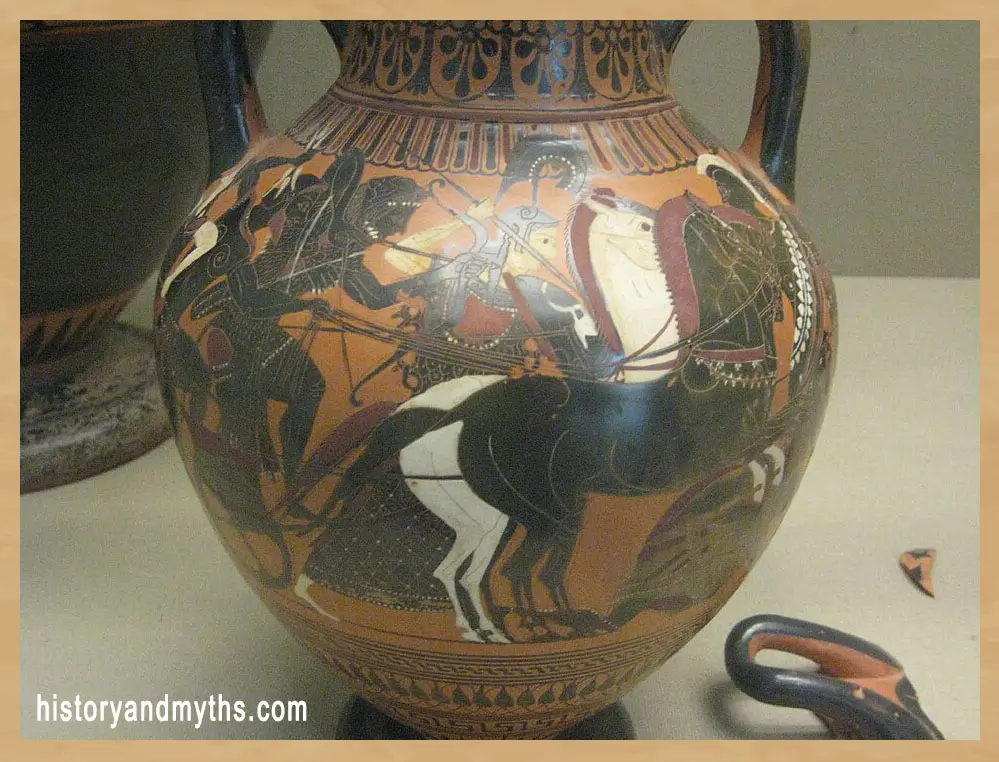
The Gigantomachy became one of the most influential symbolic conflicts in Greek art. Vase paintings, temple sculpture, and monumental reliefs repeatedly used the battle to represent order resisting destructive force. By the classical period, the myth had grown into one of the defining visual expressions of cosmic struggle in the Greek world.
| Aspect | Gigantomachy |
|---|---|
| Main Conflict | War between the Olympian gods and the Giants |
| Primary Threat | Chaos and violent disorder challenging Olympus |
| Main Opponents | The Giants born from Gaia |
| Role of Heracles | Essential ally needed for Olympian victory |
| Difference from Titanomachy | Not a succession war, but a defense of existing cosmic order |
| Symbolic Meaning | Order resisting destruction and instability |
| Cultural Importance | Used in Greek art and politics as a symbol of civilization defending itself |
Why the Giants Rose Against Olympus
Greek mythology does not present the Gigantomachy as a random rebellion. The rise of the Giants came from tensions that remained unresolved after the defeat of the Titans. Although Zeus and the Olympians had established control over the cosmos, the imprisonment of earlier powers beneath the earth left behind a continuing source of instability tied to Gaia herself.
In many traditions, Gaia created the Giants in response to the treatment of the Titans after the Titanomachy. The myth connects the earth goddess with forces that resist confinement and imposed order. From this perspective, the Gigantomachy becomes a reaction against the expanding authority of Olympus rather than a simple attempt to seize power.
The Giants themselves represented a different kind of threat from the Titans. They were not rulers defending an older system or rivals claiming legitimate succession. Greek art and literature consistently associate them with excess, destruction, and violent disruption. Their attack on Olympus challenged the boundaries that the Olympian gods had imposed on the cosmos after the earlier wars.
This difference matters because the Gigantomachy is ultimately about the vulnerability of order once it has already been established. The Olympians had won the universe, but Greek mythology still imagined chaos as something that could return from beneath the surface of the world at any moment.
Giants vs Titans: The Crucial Difference
The Titans and the Giants are often treated as the same beings in modern retellings, but Greek mythology separates them clearly. The Titans belonged to an older divine generation connected to the rule of Cronus before the rise of Zeus. They were cosmic powers associated with the structure of the early universe, and the Titanomachy centered on succession and the transfer of authority between generations of gods.
The Giants served a different role. They were not former rulers of the cosmos and did not represent an earlier divine order. Greek sources usually portray them as violent beings tied to the earth and hostile to the stability imposed by Olympus. Their rebellion was not about inheriting power from Zeus. It was about breaking the boundaries of the Olympian system itself.
The two wars also carry different symbolic meanings. The Titanomachy explains how Olympian rule began, while the Gigantomachy explores the constant possibility that disorder could rise again even after the cosmos had been organized. One myth focuses on succession. The other focuses on survival.
Greek art often reinforces this distinction visually. Titans are usually depicted in forms closer to the Olympian gods, while Giants frequently appear as monstrous or hybrid figures, especially in later classical and Hellenistic art. The imagery reflects the changing nature of the threat facing Olympus in each conflict.
Why Zeus Could Not Win Alone
One of the most unusual elements of the Gigantomachy is that Zeus and the Olympians could not defeat the Giants without mortal help. Several Greek traditions state that the Giants were protected by a prophecy declaring they could only be destroyed through cooperation between a god and a human. Because of this, Heracles became essential to the final victory of Olympus.
The role of Heracles changes the meaning of the war. Earlier cosmic conflicts such as the Titanomachy were fought entirely between divine generations, but the Gigantomachy brings the mortal world directly into the survival of cosmic order. Greek mythology presents the Olympian system as powerful, yet still dependent on forces outside Olympus at critical moments.
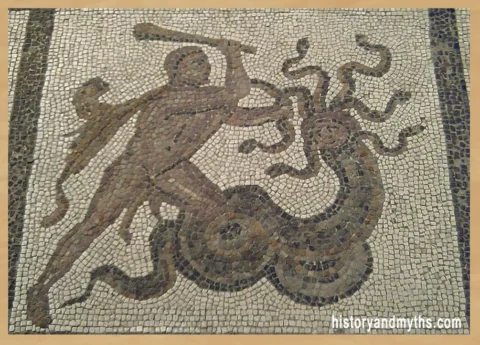
This partnership also elevated Heracles beyond the role of a conventional hero. By fighting beside the Olympians during the Gigantomachy, he became connected to the defense of the cosmos itself rather than the local struggles that define many other heroic myths. The war helped position him between the human and divine worlds, which later traditions reinforced through his eventual ascent to Olympus.
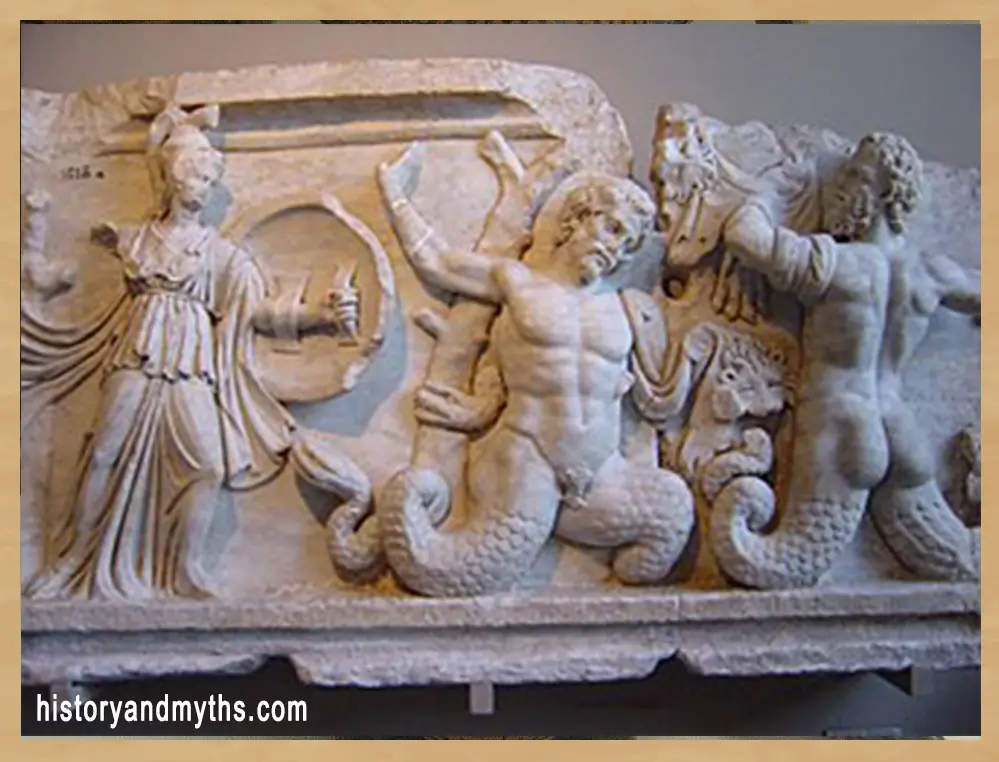
Greek artists frequently emphasized this alliance in vase painting and monumental sculpture. Heracles appears beside Athena, Zeus, and other Olympian gods as part of a unified defense against the Giants. The imagery presents divine order not as isolated power, but as a system capable of drawing strength from both gods and heroic humanity.
Why the Gigantomachy Mattered in Greek Mythology
The Gigantomachy was not simply another divine war after the Titanomachy. In Greek mythology, it became the major test of whether Olympian order could survive after Zeus and the gods had already established control over the cosmos.
- The Giants represented destructive forces resisting Olympian authority.
- The war focused on preserving order rather than creating it.
- Heracles played a crucial role beside the Olympian gods.
- The myth linked divine stability with the constant threat of returning chaos.
- Greek cities later used the Gigantomachy as a political and cultural symbol of civilization resisting disorder.
© historyandmyths.com
The Gigantomachy as a Battle Against Chaos
The Gigantomachy became important in Greek mythology because it represented more than physical warfare. The conflict symbolized the fear that chaos could return even after the Olympians had organized the cosmos under Zeus. Unlike the Titans, who belonged to an earlier divine order, the Giants embodied forces that resisted structure itself.
Greek artists reinforced this idea visually. Giants were often shown with serpent legs, exaggerated bodies, or monstrous forms that separated them from both humans and the Olympian gods. Their appearance emphasized instability and excess rather than legitimate authority. In many depictions, the battle looks less like a war between rival rulers and more like a struggle to prevent the collapse of cosmic boundaries.
This symbolism helped the Gigantomachy remain influential far beyond mythology. Greek cities and rulers used the conflict as a political and cultural image of order resisting destructive force. Temple sculpture, public monuments, and large ceremonial artworks repeatedly portrayed the Olympians defeating the Giants because the myth could represent stability overcoming violence, invasion, or social disorder.
The Gigantomachy therefore carried a different emotional weight from the Titanomachy. The earlier war explained how Olympian rule began. The later conflict asked whether that rule could survive when confronted by forces determined to tear the system apart.
Continue Reading
How Greek Art Turned the Gigantomachy Into a Symbol
The Gigantomachy became one of the most common battle scenes in Greek art because it could communicate political and cultural ideas far beyond mythology itself. Greek temples and public monuments used the conflict to symbolize the defense of order against destructive forces threatening society and the cosmos.
One of the clearest examples appears in large sculptural programs where Olympian gods battle Giants across temple friezes and monumental reliefs. These scenes were designed to be more than decorative. They presented the Olympians as protectors of balance, law, and civilization while the Giants represented violent disorder pushing against those boundaries.
The myth became especially powerful during periods of war and political tension in the Greek world. Cities could use Gigantomachy imagery to compare their enemies to chaotic forces opposing order and stability. In this way, mythology and political identity often merged together inside Greek public art.
Artists also used the Gigantomachy to experiment visually with movement, tension, and scale. Unlike calmer scenes of Olympian assemblies, Gigantomachy compositions are filled with twisting bodies, collapsing Giants, divine weapons, and dramatic motion. The conflict gave Greek sculptors and vase painters a myth large enough to display both cosmic struggle and artistic power at the same time.
Why the Gigantomachy Became the Final Test of Olympian Power
The Gigantomachy occupies a unique place in Greek mythology because it challenged the Olympian gods after their authority had already been established. The war tested whether the system created under Zeus could withstand forces that rejected cosmic boundaries altogether. In this sense, the Gigantomachy became the final confirmation of Olympian dominance rather than the beginning of it.
The myth also reveals an important aspect of Greek cosmology: order was never considered permanent or completely secure. Even after the defeat of the Titans, the possibility of renewed chaos remained embedded within the structure of the universe itself. The Giants represented that continuing threat rising from beneath the world ruled by Olympus.
By defeating the Giants, the Olympians proved more than military strength. The victory demonstrated that the divine order established after the Titanomachy could survive rebellion, instability, and destructive force without collapsing into another cosmic succession crisis. That distinction gave the Gigantomachy lasting importance in Greek mythological thought.
The conflict ultimately became a myth about endurance. The Olympians had already conquered the cosmos once. The Gigantomachy tested whether they were capable of keeping it.
The Gigantomachy was not a second Titanomachy or another struggle over divine succession. In Greek mythology, it represented a direct attack on the stability of the Olympian world after Zeus and the gods had already established control over the cosmos. The conflict explored a different fear: not the creation of order, but the possibility that order could still collapse under the pressure of violent and destructive forces.
The myth remained influential because it connected cosmic struggle with larger questions about stability, power, and survival. Greek artists and political communities transformed the Gigantomachy into a lasting symbol of civilization resisting chaos, while the mythology itself used the war to show that Olympian authority had to be defended continuously rather than assumed to be permanent.
Key Takeaways
- The Gigantomachy was the war between the Olympian gods and the Giants.
- Unlike the Titanomachy, the conflict was not about divine succession.
- The Giants symbolized destructive and chaotic forces threatening Olympus.
- Greek mythology often portrays Gaia as connected to the rise of the Giants.
- Several traditions state that Heracles was necessary for Olympian victory.
- The myth became a major symbol of order resisting instability in Greek art and political thought.
- The Gigantomachy tested whether Olympian power could endure after the cosmos had already been organized.
Frequently Asked Questions
What was the Gigantomachy in Greek mythology?
The Gigantomachy was the mythological war between the Olympian gods and the Giants after the rise of Zeus and Olympus.
Who were the Giants in the Gigantomachy?
The Giants were powerful beings associated with Gaia and destructive forces opposing Olympian authority.
What caused the Gigantomachy?
Many Greek traditions connect the war to Gaia’s anger after the defeat and imprisonment of the Titans.
What is the difference between the Gigantomachy and the Titanomachy?
The Titanomachy was a succession war against the Titans, while the Gigantomachy focused on defending Olympian order against chaos.
Why was Heracles important in the Gigantomachy?
Several Greek myths state that the Giants could only be defeated through cooperation between gods and a mortal hero, making Heracles essential to the victory.
How did Greek art portray the Giants?
Greek artists often depicted the Giants as monstrous or serpent-legged beings to emphasize chaos and violent disorder.
Why was the Gigantomachy important to Greek culture?
The myth became a symbol of order resisting destruction and was widely used in Greek temples, sculpture, and political imagery.
Sources & Rights
- Hesiod. Theogony. Translated by M. L. West. Oxford University Press.
- Apollodorus. The Library of Greek Mythology. Translated by Robin Hard. Oxford University Press.
- Pausanias. Description of Greece. Harvard University Press.
- Homer. Iliad. Translated by Richmond Lattimore. University of Chicago Press.
- Pindar. The Odes. Translated by Diane Arnson Svarlien. Hackett Publishing.
- Burkert, Walter. Greek Religion. Harvard University Press.
- Burkert, Walter. Structure and History in Greek Mythology and Ritual. University of California Press.
- Graf, Fritz. Greek Mythology: An Introduction. Johns Hopkins University Press.
- Hard, Robin. The Routledge Handbook of Greek Mythology. Routledge.
- Buxton, Richard. The Complete World of Greek Mythology. Thames & Hudson.
- Kirk, G. S. The Nature of Greek Myths. Penguin Books.
- Gantz, Timothy. Early Greek Myth: A Guide to Literary and Artistic Sources. Johns Hopkins University Press.
- Nilsson, Martin P. A History of Greek Religion. Oxford University Press.
- Vernant, Jean-Pierre. Myth and Society in Ancient Greece. Zone Books.
- Detienne, Marcel. The Creation of Mythology. University of Chicago Press.
- Dowden, Ken. The Uses of Greek Mythology. Routledge.
- Morford, Mark, and Robert Lenardon. Classical Mythology. Oxford University Press.
- Rose, H. J. A Handbook of Greek Mythology. Routledge.
- Csapo, Eric. Theories of Mythology. Wiley-Blackwell.
- West, M. L. The East Face of Helicon: West Asiatic Elements in Greek Poetry and Myth. Oxford University Press.
- Boardman, John. Greek Sculpture: The Classical Period. Thames & Hudson.
- Beazley, John D. Attic Red-Figure Vase-Painters. Oxford University Press.
- Pollitt, J. J. Art and Experience in Classical Greece. Cambridge University Press.
- Stewart, Andrew. Greek Sculpture: An Exploration. Yale University Press.
- Hurwit, Jeffrey M. The Art and Culture of Early Greece. Cornell University Press.
- Elsner, Jaś. Imperial Rome and Christian Triumph. Oxford University Press.
- Edmonds, Radcliffe G. Greek Myth. Routledge.
- Hamilton, Edith. Mythology. Little, Brown and Company.
- Segal, Robert A. Myth: A Very Short Introduction. Oxford University Press.
- Graves, Robert. The Greek Myths. Penguin Books.
Written by H. Moses — All rights reserved © Mythology and History