Power and Authority in Ancient Mesopotamia: How Kings Ruled Society
Power in ancient Mesopotamia was built through a combination of religious legitimacy, economic control, legal authority, and administrative expertise. Kings did not rule by force alone; they governed through institutions that managed resources, enforced laws, and shaped public belief. Authority was therefore organized, documented, and continuously reinforced.
From temple networks and palace bureaucracies to taxation systems and military organization, political power depended on coordinated structures rather than personal dominance. Literacy, record-keeping, and ritual ideology transformed leadership into a durable system of governance.
This article examines how Mesopotamian rulers constructed, maintained, and justified authority, revealing the mechanisms that connected divine symbolism, economic management, and legal enforcement. By analyzing these foundations, it explains why early Mesopotamian states achieved long-term stability—and why their systems eventually collapsed.
The Origins of Kingship and Political Authority
Political authority in Mesopotamia emerged from the need to coordinate large populations, manage agricultural production, and regulate urban life. Early rulers gained influence by organizing irrigation systems, supervising labor, and protecting communal resources. Leadership developed first as administrative necessity before becoming formal kingship.
As cities expanded, rulers institutionalized their authority through permanent offices, standardized laws, and controlled archives. Power shifted from personal leadership to structured governance supported by trained officials and documented procedures. This transformation reduced dependence on individual charisma and increased political stability.
Kingship was therefore not simply inherited dominance. It represented a system built on economic management, legal enforcement, and bureaucratic coordination. Authority rested on the ability to organize society efficiently rather than on military strength alone.
Divine Legitimacy and Sacred Kingship
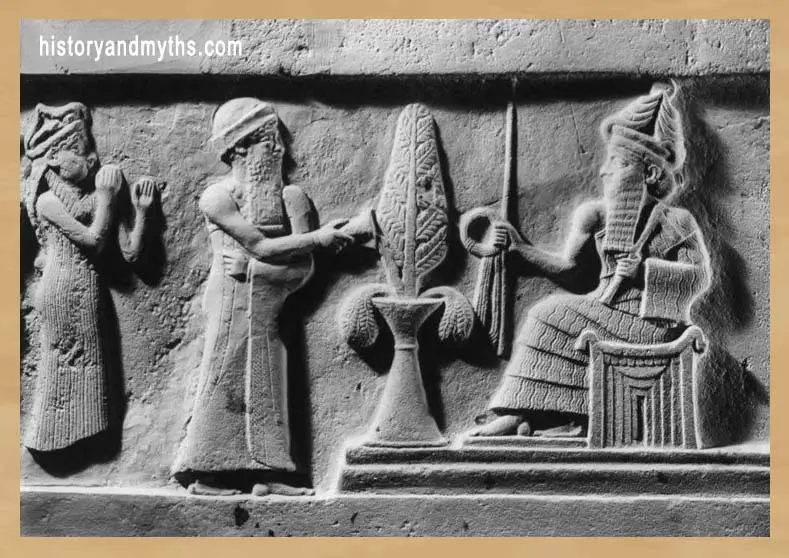
Mesopotamian rulers justified their authority through religious ideology that presented kingship as divinely sanctioned. Kings were portrayed as chosen by the gods to maintain cosmic order, protect temples, and uphold justice. This sacred framework transformed political obedience into religious duty.
Royal inscriptions, hymns, and monuments emphasized the ruler’s relationship with major deities such as Enlil, Marduk, and Shamash. Victories, construction projects, and legal reforms were framed as expressions of divine will rather than personal ambition.
Priestly institutions reinforced this ideology through rituals, omens, and public ceremonies. By linking governance to sacred approval, religious authorities strengthened royal legitimacy and reduced resistance. Divine kingship therefore functioned as a powerful instrument of political stability and social compliance.
Palace Administration and Bureaucratic Control
Palaces functioned as the operational centers of political authority in Mesopotamia. From these institutions, rulers supervised taxation, labor organization, military provisioning, and regional administration. Power was exercised through coordinated documentation rather than personal intervention.
Trained officials managed archives, compiled reports, and monitored resource flows. Every major activity—land distribution, ration allocation, construction projects—was recorded and reviewed. This system reduced corruption and enabled centralized oversight across distant territories.
Bureaucratic discipline reinforced royal control. Standardized procedures limited individual discretion and ensured loyalty to institutional rules. By transforming governance into an administrative process, palaces converted political authority into a stable, repeatable system.
| Source of Power | Main Institution | Key Tools | Political Function |
|---|---|---|---|
| Religious Authority | Temples | Rituals, Omens, Prophecy | Legitimizing Kingship |
| Administrative Control | Palaces | Archives, Reports, Records | Central Governance |
| Legal Power | Courts | Laws, Contracts | Social Regulation |
| Economic Management | State Institutions | Taxation, Storage | Resource Control |
| Military Force | Royal Army | Weapons, Logistics | Enforcement |
Law, Justice, and Royal Enforcement
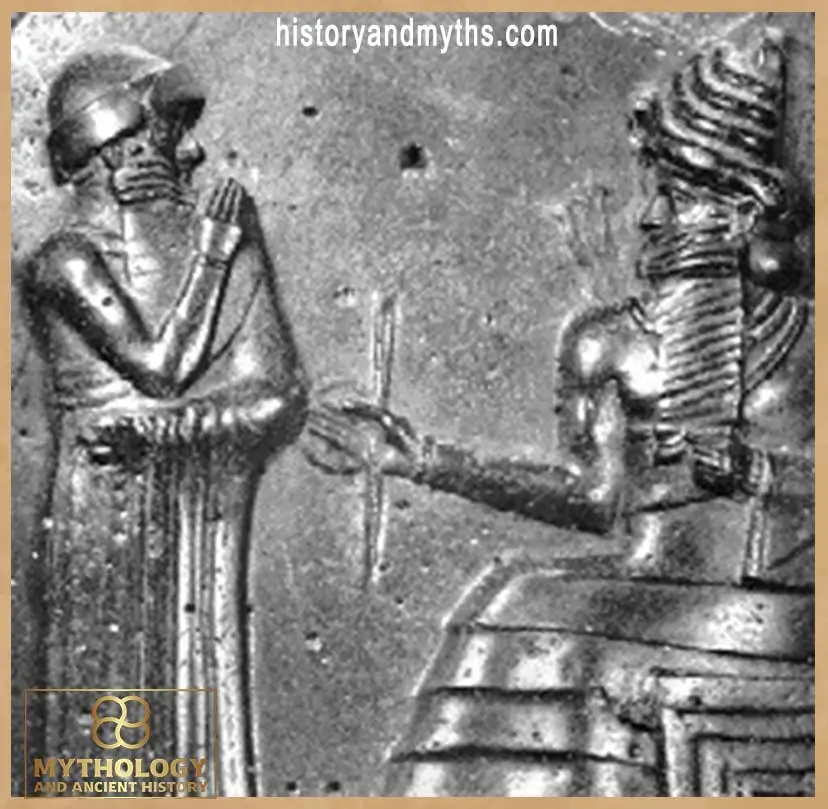
Legal systems in Mesopotamia served as essential instruments of political authority. Kings presented themselves as guarantors of justice, responsible for protecting property, regulating contracts, and resolving disputes. Law reinforced the ruler’s role as both administrator and moral guardian.
Royal law collections, court records, and judicial procedures standardized legal practice across cities and regions. Judges and scribes applied established formulas that limited arbitrary decision-making and strengthened institutional consistency.
Enforcement mechanisms ensured compliance. Fines, labor obligations, and corporal punishment deterred violations and preserved social order. By controlling legal institutions, rulers transformed justice into a tool of governance, reinforcing obedience through regulated accountability.
Economic Control and Resource Management
Economic administration formed the material foundation of political power in Mesopotamia. Rulers controlled land distribution, agricultural output, and storage facilities to secure steady revenue and food supplies. Without economic coordination, centralized authority could not function.
State institutions managed taxation through standardized assessments and recorded obligations. Farmers, craftsmen, and merchants were required to deliver grain, labor, or silver according to regulated schedules. These systems transformed economic activity into predictable state income.
Central warehouses and redistribution networks enabled rulers to respond to shortages, fund public works, and reward loyal officials. By supervising production and circulation, political authorities converted material resources into instruments of long-term stability and influence.
Military Organization and Coercive Power
Military institutions provided the coercive foundation that supported Mesopotamian political authority. Rulers maintained standing forces and mobilized conscripted labor to defend territories, suppress revolts, and secure trade routes. Armed power reinforced administrative control.
Command structures organized soldiers under appointed officers who reported directly to the palace. Logistics systems supplied weapons, food, and equipment through centralized storage and accounting. Effective military management depended on bureaucratic coordination rather than spontaneous mobilization.
Public displays of military success—victory monuments, royal inscriptions, and ceremonial parades—strengthened royal prestige. By combining organized force with symbolic representation, rulers deterred opposition and legitimized their dominance.
Priests, Temples, and Religious Influence
Temples constituted powerful institutions that shaped political authority in Mesopotamia. Priests controlled ritual practices, sacred calendars, and divine communication, making them essential partners in governance. Royal power depended partly on religious endorsement.
Temple administrators managed extensive landholdings, labor forces, and storage facilities. These economic assets allowed religious institutions to influence regional politics and resource distribution. Cooperation between palace and temple ensured mutual stability.
Priests also regulated access to omens, prophecies, and divine judgments. By interpreting supernatural signs, they framed political events within sacred narratives. This control over religious meaning reinforced social obedience and strengthened the ideological foundations of authority.
How Mesopotamian Rulers Maintained Authority
- Controlled temple and palace institutions.
- Monopolized legal and administrative knowledge.
- Managed taxation and food distribution.
- Maintained organized military forces.
- Used religion for political legitimacy.
Result: Power became institutional, durable, and difficult to challenge.
© historyandmyths.com — Educational Use
Rebellion, Resistance, and Political Instability
Despite strong administrative systems, Mesopotamian states frequently faced internal resistance and political unrest. Heavy taxation, forced labor, and unequal resource distribution generated social tensions that occasionally erupted into rebellion.
Local elites, military commanders, and provincial governors sometimes challenged royal authority when central control weakened. Competing claims to legitimacy created cycles of coups, civil conflicts, and dynastic struggles that destabilized governance.
Rulers responded through military repression, legal reforms, and symbolic reconciliation. Amnesty decrees, debt cancellations, and public rituals were used to restore loyalty. These measures reveal that political authority required continuous negotiation rather than permanent dominance.
Continue Reading
The Limits and Legacy of Mesopotamian Authority
Mesopotamian systems of power were highly effective but structurally constrained by environmental pressures, economic dependency, and institutional rigidity. Floods, droughts, and trade disruptions could rapidly undermine state capacity and weaken administrative control.
Centralized governance also depended on sustained elite cooperation. When palace officials, priests, or military leaders withdrew support, political stability deteriorated. Internal fragmentation often preceded external conquest.
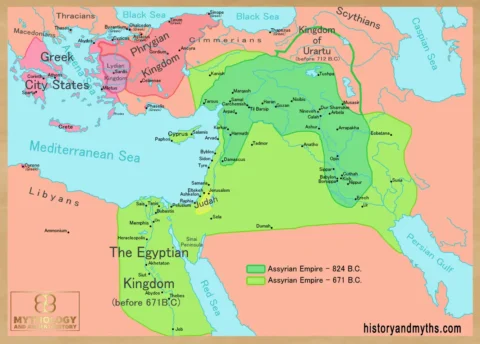
Despite these vulnerabilities, Mesopotamian models of authority left lasting institutional legacies. Later Near Eastern empires adopted similar systems of taxation, law enforcement, bureaucratic training, and divine legitimation. These frameworks influenced patterns of governance for centuries.
By integrating economic management, religious ideology, and administrative organization, Mesopotamian rulers established one of the earliest comprehensive models of state power. Their experience demonstrates how authority can be constructed, maintained, and ultimately transformed.
Key Takeaways
- Mesopotamian power depended on institutions, not individuals.
- Religion provided legitimacy for political rule.
- Administration enabled long-term control.
- Economic systems financed authority.
- Military force enforced compliance.
- Political stability required constant negotiation.
Frequently Asked Questions
Who held the highest power in Mesopotamia?
The king, supported by temples, bureaucrats, and military institutions.
How did religion support political authority?
It presented rulers as chosen by the gods.
Did priests compete with kings for power?
Yes. Temples sometimes rivaled royal authority.
How was power enforced?
Through law, taxation, administration, and military force.
Why did rebellions occur?
Because of heavy taxation, labor demands, and political instability.
Was Mesopotamian authority centralized?
Yes, but it relied on cooperation from local elites.
Did these systems influence later empires?
Yes. Persian and Near Eastern states adopted similar models.
Sources & Rights
- Black, Jeremy. The Literature of Ancient Sumer. Oxford, 2004.
- Bottéro, Jean. Mesopotamia: Writing, Reasoning, and the Gods. Chicago, 1992.
- Charpin, Dominique. Writing, Law, and Kingship. Harvard, 2010.
- Foster, Benjamin. Before the Muses. CDL Press, 2005.
- George, Andrew. Babylonian Topographical Texts. Leuven, 1992.
- Goody, Jack. The Logic of Writing. Cambridge, 1986.
- Harmanşah, Ömür. Cities and State Power. Cambridge, 2013.
- Kuhrt, Amélie. The Ancient Near East. Routledge, 1995.
- Liverani, Mario. Ancient Near East. Routledge, 2014.
- Michalowski, Piotr. The Royal Correspondence. Eisenbrauns, 2011.
- Nemet-Nejat, Karen. Daily Life in Mesopotamia. Greenwood, 1998.
- Oates, Joan. Babylon. Thames & Hudson, 1986.
- Postgate, Nicholas. Early Mesopotamia. Routledge, 1992.
- Radner, Karen. State Correspondence. SAA, 2014.
- Robson, Eleanor. Mathematics in Ancient Iraq. Princeton, 2008.
- Roth, Martha. Law Collections. Scholars Press, 1995.
- Scurlock, JoAnn. Medicine in Mesopotamia. Brill, 2014.
- Snell, Daniel. Life in the Ancient Near East. Yale, 2011.
- Van De Mieroop, Marc. A History of the Near East. Wiley, 2015.
- Veldhuis, Niek. Scholarship in Mesopotamia. Brill, 2014.
Written by H. Moses — All rights reserved © Mythology and History