Law and Justice in Ancient Mesopotamia: The World’s First Legal System
Law in ancient Mesopotamia was one of the earliest organized systems of justice in human history. Long before Greece and Rome, Mesopotamian societies relied on written rules, courts, and official procedures to regulate trade, resolve disputes, and protect social order.
Justice did not begin with the Code of Hammurabi, nor was it limited to harsh punishment. Earlier legal texts such as the Code of Ur-Nammu and the Laws of Eshnunna reveal a system based on compensation, economic regulation, and administrative control. Law functioned as a foundation for daily life, not merely as a tool of authority.
This article explores how law and justice actually worked in Mesopotamian society, examining legal institutions, court practices, social inequality, and religious legitimacy to show how one of the world’s first legal systems shaped early civilization.
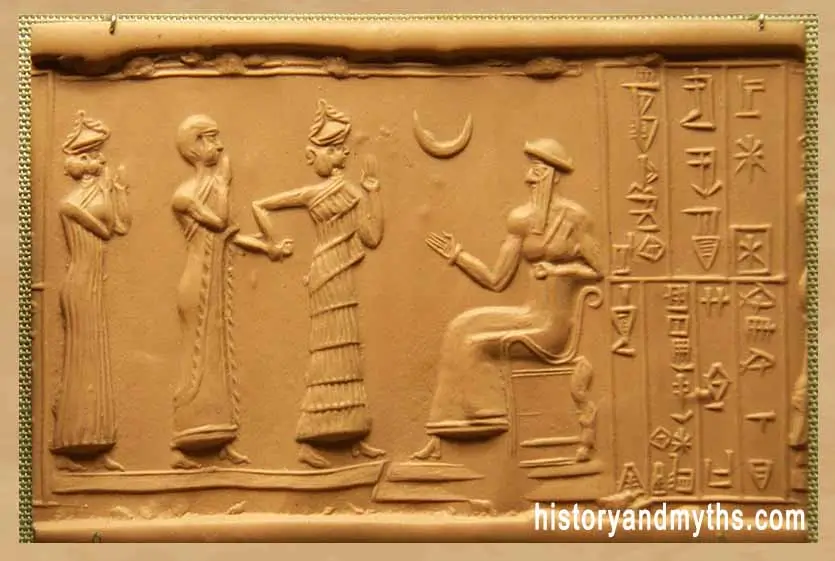
The Origins of Law in Early Mesopotamia: How Justice Began in the World’s First Cities
Law Before Hammurabi: The Sumerian Foundations
Long before famous law codes were carved into stone, legal authority in Mesopotamia emerged from the daily needs of early Sumerian cities. As urban centers such as Uruk, Ur, and Lagash expanded during the fourth and third millennia BCE, disputes over land, labor, debt, and inheritance became unavoidable. Informal customs were no longer sufficient to regulate increasingly complex economic and social relationships.
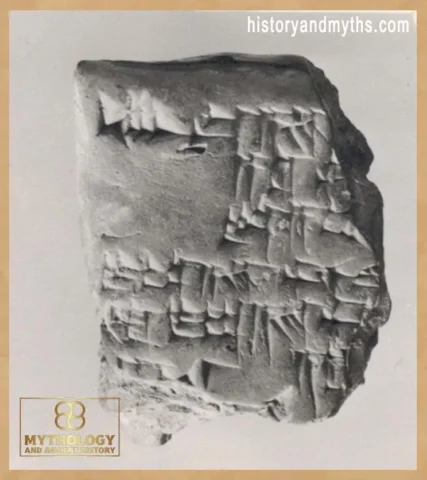
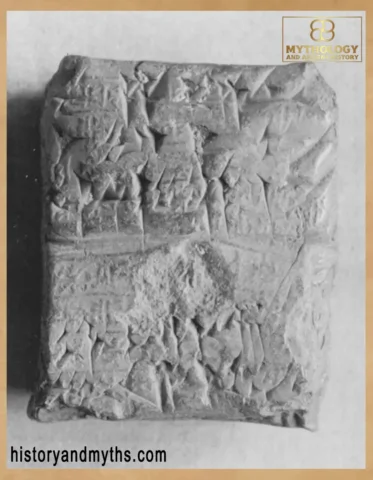
To address these challenges, rulers and administrators began recording agreements and judicial decisions on clay tablets using cuneiform script. These early legal documents included sales contracts, loan records, marriage agreements, and court verdicts. Rather than relying on personal authority or tribal tradition, justice gradually became anchored in written evidence and publicly recognized procedures.
By the late third millennium BCE, this legal culture had matured into formal law collections, most notably under the rulers of the Third Dynasty of Ur. The Code of Ur-Nammu reflects this transition from customary practice to institutionalized justice, emphasizing compensation, legal accountability, and social order. These foundations established the basic principles that later Babylonian and Assyrian legal systems would continue to develop.
Writing, Record-Keeping, and Legal Authority: How Cuneiform Turned Custom into Law
The development of writing was the single most important factor in transforming Mesopotamian justice from informal tradition into a permanent legal institution. With the invention of cuneiform script in the late fourth millennium BCE, legal decisions and private agreements could be recorded, copied, stored, and consulted over long periods of time. This created a system in which authority no longer depended solely on memory or personal status, but on written proof.
Legal tablets documented nearly every aspect of economic and social life. Sales contracts specified property boundaries and prices. Loan agreements listed interest rates and repayment deadlines. Marriage documents regulated dowries and inheritance rights. Court records preserved verdicts and testimonies. These texts were archived in temples, palaces, and private houses, forming early legal archives that protected both citizens and institutions.
Scribes played a central role in this system. Trained in specialized schools, they ensured that contracts followed recognized formulas and that judicial records met official standards. Their work gave legal transactions a formal structure that limited manipulation and strengthened state control. Over time, written documentation became the backbone of legal authority, allowing rulers to govern large populations through standardized procedures rather than personal intervention.
Major Mesopotamian Law Codes: From Early Reform to Systematic Justice
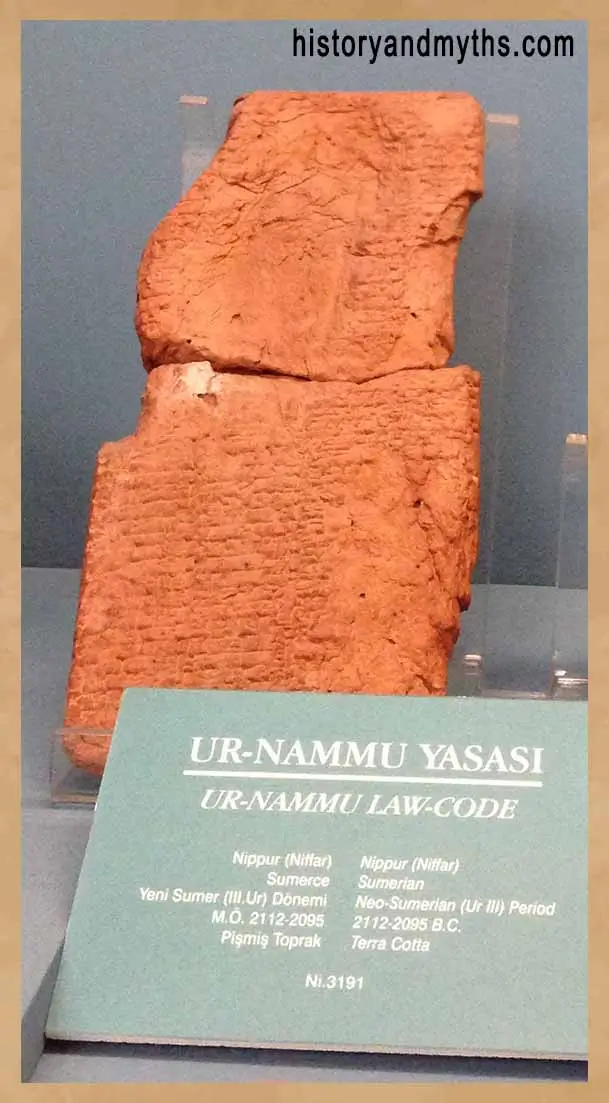
The Code of Ur-Nammu: Compensation over Revenge
The earliest surviving law collection in Mesopotamian history dates to the reign of Ur-Nammu, ruler of the Third Dynasty of Ur in the late third millennium BCE. Unlike later codes that emphasized physical retaliation, this legal text relied primarily on financial compensation. Injuries, property damage, and professional negligence were usually punished through fixed monetary fines rather than bodily harm.
This approach reflects a pragmatic understanding of justice. Instead of escalating conflict through revenge, the law sought to restore social balance by assigning measurable responsibility. A broken bone, stolen livestock, or damaged field had a defined legal value. Offenders were required to compensate victims, while the state ensured enforcement.
The Code of Ur-Nammu also demonstrates early concern for legal accountability. False accusations, abuse of authority, and unlawful seizure of property were explicitly condemned. Judges and officials were expected to follow standardized procedures, reinforcing the idea that justice was an institutional process rather than a personal decision.
By prioritizing compensation, documentation, and administrative oversight, this code laid the structural foundations for later Mesopotamian legal systems. It established law as a mechanism for stability and economic continuity, not merely punishment.
The Code of Lipit-Ishtar: Stabilizing Society Through Written Justice
Issued under Lipit-Ishtar of Isin in the early second millennium BCE, this law collection reflects a growing concern with social stability rather than simple punishment. Like other Mesopotamian codes, it follows the “if…then…” structure, presenting legal rules through practical case scenarios. Its surviving provisions focus mainly on everyday disputes involving property, agriculture, labor, family relations, and false testimony.
Unlike earlier legal traditions that emphasized compensation alone, the Code of Lipit-Ishtar shows a clearer attempt to regulate social behavior through standardized legal categories. It defines responsibilities between landlords and tenants, employers and workers, parents and children, and husbands and wives. In doing so, it transforms customary expectations into enforceable legal norms.
The prologue of the code presents the king as a guarantor of justice, appointed to restrain wrongdoing and protect social order. Law is portrayed not as a personal tool of power, but as a public institution serving the stability of the community. Judicial authority is therefore linked to both political leadership and moral responsibility.
Through its emphasis on routine conflicts and civic obligations, the Code of Lipit-Ishtar represents an important transitional stage between early compensatory systems and the more comprehensive legal frameworks of later Babylonian rulers.
The Laws of Eshnunna: Regulating Prices, Wages, and Economic Life
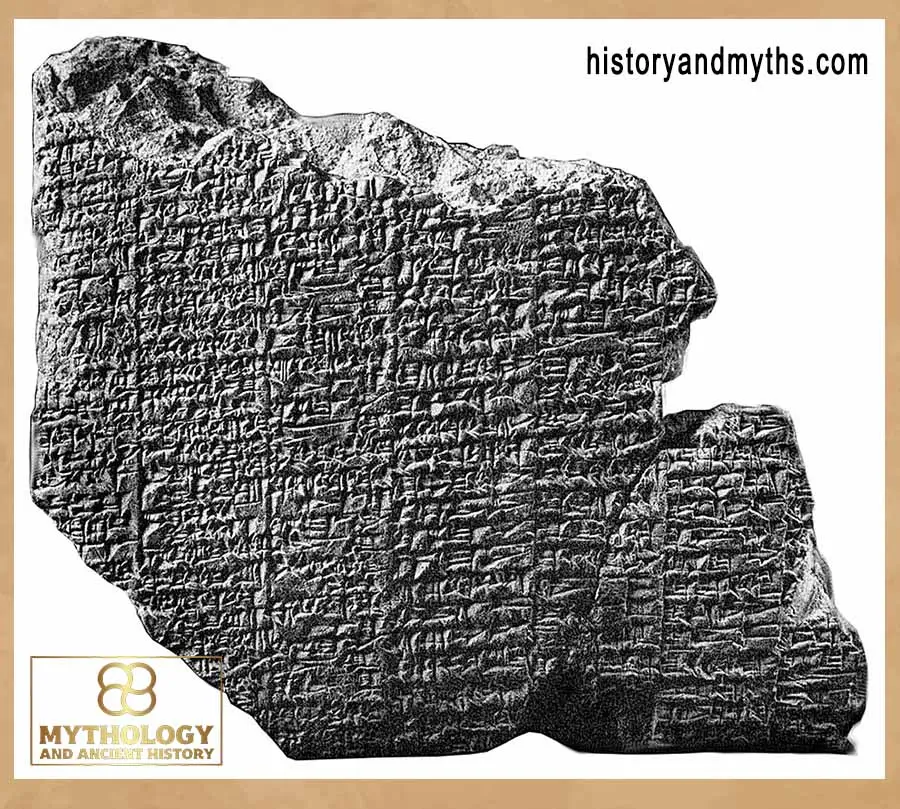
Compiled in the city of Eshnunna during the early second millennium BCE, this legal collection reflects a distinctive shift toward economic regulation. While earlier codes focused primarily on compensation and social obligations, the Laws of Eshnunna devote significant attention to controlling prices, wages, and commercial transactions. This reveals how law became a practical instrument for managing urban markets and protecting economic stability.
Many of its provisions establish fixed rates for basic commodities such as grain, oil, and wool, as well as standardized payments for labor and transportation. By limiting price fluctuations and wage disputes, the law reduced uncertainty in trade and prevented exploitation during periods of scarcity. Economic justice, in this context, was closely linked to predictable regulation rather than moral judgment alone.
The code also addresses issues of negligence, violence, and property damage, often combining financial compensation with graded penalties. Responsibility is clearly assigned to ship owners, herdsmen, builders, and merchants, emphasizing professional accountability. Economic activity was therefore treated as a legal matter subject to oversight and sanction.
Through its detailed concern with commercial life, the Laws of Eshnunna demonstrate that Mesopotamian justice was not confined to courts and punishments. It operated daily in markets, workshops, and transport networks, shaping how wealth was produced, exchanged, and protected.

The Code of Hammurabi: Systematic Justice and Social Hierarchy
Issued under Hammurabi of Babylon in the eighteenth century BCE, this law collection represents the most comprehensive attempt to organize justice in ancient Mesopotamia. Unlike earlier codes that focused on limited social or economic issues, Hammurabi’s laws cover criminal acts, property disputes, commercial contracts, family relations, labor obligations, and professional responsibility within a single legal framework.
The code is best known for its principle of proportional punishment, often summarized as “an eye for an eye.” However, this formula was not applied equally. Penalties varied according to social status, distinguishing between free citizens, dependents, and slaves. Justice was therefore structured around hierarchy rather than universal equality.
At the same time, the code emphasizes legal procedure and accountability. Judges who issued incorrect verdicts could be fined and removed. Builders, doctors, and merchants were held responsible for professional failures. Written contracts and witness testimony were central to legal enforcement. Law functioned as an administrative system, not merely a moral statement.
By combining religious legitimacy, royal authority, and detailed regulation, the Code of Hammurabi transformed earlier legal traditions into a centralized and standardized model. It marks the point at which Mesopotamian law became a tool of imperial governance as well as social control.
Major Mesopotamian Law Codes Compared
| Code | Period | Main Focus | Type of Punishment | Historical Significance |
|---|---|---|---|---|
| Ur-Nammu | c. 2100 BCE | Compensation and social order | Fines and restitution | Oldest surviving legal code |
| Lipit-Ishtar | c. 1900 BCE | Family and property law | Mixed penalties | Transitional legal system |
| Eshnunna | c. 1800 BCE | Economic regulation | Fines and graded sanctions | Market and wage control |
| Hammurabi | c. 1750 BCE | Comprehensive legal system | Retaliation and fines | Most complete ancient code |
Was There a Unified Legal System in Mesopotamia?
Despite the existence of famous law codes, Mesopotamia never developed a single, unified legal system that applied equally across all regions and periods. Legal practice varied from city to city, depending on local traditions, political authority, and economic conditions. Each major center—such as Ur, Isin, Eshnunna, and Babylon—maintained its own legal customs alongside royal legislation.
Law codes functioned primarily as ideological and administrative references rather than complete rulebooks for daily litigation. Courts did not mechanically apply written laws in every case. Instead, judges combined royal regulations with local precedent, customary practice, and situational judgment. This allowed legal systems to remain flexible in rapidly changing urban environments.
Royal law collections also served political purposes. By presenting themselves as guardians of justice, kings used legal texts to legitimize their rule and reinforce central authority. Uniformity was therefore more symbolic than practical. The appearance of standardized justice strengthened state power, even when local variation continued in practice.
Mesopotamian law should thus be understood as a network of overlapping legal traditions rather than a single centralized system. Its strength lay in adaptability, not rigid uniformity.
How Justice Worked in Practice: Courts, Evidence, and Trials
Legal disputes in Mesopotamia were handled by local courts operating under royal authority. Judges, governors, and senior officials presided over cases involving property, debt, marriage, injury, and commercial conflict. There were no professional lawyers; individuals were expected to present their own claims and defenses.
Judicial decisions relied on written contracts, witness testimony, and sworn oaths. Documents recorded by scribes carried strong legal weight, while false testimony was severely punished. In uncertain cases, oaths before the gods were used to reinforce truthfulness and accountability.
Trials were generally public and procedural rather than arbitrary. Verdicts were issued in written form and stored in archives, ensuring continuity and legal memory. Justice functioned through documentation, institutional authority, and religious obligation, creating a system that balanced flexibility with formal control.
Crime, Punishment, and Social Hierarchy
Punishment in Mesopotamian society was shaped by social status rather than universal equality. Legal penalties differed according to whether the offender and victim were free citizens, dependents, or slaves. The same crime could result in financial compensation, physical punishment, or death depending on class.
Violent offenses and serious property violations were often punished through corporal penalties or capital punishment, especially when they threatened public order. Lesser crimes were usually resolved through fines and restitution. Economic damage was treated as a legal harm comparable to physical injury.
Family-related offenses, including adultery, abandonment, and inheritance disputes, were closely regulated. Women’s legal rights existed but were limited by patriarchal structures and male guardianship. Slaves remained legal property, with minimal protection under the law.
Justice therefore reinforced existing hierarchies. Law did not aim to create equality, but to preserve social stability by assigning different legal values to different social groups.
Law, Religion, and Divine Authority
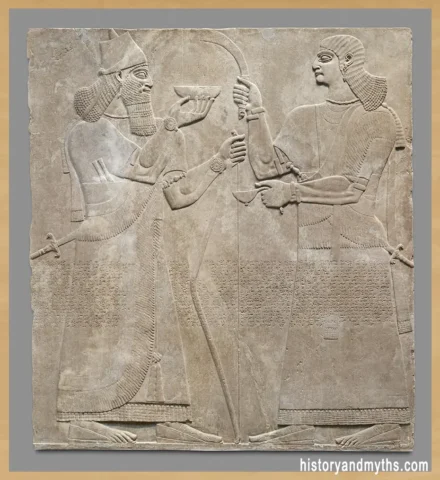
>>>>>>>>>>>>>>Law in Mesopotamia was inseparable from religious belief. Justice was presented as a divine mandate, granted to kings by the gods and enforced under their supervision. Legal authority was therefore grounded in sacred legitimacy rather than human agreement alone.
Oaths sworn before major deities played a central role in trials and contracts. Perjury was considered both a legal offense and a religious sin, carrying social and supernatural consequences. Fear of divine punishment reinforced legal compliance.
Temples also functioned as legal and economic institutions. Many contracts, loans, and property transactions were registered within religious complexes, where priests and scribes acted as witnesses and record keepers. This integration strengthened trust in legal documents.
By linking law to divine order, Mesopotamian societies ensured that justice operated not only through courts and officials, but through moral obligation and religious authority.
Law and Divine Authority in Mesopotamia
- Justice was presented as a divine mandate.
- Kings ruled as representatives of the gods.
- Oaths before deities reinforced honesty.
- Perjury was both a legal and religious crime.
- Temples served as legal and economic centers.
- Religious fear strengthened legal compliance.
© historyandmyths.com — Educational Use
Law as a Tool of Economic and Social Order
Mesopotamian law functioned primarily as a system for protecting economic stability. Contracts regulated land leases, trade partnerships, loans, wages, and transportation. By fixing obligations in written form, the legal system reduced uncertainty and limited disputes between individuals and institutions.
Merchants, farmers, craftsmen, and laborers operated within legally defined frameworks. Failure to meet contractual duties resulted in financial penalties or legal sanctions. This structure allowed complex urban economies to function without constant conflict, reinforcing trust in long-distance trade and credit systems.
Law therefore served as an administrative mechanism that supported production, exchange, and property rights. Economic order was not separate from justice; it was one of its central objectives.
Limits of Justice and Legal Inequality
Despite its sophistication, Mesopotamian law was not impartial. Access to justice depended heavily on social position, wealth, and political connections. Elites enjoyed greater legal protection and influence, while dependents and slaves faced severe limitations.
Corruption, favoritism, and abuse of authority occasionally undermined legal ideals. Powerful families and officials could manipulate procedures, delay verdicts, or pressure witnesses. Written law did not always guarantee fair outcomes in practice.
Legal inequality was therefore built into the system. Law aimed to preserve stability rather than promote social equality. Justice functioned within existing hierarchies, reinforcing rather than challenging them.
Continue Reading
- Trade and Commerce in Mesopotamian Civilization
- Social Classes in Mesopotamian Society
- Ancient Mesopotamian Economy: Trade, Debt, and Daily Survival
- Education and Scribal Schools in Mesopotamia
- Daily Life in Mesopotamian Society: How Ordinary People Lived
- What If Hammurabi Had Failed to Conquer Mesopotamia?
Conclusion: Law and Justice in the First Urban Civilizations
The legal traditions of Mesopotamia represent one of humanity’s earliest attempts to organize society through written rules and institutional authority. From early Sumerian reforms to the comprehensive system of Hammurabi, law evolved alongside urban growth, economic complexity, and political centralization.
Justice operated through courts, documentation, religious legitimacy, and royal oversight. It regulated trade, protected property, structured family life, and maintained social hierarchy. While imperfect and unequal, it provided a durable framework for governing large populations.
By transforming custom into law and authority into procedure, Mesopotamian societies laid the foundations for later legal systems across the ancient world. Their legacy demonstrates that organized justice was a central pillar of civilization from its earliest beginnings.
Key Takeaways
- Mesopotamia developed the earliest written legal systems.
- Law evolved from compensation to centralized control.
- Justice depended on social status and hierarchy.
- Religion legitimized legal authority.
- Written contracts were central to enforcement.
- Law supported economic stability and governance.
Frequently Asked Questions
Did Mesopotamia have real courts?
Yes. Local courts operated under royal authority and handled civil, commercial, and criminal cases.
Was the Code of Hammurabi applied everywhere?
No. Local traditions often influenced how laws were enforced.
Were all citizens treated equally?
No. Legal penalties depended heavily on social class.
Did Mesopotamians use lawyers?
No. Individuals represented themselves in court.
How important was writing in law?
Written contracts and records formed the foundation of legal authority.
Did religion affect justice?
Yes. Oaths, temples, and divine legitimacy shaped legal practice.
Sources & Rights
- Bottéro, Jean. Mesopotamia: Writing, Reasoning, and the Gods. Chicago: University of Chicago Press, 1992.
- Driver, G. R., and John C. Miles. The Babylonian Laws. Oxford: Clarendon Press, 1952.
- Finkelstein, J. J. “Some New Misharum Material.” Journal of Cuneiform Studies 15 (1961).
- Harris, Rivkah. Gender and Aging in Mesopotamia. Norman: University of Oklahoma Press, 2000.
- Joannès, Francis. Dictionary of Ancient Mesopotamia. London: British Museum Press, 2001.
- Kramer, Samuel Noah. History Begins at Sumer. Philadelphia: University of Pennsylvania Press, 1981.
- Kuhrt, Amélie. The Ancient Near East. London: Routledge, 1995.
- Leemans, W. F. Foreign Trade in the Old Babylonian Period. Leiden: Brill, 1960.
- Mieroop, Marc Van De. King Hammurabi of Babylon. Oxford: Blackwell, 2005.
- Postgate, J. N. Early Mesopotamia. London: Routledge, 1994.
- Roth, Martha. Law Collections from Mesopotamia and Asia Minor. Atlanta: Scholars Press, 1997.
- Saggs, H. W. F. The Greatness That Was Babylon. London: Sidgwick & Jackson, 1988.
- Snell, Daniel. Life in the Ancient Near East. New Haven: Yale University Press, 1997.
- Stol, Marten. Women in the Ancient Near East. Berlin: De Gruyter, 2016.
- Westbrook, Raymond. Studies in Biblical and Cuneiform Law. Paris: Gabalda, 1988.
- Westbrook, Raymond. A History of Ancient Near Eastern Law. Leiden: Brill, 2003.
- Wiseman, D. J. The Vassal Treaties of Esarhaddon. London: British Museum, 1958.
- Hallo, William. The Context of Scripture. Leiden: Brill, 2003.
- Oppenheim, A. Leo. Ancient Mesopotamia. Chicago: University of Chicago Press, 1977.
- Cooper, Jerrold. “Sumerian Law.” In Cambridge Ancient History. Cambridge: CUP, 1991.
Written by H. Moses — All rights reserved © Mythology and History