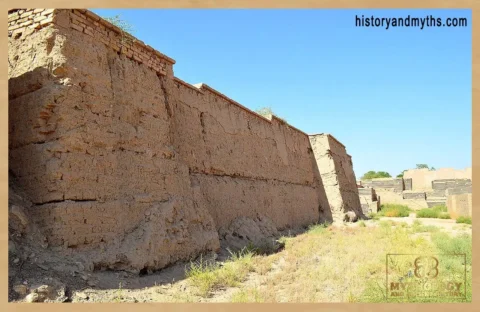
Mesopotamian Irrigation: How Water Control Built Civilization
Irrigation systems in Mesopotamia were the foundation of agriculture, urban life, and political authority. Because rainfall was insufficient and unpredictable, societies along the Tigris and Euphrates relied on artificial canals to control water flow, irrigate fields, and prevent crop failure. This control was not informal; it was organized, regulated, and enforced.
Mesopotamian irrigation worked through canal networks managed by temples and state authorities, supported by compulsory labor, seasonal schedules, and legal rules governing water access. Control of irrigation determined agricultural output, taxation, and social stability, while failures—such as flooding, canal collapse, or salinization—posed constant systemic risks.
This article explains how irrigation systems functioned as a system of water control, who managed them, how they were maintained, and why irrigation was both the greatest strength and a long-term vulnerability of Mesopotamian civilization.
Why Mesopotamia Required Artificial Irrigation
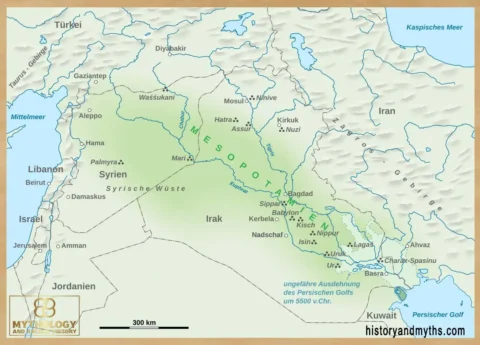
Mesopotamia could not rely on rainfall agriculture. Annual precipitation across southern Mesopotamia was far below the threshold needed for stable crop production, while the Tigris and Euphrates produced irregular and often destructive floods rather than predictable seasonal watering. This mismatch forced early communities to abandon passive flood farming and adopt deliberate water control through canals, embankments, and diversion channels.
Artificial irrigation solved two structural problems at once: water scarcity during the growing season and flood excess during peak river flow. By redirecting river water away from natural floodplains and into managed canal systems, farmers could irrigate fields at controlled times, extend cultivation into dry zones, and stabilize grain output. Without this intervention, surplus agriculture—and therefore cities, taxation, and administration—would not have been possible.
However, irrigation also introduced permanent dependency. Once fields relied on canal water, agriculture became vulnerable to canal failure, labor shortages, and administrative breakdown. Irrigation was not an optional improvement; it was a technological necessity that locked Mesopotamian societies into continuous maintenance, coordination, and enforcement, making water control a core function of political authority rather than a purely agricultural task.
| Aspect | Key Features |
|---|---|
| Water Source | Tigris and Euphrates rivers, diverted through artificial canals |
| Canal Structure | Primary canals feeding secondary and tertiary distribution channels |
| Control Authority | Temples and royal administrations, not individual farmers |
| Labor System | Compulsory corvée labor for construction and maintenance |
| Legal Regulation | Formal water laws, penalties for negligence or illegal diversion |
| Major Risks | Flooding, siltation, salinization, system-wide failure |
How Mesopotamian Canal Systems Were Designed and Operated
Mesopotamian irrigation relied on hierarchical canal networks rather than isolated ditches. Large primary canals diverted water directly from the Tigris or Euphrates, feeding secondary and tertiary channels that distributed water to fields at different elevations. This structure allowed gradual flow control and reduced the risk of sudden flooding, but it required precise coordination and constant upkeep.
Canal operation followed seasonal schedules tied to planting cycles. Water release was timed to avoid peak floods and ensure availability during critical growth stages. Gates, embankments, and diversion points regulated flow, while field boundaries and intake points defined how much water each plot received. Improvised access was prohibited because unauthorized diversion could deprive downstream users and destabilize the entire system.
Operation was inseparable from maintenance. Canals accumulated silt rapidly, especially in southern Mesopotamia, and required regular dredging and reinforcement. This work was organized through corvée labor imposed by temples or state authorities. Failure to participate in maintenance endangered not only individual harvests but regional food supply, making canal management a collective obligation enforced from above.
In practice, canal systems functioned as managed infrastructures, not natural waterways. Their effectiveness depended less on engineering sophistication than on administrative discipline—clear schedules, enforced access rules, and the ability to mobilize labor at scale.
Who Controlled Water in Mesopotamia?
Control of irrigation in Mesopotamia rested with institutional authority, not individual farmers. In early periods, temples acted as administrative centers that organized canal construction, scheduled water distribution, and enforced maintenance duties. As states expanded, royal administrations increasingly assumed this role, integrating water control into taxation, labor obligations, and legal oversight.
Water access was regulated through formal rules. Authorities determined when canals were opened, how much water could be diverted, and which communities had priority during shortages. Unauthorized diversion or neglect of maintenance was treated as a legal offense because it threatened downstream users and agricultural stability. This made irrigation a matter of governance rather than local custom.
Local communities participated in day-to-day management, but they did not control the system. Their role was operational—supplying labor, monitoring sections of canals, and reporting damage—while strategic decisions remained centralized. In effect, water control functioned as a tool of political power, binding agricultural production, taxation, and social order into a single administrative framework.
Labor and Maintenance: Keeping the Irrigation System Alive
Mesopotamian irrigation systems survived only through continuous maintenance, not initial construction. Canals filled with silt rapidly, embankments eroded after floods, and breaches could destroy entire planting seasons. As a result, maintenance was treated as a mandatory public duty, not voluntary cooperation.
Authorities organized canal upkeep through corvée labor. Farmers and dependents were required to clean canals, reinforce banks, and repair damage at specific times of the year, usually before planting seasons. These obligations were tied directly to land use: access to irrigated fields depended on participation in maintenance. Neglect was punished because it endangered collective water supply.
Maintenance was also a mechanism of control. By mobilizing labor at scale, temples and royal administrations reinforced their authority over rural populations. Irrigation systems therefore imposed a permanent social cost: agriculture could function only if labor was regularly extracted and coordinated.
In practical terms, irrigation was never a finished system. It was a fragile infrastructure that demanded constant human input, making long-term agricultural stability inseparable from administrative capacity.
- Irrigation in Mesopotamia was a centralized system, not a local farming practice.
- Control of water determined agricultural output, taxation, and political authority.
- Continuous maintenance was mandatory; failure threatened regional food security.
- Environmental risks were structural and accumulated over time.
© historyandmyths.com — Educational use
Water Law, Disputes, and Enforcement
Irrigation in Mesopotamia was governed by formal legal rules, not informal custom. Because canal misuse could deprive downstream fields and trigger crop failure, water access was treated as a legal responsibility. Laws defined who could divert water, when canals could be opened, and how damage or negligence was assessed.
Disputes typically arose between upstream and downstream users. Unauthorized breaches, blocked channels, or failure to maintain embankments were prosecuted because they endangered the wider system. Penalties ranged from fines and restitution to compulsory repair work, reflecting the principle that harm to irrigation was harm to the community.
Enforcement relied on local officials acting under temple or royal authority. Inspectors monitored canals, recorded violations, and compelled offenders to restore damaged sections. Law codes—most notably those attributed to Hammurabi—did not invent water regulation but codified existing practices, turning irrigation management into a standardized legal domain.
Through law, water control became predictable and enforceable. This legal framework reduced conflict, protected agricultural output, and reinforced centralized authority by making irrigation compliance a matter of justice rather than negotiation.
Environmental Risks: Flooding, Salinization, and System Failure
Mesopotamian irrigation carried structural environmental risks that no level of administration could fully eliminate. Rivers flooded unpredictably, canals silted up rapidly, and prolonged irrigation caused salinization of soils, especially in southern Mesopotamia. These were not occasional problems; they were systemic consequences of large-scale water control.
Flooding damaged embankments and destroyed fields when canals overflowed or collapsed. Silt accumulation reduced water flow, forcing constant dredging. More critically, repeated irrigation without sufficient drainage led to salt buildup in the soil, gradually lowering crop yields and making some lands unusable. Archaeological and textual evidence shows declining productivity in parts of southern Mesopotamia over long periods, linked directly to salinization.
System failure occurred when maintenance lagged or administrative coordination broke down. A single neglected canal section could disrupt downstream supply, triggering crop loss and conflict. Over time, these environmental pressures contributed to shifts in settlement patterns and agricultural focus, particularly the movement from wheat to more salt-tolerant barley.
Irrigation enabled Mesopotamian civilization, but it also imposed long-term ecological limits. Managing water meant managing risk, and failure to do so had cumulative consequences that shaped the region’s economic and demographic history.
Regional Differences in Irrigation: Southern vs. Northern Mesopotamia
Irrigation practices in Mesopotamia varied sharply by region. Southern Mesopotamia faced minimal rainfall and flat terrain, making large, artificial canal networks essential. Water had to be diverted over long distances, requiring intensive coordination, constant dredging, and strict regulation. These conditions amplified risks of salinization and system-wide failure, pushing authorities toward centralized control.
In contrast, Northern Mesopotamia benefited from higher rainfall, uneven terrain, and shorter canals fed by tributaries. Irrigation there supplemented rain-fed agriculture rather than replacing it entirely. Canal systems were smaller, easier to maintain, and less vulnerable to salinity, allowing for more localized management and reduced dependence on large-scale administrative enforcement.
These environmental differences shaped political and economic organization. The south’s heavy reliance on irrigation reinforced centralized authority and labor mobilization, while the north retained greater flexibility and resilience. Irrigation, therefore, did not produce a single Mesopotamian model; it generated region-specific systems with distinct administrative demands and long-term outcomes.
Why Water Control Defined Power in Mesopotamian Civilization
In Mesopotamia, power was inseparable from the ability to control water. Irrigation determined who could farm, how much surplus could be extracted, and whether cities could survive periods of stress. Because canal systems required coordination beyond the capacity of individual households, authority over water naturally translated into political and economic dominance.
Temples and royal administrations did not merely manage irrigation; they used it to structure dependency. Access to water was conditional on labor participation, legal compliance, and tax obligations. This transformed irrigation from an agricultural necessity into a governing mechanism that linked land, labor, and law under centralized oversight.
At the same time, water control exposed the limits of power. Environmental risks, administrative failure, or social disruption could collapse irrigation networks quickly, undermining food production and state stability. Mesopotamian history shows repeated cycles in which strong water management supported expansion, while breakdowns in control accelerated decline.
Irrigation systems, therefore, were not background infrastructure. They were the core system through which Mesopotamian civilization organized production, enforced authority, and confronted its own ecological constraints.
- Mesopotamian agriculture depended entirely on artificial irrigation.
- Water control was managed by temples and states, not private individuals.
- Canal systems required constant labor, coordination, and legal enforcement.
- Flooding and salinization posed long-term ecological limits.
- Irrigation shaped political power and social dependency.
Frequently Asked Questions
They relied on artificial canal networks that diverted water from the Tigris and Euphrates to agricultural fields according to seasonal schedules and administrative control.
Water distribution was controlled by temples and royal administrations, not by individual farmers.
Rainfall was insufficient and unreliable, making artificial irrigation necessary for stable agriculture and urban survival.
Major problems included flooding, canal siltation, and long-term soil salinization.
Yes. Formal laws governed canal maintenance, water diversion, and penalties for negligence or illegal interference.
Yes. Southern Mesopotamia depended on large canal networks, while northern regions relied on smaller systems supplemented by rainfall.
Sources & Rights
- Jacobsen, Thorkild & Adams, Robert McC. “Salt and Silt in Ancient Mesopotamian Agriculture.” Science, 1958.
- Adams, Robert McC. Heartland of Cities: Surveys of Ancient Settlement and Land Use on the Central Floodplain of the Euphrates.
- Van De Mieroop, Marc. A History of the Ancient Near East.
- Liverani, Mario. The Ancient Near East: History, Society and Economy.
- Postgate, J. Nicholas. Early Mesopotamia: Society and Economy at the Dawn of History.
- Pollock, Susan. Ancient Mesopotamia: The Eden That Never Was.
- Oates, Joan. Babylon.
- Leick, Gwendolyn. Mesopotamia: The Invention of the City.
- Hammurabi. Law Code (water and canal regulations).
- Encyclopaedia Britannica. Irrigation and Agriculture in the Ancient Near East.
Written by H. Moses — All rights reserved © Mythology and History