Antediluvian Kings in the Sumerian King List: Myth or History?
The Sumerian King List is not a straightforward historical register of “real” pre-Flood kings; it’s a chronographic text that blends mythic origins (“kingship descended from heaven”), political legitimation, and later historical memory—so the “before the Flood” section is best read as ideology and sacred history, not literal chronology.
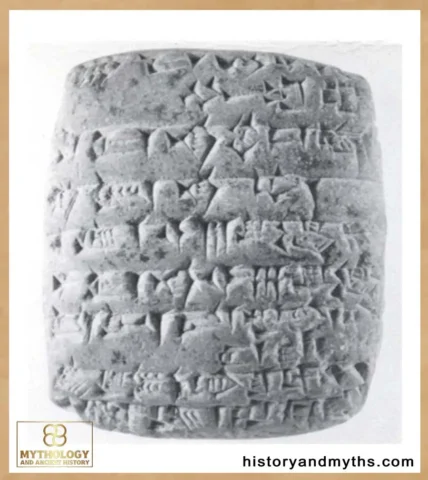
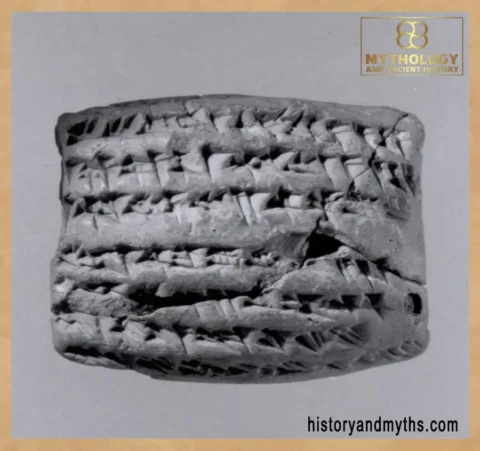
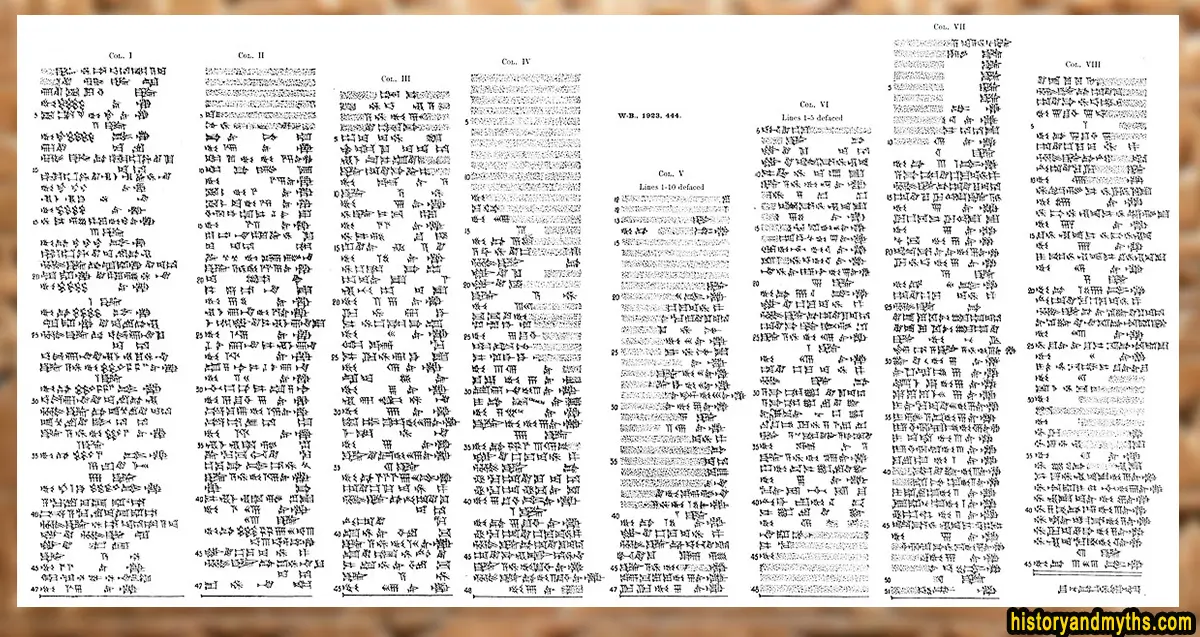
the text doesn’t just claim a Flood—it uses the Flood as a narrative reset button to explain why kingship moves from one city to another and why later dynasties deserve legitimacy. The most complete surviving witness is the Weld-Blundell Prism (Ashmolean AN1923.444), and its opening lines set the tone immediately: divine kingship, antediluvian reigns measured in impossible spans, and a world structured by theology as much as by politics.
In this article, you’ll get three concrete payoffs: (1) what the King List is and what its compilers were trying to do with the pre-Flood section, (2) why the “thousands of years” reign lengths appear (sexagesimal number culture, symbolic time, and scribal conventions—without forcing a single weak explanation), and (3) how scholars compare the Flood framework here with wider Mesopotamian and biblical traditions without collapsing them into one story.
The Flood in Religious Narratives and Historical Context
Was There a Historical Flood in Mesopotamia—Local Disaster or Global Myth?
The primary question that scholars and archaeologists have sought to answer is whether the flood occurred in a specific region and then spread across the entire Earth or whether it was a localized event. Most archaeological evidence suggests that the flood took place in Mesopotamia, particularly in its southern region, and covered a relatively small area of land.
As for the estimated time of occurrence, researchers have dated it to approximately 3000 BCE, with a possible margin of error of ±100 years, meaning it likely happened between 3100 and 2900 BCE.
| City | Antediluvian King(s) | Recorded Reign | Textual Function |
|---|---|---|---|
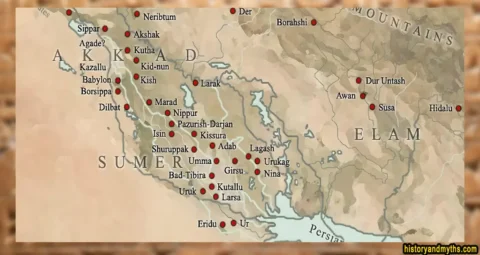
| Eridu | Alulim, Alalngar | 28,800–36,000 years | Divine origin of kingship |
| Bad-tibira | En-men-lu-ana, En-men-gal-ana, Dumuzi-Sipa | 28,800–43,200 years | Economic and cultic authority |
| Larak | En-sipad-zid-ana | 28,800 years | Transitional kingship |
| Sippar | En-men-dur-ana | 21,000 years | Solar cult and divine wisdom |
| Shuruppak | Ubara-Tutu | 18,600 years | Terminal city before the Flood |
Ziusudra and Noah: Where the Flood Traditions Converge (and Diverge)
A key aspect of this discussion is the comparison between the Sumerian figure Ziusudra (known as Utnapishtim in Babylonian mythology) and the biblical and Quranic figure of Noah. This parallel has led scholars to examine both the Sumerian King List and the genealogies in the Book of Genesis.
While the Book of Genesis provides a lineage of the early patriarchs and pre-flood prophets, the Sumerian King List, discovered on ancient clay tablets, records the names of early Sumerian rulers who reigned before the flood.
The Antediluvian Kings: Cities and Reign Lengths in the King List
The following version of the Sumerian King List is based on translations by Thorkild Jacobsen and Weld-Blundell. These versions are largely similar, with only minor differences that we will highlight. Below is the full translation of the pre-flood section of the list, as translated by Jacobsen from the original Sumerian text:
It was established in Eridu.
In Eridu, Alulim became king,
And he ruled for 28,800 years.
Alalngar ruled for 36,000 years.
Two kings in total,
They ruled for 64,800 years.
Eridu then fell,
And its kingship was transferred to Bad-tibira.
In Bad-tibira, En-men-lu-ana
Ruled for 43,200 years.
En-men-gal-ana
Ruled for 28,800 years.
Dumuzi-Sipa ruled for 36,000 years.
Three kings in total,
They ruled for 108,000 years.
Bad-tibira then fell,
And its kingship was transferred to Larak.
In Larak, En-sipad-zid-ana
Ruled for 28,800 years.
One king in total,
He ruled for 28,800 years.
Larak then fell,
And its kingship was transferred to Sippar (Zimbir).
In Sippar, En-men-dur-ana
Became king and ruled for 21,000 years.
One king in total,
He ruled for 21,000 years.
Sippar then fell,
And its kingship was transferred to Shuruppak.
In Shuruppak, Ubara-Tutu
Became king and ruled for 18,600 years.
One king in total,
He ruled for 18,600 years.
In total, there were five cities
Ruled by eight kings
Who collectively ruled for 241,200 years.
Then, the flood swept over the land.
After the flood had passed,
Kingship once again descended from heaven,
And it was established in Kish.
In Kish, Jushur
Became king,
And he ruled for 1,200 years.”
Why the Reigns Last “Thousands of Years”: Numbers, Symbols, and Scribal Logic
What stands out in the pre-flood section of the Sumerian King List is the extraordinarily long reign durations assigned to each king. This raises an important question: could the term “year” in these records actually represent a shorter time unit, such as a day? If so, dividing the reign periods by 365 days (or 360, based on the Sumerian calendar) would produce more realistic lifespans.
Moreover, the Sumerian numeral system used the “sar” unit, which consistently equated to 3,600. Some scholars argue that this unit does not necessarily indicate literal years but might symbolize a different measurement of time.
The list does not mention specific events during the reign of each king, except for the descent of kingship in the first city (Eridu) and the occurrence of the flood during the era of the last city (Shuruppak). To clarify the content of the previous tablet, we have presented it in the following simplified table:
The primary Weld-Blundell version lists nine kings ruling over five cities before the flood.
| # | King’s Name | Reign Duration (Years) | His City |
|---|---|---|---|
| 1 | Alulim | 28.800 | Eridu |
| 2 | Alalngar | 36.000 | Eridu |
| 3 | En-men-lu-ana | 43.200 | Bad-tibira |
| 4 | En-men-gal-ana | 28.800 | Bad-tibira |
| 5 | Dumuzi-Sipa | 36.000 | Bad-tibira |
| 6 | En-sipad-zid-ana | 28.800 | Larak |
| 7 | En-men-dur-ana | 21.000 | Sippar |
| 8 | Ubara-Tutu | 18.600 | Shuruppak |
Historical Insight
The pre-Flood section of the Sumerian King List is not intended as literal history.
It functions as a sacred framework that explains the divine origin of kingship,
legitimizes later dynasties, and marks the Flood as a cosmological rupture between mythic time and historical time.
The Weld-Blundell Prism: The Most Complete King List Witness
A second version of the Sumerian King List, recorded on a separate clay tablet and translated by Weld-Blundell, presents some variations in both the names and reign durations of pre-flood rulers. These differences include:
- The primary Weld-Blundell version lists nine kings ruling over five cities before the flood.
| # | King’s Name | Reign Duration (Years) | His City |
|---|---|---|---|
| 1 | Aboulim | 67.200 | Eridu |
| 2 | Alagar | 72.000 | Eridu |
| 3 | Enmen-lu-ana | 21.600 | Bad-tibira |
| 4 | Enmen-gal-ana | Bad-tibira | |
| 5 | Doumeuzi | Bad-tibira | |
| 6 | Ensip-zi-ana | 36.000 | Larak |
| 7 | Enmen-dur-ana | 72.000 | Sippar |
| 8 | Ubara-Tu-tu | 28.800 | Shuruppak |
| 9 | Zi-u-sud-ra | 36.000 | Shuruppak |
- An extended version of the list expands this to twelve kings and seven cities.
- Unique additions include two rulers from Larsa:
- Ki-du-un-nu, who ruled for 72,000 years.
- A-lim-mamu, who ruled for 21,000 years.
| # | King’s Name | Reign Duration (Years) | His City |
|---|---|---|---|
| 1 | Aboulim | 67.200 | Eridu |
| 2 | Alagar | 72.000 | Eridu |
| 3 | Ki-du-un-nu | 72.000 | Larsa |
| 4 | A-lim-mamu | 21.000 | Larsa |
| 5 | Enmen-lu-ana | 21.600 | Bad-tibira |
| 6 | Enmen-gal-ana | Bad-tibira | |
| 7 | Doumeuzi | Bad-tibira | |
| 8 | Ensip-zi-ana | 36.000 | Larak |
| 9 | Enmen-dur-ana | 72.000 | Sippar |
| 10 | Ubara-Tu-tu | Shuruppak | |
| 11 | su-kar-lam | sukarlam | |
| 12 | Zi-u-sud-ra | Numkurru |
Variations in City Names and Ruler Identifications
Certain names and locations in these lists exhibit variations across different sources:
- En-men-dur-ana is sometimes recorded as En-men-dur-Enki, possibly referencing the ziggurat of Nippur.
- Shuruppak is sometimes spelled as Su-kar-lam or Ru-lam-kur, leading some scholars to identify it with the ancient city of Numkurru.
- Ubara-Tutu, listed as the final pre-flood king, is sometimes described as the father of Ziusudra, though the sources do not explicitly name him as a king.
Continue Reading
How Historians Read the King List—Legitimation, Memory, and Myth
The existence of multiple versions of the Sumerian King List suggests that the text underwent edits and additions over time. Scholars believe that most surviving copies were compiled no earlier than the Third Dynasty of Ur (circa 2112–2004 BCE), while the earliest versions may have originated in Uruk during the reign of Utu-hengal.
These lists provide a fascinating glimpse into how the Sumerians viewed their history, blending mythology with recorded events and reinforcing the divine legitimacy of kingship. While modern historians approach the exaggerated reigns with skepticism, the King List remains a vital document for understanding Sumerian civilization and its perception of time and rulership.
Key Takeaways
- The Sumerian King List is a political and theological document, not a neutral chronicle.
- Antediluvian reign lengths reflect symbolic time and scribal number systems.
- The Flood functions as a narrative boundary, not a dated historical event.
- Multiple manuscript versions show editorial development over centuries.
- Later dynasties used the list to claim divine continuity and legitimacy.
Frequently Asked Questions
Is the Sumerian King List a historical document?
It is a historical source, but not a factual chronicle; it combines myth, ideology, and political memory.
Did the pre-Flood kings really rule for thousands of years?
No. These reigns reflect symbolic time units and scribal numerical conventions.
Was the Flood global according to the King List?
The text implies a regional Mesopotamian catastrophe, not a worldwide flood.
Who was Ziusudra?
Ziusudra is the Sumerian flood hero, later known as Utnapishtim in Akkadian tradition.
Why does kingship “descend from heaven”?
This phrase legitimizes royal authority by grounding it in divine will.
Which manuscript is most complete?
The Weld-Blundell Prism is the most complete surviving version.
Sources & Rights
- Jacobsen, Thorkild. The Sumerian King List. University of Chicago Press.
- Van De Mieroop, Marc. A History of the Ancient Near East. Wiley-Blackwell.
- Glassner, Jean-Jacques. Mesopotamian Chronicles. Society of Biblical Literature.
- Black, Jeremy, and Anthony Green. Gods, Demons and Symbols of Ancient Mesopotamia. British Museum Press.
- Bottéro, Jean. Religion in Ancient Mesopotamia. University of Chicago Press.
- Kuhrt, Amélie. The Ancient Near East. Routledge.
- Oates, Joan. Babylon. Thames & Hudson.
- Liverani, Mario. The Ancient Near East: History, Society and Economy. Routledge.
- Postgate, J. Nicholas. Early Mesopotamia. Routledge.
- Pollock, Susan. Ancient Mesopotamia. Cambridge University Press.
- Langdon, Stephen Herbert. Oxford Editions of Cuneiform Texts. Oxford University Press.
- ETCSL, University of Oxford. The Sumerian King List.
- CDLI. Cuneiform Digital Library Initiative.
- Ashmolean Museum, Oxford. Weld-Blundell Prism (AN1923.444).
- Hallo, William W. The World’s Oldest Literature. Brill.
Written by H. Moses — All rights reserved © Mythology and History