Education in Ancient Mesopotamia: How Knowledge Shaped Society
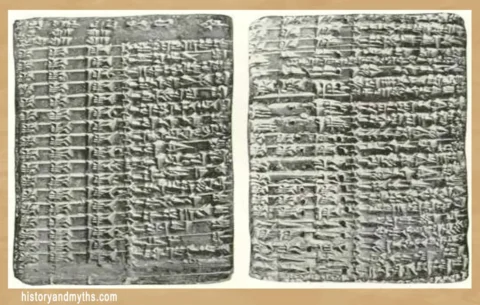
Education in ancient Mesopotamia was not limited to learning how to write. It was a structured system for producing administrators, physicians, priests, engineers, and legal experts who sustained the world’s earliest urban societies. Knowledge functioned as an institutional resource, carefully transmitted, regulated, and preserved within temples, palaces, and specialized schools.
From early childhood training to advanced scribal instruction, learning followed defined pathways that determined social mobility and political influence. Literacy, mathematics, medicine, and astronomy were essential tools of governance, economic management, and religious authority. Access to education therefore shaped who could exercise power and who remained dependent.
This article examines how knowledge was organized, taught, and controlled in Mesopotamian civilization, exploring its institutions, disciplines, and social boundaries. By analyzing educational practices and intellectual traditions, it reveals how mastery of learning became one of the strongest foundations of early state power.
The Foundations of Organized Learning in Ancient Mesopotamia
Learning in Mesopotamia developed gradually from informal skill transmission into structured institutional education. In early village societies, knowledge was passed within families through practical training in farming, craftwork, and household management. Children learned by observation and repetition rather than through formal instruction.
As cities expanded and administrative systems grew more complex, this informal model became insufficient. Large temples and palaces required trained personnel capable of managing records, calculations, and legal procedures. This demand led to the creation of organized learning environments where instruction followed standardized methods.
Education therefore emerged as a response to institutional necessity rather than cultural idealism. It served economic coordination, political control, and religious administration. By transforming experience into codified knowledge, Mesopotamian societies created one of the earliest systems of formal learning in human history.
Knowledge Before Formal Schools
Before the emergence of organized schools, most learning in Mesopotamia took place within households and professional environments. Agricultural techniques, craft skills, and trade practices were transmitted through daily participation in work rather than through abstract instruction. Mastery developed through long-term observation and supervised practice.
Parents, senior craftsmen, and experienced merchants acted as informal instructors. They taught practical knowledge such as irrigation maintenance, tool production, price calculation, and resource management. This early training created competent workers but offered limited theoretical understanding.
Because this system depended on personal relationships, access to advanced knowledge remained uneven. Families with institutional connections provided better learning opportunities than independent households. As economic and administrative demands increased, this informal model proved insufficient, paving the way for formal education structures.
From Informal Teaching to Institutional Education
The transition from household training to institutional education was driven by administrative expansion and economic complexity. As temples and palaces accumulated land, labor, and resources, they required reliable systems for training officials who could manage records, taxation, and legal documentation.
Specialized learning spaces emerged within religious and governmental complexes. Instruction became standardized, with students following fixed exercises in writing, accounting, and legal formulas. Progress was monitored, and errors were systematically corrected, creating consistent professional competence.
Institutional education also strengthened state control over knowledge. By centralizing training within official structures, authorities regulated who could access advanced learning and professional advancement. Education thus became a tool of governance, reinforcing bureaucratic stability and political authority.
Scribal Training and Administrative Education
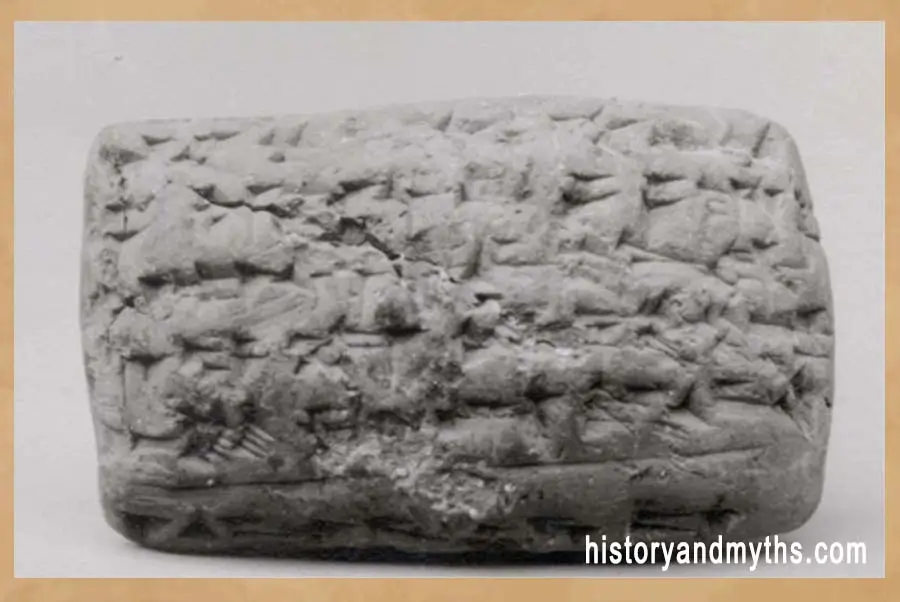
Scribes formed the intellectual core of Mesopotamian administration. Their training was designed to produce specialists capable of managing taxation, property records, legal contracts, and state correspondence. Unlike informal learners, scribal students followed long and demanding educational programs.
Training began with mastering basic signs and numerical systems before progressing to complex texts and legal formulas. Students practiced copying model tablets, memorizing technical terminology, and solving administrative problems. Accuracy and discipline were essential, as minor errors could disrupt economic and legal processes.
Graduates entered temple and palace bureaucracies where their skills granted access to stable employment and political influence. Scribal education therefore functioned as a gateway to elite status, transforming literacy into institutional power.
Professional Formation of Scribes
Scribal training followed a structured progression designed to eliminate inconsistency and personal improvisation. Students first mastered basic sign lists and numerical tables before moving to legal documents, economic accounts, and official correspondence. Each stage was evaluated through repeated copying and correction.
Instruction emphasized precision, endurance, and obedience. Mistakes were recorded, exercises were rewritten, and weak performance delayed advancement. This system ensured that graduates could operate within complex administrative environments without supervision.
Advanced students learned specialized skills such as drafting contracts, calculating wages, and managing inventories. By the end of training, scribes functioned as standardized professionals whose competence supported state administration and institutional stability.
Curricula and Technical Competence
Scribal curricula were designed to produce multifunctional administrators rather than narrow specialists. Students studied writing systems, mathematical operations, legal terminology, and standardized document formats. This integrated approach allowed scribes to handle diverse administrative tasks.
Training materials included lexical lists, model contracts, accounting records, and correspondence templates. These texts familiarized students with institutional language and professional conventions. Repeated exposure created technical fluency and reduced individual variation.
Beyond memorization, students learned applied problem-solving. They practiced calculating wages, measuring land, recording transactions, and verifying inventories. Technical competence therefore combined theoretical knowledge with operational efficiency, ensuring bureaucratic reliability.
| Field of Knowledge | Main Institutions | Training Method | Primary Function |
|---|---|---|---|
| Scribal Education | Temples, Palaces | Copying, Memorization | Administration, Law |
| Mathematics | Schools, Archives | Problem Solving, Tables | Accounting, Construction |
| Medical Training | Temples, Clinics | Apprenticeship, Texts | Diagnosis, Treatment |
| Astronomy | Temples | Observation, Calculation | Calendars, Omens |
| Engineering | State Projects | Supervised Practice | Irrigation, Architecture |
Mathematics, Measurement, and Applied Knowledge
Mathematical knowledge in Mesopotamia developed primarily to serve administrative, commercial, and engineering needs. Numerical systems were designed for calculating taxes, wages, land areas, and commodity exchanges. Mathematics functioned as a practical tool rather than an abstract discipline.
Scribes learned standardized units of weight, volume, and length that enabled consistent measurement across regions. These systems supported fair distribution of rations, accurate pricing, and reliable construction planning. Without shared standards, large-scale economic coordination would have been impossible.
Applied mathematics was also essential in irrigation management and architecture. Canal dimensions, field boundaries, and building layouts required precise calculations. Through repeated training and institutional supervision, numerical competence became a core component of professional expertise and state administration.
Numerical Systems and Accounting
Mesopotamian accounting relied on highly structured numerical systems adapted to administrative and commercial requirements. The sexagesimal base-60 system allowed flexible calculation of fractions, wages, and commodity ratios, making it suitable for complex economic management.
Scribes were trained to record incoming and outgoing goods through standardized tables and balance statements. These records documented grain storage, livestock transfers, labor rations, and silver payments. Accuracy was essential, as accounting errors could disrupt redistribution networks.
Regular audits and cross-checking procedures reduced fraud and mismanagement. Tablets were archived and reviewed by supervisors, creating institutional accountability. Through systematic training, numerical recording became a central mechanism for maintaining economic stability.
Geometry and Land Management
Geometric knowledge in Mesopotamia developed from the practical need to measure agricultural land and regulate property boundaries. Flooding, canal maintenance, and seasonal cultivation frequently altered field limits, requiring accurate recalculation and documentation.
Scribes and surveyors used standardized measurement units to calculate field areas, irrigation access, and tax obligations. These calculations determined rent, labor duties, and crop quotas. Precision was therefore essential for maintaining economic fairness and administrative control.
Land measurement also supported state planning. Authorities relied on survey data to allocate resources, organize agricultural labor, and resolve boundary disputes. Through systematic training, geometric techniques became integral to territorial management and institutional governance.
Practical Mathematics in Trade and Construction
Mathematical training in Mesopotamia extended beyond administration into commercial exchange and large-scale building projects. Merchants relied on numerical skills to calculate prices, interest rates, transport costs, and profit shares in trading partnerships.
Construction supervisors used applied mathematics to estimate material quantities, labor requirements, and project timelines. Accurate calculations reduced waste and ensured that public works such as temples, walls, and canals met institutional standards.
Standardized formulas and reference tables supported consistency across different regions and projects. By integrating numerical competence into professional practice, Mesopotamian societies maintained economic reliability and infrastructural stability.
Medical, Scientific, and Technical Learning
Medical and technical knowledge in Mesopotamia was transmitted through specialized training and preserved in written manuals. Healers, engineers, and technical specialists developed their skills within institutional environments where experience and documentation reinforced each other.
Medical education combined empirical observation with ritual practices. Students learned diagnostic methods, symptom classification, and treatment procedures through supervised practice and reference texts. Technical instruction followed similar patterns, emphasizing accuracy, repetition, and institutional standards.
Scientific and technical learning was therefore embedded in professional routines rather than separated into theoretical disciplines. Knowledge developed through continuous interaction between written tradition and practical application, ensuring reliability and long-term transmission.
Medical Training and Diagnosis
Medical practitioners in Mesopotamia were trained through direct mentorship and systematic study of diagnostic texts. Students learned to recognize symptoms, classify diseases, and distinguish between physical and supernatural causes of illness.
Instruction emphasized case-based learning. Trainees studied recorded treatments, observed experienced healers, and practiced under supervision. Successful diagnosis depended on careful observation, standardized terminology, and adherence to established procedures.
Medical errors carried legal and social consequences, reinforcing professional discipline. Practitioners who failed to follow accepted methods risked financial penalties or loss of reputation. This regulatory environment encouraged accuracy and continuity in medical practice.
Pharmacology and Herbal Knowledge
Mesopotamian pharmacological knowledge developed through systematic experimentation and long-term observation. Healers compiled lists of plants, minerals, and animal substances used in therapeutic preparations. These materials were classified according to their perceived effects and methods of application.
Students learned precise dosage calculations, preparation techniques, and storage procedures. Remedies were recorded on tablets that specified ingredients, proportions, and treatment sequences. Consistency was essential, as improper mixtures could worsen illness.
Pharmacological training also involved field knowledge. Practitioners identified medicinal plants in natural environments and learned seasonal harvesting practices. This integration of textual instruction and empirical experience ensured the reliability of therapeutic knowledge.
Engineering and Technical Skills
Engineering knowledge in Mesopotamia focused on infrastructure essential for urban survival, including irrigation systems, flood defenses, roads, and monumental architecture. Technical specialists were trained through apprenticeship and supervised project work.
Students learned surveying methods, material selection, and construction sequencing. Instruction emphasized durability, water resistance, and structural balance. Written manuals and project records preserved technical standards across generations.
Engineers operated within institutional frameworks that coordinated labor and resources. Their expertise enabled large-scale projects that reinforced political authority and economic stability. Technical training therefore functioned as a cornerstone of state capacity.
Astronomy, Divination, and Sacred Knowledge
Astronomical and divinatory knowledge in Mesopotamia was closely linked to religious authority and political decision-making. Priests and scholars observed celestial movements to regulate calendars, predict seasonal changes, and interpret divine intentions.
Training in this field combined mathematical calculation with ritual interpretation. Students learned to record planetary cycles, lunar phases, and eclipses, then connect these phenomena to omens and political forecasts. Accuracy in observation was essential, as errors could undermine religious credibility.
Sacred knowledge remained highly restricted. By limiting access to astronomical and divinatory training, temple institutions preserved their monopoly over spiritual interpretation. This control reinforced both religious influence and state legitimacy.
Celestial Observation Systems
Mesopotamian scholars developed systematic methods for tracking celestial bodies in order to regulate time and predict environmental cycles. Observations of the sun, moon, and major planets were recorded over long periods, creating reliable astronomical datasets.
Students were trained to recognize recurring patterns and calculate future movements. They used standardized tables to forecast eclipses, seasonal shifts, and planetary positions. These calculations supported agricultural planning and ritual scheduling.
Observational accuracy depended on disciplined record-keeping and institutional supervision. Archives preserved astronomical data across generations, enabling continuous refinement of predictive techniques and reinforcing scholarly authority.
Astrology and Political Decision-Making
Astrological interpretation played a central role in Mesopotamian governance. Rulers consulted trained scholars to assess omens derived from planetary movements, eclipses, and unusual celestial events before making major political or military decisions.
Students of astrology learned complex interpretive systems that linked specific astronomical phenomena to predicted outcomes such as rebellion, famine, or royal success. These associations were preserved in extensive omen compendia and memorized through continuous study.
Because political stability depended partly on these interpretations, astrologers operated under strict institutional oversight. Their expertise reinforced royal authority by presenting political choices as divinely sanctioned, transforming celestial knowledge into a tool of state control.
Priestly Control of Sacred Knowledge
Priestly institutions maintained strict control over religious and divinatory learning in Mesopotamia. Access to sacred texts, ritual formulas, and omen collections was limited to trained specialists operating within temple hierarchies.
Students advanced through graded levels of instruction, beginning with basic liturgical recitation and progressing to complex ritual interpretation. Knowledge was transmitted through memorization, supervised practice, and controlled copying of authorized texts.
By monopolizing sacred learning, priests reinforced their social authority and institutional autonomy. Control over divine interpretation allowed temples to influence political decisions, economic policy, and public behavior, making religious knowledge a central pillar of power.
How Knowledge Was Preserved in Mesopotamia
- Clay tablets were copied and archived systematically.
- Institutional libraries stored legal, medical, and scientific texts.
- Senior scholars supervised textual transmission.
- Unauthorized copying was restricted.
- Archives ensured continuity across generations.
Result: Knowledge remained stable, standardized, and politically controlled.
© historyandmyths.com — Educational Use
Institutions of Knowledge Production
Knowledge in Mesopotamia was produced and preserved within structured institutional environments rather than through independent scholarship. Temples, palaces, and administrative centers functioned as primary hubs for training, documentation, and intellectual coordination.
These institutions maintained archives, standardized curricula, and supervised specialists across multiple disciplines. Texts were copied, classified, and stored according to official protocols, ensuring continuity and reliability.
By centralizing intellectual activity, authorities controlled both the content and circulation of knowledge. Institutional supervision minimized deviation, protected administrative secrecy, and reinforced hierarchical access to learning.
Temples as Learning Centers
Temples served as major centers for education, archival storage, and professional training in Mesopotamia. Priestly administrators supervised the instruction of scribes, healers, and ritual specialists within temple complexes.
Students trained using temple archives that contained legal records, economic accounts, medical texts, and omen collections. Access to these materials was regulated, ensuring that learning followed institutional priorities.
Temple-based education emphasized discipline, loyalty, and doctrinal consistency. By shaping both technical and religious expertise, temples functioned as powerful engines of intellectual reproduction and social control.
Palaces and Bureaucratic Knowledge
Palaces functioned as administrative training centers where knowledge was shaped to serve state management and political authority. Unlike temple education, palace instruction focused primarily on taxation, labor organization, diplomacy, and legal enforcement.
Students and junior officials were trained to manage archives, compile reports, and coordinate large-scale economic activities. They learned standardized procedures for census registration, resource distribution, and correspondence with regional authorities.
Bureaucratic knowledge within palaces emphasized efficiency, secrecy, and loyalty. By controlling administrative training, royal institutions ensured that key information remained centralized, reinforcing the ruler’s capacity to govern complex territories.
Archives and Libraries
Archives and libraries in Mesopotamia functioned as institutional memory systems that preserved administrative, legal, and scholarly knowledge. Clay tablets were systematically classified, labeled, and stored according to subject, date, and institutional function.
Students and specialists were trained to retrieve, copy, and update archival materials. This process ensured continuity in taxation records, legal precedents, medical treatments, and astronomical observations. Regular copying also prevented information loss through physical deterioration.
Access to archives was tightly controlled. Only authorized personnel could consult sensitive documents, reinforcing information security and bureaucratic hierarchy. Through these practices, archives sustained long-term governance and intellectual stability.
Continue Reading
Access to Education and Social Inequality
Access to formal education in Mesopotamia was uneven and strongly shaped by social hierarchy. Institutional training remained largely restricted to families connected to temples, palaces, and administrative offices. These networks controlled admission to advanced learning.
Elite households invested in long-term education for their children, securing future positions in bureaucracy and religious institutions. Literacy and technical competence therefore became inherited advantages rather than universally accessible skills.
Lower social groups relied mainly on informal training and manual experience. Farmers, laborers, and small craftsmen rarely gained access to scribal or scholarly education. Women and enslaved individuals faced additional barriers that limited their participation in institutional learning.
Educational inequality reinforced broader social stratification. By concentrating knowledge within narrow circles, Mesopotamian society preserved elite dominance and restricted upward mobility.
Knowledge as Political and Economic Power
In Mesopotamia, specialized knowledge functioned as a central instrument of political authority and economic control. Administrative expertise enabled rulers to organize taxation, manage labor, and regulate agricultural production across large territories.
Scribes and trained officials controlled access to legal procedures, contracts, and state archives. This monopoly allowed institutions to shape property rights, debt relations, and commercial transactions in their favor. Economic advantage was therefore closely tied to intellectual competence.
Legal knowledge reinforced political dominance. Officials who mastered judicial formulas and documentation procedures mediated disputes and enforced royal policies. Their authority depended not on physical force but on institutional legitimacy grounded in expertise.
Knowledge also influenced diplomatic and military strategy. Reports, forecasts, and logistical calculations guided decision-making at the highest levels of government. Through these mechanisms, education transformed intellectual skill into practical power.
Limits and Vulnerabilities of Mesopotamian Knowledge Systems
Despite their sophistication, Mesopotamian knowledge systems remained structurally fragile. They depended heavily on centralized institutions, trained specialists, and continuous documentation. Disruptions to any of these elements threatened intellectual continuity.
Wars, political instability, and regime changes frequently damaged archives and educational centers. The destruction of temples and palaces led to the loss of accumulated records, technical manuals, and scholarly traditions.
Knowledge transmission also relied on narrow professional lineages. When trained specialists disappeared through migration, disease, or conflict, entire fields of expertise could decline rapidly. Informal learning networks lacked the capacity to replace institutional systems.
Material limitations further weakened preservation. Clay tablets were durable but vulnerable to fire, flood, and neglect. Without sustained administrative support, libraries deteriorated and intellectual capital eroded.
These vulnerabilities exposed the dependence of early knowledge systems on political stability and institutional maintenance.
The Legacy of Mesopotamian Learning Traditions
Mesopotamian systems of education and knowledge transmission established durable models for bureaucratic training and scholarly specialization. Later civilizations in the Near East inherited administrative techniques, mathematical methods, medical practices, and archival procedures developed in Mesopotamia.
Assyrian and Babylonian scholars expanded these traditions by standardizing curricula and preserving large scholarly collections. Persian administrations adopted Mesopotamian record-keeping and educational frameworks to manage imperial territories efficiently.
Beyond institutional influence, Mesopotamian learning shaped long-term intellectual culture. The integration of practical skills, written documentation, and centralized training became a defining feature of complex societies.
Modern systems of professional education, public administration, and technical instruction still reflect structural principles first articulated in Mesopotamia. In this sense, early Mesopotamian scholars helped define how knowledge functions within organized states.
Key Takeaways
- Education served administrative and political needs.
- Scribal training formed the backbone of governance.
- Mathematics and medicine were applied disciplines.
- Access to knowledge was socially restricted.
- Institutions controlled learning and transmission.
- Knowledge functioned as a form of power.
Frequently Asked Questions
Did Mesopotamians have formal schools?
Yes. Scribal schools operated within temples and palaces to train administrators.
Who could receive advanced education?
Mainly children of elite families connected to institutions.
What subjects were taught?
Writing, mathematics, law, medicine, astronomy, and administration.
Was education linked to social status?
Yes. Literacy and training reinforced elite dominance.
How was knowledge preserved?
Through archives, copying practices, and institutional supervision.
Did women receive formal education?
In rare cases, mainly within elite or religious contexts.
Why was knowledge politically important?
It enabled taxation, law enforcement, and state control.
Sources & Rights
- Black, Jeremy. Reading Sumerian Poetry. Oxford University Press, 1998.
- Bottéro, Jean. Mesopotamia: Writing, Reasoning, and the Gods. University of Chicago Press, 1992.
- Civil, Miguel. “Education in Ancient Mesopotamia.” Journal of Cuneiform Studies 22 (1968).
- George, Andrew. The Babylonian Gilgamesh Epic. Oxford, 2003.
- Goody, Jack. The Logic of Writing and the Organization of Society. Cambridge, 1986.
- Harris, Rivkah. Gender and Aging in Mesopotamia. Oklahoma, 2000.
- Hunger, Hermann. Astrological Reports. Vienna, 1992.
- Kramer, Samuel. History Begins at Sumer. Pennsylvania, 1981.
- Leick, Gwendolyn. Mesopotamia: The Invention of the City. Penguin, 2002.
- Liverani, Mario. Ancient Near East. Routledge, 2014.
- Nemet-Nejat, Karen. Daily Life in Ancient Mesopotamia. Greenwood, 1998.
- Oates, Joan. Babylon. Thames & Hudson, 1986.
- Postgate, Nicholas. Early Mesopotamia. Routledge, 1992.
- Robson, Eleanor. Mathematics in Ancient Iraq. Princeton, 2008.
- Roth, Martha. Law Collections from Mesopotamia. Scholars Press, 1995.
- Scurlock, JoAnn. Sourcebook for Ancient Mesopotamian Medicine. SBL, 2014.
- Snell, Daniel. Life in the Ancient Near East. Yale, 2011.
- Van De Mieroop, Marc. A History of the Ancient Near East. Wiley, 2015.
- Veldhuis, Niek. Religion, Literature, and Scholarship. Brill, 2014.
- Westenholz, Joan. Legends of the Kings of Akkade. Eisenbrauns, 1997.
Written by H. Moses — All rights reserved © Mythology and History