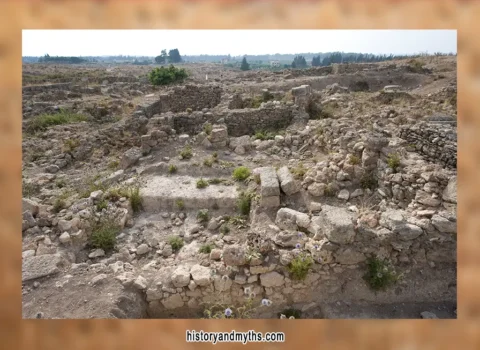
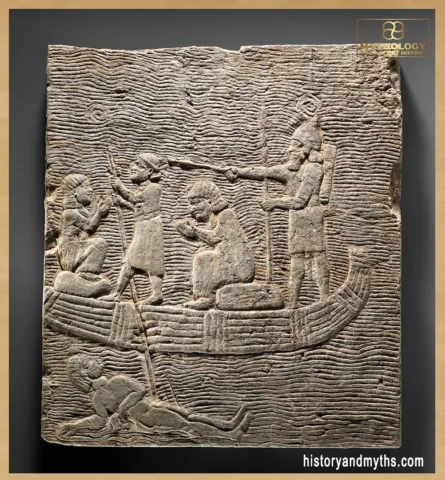
Neo-Babylonian Empire: Power, Religion, and the Fall of Babylon
The Neo-Babylonian Empire (626–539 BCE) was the last great Mesopotamian empire ruled from Babylon and the final phase of native Babylonian political power before the Persian conquest. Emerging from the collapse of Assyrian dominance, it rebuilt Babylon into the cultural, religious, and administrative center of the Near East under kings such as Nabopolassar and Nebuchadnezzar II. Far from being a simple revival of earlier traditions, the empire developed a centralized system that fused royal authority, temple institutions, and large-scale economic management. Its rapid rise, internal tensions, and sudden fall to Cyrus of Persia reveal how imperial power in the ancient world depended not only on military strength, but also on religious legitimacy, administrative control, and political stability.
What Was the Neo-Babylonian Empire?
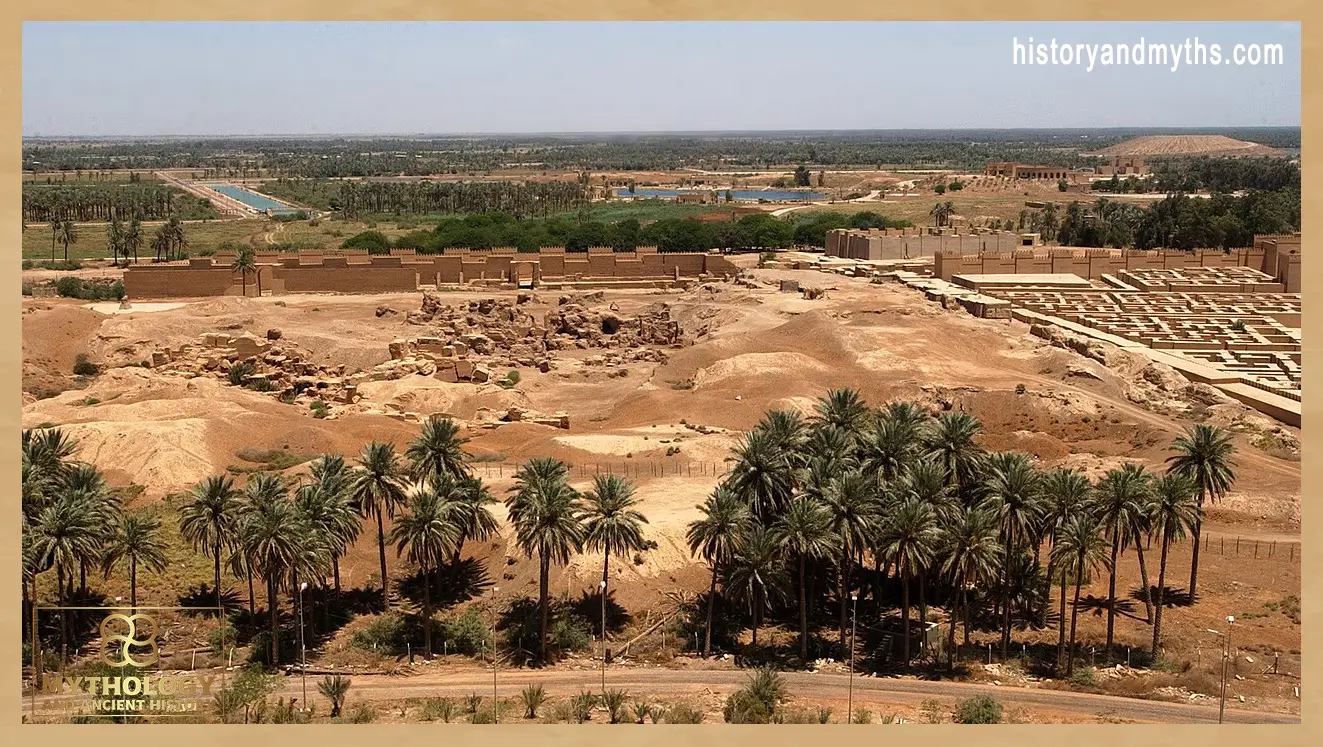
The Neo-Babylonian Empire was a Mesopotamian imperial state that ruled much of the Near East between 626 and 539 BCE. It emerged after the rapid collapse of the Assyrian Empire and represented the final period in which Babylon functioned as the political center of a major regional power. Modern historians often describe it as the “Chaldean Dynasty,” but this label reflects ethnic terminology found in earlier Assyrian sources rather than a precise administrative category used by the Babylonians themselves.
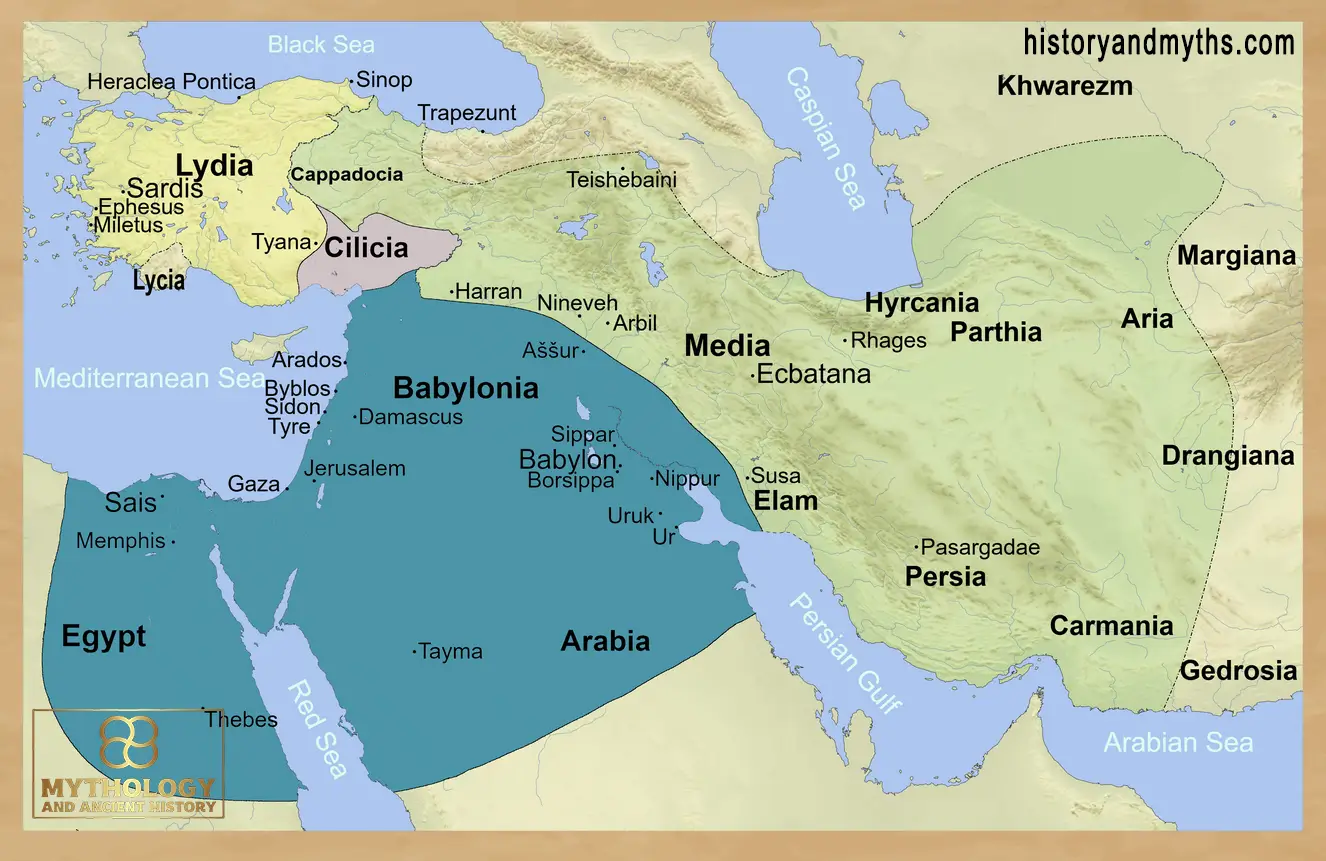
At its core, the empire was built on three pillars: military consolidation in the aftermath of Assyrian withdrawal, restoration of Babylon as a sacred capital dedicated to Marduk, and reconstruction of imperial infrastructure through taxation, forced labor, and tribute from western territories. Its territory extended from southern Mesopotamia through Syria and the Levant, reaching periodically into parts of Anatolia and confronting Egyptian influence along the Mediterranean frontier.
Chronology (626–539 BCE)
The empire began in 626 BCE when Nabopolassar, a Babylonian leader operating during Assyria’s internal instability, established control over Babylon and gradually asserted independence. In alliance with the Medes, he participated in the campaigns that destroyed major Assyrian centers, including Nineveh in 612 BCE. This marked the end of Assyrian supremacy and the beginning of Babylon’s ascendancy.
Nebuchadnezzar II (r. 605–562 BCE) transformed this fragile post-Assyrian state into a dominant imperial power. He defeated Egyptian forces at Carchemish, secured the Levant, destroyed Jerusalem in 586 BCE after repeated revolts, and invested heavily in monumental construction within Babylon itself. Under his rule, the empire reached both its greatest territorial extent and architectural ambition.
After Nebuchadnezzar’s death, rapid succession crises weakened central authority. Amel-Marduk and Neriglissar ruled briefly, followed by the child-king Labashi-Marduk. The final king, Nabonidus (r. 556–539 BCE), pursued controversial religious policies that shifted royal attention away from Babylon’s traditional cult of Marduk. His prolonged absence from the capital and emphasis on the moon god Sin generated tension with Babylon’s priestly elite. In 539 BCE, Cyrus II of Persia entered Babylon with limited resistance, ending the Neo-Babylonian Empire.
Why It Is Also Called the Chaldean Dynasty
The term “Chaldean” originates in Assyrian and earlier Mesopotamian references to tribal groups living in southern Babylonia. Nabopolassar may have had connections to these southern communities, which later classical writers interpreted as ethnic identifiers for the ruling house. However, Babylonian royal inscriptions do not frame the dynasty primarily in ethnic terms; they present kingship as divinely sanctioned through Marduk and rooted in Babylonian tradition.
For that reason, modern scholarship generally prefers “Neo-Babylonian Empire,” emphasizing political continuity with earlier Babylonian states while distinguishing it chronologically from the Old Babylonian period of Hammurabi. The label underscores that this was not merely a tribal takeover, but a reconfiguration of imperial authority in the wake of Assyria’s collapse.
| Category | Details |
|---|---|
| Period | 626–539 BCE |
| Capital | Babylon |
| Major Rulers | Nabopolassar, Nebuchadnezzar II, Nabonidus |
| Political System | Centralized monarchy with temple administration |
| Main Deity | Marduk |
| Territorial Reach | Mesopotamia, Syria, Levant |
| End of Empire | Persian conquest under Cyrus II (539 BCE) |
From Assyrian Collapse to Babylonian Revival
The rise of the Neo-Babylonian Empire cannot be understood without examining the rapid disintegration of Assyrian power at the end of the seventh century BCE. For more than two centuries, Assyria had dominated Mesopotamia through military intimidation, mass deportations, and centralized extraction of resources. By the 630s BCE, internal revolts, dynastic struggles, and overextension weakened its ability to control peripheral regions. This structural fragility created the political vacuum in which Babylonian leaders could act.
The Fall of Nineveh and the Power Vacuum
Assyria’s collapse was not a single event but a sequence of military and political failures. After the death of Ashurbanipal, competing claimants to the throne destabilized the empire. Provincial governors and subject peoples began to defect, while Babylon regained limited autonomy. Nabopolassar exploited this fragmentation by consolidating power in southern Mesopotamia and presenting himself as the restorer of Babylon’s traditional sovereignty.
The decisive moment came with the Median–Babylonian alliance. In 614 BCE, the Medes captured Assur, Assyria’s ancient religious capital. Two years later, combined forces destroyed Nineveh, the imperial center. By 609 BCE, the last Assyrian resistance collapsed at Harran. These defeats dismantled the administrative and military networks that had sustained Assyrian rule. No successor state inherited this system intact, leaving space for new forms of imperial organization.
Babylon as Successor, Not Copy
Although the Neo-Babylonian rulers inherited large parts of Assyria’s former territory, they did not replicate Assyrian imperial ideology. Assyrian kings had emphasized domination through fear, publicized violence, and constant military expansion. Babylonian rulers instead framed their authority through restoration, divine favor, and urban renewal. Royal inscriptions focus less on terror and more on rebuilding temples, reviving rituals, and honoring Marduk.
Administratively, the Babylonians retained some Assyrian practices, including provincial governance and tribute extraction, but integrated them into older Babylonian legal and religious frameworks. Temples regained central economic and political influence, functioning as landowners, employers, and credit institutions. This reintegration of religious institutions into imperial management distinguished Babylonian rule from its Assyrian predecessor.
The empire therefore functioned as both heir and reformer. It inherited Assyria’s territorial reach and military experience, yet rejected its ideological model. Instead of presenting empire as permanent conquest, Neo-Babylonian kings presented it as the divinely approved restoration of cosmic and political order centered on Babylon. This ideological shift would later influence how Persian rulers justified their own dominance after 539 BCE.
Imperial Power Structure and Administration
Neo-Babylonian rule rested on a highly centralized monarchy supported by provincial officials and powerful temple institutions. The king stood at the apex of authority, combining military command, judicial oversight, and religious responsibility. Royal inscriptions present him not merely as a conqueror but as the chosen agent of Marduk, responsible for maintaining order, justice, and cultic stability. Political legitimacy depended as much on ritual performance as on battlefield success.
Kingship and Central Authority
The king controlled foreign policy, taxation, land grants, and major construction programs. Royal estates and crown lands formed a significant economic base, managed through appointed administrators. Legal documents from the period show royal involvement in confirming property rights and overseeing contracts, reflecting a system in which authority radiated directly from the palace rather than through semi-autonomous feudal structures.
Succession, however, remained vulnerable. After Nebuchadnezzar II, rapid turnover at the top revealed how dependent the system was on a stable ruler. The absence of institutionalized succession mechanisms contributed to political fragility in the final decades.
Provincial Governance
Territories outside the Babylonian heartland were administered through appointed governors. These officials supervised tax collection, military levies, and local order. In regions such as Syria and the Levant, Babylon relied on a mixture of direct oversight and controlled local elites. Revolts were met with deportations and redistribution of populations, a strategy inherited from Assyria but implemented with less emphasis on publicized brutality.
Administrative texts indicate structured record-keeping and economic monitoring. Grain deliveries, silver payments, and labor obligations were documented through cuneiform tablets, demonstrating bureaucratic continuity with earlier Mesopotamian practice.
Temples as Economic and Political Institutions
Temples were not symbolic appendages; they were central administrative actors. Major sanctuaries, especially the Esagila of Marduk in Babylon, controlled extensive landholdings, workshops, and labor forces. Priests managed agricultural production, loans, and redistribution networks. The collaboration between palace and temple formed the backbone of imperial stability.
Tension arose when this balance was disturbed. Nabonidus’ religious policies, which elevated the moon god Sin and redirected royal patronage, disrupted the established alignment between crown and priesthood. The resulting strain weakened elite cohesion at a critical moment.
In practical terms, Neo-Babylonian administration functioned as a coordinated system linking palace authority, provincial oversight, and temple economies. It was efficient when aligned under a strong ruler, but structurally exposed when royal legitimacy or elite consensus faltered.
Religion and Political Legitimacy
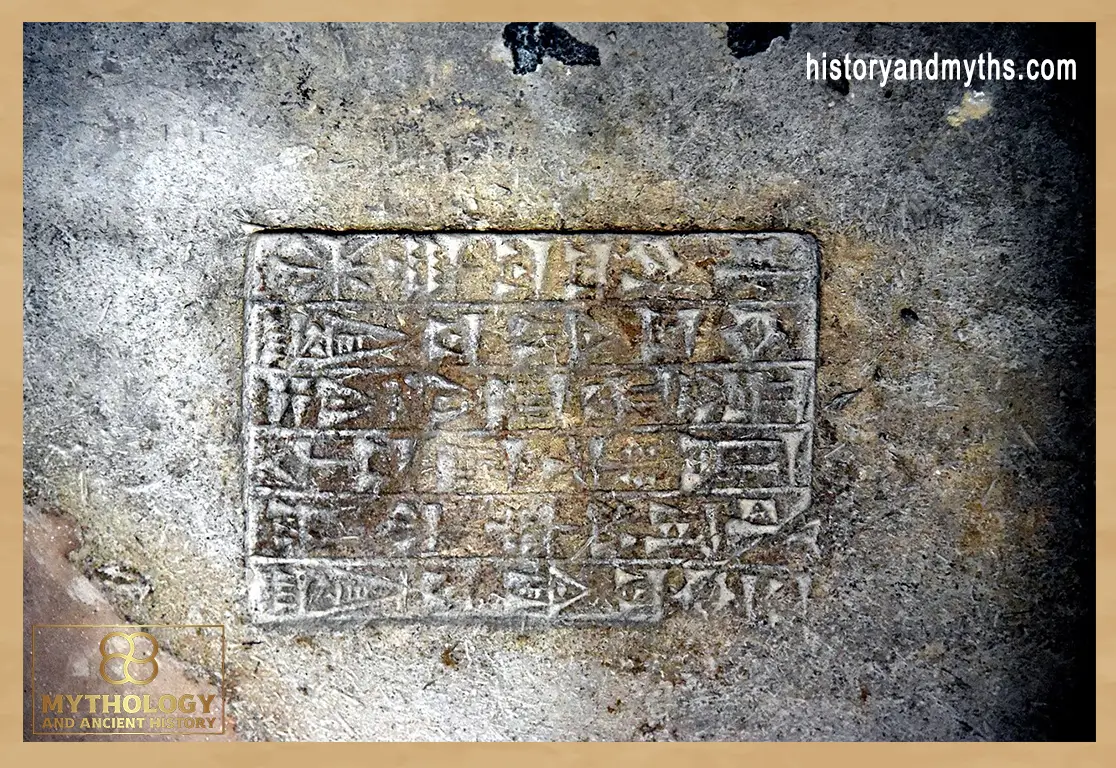
In the Neo-Babylonian Empire, political authority was inseparable from religious legitimacy. Kings did not rule solely by military power or administrative control; they ruled as representatives of the gods, above all Marduk, the patron deity of Babylon. Royal authority depended on continuous public confirmation that the ruler remained in divine favor. When this religious framework weakened, political stability followed.
Marduk and State Theology
Marduk occupied the central position in Babylonian state ideology. He was regarded as the supreme god who had granted Babylon its cosmic status and entrusted kingship to worthy rulers. Neo-Babylonian inscriptions consistently present kings as chosen by Marduk to restore order, rebuild temples, and protect justice.
This theology justified imperial expansion. Military victories were framed as evidence of divine approval, while construction projects were presented as acts of religious obedience. By rebuilding sanctuaries and sponsoring rituals, kings publicly reaffirmed their role as legitimate intermediaries between heaven and society.
The Akitu Festival and Royal Ritual
The most important political-religious event was the annual Akitu (New Year) festival. During this ceremony, the king participated in a ritual humiliation before Marduk’s statue, symbolically surrendering his authority and receiving it back through divine confirmation. Only after this process could he rule for another year.
This ritual was not symbolic theater. It functioned as a public test of legitimacy. A king who failed to perform it correctly, or who was absent, risked being perceived as illegitimate. The festival reinforced the idea that royal power was conditional, dependent on continued divine approval and proper ritual conduct.
The Nabonidus Religious Crisis
Nabonidus disrupted this system more than any previous Neo-Babylonian ruler. Instead of prioritizing Marduk’s cult, he promoted the moon god Sin, particularly at Harran and in Arabia. He spent long periods away from Babylon, leaving his son Belshazzar in charge.
This absence had direct religious consequences. The Akitu festival could not be properly performed without the king’s presence, weakening the ritual foundation of authority. At the same time, priestly elites at the Esagila temple lost influence and resources as royal patronage shifted.
Babylonian texts from the period reflect growing tension between palace and priesthood. Later Persian propaganda exploited this conflict by portraying Cyrus as a restorer of Marduk’s cult. Whether exaggerated or not, this narrative resonated because Nabonidus had already undermined the traditional religious-political balance.
Religion in the Neo-Babylonian Empire therefore functioned as a system of governance. It regulated legitimacy, unified elites, and stabilized authority. When that system fractured, the empire lost one of its main foundations of cohesion.
Imperial Power Formula in Neo-Babylonian Rule
- Royal Authority: Centralized control over land, taxation, and diplomacy.
- Temple Economy: Major sanctuaries functioned as financial institutions.
- Religious Legitimacy: Kingship depended on Marduk’s approval.
- Provincial Administration: Governors supervised tribute and security.
- Population Management: Deportation and resettlement supported production.
The stability of the empire depended on the balance between these elements. When this balance collapsed under Nabonidus, imperial cohesion rapidly weakened.
© historyandmyths.com — Educational use
Military Expansion and Foreign Policy
Neo-Babylonian power relied on a professionalized army used primarily for territorial consolidation and strategic deterrence rather than permanent conquest campaigns. Unlike Assyrian rulers, who emphasized continuous warfare, Babylonian kings pursued limited but decisive operations aimed at controlling key corridors linking Mesopotamia with the Mediterranean.
Conquest of the Levant
The western provinces were the empire’s main strategic priority. Control of Syria and Palestine secured trade routes, tax revenues, and access to Mediterranean ports. After defeating Egyptian forces at Carchemish in 605 BCE, Nebuchadnezzar II eliminated Egyptian influence in the region and imposed Babylonian authority over former Assyrian client states.
Local rulers were allowed limited autonomy as long as tribute was delivered and loyalty maintained. Repeated revolts, however, led to harsher intervention. Babylonian policy combined diplomacy, military pressure, and selective repression to maintain dominance without constant occupation.
The Destruction of Jerusalem (586 BCE)
Judah became a focal point of Babylonian intervention due to its strategic position and unstable leadership. After multiple rebellions supported by Egypt, Nebuchadnezzar launched a final campaign against Jerusalem. In 586 BCE, the city was captured, its temple destroyed, and a significant portion of its population deported to Babylonia.
This action served both punitive and administrative purposes. Deportation removed rebellious elites while supplying skilled labor to the imperial core. The event became central to later Jewish historical memory, but within Babylonian policy it represented a standard response to persistent defiance.
Egypt and the Western Frontier
Egypt remained Babylon’s principal rival in the west. Although Nebuchadnezzar campaigned along the Egyptian border and briefly invaded Egyptian territory, Babylon never achieved permanent control over the Nile Valley. Instead, both powers engaged in indirect competition through client states and shifting alliances.
Babylonian strategy focused on preventing Egyptian reentry into Syria rather than on outright conquest. Fortified positions, loyal governors, and rapid-response forces maintained this balance for several decades.
Overall, Neo-Babylonian foreign policy prioritized stability over expansion. Military force was applied selectively to secure economic routes and suppress rebellion. This restrained strategy preserved imperial resources but also limited Babylon’s capacity to respond rapidly when confronted by the highly mobile and ideologically flexible Persian forces in the late sixth century BCE.
Economy of an Empire
Neo-Babylonian stability depended on structured resource extraction and controlled redistribution. The empire’s economy combined crown lands, temple estates, private enterprise, and tribute from western provinces into a coordinated system centered in Babylon.
Taxation and Tribute
Provincial regions supplied grain, livestock, silver, and labor. Tribute was not symbolic; it financed military logistics, palace administration, and large-scale construction. Written contracts and ration lists from the period show standardized allocations for workers and officials, indicating bureaucratic oversight rather than ad hoc collection.
Deportations reinforced this system. Skilled artisans, administrators, and agricultural workers relocated to Babylonia increased production capacity and reduced dependence on local elites in rebellious territories.
Temple Economies
Major temples functioned as economic engines. They owned agricultural land, managed herds, issued loans, and employed laborers. Priestly administrations kept detailed records of transactions in cuneiform tablets, demonstrating continuity with long-standing Mesopotamian accounting traditions.
The cooperation between palace and temple created financial resilience. When aligned, this partnership sustained urban growth and monumental building. When strained—particularly under Nabonidus—the system’s cohesion weakened.
Trade Networks and Infrastructure
Babylon occupied a strategic position between the Persian Gulf and the Levant. Trade routes moved textiles, metals, timber, and luxury goods through imperial territory. Canal maintenance and agricultural expansion in southern Mesopotamia supported surplus production.
Unlike Assyria, which relied heavily on constant expansion, Neo-Babylonian economic policy emphasized consolidation. Revenue extraction and infrastructural investment allowed the capital to flourish without continuous large-scale warfare.
In practical terms, the empire functioned as a centralized fiscal network. Its strength lay in coordination between provincial tribute, temple wealth, and royal oversight. Its vulnerability emerged when political conflict disrupted that coordination.
Continue Reading
Society and Daily Life in Imperial Babylon
Neo-Babylonian society was highly stratified, shaped by imperial administration, temple economies, and large-scale population movements. Daily life in Babylon and other major cities reflected both long-standing Mesopotamian traditions and new realities created by empire.
Social Hierarchy
At the top stood the royal family, high officials, and senior priests who controlled land, labor, and legal authority. Beneath them were merchants, scribes, craftsmen, and skilled workers employed by temples, palaces, and private households. These groups formed the urban middle strata and played a central role in administration and trade.
The majority of the population consisted of agricultural laborers, dependent workers, and slaves. Many were attached to estates owned by temples or elite families. Legal texts show that social status affected wages, legal penalties, and access to credit, reinforcing structural inequality.
Deportees and Resettlement Policies
Population transfer remained a core imperial strategy. Communities from Syria, Judah, and other western regions were relocated to Babylonia after rebellions. These deportees were settled in organized villages or urban districts and assigned agricultural or artisanal roles.
Unlike earlier Assyrian practice, deportation under the Neo-Babylonians focused less on terror and more on economic integration. Exiles retained family structures and religious practices while contributing to imperial production. Over time, many became embedded in local economic networks.
Urban Life and Household Organization
Babylon functioned as both capital and economic hub. Its population included administrators, priests, traders, laborers, and foreigners. Residential quarters were organized around extended-family households, with domestic production, storage, and small-scale commerce integrated into daily routines.
Education centered on scribal training, which preserved administrative continuity. Literacy remained limited to specialists, but written contracts and records structured everyday transactions. Markets, workshops, and temple complexes formed interconnected spaces of economic and social interaction.
Daily life in the Neo-Babylonian Empire was therefore shaped by hierarchy, mobility, and institutional control. Social stability depended on the integration of diverse populations into palace and temple systems, reinforcing imperial authority at the level of ordinary households.
Architecture as Imperial Ideology
Monumental architecture in the Neo-Babylonian Empire functioned as a political instrument. Building projects were designed not only to serve religious or urban needs, but to materialize royal authority and communicate imperial legitimacy. The transformation of Babylon under Nebuchadnezzar II represents one of the most systematic uses of architecture as state propaganda in the ancient Near East.
The Ishtar Gate and the Processional Way
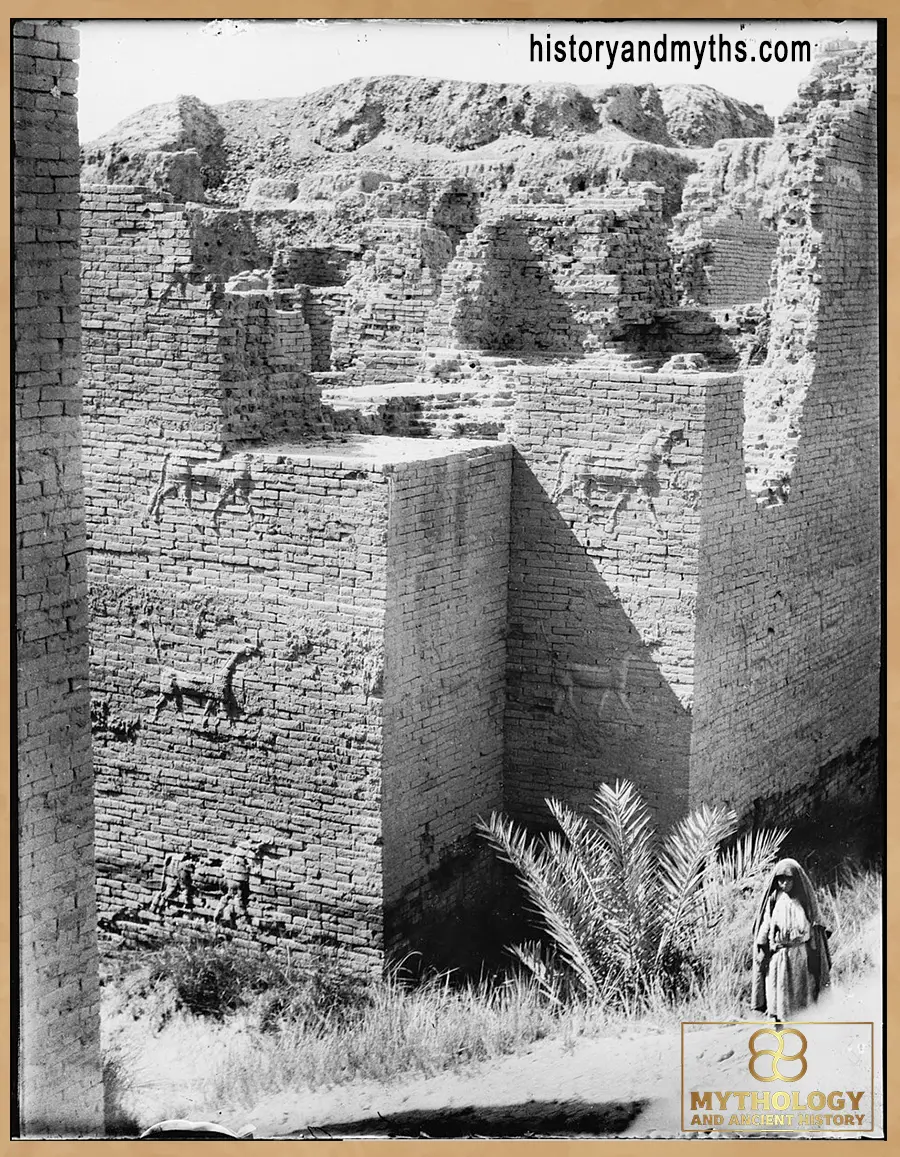
The Ishtar Gate formed the ceremonial entrance to Babylon and connected the outer city to the sacred core through the Processional Way. Decorated with glazed-brick reliefs of lions, bulls, and dragons associated with major deities, it created a controlled visual narrative of divine protection and royal power.
During religious festivals, especially the Akitu procession, this route framed the king’s movement through the city. Urban space was thus organized to stage political authority within a sacred landscape. Architecture structured how power was seen and experienced.
Palaces, Temples, and Urban Order
Royal palaces and major temples were integrated into a unified urban design. The Southern Palace, Esagila temple complex, and ziggurat Etemenanki formed a symbolic axis linking kingship, priesthood, and cosmic order. Construction inscriptions emphasize restoration and perfection, presenting the king as the maintainer of universal balance.
These projects mobilized vast labor forces and resources, reinforcing dependence on the central state. Urban planning therefore functioned simultaneously as ideological display and administrative control.
The Hanging Gardens Debate
Classical sources describe the Hanging Gardens as one of the Seven Wonders of the Ancient World, traditionally attributed to Nebuchadnezzar II. However, no contemporary Babylonian texts confirm their existence in Babylon. Some modern scholars argue that later descriptions may reflect Assyrian gardens at Nineveh instead.
Regardless of their historical location, the tradition reflects how Neo-Babylonian architecture became associated with extraordinary technological and aesthetic achievement. This reputation reinforced Babylon’s image as a divinely favored and culturally superior capital.
Architecture in the Neo-Babylonian Empire thus operated as a language of power. Through controlled space, monumental scale, and religious symbolism, rulers transformed the urban environment into a permanent statement of imperial legitimacy.
Why Did the Neo-Babylonian Empire Fall?
The collapse of the Neo-Babylonian Empire in 539 BCE was not the result of sudden military defeat alone. It followed years of internal instability, elite fragmentation, and declining ideological cohesion. Persian conquest succeeded largely because Babylon’s political and religious foundations had already weakened.
Internal Political and Institutional Weaknesses
After the death of Nebuchadnezzar II, the monarchy lost continuity. Short reigns, palace intrigues, and irregular successions reduced confidence in royal authority. Without a stable ruling figure, coordination between palace, provinces, and temples deteriorated.
Nabonidus’ prolonged absence from Babylon further undermined governance. Delegating power to Belshazzar created dual authority and administrative uncertainty. Provincial loyalty weakened, while court factions competed for influence. The empire lacked mechanisms to resolve these tensions institutionally.
Religious Alienation and Elite Disunity
Nabonidus’ religious reforms disrupted the ideological basis of kingship. By marginalizing Marduk’s cult and favoring Sin, he alienated the powerful priesthood of Babylon. This group controlled economic resources, public rituals, and ideological narratives. Their withdrawal of support weakened royal legitimacy.
Contemporary Babylonian texts reflect resentment toward the king’s policies. Later Persian sources exploited this dissatisfaction, portraying Cyrus as a restorer of religious order. Whether exaggerated or not, such claims were credible because internal cohesion had already eroded.
Persian Strategy under Cyrus II
Cyrus II pursued a calculated approach rather than open destruction. Persian forces advanced rapidly through Mesopotamia in 539 BCE, defeating Babylonian troops at Opis before entering Babylon with minimal resistance. There is no evidence of large-scale urban fighting.
Persian policy emphasized continuity. Administrative systems, local elites, and temple privileges were largely preserved. This reduced incentives for resistance and encouraged collaboration among Babylonian officials.
The Cyrus Cylinder: Liberation or Propaganda?
The Cyrus Cylinder presents the Persian conquest as a peaceful liberation sanctioned by Marduk. It accuses Nabonidus of impiety and claims that Cyrus restored proper worship and social order. Modern scholarship recognizes this text as political propaganda modeled on earlier Mesopotamian royal inscriptions.
While the cylinder does not provide an objective account, it reflects how conquest was justified to Babylonian audiences. Cyrus’ success depended not only on military victory but on his ability to appropriate Babylonian religious and political language.
The fall of the Neo-Babylonian Empire therefore resulted from structural vulnerability combined with strategic Persian intervention. When ideological legitimacy, elite consensus, and administrative unity collapsed, military defense alone proved insufficient.
Legacy of the Neo-Babylonian Empire
Although the Neo-Babylonian Empire lasted barely a century, its institutional and cultural influence extended far beyond its political collapse. Persian rulers, later Hellenistic administrations, and even Roman-era writers inherited and adapted Babylonian models of governance, religious symbolism, and urban prestige.
Influence on Persian Administration
The Achaemenid Empire did not dismantle Babylonian institutions after 539 BCE. Instead, Persian authorities preserved local administrative practices, temple economies, and legal traditions. Babylon remained a major provincial center, and its scribes continued to produce economic and legal documents in cuneiform for decades.
Persian kings adopted elements of Babylonian ideology, presenting themselves as divinely sanctioned rulers and restorers of order. Titles, building practices, and ritual patronage reveal continuity rather than rupture. This selective preservation allowed Persian rule to appear legitimate within Mesopotamian political culture.
Babylon in Biblical and Near Eastern Memory
The Neo-Babylonian period left a deep imprint on Jewish religious and historical tradition through the experience of exile. Biblical texts portray Babylon both as an instrument of divine punishment and as a symbol of imperial oppression. These narratives shaped later religious conceptions of power, suffering, and redemption.
Within Mesopotamian tradition, Babylon retained its status as a sacred and intellectual center. Scholarly schools continued to copy literary, scientific, and religious texts, ensuring the survival of Mesopotamian knowledge well into the Hellenistic period.
Long-Term Cultural and Historical Significance
Classical authors and later historians viewed Neo-Babylonian Babylon as the embodiment of ancient splendor, associating it with monumental architecture, scientific learning, and legendary wonders. This reputation, though partly mythologized, reflects the city’s genuine role as a late center of Mesopotamian civilization.
More importantly, the empire demonstrated how political authority in the ancient Near East depended on institutional balance. Its rise was made possible by cooperation between monarchy, priesthood, and administration. Its fall resulted from the breakdown of that balance. This pattern influenced later imperial systems that sought to combine military power with ideological legitimacy.
The Neo-Babylonian Empire thus represents the final expression of indigenous Mesopotamian statecraft. It transmitted centuries of administrative, religious, and cultural tradition to successor powers, ensuring that Babylonian political culture remained foundational to Near Eastern history long after Babylon itself had lost sovereignty.
Key Takeaways
- The Neo-Babylonian Empire was the last indigenous Mesopotamian imperial state.
- Its power rested on cooperation between monarchy, priesthood, and administration.
- Economic centralization financed monumental urban projects.
- Religious legitimacy was essential for political stability.
- Nabonidus’ reforms weakened elite consensus.
- Persian conquest succeeded through ideological adaptation, not force alone.
Frequently Asked Questions
When did the Neo-Babylonian Empire exist?
It ruled from 626 BCE until the Persian conquest in 539 BCE.
Why is it called the Chaldean Dynasty?
The term derives from southern Mesopotamian tribal groups, but it was not an official dynastic label.
Who was the most powerful Neo-Babylonian king?
Nebuchadnezzar II was the empire’s most influential ruler.
Why did Babylon fall to Persia?
Internal political weakness and religious conflict undermined resistance.
Did the Hanging Gardens really exist?
No contemporary Babylonian sources confirm their presence in Babylon.
How important were temples in government?
They managed land, labor, credit, and taxation.
What happened to deported populations?
They were integrated into agricultural and urban economies.
Did Persia destroy Babylon?
No, Persian rulers preserved most institutions.
Sources & Rights
- Beaulieu, Paul-Alain. The Reign of Nabonidus. Yale University Press.
- Briant, Pierre. From Cyrus to Alexander. Eisenbrauns.
- Brinkman, J. A. Political History of Post-Kassite Babylonia.
- Dalley, Stephanie. The Mystery of the Hanging Garden of Babylon.
- George, Andrew. Babylonian Topographical Texts.
- Glassner, Jean-Jacques. Mesopotamian Chronicles.
- Grayson, A. K. Assyrian and Babylonian Chronicles.
- Joannès, Francis. The Age of Empires.
- Kleber, Kristin. Temple and Palace Administration.
- Kuhrt, Amélie. The Persian Empire.
- Leick, Gwendolyn. Mesopotamia.
- Oates, Joan. Babylon.
- Radner, Karen. State Correspondence in the Neo-Babylonian Period.
- Rollinger, Robert. Herodotus and Babylon.
- Saggs, H. W. F. The Greatness That Was Babylon.
- Stolper, Matthew. Entrepreneurs and Empire.
- Van De Mieroop, Marc. A History of the Ancient Near East.
- Waters, Matt. Ancient Persia.
- Wiseman, D. J. Chronicles of Chaldean Kings.
- Zawadzki, Stefan. Garments of the Gods.
Written by H. Moses — All rights reserved © Mythology and History