City Walls in Mesopotamian Cities: Defense, Power, and Control
City walls in Mesopotamian cities were not merely defensive structures built to repel external attacks. They functioned as political boundaries, economic regulators, and instruments of urban control that shaped how cities operated and how power was exercised. Through their size, design, and placement, walls defined the physical and symbolic limits of urban authority.
In major centers such as Babylon, Nineveh, and Uruk, fortification systems combined massive mudbrick walls, fortified gates, and watchtowers into integrated defense networks. These systems regulated movement, protected institutional assets, and reinforced political hierarchy as much as they provided military security.
This article examines how Mesopotamian city walls were designed, built, and maintained, how they functioned in warfare and administration, how they controlled trade and population movement, and how archaeological evidence reveals their long-term role in shaping urban life and state authority.
Purpose of City Walls
City walls in Mesopotamian cities served multiple functions that extended beyond military defense. Their primary purpose was to protect urban populations, administrative centers, and stored resources from raids, invasions, and organized attacks. In regions exposed to frequent conflict, fortifications formed the first line of survival.
Walls also functioned as political boundaries. They defined the legal and administrative limits of the city, separating controlled urban space from surrounding rural territory. Entry and exit points were restricted to fortified gates, allowing authorities to monitor movement and regulate access.
Economic protection was another central function. Warehouses, temples, and palaces stored large quantities of grain, textiles, and metals inside fortified zones. By enclosing these assets, walls reduced theft and ensured continuity of institutional distribution systems.
In cities such as Babylon, Nineveh, and Uruk, walls also acted as instruments of social control. They concentrated populations within manageable spaces and limited uncontrolled settlement growth outside official boundaries.
Environmental protection played a secondary role. In flood-prone areas, reinforced walls and embankments helped reduce water damage and stabilize urban foundations, especially near riverbanks and canals.
Overall, Mesopotamian city walls combined security, administration, and economic regulation into a single architectural system. They were designed to defend territory, control resources, and reinforce state authority simultaneously.
| Aspect | Description |
|---|---|
| Primary Function | Defense and population control |
| Main Material | Mudbrick with stone foundations |
| Key Structures | Gates, towers, patrol corridors |
| State Role | Construction, taxation, supervision |
| Social Impact | Urban hierarchy and migration control |
Construction and Engineering Techniques
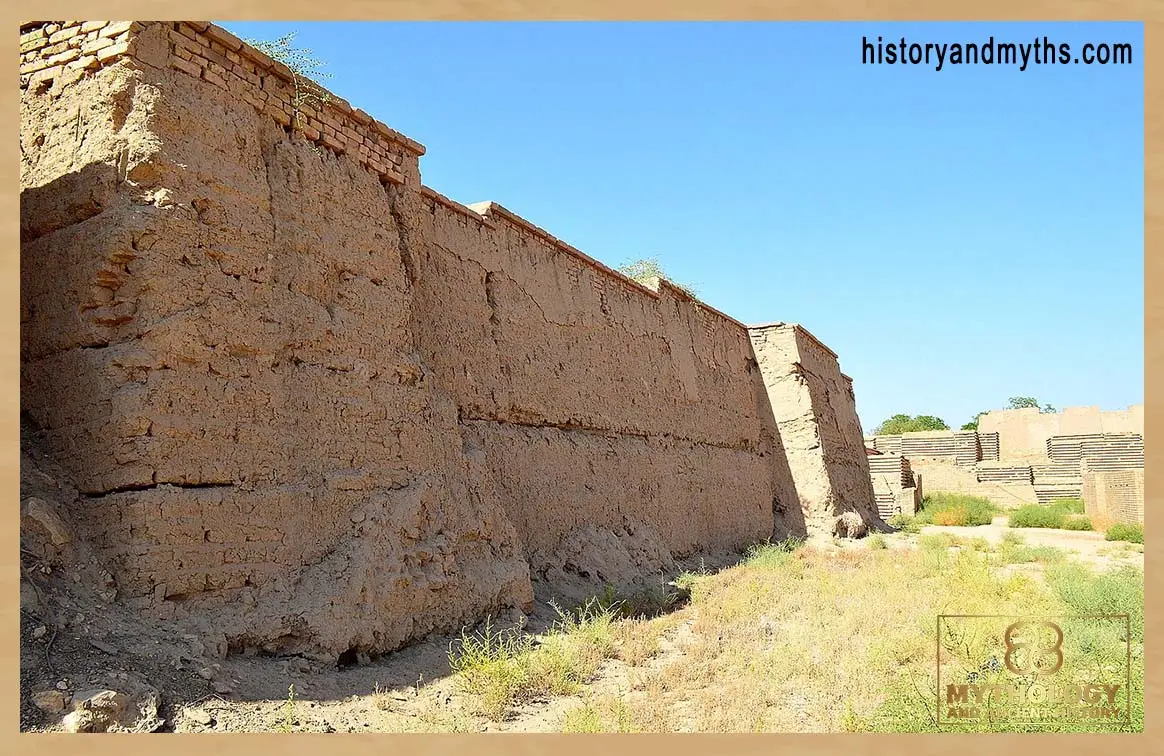
Mesopotamian city walls were built using materials adapted to local environmental conditions and available resources. The primary construction material was mudbrick, produced from river clay mixed with straw and dried in the sun. This material was inexpensive, easy to replace, and suitable for large-scale construction.
Stone was used mainly for foundations, gateways, and structural reinforcements, especially in northern regions where stone was more accessible. These bases protected walls from erosion and groundwater damage. In major fortifications, brick courses were laid in alternating patterns to increase stability.
Walls were typically constructed in multiple layers. An outer defensive face, a compacted core, and an inner retaining wall formed thick composite structures capable of absorbing impact and resisting collapse. Some cities employed double or triple wall systems separated by patrol corridors.
Towers and buttresses were integrated at regular intervals. These projections strengthened long stretches of wall and provided elevated platforms for surveillance and defense. Staircases and ramps inside the wall allowed rapid movement of guards and supplies.
Construction required centralized organization. Royal and temple administrations mobilized labor forces, controlled brick production, and maintained supply chains for materials. Inscriptions and administrative texts record large-scale building projects coordinated by state authorities.
Regular maintenance was essential. Rain, flooding, and heat rapidly degraded mudbrick structures, requiring constant resurfacing and reinforcement. Repair teams operated continuously to preserve defensive integrity.
Overall, Mesopotamian wall engineering emphasized durability through scale and maintenance rather than permanent materials. Strength depended on organization, layered design, and administrative capacity more than on stone construction alone.
Gates, Towers, and Surveillance Systems
Gates and towers formed the most critical elements of Mesopotamian defensive systems. While walls provided continuous barriers, gates controlled access and concentrated administrative and military oversight. They were therefore heavily fortified and carefully monitored.
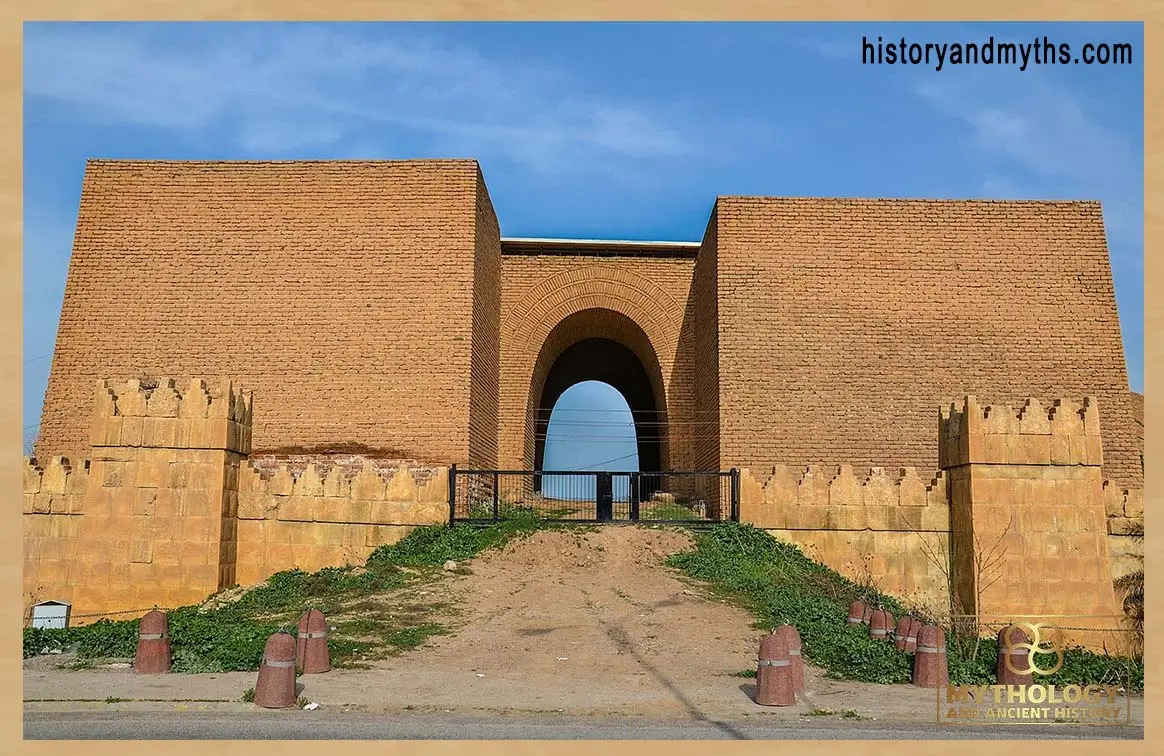
City gates were built with thick mudbrick walls, reinforced passages, and multiple entry chambers. Some gates followed bent-axis designs that forced entrants to turn sharply, slowing movement and increasing vulnerability to inspection. Wooden doors reinforced with metal fittings provided additional protection.
Towers were positioned at regular intervals along walls and near gate complexes. These elevated structures allowed guards to observe surrounding terrain, river routes, and approaching caravans or armies. From these positions, defenders could transmit warnings through visual signals, horns, or messenger networks.
Guard posts and checkpoints operated continuously at major entrances. Officials recorded arrivals, inspected cargo, collected taxes, and verified permits. This integrated security and economic regulation within a single architectural framework.
Internal stairways, ramps, and corridors connected gates and towers to wall walkways. These passages enabled rapid deployment of personnel and supplies during emergencies. In large cities such as Babylon and Nineveh, gate complexes functioned as fortified administrative hubs rather than simple entrances.
Overall, gates and towers transformed static walls into active defense networks. They combined surveillance, inspection, and military readiness into integrated control points that sustained urban security and political authority.
Military Defense and Siege Warfare
Mesopotamian city walls were designed to withstand prolonged military pressure rather than short-term attacks. Defense strategies focused on delaying enemy advances, exhausting besieging forces, and protecting essential infrastructure inside the city.
During sieges, defenders relied on elevated walls and towers to monitor enemy movement and coordinate resistance. Archers and slingers operated from parapets, while narrow gate passages limited the effectiveness of battering rams and mass assaults. Defensive positions were reinforced with wooden barriers, earth fill, and temporary platforms when needed.
Cities maintained emergency stockpiles of grain, water, and tools within fortified zones. These reserves allowed populations to survive extended blockades and reduced dependence on external supply lines. Administrative records indicate that authorities actively managed these resources during periods of conflict.
Attackers employed tactics such as surrounding walls, cutting canal access, undermining foundations, and constructing siege ramps. In response, defenders repaired breaches, flooded approaches, and strengthened vulnerable sections. Rapid maintenance was often decisive in determining siege outcomes.
Royal inscriptions from Assyrian and Babylonian rulers describe campaigns involving systematic sieges, wall destruction, and reconstruction. These texts confirm that fortifications were tested repeatedly in real warfare rather than serving symbolic purposes alone.
In cities such as Nineveh and Babylon, defensive systems evolved in response to military experience. Each major conflict prompted upgrades in wall thickness, tower density, and gate reinforcement.
Overall, Mesopotamian siege defense relied on preparation, resource management, and coordinated maintenance. Walls functioned as dynamic military systems that required constant adaptation rather than static monuments.
Mesopotamian City Walls — Key Facts
- Walls combined military and administrative functions.
- Gate complexes regulated trade and movement.
- Towers enabled long-distance surveillance.
- Maintenance was continuous and state-controlled.
- Fortifications symbolized political authority.
Walls and Political Authority
City walls in Mesopotamian cities functioned as visible expressions of political power and state control. Their scale, height, and complexity signaled the strength of ruling authorities and reinforced social hierarchies within and beyond urban boundaries.
Control over gates allowed governments to regulate population movement, taxation, and trade. Officials monitored merchants, migrants, and travelers, collecting fees and enforcing legal requirements. Through this system, walls became instruments of economic governance as much as physical defenses.
Large construction and maintenance projects were organized by royal and temple administrations. Mobilizing labor for wall building demonstrated administrative capacity and centralized authority. Royal inscriptions often emphasized wall construction as proof of legitimate rule and divine favor.
Walls also defined political identity. Enclosed urban space symbolized membership within the civic community, while areas outside remained under weaker administrative supervision. Residency within fortified zones was associated with legal protection and social privilege.
Ceremonial use reinforced political meaning. Processions, royal entries, and religious festivals passed through monumental gates, transforming defensive structures into stages of state ideology. These performances linked military strength with divine and royal legitimacy.
In cities such as Babylon and Nineveh, wall systems were repeatedly rebuilt and expanded to reflect shifts in political ambition and imperial reach.
Overall, Mesopotamian walls were tools of governance. They structured authority, regulated resources, and shaped civic identity through architecture rather than coercion alone.
Economic and Social Impact
City walls strongly influenced economic activity and social organization in Mesopotamian cities. By controlling entry points, authorities regulated the flow of goods, merchants, and labor, shaping market access and commercial competition.
Trade was concentrated at fortified gates, where taxes, inspections, and documentation took place. Merchants entering cities such as Uruk were required to pass through official checkpoints, increasing transaction costs but also providing legal protection and security. This system favored established traders with institutional connections over small-scale outsiders.
Walls affected urban property values and residential patterns. Areas near major gates and main routes became economically attractive, hosting warehouses, workshops, and elite housing. Peripheral districts near weaker sections of walls were often occupied by lower-income populations and temporary residents.
Social stratification was reinforced through spatial division. Living inside fortified zones offered access to protection, legal institutions, and food reserves during crises. Communities outside or near the margins faced greater vulnerability and weaker administrative support.
During conflicts and shortages, walls shaped survival strategies. Enclosed cities could regulate food distribution and limit population movement, reducing internal disorder. At the same time, prolonged isolation increased pressure on poorer households with limited resources.
Walls also influenced migration patterns. Rural populations sought refuge inside fortified cities during periods of instability, increasing urban density and labor supply. Authorities responded by expanding fortifications or reorganizing internal districts.
Overall, city walls structured economic opportunity and social hierarchy. They concentrated wealth and authority within protected spaces while defining clear boundaries between secure urban life and more precarious external zones.
Continue Reading
Archaeological and Textual Evidence
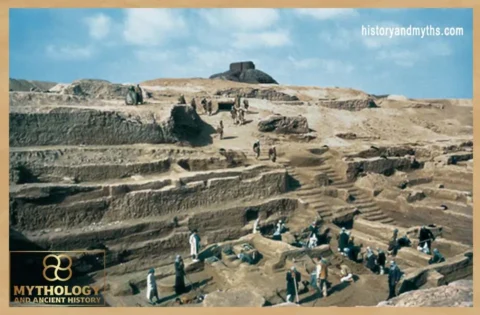
Evidence for Mesopotamian city walls comes primarily from excavation records, architectural remains, and administrative texts. Archaeological surveys in cities such as Babylon, Nineveh, and Uruk have revealed massive mudbrick foundations, reinforced gate complexes, and layered fortification systems indicating long-term construction and repair.
Excavated wall bases often show repeated rebuilding phases. New layers were added over older structures, reflecting responses to warfare, flooding, and political expansion. These stratigraphic sequences allow archaeologists to trace how defensive systems evolved across centuries.
Physical remains include towers, buttresses, patrol corridors, and drainage channels integrated into wall structures. In some areas, preserved stairways and walkways demonstrate how guards and administrators accessed defensive positions and controlled movement along fortifications.
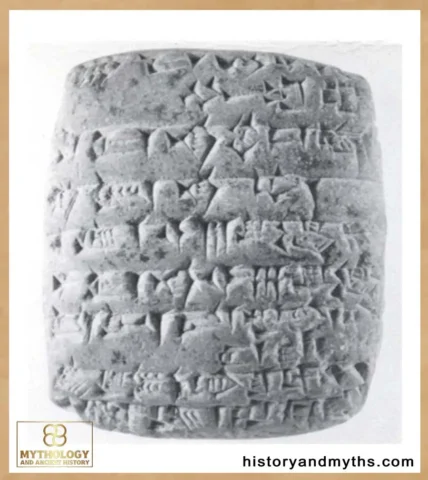
Cuneiform tablets provide complementary textual evidence. Administrative records mention wall repairs, labor assignments, material deliveries, and security responsibilities. Legal texts also refer to boundary disputes and access rights, confirming that walls were legally defined urban assets.
Royal inscriptions describe construction campaigns and siege events, emphasizing fortifications as symbols of royal power and military capability. These texts, although propagandistic, align closely with archaeological data showing large-scale building activity.
Together, architectural remains, excavation maps, and written documentation form a coherent body of evidence. They demonstrate that Mesopotamian city walls were systematically planned, continuously maintained, and deeply embedded in administrative, military, and economic systems.
Key Takeaways
- Mesopotamian walls were tools of defense and governance.
- Construction relied on layered mudbrick engineering.
- Gates functioned as security and tax checkpoints.
- Walls shaped trade, migration, and social hierarchy.
- Archaeology confirms continuous repair and expansion.
Frequently Asked Questions
Why did Mesopotamian cities build walls?
To defend against attacks, control trade, and regulate population movement.
What materials were used in city walls?
Mainly mudbrick with stone foundations and reinforcements.
Were city gates heavily protected?
Yes, gates were fortified and monitored by officials.
Did walls affect trade?
Yes, they concentrated taxation and inspection at entry points.
How were walls maintained?
Through state-organized labor and continuous repairs.
Sources & Rights
- Postgate, J. N. Early Mesopotamia: Society and Economy. Routledge, 1992.
- Van De Mieroop, Marc. A History of the Ancient Near East. Blackwell, 2016.
- Oates, Joan. Babylon. Thames & Hudson, 1986.
- Leick, Gwendolyn. Mesopotamia: The Invention of the City. Penguin, 2002.
- Liverani, Mario. The Ancient Near East. Routledge, 2014.
- Roaf, Michael. Cultural Atlas of Mesopotamia. Facts On File, 1990.
- Stone, Elizabeth C. Urban Life in Mesopotamia. Cambridge, 2013.
- Snell, Daniel C. Life in the Ancient Near East. Yale, 1997.
- Charpin, Dominique. Writing, Law, and Kingship. Chicago, 2010.
- Kuhrt, Amélie. The Ancient Near East. Routledge, 1995.
- Reade, Julian. Assyrian Sculpture. British Museum, 1998.
- Fales, Frederick Mario. Assyrian Royal Inscriptions. Rome, 1981.
- Pedersén, Olof. Archives and Libraries in the City of Assur. Uppsala, 1986.
- Pollock, Susan. Ancient Mesopotamia. Cambridge, 1999.
Written by H. Moses — All rights reserved © Mythology and History