Children and Education in Mesopotamia: How Knowledge Shaped Society
Children in Mesopotamia were not raised primarily to be educated, but to be integrated.
Education was only one part of a broader system of social formation that prepared children for obedience, labor, and institutional roles within family, workshop, temple, or palace. Formal schooling existed, but it was limited, selective, and never the main path for most children.
For the majority, learning happened outside schools—through household instruction, early work, and practical imitation. Skills were transmitted informally, shaped by social class, gender, and economic need rather than intellectual development. Childhood, therefore, functioned as a stage of conditioning rather than exploration.
This article explains how childhood and education operated as social mechanisms in Mesopotamia—who received formal instruction, who did not, what children learned through work and family life, and why education ultimately served to reproduce administration, labor systems, and state authority rather than universal literacy.
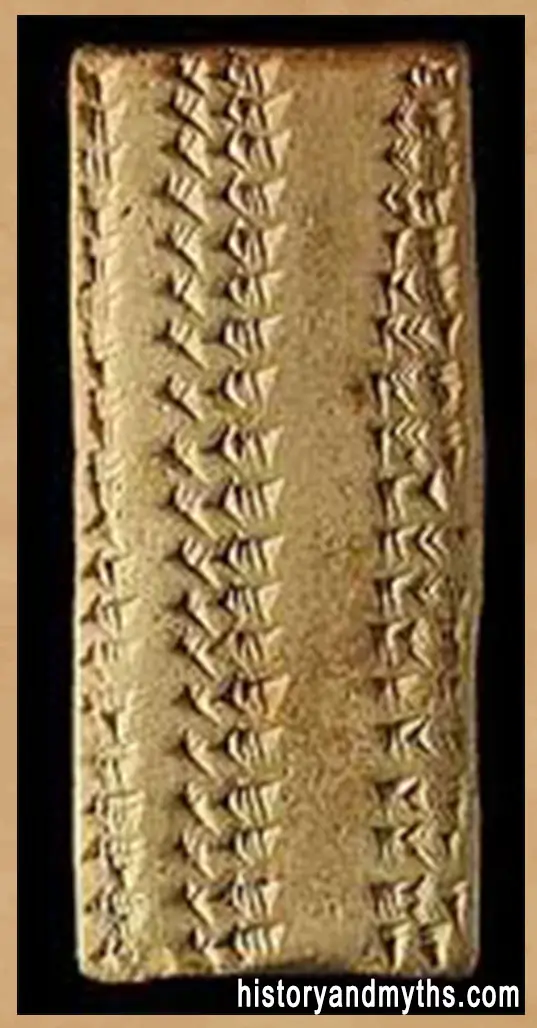
Childhood as a Social Stage in Mesopotamia
Childhood in Mesopotamia was not defined by age alone, but by social expectation and economic role. Children were viewed as future contributors to household stability and institutional continuity, not as dependents undergoing a protected phase of development.
From an early age, children were integrated into structured environments where obedience, repetition, and imitation shaped behavior. Authority—parental, workshop-based, or institutional—guided daily routines, reinforcing norms of discipline and responsibility long before formal education was considered.
This approach framed childhood as preparation. The goal was not personal growth, but social alignment: producing individuals capable of fulfilling predefined roles within family, labor, and administration. Childhood, therefore, functioned as an early stage of social conditioning rather than a distinct or separate life phase.
| Child Category | Primary Learning Context | Social Function |
|---|---|---|
| Elite Children | Scribal schools and households | Administrative continuity |
| Non-Elite Children | Family, fields, workshops | Labor and household survival |
| Boys | Formal and informal training | Public and institutional roles |
| Girls | Domestic and family-based learning | Household stability |
Who Had Access to Education
Access to formal education in Mesopotamia was limited and selective, not universal. Schooling was primarily reserved for children connected to administrative, priestly, or elite households that required literacy for institutional functions.
Most families had neither the need nor the resources to educate their children formally. Literacy was valuable only where record-keeping, contracts, and administration were central. As a result, education followed demand, not aspiration. Children outside these circles were directed toward labor, craft training, or household roles instead.
Gender further shaped access. While some girls from elite backgrounds received instruction, formal education overwhelmingly favored boys destined for scribal or administrative careers. Education, therefore, operated less as a social equalizer and more as a mechanism of controlled inclusion, reinforcing existing hierarchies rather than expanding opportunity.
The Scribal School as an Institutional Tool
Scribal schools in Mesopotamia did not exist to educate broadly; they existed to serve institutional needs. Their primary function was to produce reliable scribes capable of maintaining records, enforcing contracts, and sustaining administrative continuity.
Instruction emphasized copying, memorization, and strict adherence to established forms. This was not accidental. Standardization ensured accuracy and obedience, qualities essential for bureaucratic work. Schools trained compliance as much as competence, aligning students with institutional expectations rather than encouraging independent thought.
As an institution, the scribal school functioned as a filter. It selected a small group of children and shaped them into administrative instruments, reinforcing the concentration of literacy and power within limited circles.
Training, Discipline, and Obedience
Education and early training in Mesopotamia prioritized discipline over creativity. Repetition, memorization, and correction were central methods, designed to produce predictable behavior and reliable performance rather than intellectual exploration.
Discipline extended beyond schools. In households and workshops, children learned through imitation and correction, absorbing hierarchies of authority early. Obedience was not incidental; it was a learned skill essential for functioning within administrative, economic, and labor systems.
This emphasis ensured continuity. By normalizing discipline from childhood, Mesopotamian society aligned individual behavior with institutional stability, reducing friction and preserving order across generations.
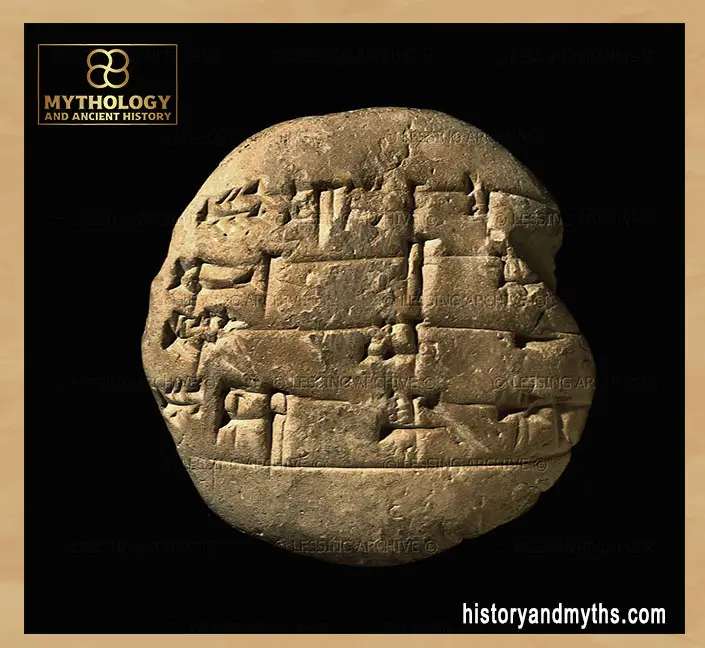
Education in Mesopotamia was never designed to be universal.
It functioned as a selective system that prepared a small administrative elite while integrating the majority of children into labor and household roles essential for economic survival.
Children Outside Formal Education
Most children in Mesopotamia never entered formal education. Their learning took place within households, fields, and workshops, where practical skills were transmitted through observation, repetition, and early participation in work.
Children learned tasks relevant to family survival—agriculture, herding, craft assistance, or domestic labor. This form of learning was immediate and functional. It did not require literacy, nor was it designed to produce upward mobility. Instead, it ensured continuity of labor and household stability.
Education outside schools was therefore not secondary or inferior. It was the dominant mode of knowledge transmission, shaping the majority of the population and sustaining the productive base of Mesopotamian society.
- School Life in Sumerian Civilization — Formal scribal education and institutional training.
- Artisans and Laborers in Mesopotamia — How children learned skills outside schools.
- How Trade Contracts Worked in Mesopotamia — Literacy, contracts, and administrative knowledge.
Age, Transition, and Social Role
Childhood in Mesopotamia did not end at a fixed age. Transition into social roles was functional rather than chronological, determined by physical ability, household need, and institutional demand. As children became capable of contributing, expectations shifted from learning to participation.
This transition was gradual. Children moved from observation to assistance, then to responsibility, without formal rites marking adulthood. The absence of a clear boundary reinforced continuity: childhood flowed into labor, training, or administrative preparation as part of a managed social process rather than a personal milestone.
Education and the Reproduction of Social Order
Education in Mesopotamia reinforced existing social structures rather than challenging them. By restricting literacy and formal training to specific groups, the system ensured that administrative knowledge remained concentrated within families and institutions already positioned to wield power.
For most children, informal learning reproduced labor roles across generations. For a minority, formal education reproduced scribal and administrative elites. In both cases, education functioned as a mechanism of continuity, preserving hierarchy and stability by aligning knowledge transmission with institutional needs rather than individual mobility.
Why Childhood and Education Sustained Mesopotamian Civilization
Childhood and education sustained Mesopotamian civilization because they ensured predictability across generations. By shaping behavior early and aligning learning with institutional demand, society reproduced the labor force, administrative class, and social hierarchy required for long-term stability.
Education did not aim to maximize knowledge; it aimed to stabilize function. Children who entered formal training became reliable scribes and officials. Those who did not were prepared for productive roles through family, labor, and imitation. Both paths served the same purpose: maintaining economic continuity and administrative control.
In this system, childhood was not a protected phase but a preparatory one. Education—formal or informal—acted as a mechanism of social transmission, ensuring that cities, institutions, and power structures could endure without disruption. The resilience of Mesopotamian civilization rested not only on laws or trade, but on how each generation was trained to take its place within an ordered social system.
- Childhood in Mesopotamia was a preparatory social stage, not a protected phase.
- Formal education was limited to children linked to institutional needs.
- Most learning occurred outside schools through family and labor.
- Discipline and obedience were central educational values.
- Education reinforced social hierarchy rather than enabling mobility.
- Knowledge transmission ensured long-term administrative and economic stability.
Frequently Asked Questions
Did most children in Mesopotamia attend school?
No. Formal schooling was limited to a small group linked to administrative and elite families.
How did children learn without schools?
They learned through observation, imitation, and early participation in household and labor tasks.
Was literacy common among children?
Literacy was rare and concentrated among future scribes and officials.
Did education offer social mobility?
In most cases, education reinforced existing social roles rather than changing them.
Were girls educated in Mesopotamia?
Some elite girls received instruction, but most learning for girls occurred within households.
At what age did children begin working?
Work and responsibility increased gradually as children became physically capable.
Sources & Rights
- Van De Mieroop, Marc. A History of the Ancient Near East. Wiley-Blackwell.
- Postgate, J. Nicholas. Early Mesopotamia: Society and Economy. Routledge.
- Snell, Daniel C. Life in the Ancient Near East. Yale University Press.
- Robson, Eleanor. Education and Learning in Ancient Mesopotamia. Cambridge University Press.
- Veldhuis, Niek. History of the Cuneiform Lexical Tradition. Brill.
- Foster, Benjamin R. Before the Muses. CDL Press.
- Leick, Gwendolyn. The Babylonian World. Routledge.
- Wright, Henry T. Early State Dynamics in Mesopotamia. University of Michigan.
- Hudson, Michael. The Archaeology of Money and Debt. ISLET.
- Algaze, Guillermo. Ancient Mesopotamia at the Dawn of Civilization. University of Chicago Press.
- Steinkeller, Piotr. Labor and Education in Early Mesopotamia. CDL Press.
Written by H. Moses — All rights reserved © Mythology and History