The Akkadian Empire: First Imperial State, Rise, Power, and Collapse
The Akkadian Empire was the first serious experiment in ruling multiple cities under a single central authority. Before it, Mesopotamia was a mosaic of independent city-states competing for land, trade, and prestige. Under Sargon of Akkad in the 23rd century BCE, that fragmented political world was transformed into something new: a territorial state that stretched across southern and northern Mesopotamia and projected power beyond it.
This was not merely a story of conquest. It was the creation of a governing system—an attempt to manage distant cities, control resources, impose language, and secure loyalty across regions that had never before answered to one ruler. The Akkadian Empire introduced mechanisms of administration, military coordination, and ideological control that later empires would refine. Yet it also revealed the limits of early imperial governance. Its rapid rise was matched by structural vulnerabilities that eventually led to collapse.
To understand the Akkadian Empire, then, is to understand the birth of imperial rule itself: how centralized power was built, how it functioned, and why it proved difficult to sustain.
The Rise of Imperial Rule Under Sargon of Akkad
The Akkadian Empire did not emerge from stability; it emerged from competition. In the centuries before Sargon, southern Mesopotamia was dominated by rival Sumerian city-states—Uruk, Ur, Lagash, Kish—each governed by its own ruler and bound to its own temple economy. Political authority was local. Warfare was frequent but limited in scale. No city had yet succeeded in imposing lasting control over the entire region.
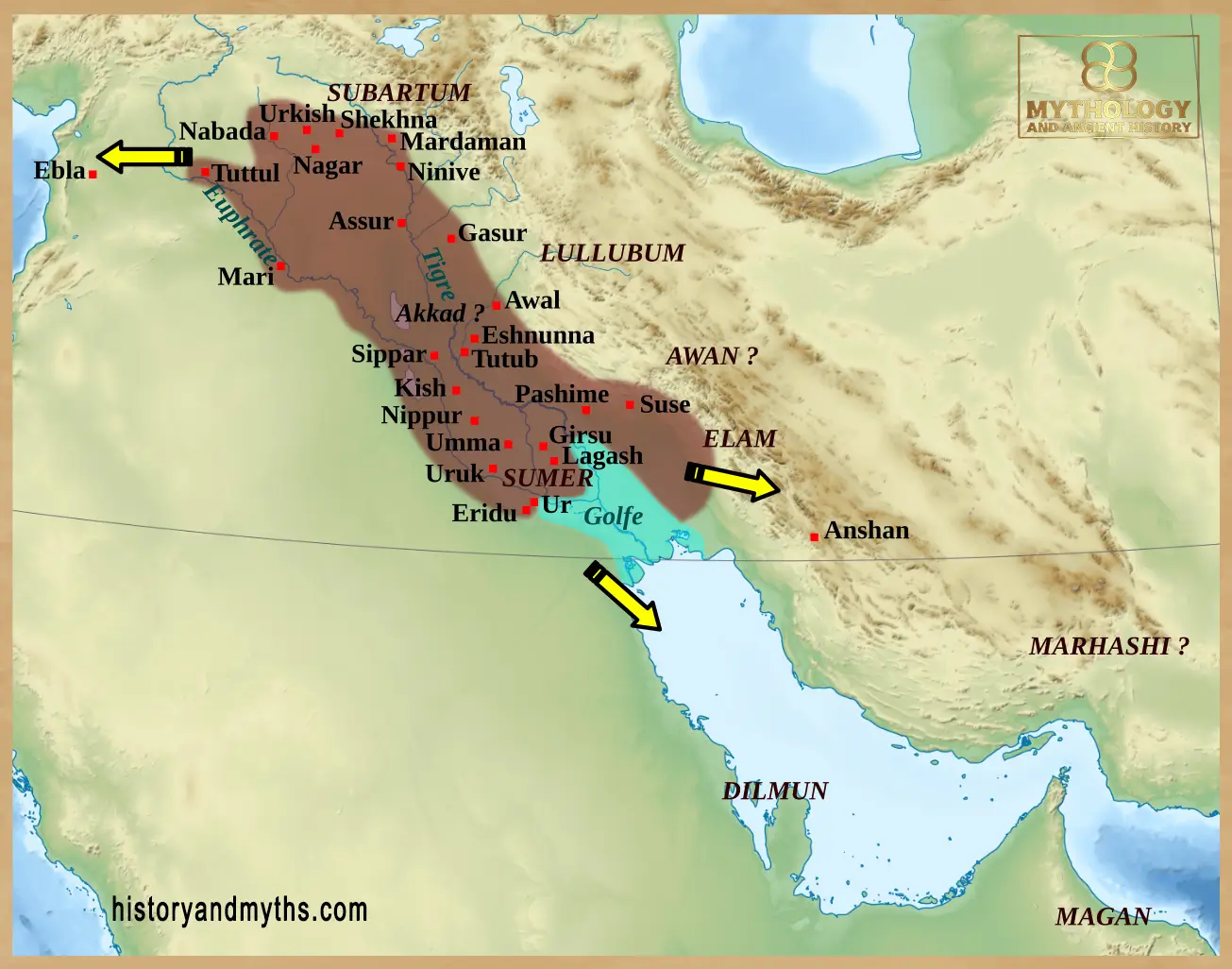
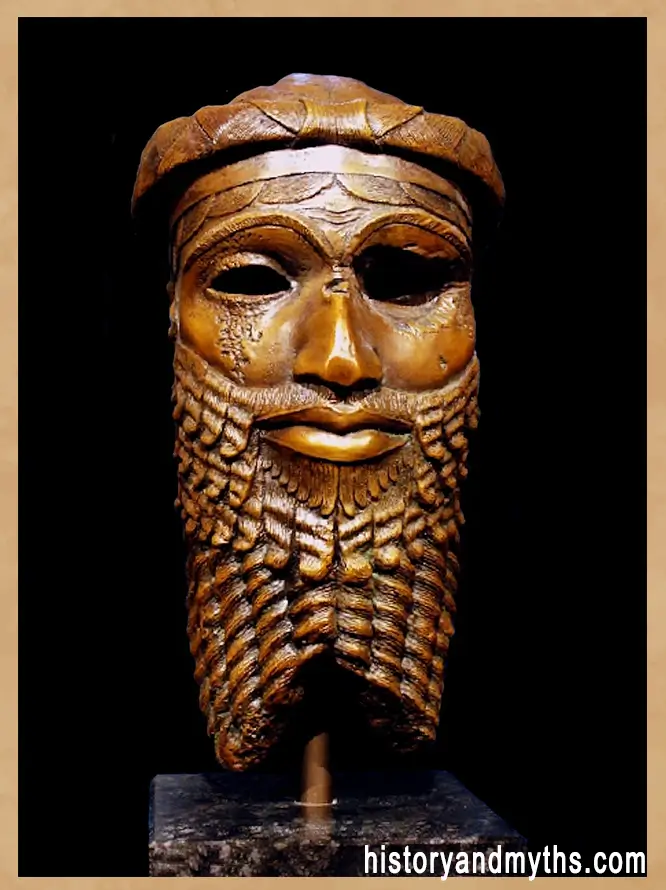
Sargon altered that balance. Originally associated with Kish, he seized power and founded a new capital—Akkad—whose exact location remains uncertain but whose political role was decisive. By establishing a new center rather than ruling from an older Sumerian city, Sargon positioned himself above existing rivalries. His authority was not tied to one traditional urban cult or lineage; it was framed as broader, territorial, and increasingly personal.
His campaigns extended beyond the immediate Sumerian south into northern Mesopotamia and possibly toward the Levant. What distinguished these conquests was not simply their scale, but their outcome. Instead of raiding and withdrawing, Sargon imposed ongoing control. Local rulers were replaced, subordinated, or bound by allegiance to Akkad. Tribute flowed toward the center. Military victories were followed by administrative arrangements.
This shift marks the real beginning of imperial rule. The objective was no longer to defeat a rival city; it was to reorganize political space. Cities that once operated autonomously were integrated into a wider hierarchy. Authority was centralized, and loyalty was directed toward a single ruler whose legitimacy was framed as divinely sanctioned.
Sargon’s inscriptions emphasize universal kingship—claims to rule “the four quarters.” Such language was not rhetorical excess; it signaled a new political idea. Power was no longer defined by proximity to one city’s walls. It was territorial, expansive, and conceptually unlimited.
Yet the rapid expansion created immediate pressures. Governing distant populations required mechanisms beyond personal charisma and military intimidation. Communication had to be maintained across long distances. Tribute had to be standardized. Local elites had to be managed carefully—too much autonomy invited rebellion; too little risked administrative overload.
| Aspect | Details |
|---|---|
| Founder | Sargon of Akkad |
| Capital | Akkad (location uncertain) |
| Period | c. 2334–2154 BCE |
| Territory | Mesopotamia, Levant, Elam |
| Administration | Provincial governors, scribal archives |
| Economy | Redistribution, taxation, temple networks |
| Military | Standing army, imperial garrisons |
| Collapse | Internal revolt, climate stress, Gutian invasions |
Central Administration and the Birth of Imperial Bureaucracy
Military conquest alone could not hold together the territories Sargon had acquired. Once initial campaigns ended, the survival of the Akkadian Empire depended on its ability to manage cities that were geographically distant, culturally diverse, and politically restless. This required a form of administration more systematic than anything Mesopotamia had previously known.
The Akkadian rulers responded by creating a centralized bureaucratic structure that linked provincial centers directly to the royal court. Instead of relying solely on local traditions, they imposed imperial officials who represented Akkad’s interests. Governors were appointed to oversee major cities and regions, replacing or supervising former dynastic rulers. Their authority derived from the king, not from local institutions.
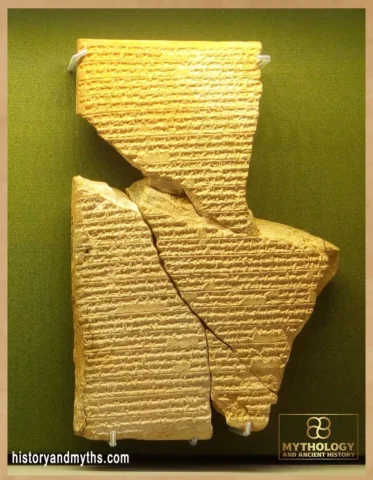
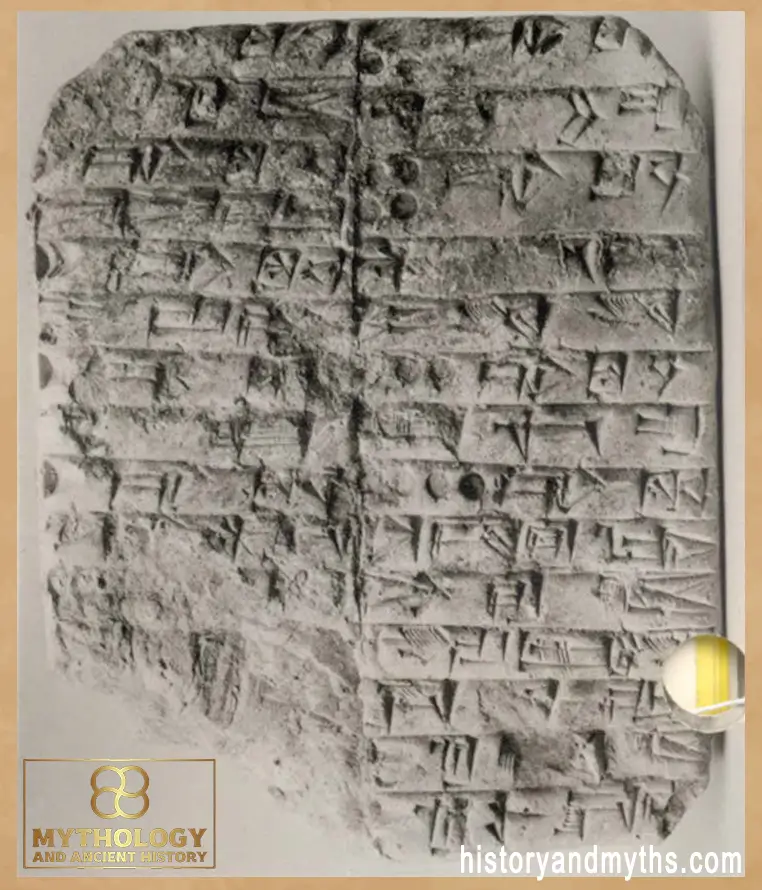
Written administration formed the backbone of this system. Scribes recorded deliveries of grain, silver, livestock, and labor. They documented land assignments, tax obligations, and legal disputes. These records allowed the central government to monitor regional productivity and intervene when necessary. Information became a tool of power.
One of the most significant innovations was the integration of economic and political management. Temple estates, royal lands, and urban workshops were increasingly coordinated under imperial supervision. Resources were no longer confined to local redistribution; they were redirected toward supporting armies, court officials, and construction projects across the empire.
Language policy reinforced administrative unity. Akkadian replaced Sumerian as the primary language of state records and royal inscriptions. This shift simplified communication across regions and symbolized the emergence of a new political identity centered on imperial authority rather than city-based tradition.
Despite these advances, early bureaucracy remained fragile. Communication was slow. Enforcement depended heavily on personal loyalty. Governors operated far from constant supervision and could accumulate independent influence. The system worked best under strong kings and weakened quickly during political instability.
Nevertheless, the Akkadian administrative framework represented a decisive break with earlier models of governance. For the first time, Mesopotamia was governed through coordinated records, appointed officials, and standardized procedures. This bureaucratic experiment laid the foundation for later Assyrian and Babylonian systems and marked the true institutional birth of empire.
Military Expansion and Territorial Control
The Akkadian Empire was built and maintained through sustained military organization. Unlike earlier city-state armies, which were largely seasonal and locally mobilized, Akkadian forces operated as semi-permanent instruments of state policy. Warfare became a continuous function of governance rather than an occasional response to rivalry.
Sargon and his successors relied on mobile, centrally directed troops capable of operating far from their home regions. These forces combined infantry, archers, and specialized units supported by logistical networks. Control over supply routes and storage centers allowed armies to remain active for extended periods, making long-distance campaigns possible.
Conquest was followed by occupation. Garrisons were installed in strategic cities and border zones to secure trade routes and suppress resistance. Military presence was not temporary; it became embedded in provincial administration. Commanders often worked closely with governors, linking security and civil authority.
Campaigns served multiple purposes. They eliminated rival powers, secured access to raw materials, and reinforced royal prestige. Victory was presented as proof of divine favor and political legitimacy. Inscriptions and monuments emphasized the king’s role as protector and enforcer of order, turning military success into ideological capital.
Deportations and population transfers were also used selectively. By relocating groups and resettling loyal communities, the state reduced the risk of coordinated rebellion and strengthened control over contested areas. These measures reflected an early understanding of demographic management as a political tool.
However, military expansion carried long-term costs. Continuous campaigning drained manpower and resources. Distant frontiers required constant reinforcement. As the empire grew, the gap between military obligations and administrative capacity widened.
The Akkadian army made imperial rule possible, but it also created structural dependency on force. Stability rested on the ability to mobilize troops quickly and decisively. When that capacity weakened, territorial control began to erode, exposing the limits of conquest-based authority.
Language, Ideology, and Royal Propaganda
The Akkadian Empire did not rely on force alone to sustain authority. Its rulers invested heavily in symbolic power—language, religious imagery, and royal ideology—to legitimize centralized rule and shape how subjects understood political order.
One of the most important shifts was linguistic. Akkadian replaced Sumerian as the primary language of administration and royal inscriptions. This was not merely practical. By standardizing official communication, the state reinforced a shared imperial identity that transcended local traditions. Language became an instrument of political integration.
Royal ideology developed alongside this linguistic shift. Akkadian kings presented themselves as divinely chosen rulers responsible for maintaining cosmic and social order. Victory in war, economic prosperity, and internal stability were portrayed as evidence of divine approval. Failure or rebellion, by contrast, was framed as moral and religious deviation.
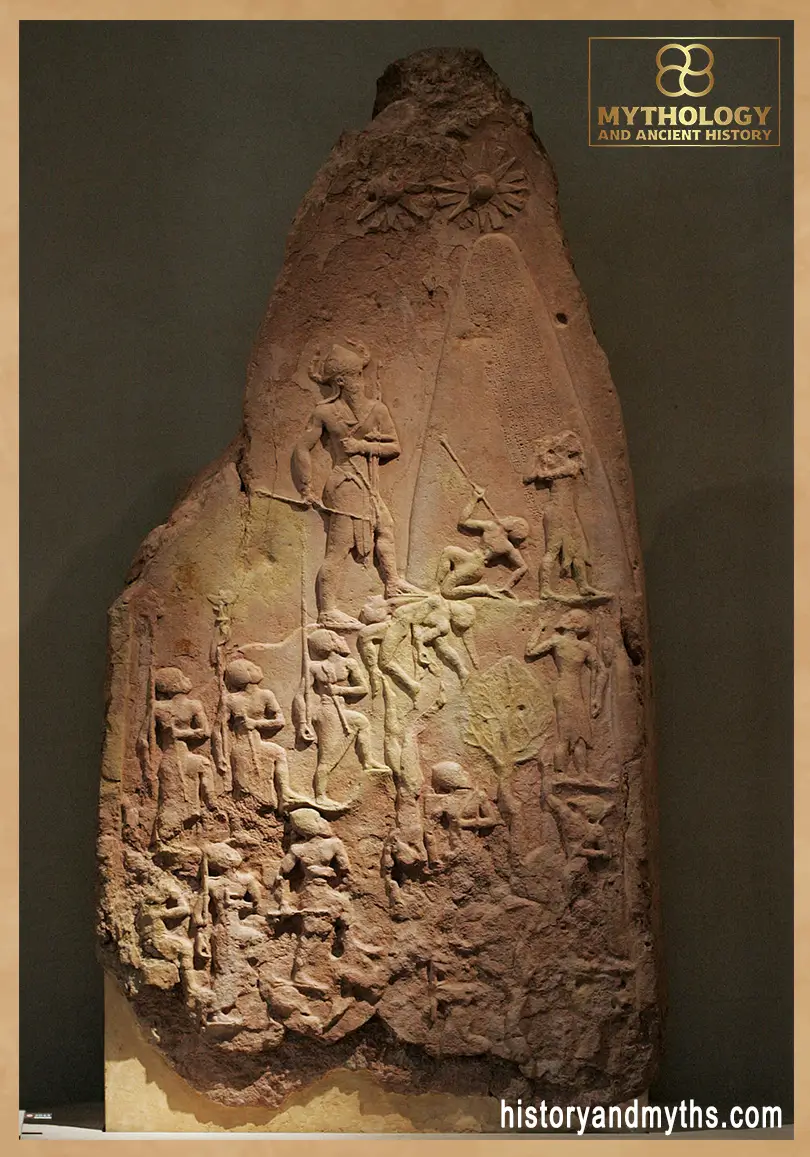
This ideological system reached its peak under Naram-Sin, who went beyond traditional kingship by adopting divine status. He appeared in inscriptions and reliefs as a god-like figure, wearing divine symbols and receiving worship. This was unprecedented in Mesopotamian political culture and reflected an attempt to elevate royal authority beyond human limits.
Monuments and inscriptions functioned as tools of mass communication. They were placed in temples, city centers, and border regions, proclaiming victories, territorial claims, and royal virtues. These texts were designed to be seen and remembered, reinforcing imperial narratives across generations.
Religious institutions were also integrated into state ideology. Temples received royal patronage, and major cults were linked to imperial authority. By supporting traditional worship while associating it with the king, the state reduced resistance and encouraged loyalty among priestly elites.
However, ideological control had structural weaknesses. Divine kingship increased expectations of perfection. Military defeat, famine, or unrest could quickly undermine credibility. When rulers failed to meet ideological promises, symbolic authority collapsed alongside political power.
Akkadian propaganda succeeded in creating the first coherent imperial political culture in Mesopotamia. It unified language, religion, and rulership into a single system of legitimacy. Yet its effectiveness depended entirely on continued success, making ideology a powerful but fragile foundation of empire.
How the Akkadian Empire Functioned
- Centralized royal authority supported by provincial governors.
- Economic control through redistribution and state archives.
- Military dominance maintained via permanent garrisons.
- Ideological legitimacy reinforced through divine kingship.
- Limited institutional depth beyond the royal court.
© historyandmyths.com — Educational Use
Economic Integration and Resource Management
Imperial authority in Akkadian Mesopotamia depended on the ability to control resources across multiple regions. Conquest and administration were sustainable only if agricultural production, trade, and labor could be coordinated at the imperial level. Economic integration was therefore a central pillar of Akkadian power.
The state reorganized local economies around centralized redistribution. Grain, livestock, metals, and textiles were collected through taxation and tribute and transferred to royal and temple storehouses. From there, resources were allocated to soldiers, officials, craftsmen, and construction projects. This system reduced regional autonomy and tied economic survival to imperial structures.
Long-distance trade expanded under Akkadian control. Secure routes connected southern Mesopotamia with Anatolia, the Levant, and the Iranian plateau. These networks supplied copper, timber, stone, and luxury goods that were unavailable locally. By controlling trade corridors, the state strengthened both its economy and its strategic position.
Labor was managed alongside material resources. Communities were required to provide workers for agriculture, transport, and building projects. This organized labor force supported irrigation systems, warehouses, and urban infrastructure, reinforcing economic stability and administrative oversight.
Standardized accounting practices enabled supervision. Scribes recorded production levels, deliveries, and distributions, allowing the court to monitor provincial performance. Economic data became a basis for political decision-making and intervention.
Despite these mechanisms, the system remained vulnerable. Poor harvests, disrupted trade, or excessive demands quickly destabilized local economies. Because redistribution depended on constant inflow, shortages spread rapidly through the imperial network.
The Akkadian economy succeeded in linking distant regions into a single managed system. It enhanced efficiency and strengthened central authority. At the same time, it created structural dependence on continuous production and transport, leaving the empire exposed to environmental and political shocks.
Reign of Naram-Sin and the Imperial Peak
The Akkadian Empire reached its maximum territorial and political influence under Naram-Sin. Building on the foundations established by Sargon, he expanded imperial control, strengthened central authority, and transformed kingship into a more absolute institution.
Militarily, Naram-Sin suppressed major rebellions and secured frontier regions. His campaigns reinforced Akkadian dominance over key trade routes and resource zones, allowing the state to sustain large armies and administrative networks. At this stage, imperial power was both extensive and coordinated.
Administratively, centralization intensified. Provincial officials became more closely tied to the royal court, and economic extraction increased. The state’s capacity to mobilize labor, collect revenue, and redistribute resources reached its highest level. This efficiency supported large-scale building projects and expanded religious patronage.
Ideologically, Naram-Sin introduced a radical innovation by presenting himself as divine. Unlike earlier kings, who emphasized divine favor, he claimed divine status. This move elevated royal authority above traditional political limits and reinforced loyalty during a period of peak power.
However, this concentration of authority had long-term consequences. Centralization reduced institutional flexibility. Local elites lost influence, and political stability became increasingly dependent on the personal authority of the ruler. The system functioned effectively as long as leadership remained strong, but it left little room for adjustment.
The reign of Naram-Sin represents the high point of Akkadian imperial organization. Military strength, administrative reach, economic integration, and ideological control were fully aligned. At the same time, the structural pressures created during this period laid the groundwork for later instability.
The Collapse: Political, Economic, and Environmental Causes
The fall of the Akkadian Empire was not the result of a single event. It was the outcome of multiple pressures that accumulated over time and weakened the foundations of imperial rule. Political instability, economic strain, environmental stress, and external threats converged to undermine a system that had little capacity for long-term adaptation.
After the reign of Naram-Sin, succession became fragile. Later rulers, especially Shar-Kali-Sharri, struggled to maintain control over distant provinces and rebellious cities. Royal authority increasingly depended on military suppression rather than administrative cooperation. This shift reduced political legitimacy and intensified local resistance.
Internal revolts spread across southern and northern Mesopotamia. Formerly subordinated cities attempted to restore autonomy, exploiting moments of weak leadership. Suppressing these uprisings required constant military mobilization, which drained manpower and disrupted economic production.
At the same time, economic pressure mounted. High levels of taxation and labor obligations had sustained the imperial system during its peak, but over time they weakened local resilience. Agricultural communities faced declining productivity, while redistribution networks became less reliable. When shortages occurred, the state lacked sufficient reserves to stabilize regional economies.
Environmental factors further intensified these problems. Geological and textual evidence suggests periods of reduced rainfall and drought in parts of Mesopotamia during the late Akkadian period. Lower crop yields increased food insecurity and heightened social tension. In a highly centralized system, local crises quickly became imperial crises.
External pressure added another layer of instability. Groups from the Zagros region, commonly identified as the Gutians, exploited weakened defenses and political fragmentation. Their incursions disrupted trade routes and communication networks, accelerating administrative collapse rather than causing it independently.
Most importantly, the Akkadian system lacked institutional buffers. Authority was concentrated at the top, and few durable mechanisms existed to manage prolonged crisis. When leadership faltered, the entire structure weakened simultaneously—military, economic, and ideological.
The collapse of the Akkadian Empire was therefore systemic. It reflected the limits of early imperial governance in dealing with environmental stress, political succession, and economic exhaustion. The empire did not simply fall; it unraveled under pressures it was never designed to absorb.
Why the Akkadian System Failed to Sustain Empire
The Akkadian Empire collapsed not because its rulers lacked ambition or military skill, but because its political system was structurally fragile. It succeeded in creating centralized authority quickly, yet it failed to develop institutions capable of preserving that authority across generations and crises.
One central weakness was excessive dependence on individual leadership. Imperial stability rested largely on the personal authority of kings such as Sargon of Akkad and Naram-Sin. When strong rulers were replaced by less effective successors, administrative cohesion weakened. There were no reliable mechanisms to compensate for declining leadership quality.
Succession lacked formal regulation. Transitions of power were vulnerable to internal conflict, rival claims, and regional defiance. Without stable rules of inheritance and governance, political continuity depended on force rather than legitimacy. This encouraged repeated cycles of rebellion and repression.
Institutional depth was limited. Provincial administration relied on loyalty networks rather than independent bureaucratic norms. Officials served at royal discretion and lacked long-term security. As a result, loyalty shifted quickly when central authority weakened, accelerating fragmentation.
Economic management reinforced vulnerability. The redistribution system required constant inflows of resources and labor. When warfare, drought, or rebellion disrupted production, shortages spread rapidly. Because economic control was highly centralized, local communities had little capacity to absorb shocks independently.
Ideological authority also proved unstable. Divine kingship elevated rulers above traditional political constraints, but it also tied legitimacy to continuous success. Military defeat or famine undermined sacred authority, leaving rulers exposed to both political and religious criticism.
Geographical overextension compounded these weaknesses. The empire expanded faster than its administrative infrastructure could support. Communication delays, limited surveillance capacity, and weak frontier management reduced the effectiveness of central control over distant territories.
Most critically, the Akkadian state never fully transformed from a conquest-based system into a resilient institutional order. Power remained concentrated in the royal court and military elite. When that core weakened, peripheral regions detached with little resistance.
Legacy: How Later Empires Learned from Akkad
Although the Akkadian Empire collapsed, its political experiment did not disappear. Later Mesopotamian states studied its successes and failures and adapted its methods to create more durable systems of rule. In this sense, Akkad became a foundational model for imperial governance rather than a historical dead end.
One of the most important lessons was administrative continuity. Assyrian rulers, especially Ashurnasirpal II, expanded the Akkadian idea of centralized control into a fully institutionalized provincial system. Unlike the Akkadians, they developed permanent bureaucratic offices, standardized reporting procedures, and layered chains of command that reduced dependence on individual rulers.
Babylonian governments pursued a different adaptation. Under kings such as Hammurabi, legal codification and temple-based administration were emphasized as tools of stability. While Akkad relied heavily on royal authority, later Babylonians strengthened institutional legitimacy through law, contracts, and judicial systems.
Succession management also improved. Later empires placed greater emphasis on dynastic continuity, royal education, and elite consensus. Although succession crises still occurred, they were less destabilizing than in the Akkadian period, where leadership collapse often meant systemic collapse.
Economic governance became more resilient as well. Assyrian and Neo-Babylonian states diversified revenue sources, strengthened storage systems, and expanded commercial regulation. These measures reduced dependence on constant military expansion and improved resistance to environmental or political shocks.
Ideological strategies were refined. While Akkadian rulers experimented with divine kingship, later empires balanced religious authority with institutional symbolism. Kings were presented as chosen by the gods, but rarely as gods themselves. This reduced ideological risk during periods of crisis.
Military organization also evolved. Permanent garrisons, professional officer corps, and integrated logistics replaced the more flexible but fragile Akkadian model. Warfare remained central, but it was embedded more deeply within administrative structures.
Most importantly, later empires learned that conquest had to be matched by durable institutions. Akkad demonstrated how rapid expansion was possible. Assyria and Babylon demonstrated how it could be maintained. They transformed imperial rule from a personal project into a system capable of surviving individual rulers.
Key Takeaways
- The Akkadian Empire created the first true territorial state.
- Its power depended heavily on individual leadership.
- Administration relied on loyalty rather than autonomous institutions.
- Economic centralization increased vulnerability to crisis.
- Collapse resulted from structural weakness and environmental stress.
- Later empires adapted and improved Akkadian models.
Frequently Asked Questions
Was the Akkadian Empire the first empire in history?
Yes. It was the first state to unify multiple regions under centralized rule.
Who founded the Akkadian Empire?
Sargon of Akkad established the empire in the 24th century BCE.
How did the Akkadians govern distant territories?
Through provincial governors, military garrisons, and written administration.
Why did the Akkadian Empire collapse?
Because of internal revolts, environmental stress, and weak institutions.
Did later empires copy Akkadian systems?
Yes. Assyrian and Babylonian rulers adapted Akkadian models.
Was Akkad a permanent capital city?
Its exact location remains uncertain.
How important was religion in Akkadian rule?
Divine kingship reinforced political authority.
Sources & Rights
- Foster, Benjamin. Before the Muses. Bethesda: CDL Press, 2005.
- Van de Mieroop, Marc. A History of the Ancient Near East. Oxford: Blackwell, 2016.
- Postgate, J. Nicholas. Early Mesopotamia. London: Routledge, 1994.
- Cooper, Jerrold. Sumerian and Akkadian Royal Inscriptions. Yale University Press, 1986.
- Hallo, William. The Context of Scripture. Leiden: Brill, 2003.
- Michalowski, Piotr. The Correspondence of the Kings of Ur. Winona Lake, 2011.
- Liverani, Mario. The Ancient Near East. Routledge, 2014.
- Charpin, Dominique. Writing, Law, and Kingship. Chicago, 2010.
- Westenholz, Joan. Legends of the Kings of Akkade. Eisenbrauns, 1997.
- Frayne, Douglas. Royal Inscriptions of Mesopotamia. Toronto, 1993.
- Kuhrt, Amélie. The Ancient Near East. Routledge, 1995.
- Yoffee, Norman. Myths of the Archaic State. Cambridge, 2005.
- Steinkeller, Piotr. Early State Formation. Harvard, 2002.
- Glassner, Jean-Jacques. Mesopotamian Chronicles. Atlanta, 2004.
- Robson, Eleanor. Ancient Knowledge Networks. Cambridge, 2019.
- Radner, Karen. State Correspondence. Oxford, 2014.
- Leick, Gwendolyn. Mesopotamia. Penguin, 2003.
- Dalley, Stephanie. Myths from Mesopotamia. Oxford, 2000.
- Woods, Christopher. Visible Language. Chicago, 2010.
- George, Andrew. House Most High. Eisenbrauns, 1999.
- Pollock, Susan. Ancient Mesopotamia. Cambridge, 1999.
- Winter, Irene. Art in Empire. Yale, 2010.
Written by H. Moses — All rights reserved © Mythology and History