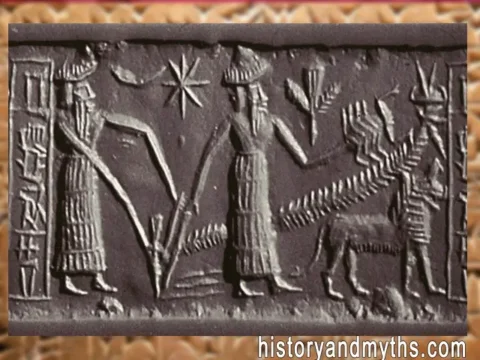
Daily Life in Mesopotamian Society: How Ordinary People Lived
Daily life in Mesopotamian society was shaped by necessity, not comfort.
For most people, everyday life revolved around work, family obligations, seasonal rhythms, and constant exposure to risk—from floods and crop failure to debt and legal pressure. Daily routines were not private choices but structured patterns enforced by institutions, social class, and economic survival.
Understanding daily life in Mesopotamia means understanding how ordinary people interacted with labor, time, religion, and authority on a practical level. This article examines daily life not as a collection of customs, but as a system that organized survival, responsibility, and social order in one of the world’s earliest civilizations.
What “Daily Life” Meant in Mesopotamian Society
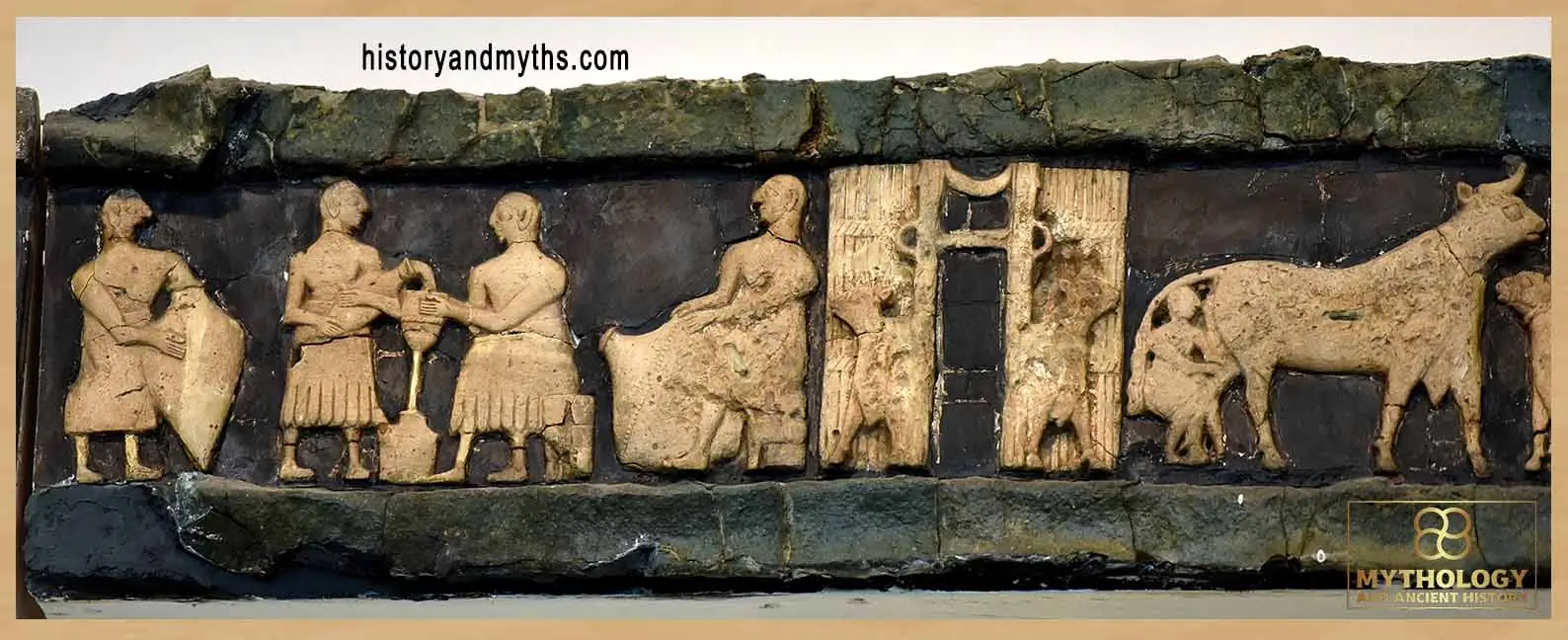
In Mesopotamia, daily life was not defined by personal preference or comfort, but by structural necessity. The concept of “everyday life” referred to the repeated obligations that ensured survival within a fragile environment—work, food production, family responsibility, and compliance with social authority. Routine was not accidental; it was the outcome of economic pressure, environmental limits, and institutional control.
Daily life functioned as a framework of discipline. Time was organized around daylight, seasons, and irrigation schedules rather than leisure. Individuals were expected to fulfill roles tied to household production, labor obligations, or service to larger institutions such as temples and palaces. These expectations shaped how people moved, worked, ate, and interacted on a daily basis.
Crucially, daily life was collective rather than individual. The household, not the individual, was the primary unit of daily organization. Survival depended on cooperation, shared labor, and adherence to norms that reduced risk in an unpredictable environment. Personal autonomy existed, but always within limits imposed by family structure, class position, and economic dependency.
Understanding daily life in Mesopotamia therefore requires moving beyond surface descriptions of customs. It demands seeing routine as a system of survival and control, where repetition maintained stability and deviation carried real social and economic consequences.
| Aspect of Daily Life | Primary Function | Structural Impact |
|---|---|---|
| Household | Production and discipline | Stabilized daily routines and labor |
| Work | Survival obligation | Maintained economic continuity |
| Food & Storage | Risk management | Reduced vulnerability to scarcity |
| Time & Seasons | Environmental synchronization | Regulated labor and planning |
| Religion | Risk interpretation | Reinforced conformity and caution |
| Social Class | Distribution of autonomy | Shaped unequal daily experience |
Time, Seasons, and the Rhythm of Everyday Life
Daily life in Mesopotamia followed a rhythm imposed by natural cycles rather than social choice. Time was structured around daylight, agricultural seasons, and the availability of water. Work began and ended with the sun, and daily routines shifted according to planting, harvesting, and irrigation schedules rather than fixed clocks or personal convenience.
Seasonality shaped almost every aspect of life. Flood seasons, drought periods, and changes in river behavior dictated when people worked, stored food, repaired infrastructure, or prepared for risk. These cycles created predictable pressures that organized labor and limited flexibility. Daily life adjusted continuously to environmental conditions that could not be controlled, only managed.
Urban and rural rhythms also differed. City dwellers experienced time through administrative duties, markets, and institutional schedules, while rural populations lived according to agricultural demands and water access. Despite these differences, both environments shared the same underlying constraint: survival depended on synchronizing daily activity with environmental reality.
This rhythm produced a disciplined society. Time was not abstract or measured for efficiency alone; it was experienced as a sequence of obligations tied to survival. Daily life functioned smoothly only when individuals and households aligned their routines with seasonal and environmental demands.
The Household as the Core of Daily Organization
In Mesopotamian society, daily life was organized around the household, not the individual. The household functioned as a unit of production, consumption, and discipline. It structured how labor was divided, how food was managed, and how responsibility was assigned across generations. Everyday routines were shaped by what the household needed to survive, not by personal schedules.
Work, childcare, food preparation, and basic training all took place within this domestic framework. Authority inside the household regulated behavior, resolved minor conflicts, and enforced routine. This internal order reduced reliance on external institutions for daily matters and ensured that obligations were met consistently.
The household also served as the primary buffer against risk. Illness, food shortage, or temporary economic stress were absorbed collectively rather than individually. Daily life therefore depended on cooperation and predictability, with each member expected to contribute according to age, status, and capacity.
By anchoring daily life in the household, Mesopotamian society created stability at the smallest social level. This structure allowed larger systems—markets, temples, and administration—to function without managing every aspect of individual behavior.
Work as Obligation, Not Choice
In Mesopotamia, work was not a personal decision or a path to self-expression; it was a basic obligation tied to survival. Daily life assumed that every capable individual contributed labor, whether within the household, the fields, workshops, or institutional service. Idleness was not socially acceptable because it threatened collective stability.
Work routines were repetitive and predictable. Tasks followed established patterns determined by season, skill, and social position. This repetition reduced uncertainty and ensured that essential activities—food production, construction, maintenance, and administration—were carried out consistently. Daily labor was less about productivity in a modern sense and more about maintaining continuity.
The type of work performed shaped daily experience but did not alter the underlying reality: labor structured the day. Physical effort, long hours, and exposure to risk were normal conditions rather than exceptions. Even administrative or skilled roles were embedded in strict routines and accountability.
By treating work as a duty rather than a choice, Mesopotamian society reinforced discipline and reliability. Daily life remained functional because labor was expected, regulated, and normalized across all levels of society.
- Routine was enforced by necessity, not preference
- The household functioned as the core unit of order
- Labor structured time and behavior
- Food security determined stability
- Religion operated as daily risk management
- Class filtered autonomy and exposure to danger
© historyandmyths.com — Educational use
Food, Storage, and Everyday Survival
Food was the central concern of daily life in Mesopotamia. Access to grain, oil, and basic staples determined whether a household could function from one season to the next. Daily routines were organized around securing, preparing, and preserving food rather than around comfort or variety.
Storage played a critical role in survival. Grain had to be measured, protected from spoilage, and allocated carefully across time. Poor storage, theft, or unexpected loss could destabilize an entire household. This made food management a daily responsibility tied to discipline and planning, not occasional preparation.
Scarcity was a constant possibility. Floods, droughts, pests, or administrative demands could interrupt supply. As a result, daily consumption was often conservative, shaped by caution rather than abundance. Meals reflected necessity, not preference, and excess carried social and economic risk.
Food, therefore, was not simply nourishment—it was a strategic resource. Daily life revolved around protecting it, rationing it, and ensuring continuity, making survival an ongoing process rather than a guaranteed condition.
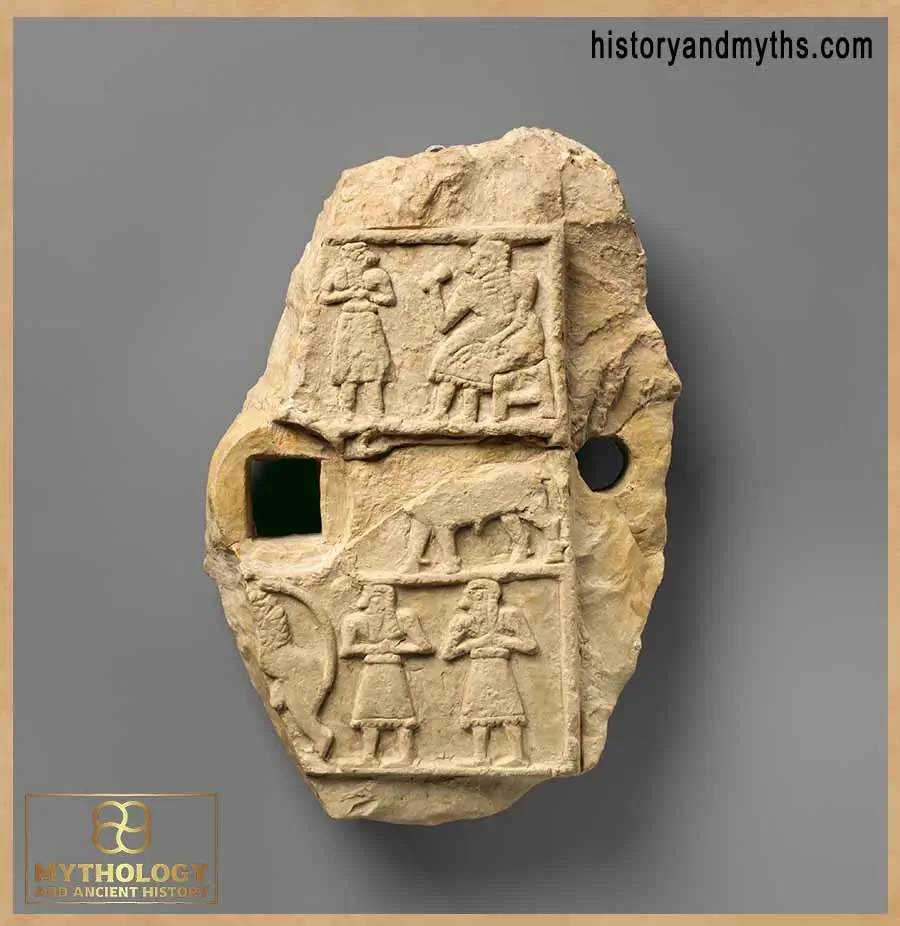
Public Domain (CC0, Public Domain Dedication).
Religion as a Daily Presence
Religion in Mesopotamian daily life was not confined to temples or formal rituals; it was embedded in routine behavior. Ordinary actions—beginning work, managing risk, responding to illness, or facing uncertainty—were shaped by an awareness of divine influence. The gods were perceived as active forces whose favor or displeasure affected everyday outcomes.
Religious practice at the daily level was pragmatic rather than theological. Simple gestures, spoken formulas, and household-level observances aimed to secure protection and reduce uncertainty. These practices were not expressions of devotion alone but tools for coping with an unpredictable environment where human control was limited.
Fear played a significant role. Misfortune was often interpreted as a sign of divine imbalance, prompting corrective behavior rather than philosophical reflection. Daily life therefore included constant attention to signs, omens, and proper conduct, reinforcing conformity and caution.
By functioning as a mechanism of reassurance and control, religion shaped daily decisions without requiring constant institutional mediation. It provided a framework through which people interpreted risk, responsibility, and survival as part of an ordered cosmic system.
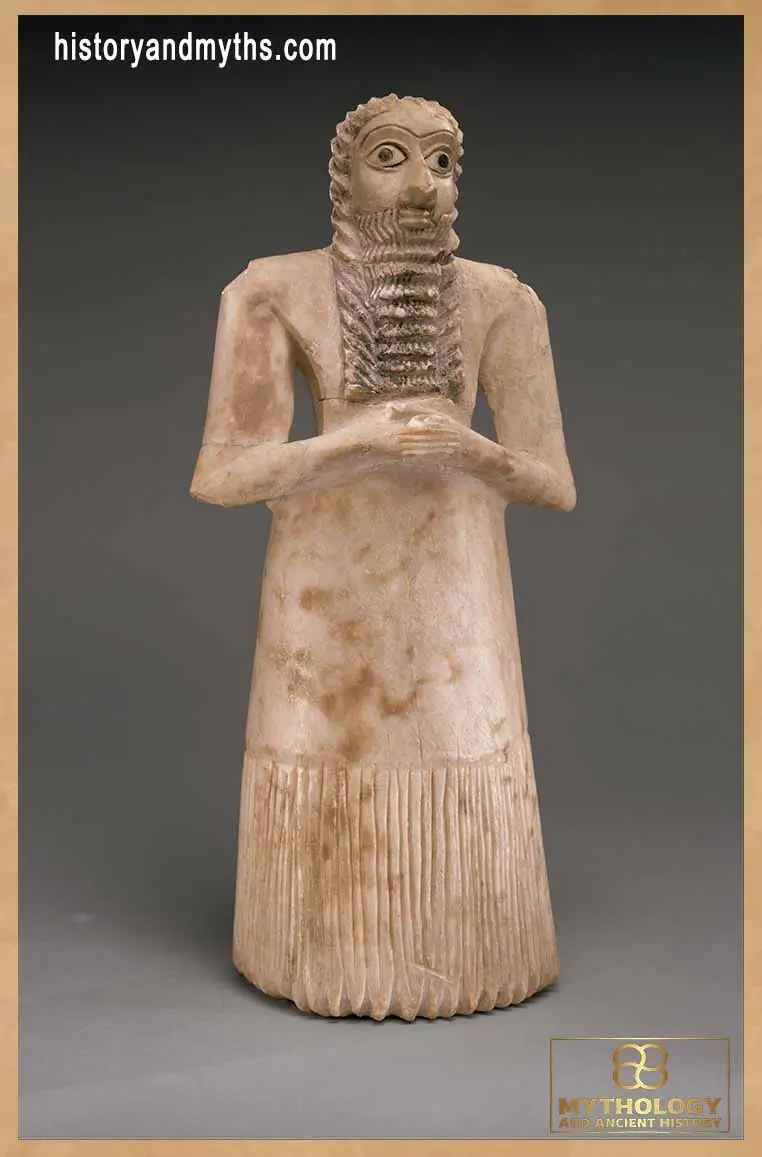
Public Domain (CC0).
How Social Class Shaped Daily Experience
Daily life in Mesopotamia was experienced differently depending on social class, even though everyone operated within the same environmental and institutional constraints. Class did not change the necessity of work or obedience, but it shaped the degree of autonomy, security, and exposure to risk within everyday routines.
Individuals with full legal capacity experienced daily life through direct interaction with institutions. They managed property, negotiated obligations, and bore personal legal responsibility. Their routines involved oversight, coordination, and accountability rather than constant physical labor, giving them limited control over how daily pressures were managed.
Those with restricted autonomy lived under tighter constraints. Service obligations, debt relationships, or institutional dependence shaped their daily routines, limiting flexibility and increasing vulnerability. For them, daily life involved fulfilling duties assigned by others, often with little room for negotiation.
At the lowest level, people treated primarily as property experienced daily life as continuous control. Their routines were defined externally, with minimal agency over labor, movement, or time. Survival depended entirely on the structures that owned or managed them.
Social class, therefore, did not create separate worlds, but it filtered the same daily demands through unequal levels of power and protection. Daily life remained universal in structure, but unequal in experience.
Why Daily Life Explains Mesopotamian Society
Daily life in Mesopotamia reveals how the civilization functioned beyond monuments and laws. Survival depended on disciplined routines shaped by environment, household structure, labor obligation, and institutional authority. These routines maintained order not through comfort or choice, but through repetition, predictability, and compliance.
By examining daily life as a system rather than a collection of habits, we see how social stability was produced at the most ordinary level. The pressures of food, work, time, and risk translated abstract structures—class, religion, and power—into lived experience. Daily life was where social hierarchy became real and where authority was felt most consistently.
Understanding daily life therefore provides the key to understanding Mesopotamian society itself. It connects economic necessity, social organization, and belief into a single framework that explains how one of the world’s earliest civilizations sustained itself over centuries of uncertainty.
- Daily life in Mesopotamia was structured by survival pressures
- Households, not individuals, organized routine behavior
- Work was an obligation tied to continuity, not choice
- Food storage and risk management shaped daily decisions
- Religion functioned as a practical response to uncertainty
- Social class defined autonomy within the same daily framework
Frequently Asked Questions
How was daily life organized in Mesopotamia?
Through structured routines centered on household labor, food management, and seasonal cycles.
Was daily life the same for all social classes?
No. While routines were similar, autonomy and exposure to risk varied significantly by class.
Did religion influence everyday behavior?
Yes. Religious awareness shaped daily decisions, especially in response to uncertainty and misfortune.
Why was food storage so important?
Because environmental instability made long-term survival dependent on careful planning.
Was work optional in Mesopotamian society?
No. Labor was a fundamental obligation necessary for household and social stability.
Sources & Rights
- Adams, Robert McC. Heartland of Cities. Chicago: University of Chicago Press, 1981.
- Bottéro, Jean. Mesopotamia: Writing, Reasoning, and the Gods. Chicago: University of Chicago Press, 1992.
- Charpin, Dominique. Writing, Law, and Kingship in Old Babylonian Mesopotamia. Chicago: University of Chicago Press, 2010.
- Foster, Benjamin R. Before the Muses. Bethesda: CDL Press, 2005.
- Garfinkle, Steven. Entrepreneurs and Enterprise in Early Mesopotamia. Ithaca: Cornell University Press, 2012.
- Harris, Rivkah. Gender and Aging in Mesopotamia. Norman: University of Oklahoma Press, 2000.
- Jacobsen, Thorkild. The Treasures of Darkness. New Haven: Yale University Press, 1976.
- Leick, Gwendolyn. The Babylonians. London: Routledge, 2003.
- Liverani, Mario. The Ancient Near East: History, Society and Economy. London: Routledge, 2014.
- Michalowski, Piotr. The Correspondence of the Kings of Ur. Winona Lake: Eisenbrauns, 2011.
- Nemet-Nejat, Karen Rhea. Daily Life in Ancient Mesopotamia. Westport: Greenwood Press, 1998.
- Oates, Joan. Babylon. London: Thames & Hudson, 1986.
- Postgate, J. N. Early Mesopotamia: Society and Economy. London: Routledge, 1992.
- Renger, Johannes. “Institutional Household in Mesopotamia.” In Economic History of the Ancient Near East. Leiden: Brill, 2004.
- Snell, Daniel C. Life in the Ancient Near East. New Haven: Yale University Press, 1997.
- Stol, Marten. Women in the Ancient Near East. Berlin: de Gruyter, 2016.
- Van De Mieroop, Marc. A History of the Ancient Near East. Oxford: Wiley-Blackwell, 2016.
- Van De Mieroop, Marc. Society and Enterprise in Old Babylonian Ur. Berlin: Reimer, 1992.
- Westenholz, Aage. Early Cuneiform Texts. Copenhagen: Museum Tusculanum Press, 2007.
- Wright, Henry T. “Early State Dynamics in Mesopotamia.” Journal of Anthropological Archaeology 25 (2006).
Written by H. Moses — All rights reserved © Mythology and History