Marriage and Divorce in Ancient Sumer: Laws and Women’s Rights
Marriage and divorce in ancient Sumer were legal institutions governed by contracts, payments, and civic authority—not private family matters. From written marriage contracts and bride prices to regulated divorce penalties, Sumerian law defined how unions were formed, dissolved, and enforced, revealing one of the earliest structured legal systems for family life.
The Status of Women in Sumerian and Akkadian Marriage
The Sumerians used the term “namdam-ší” for marriage, and in Akkadian, it was “akāzu,” meaning “to take.” Although the Sumerians encouraged early marriage, it was not favored to marry very young girls.
Marriage Procedures in Sumerian Society
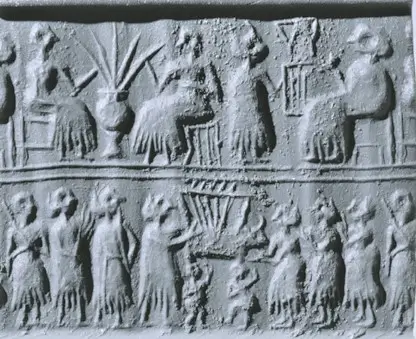
In the later Sumerian period, the groom’s father would swear an oath in the name of the king before priests and witnesses, saying, “May my son and rightful heir marry so-and-so, daughter of so-and-so.” The ceremonies were conducted by a religious priest.
The approval of both parents was essential, followed by a verbal agreement and a feast. The woman would then become a lawful wife, with this formalized by the payment of the bride price and gifts, referred to as “nig-de-a” by the Sumerians.
These included foodstuffs such as grains, meat, butter, dates, and fruit, delivered to the bride’s house in dishes.
| Term | Language | Meaning | Legal Context | Period |
|---|---|---|---|---|
| namdam-ší | Sumerian | Marriage | Formal marital union | Early Dynastic – Ur III |
| akāzu | Akkadian | To take (a wife) | Legal act of marriage | Old Akkadian – Old Babylonian |
| nig-de-a | Sumerian | Bride price | Marriage payment & compensation | Ur III – Old Babylonian |
| ka.kesda | Sumerian | Marriage contract | Written legal guarantee | Ur III – Old Babylonian |
| tag | Sumerian | Divorce | Legal dissolution of marriage | Early Dynastic onward |
The Marriage Contract in Sumerian Society
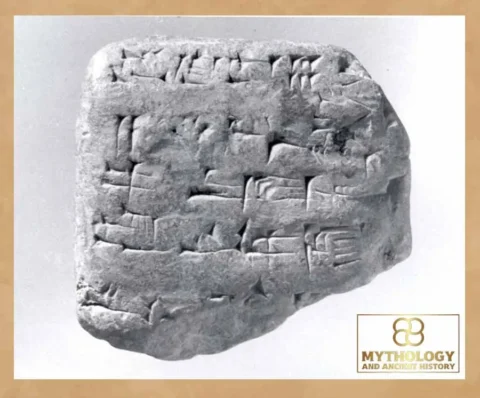
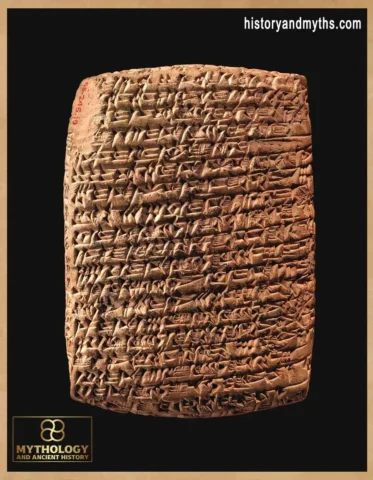
It was often written by the groom and kept by the bride to ensure the rights of any legitimate children, recorded on a small clay tablet.
A model of written contracts in Sumerian from the reign of King Samsu-iluna (1749–1712 BCE) indicates that the bride paid the bride price, which she could reclaim along with the dowry if divorced by her husband.
Conversely, if she initiated the divorce, she lost the bride price and had to pay the dowry to her husband.
Marriage & Divorce in Sumerian Law — At a Glance
- Marriage was a legal institution, not merely a social custom.
- Written contracts protected the rights of wives and legitimate children.
- Bride price and dowry defined financial responsibilities during marriage and divorce.
- Divorce was legally regulated and subject to penalties and compensation.
- Priests and civic authorities supervised marital legality.
Types of Marriage in Sumerian Society and Legal Variations
It appears that marriage was performed by a priest who poured oil on the heads of the bride and groom, who then paid a specified amount to the priest.
Continue Reading
Divorce in Sumerian Society
Urukagina’s reforms mentioned that before his time, a man wishing to divorce his wife had to pay five shekels of silver to the governor and one shekel to the chief minister, implying that the man needed the approval of authorities before divorcing.
A wife could divorce her husband in rare and specific cases, and divorce was called “tag” in Sumerian.
Sumerian laws did not prevent a husband from divorcing a wife who had children, but they placed certain conditions to balance his will with his responsibility to ensure the support of his ex-wife and children.
For example, a provision in the Law of Eshnunna stated that if a man divorced his wife after having children and took a second wife, he would be expelled from his home and sever all ties with his property.
On the other hand, divorce from a barren wife was relatively easy and acceptable.
A wife could divorce her husband if she could prove his misconduct and involvement in forbidden acts.
A Sumerian text illustrates this: after the husband had given the marriage gifts and performed the marriage rites (pouring oil), the wife filed a complaint with the city priests accusing her husband of engaging in homosexual acts.
After she proved to the judges that she had seen her husband with another man, the judges, on behalf of the king, shaved the husband’s head, pierced his nose, and paraded him in disgrace. The wife received her dowry from the husband’s possessions and left him.
Key Takeaways
- Sumerian marriage required formal consent, ritual validation, and legal documentation.
- Marriage contracts ensured inheritance rights and financial protection.
- Divorce laws balanced male authority with economic responsibility.
- Women could initiate divorce under specific legal conditions.
- Sexual misconduct could lead to public legal punishment.
Frequently Asked Questions
Was marriage mandatory in Sumerian society?
Marriage was socially encouraged but legally structured rather than compulsory.
Did Sumerian women have legal rights in marriage?
Yes. Written contracts protected their financial and inheritance rights.
Could a woman initiate divorce in ancient Sumer?
Yes, but only under specific legal circumstances.
What role did priests play in marriage?
Priests supervised rituals and validated marital legality.
Was polygamy common in Sumerian society?
Monogamy was the dominant legal norm, despite rare debated exceptions.
What happened if a husband divorced his wife after having children?
He remained legally responsible for the support of his former wife and children.
How was sexual misconduct punished?
Such acts could result in public legal penalties imposed by city authorities.
Sources & Rights
- Roth, Martha T. Law Collections from Mesopotamia and Asia Minor. Atlanta: Scholars Press.
- Westbrook, Raymond. Old Babylonian Marriage Law. Journal of the American Oriental Society.
- Bottéro, Jean. Mesopotamia: Writing, Reasoning, and the Gods. University of Chicago Press.
- Kramer, Samuel Noah. The Sumerians. University of Chicago Press.
- Hallo, William W. The Context of Scripture. Leiden: Brill.
Written by H. Moses — All rights reserved © Mythology and History