Social Classes in Mesopotamian Society: Structure and Hierarchy
Social classes in Mesopotamian society were not simple labels of wealth or power. They were legal and economic positions shaped by institutions, obligations, and access to authority. This article explains how the Mesopotamian social hierarchy was structured, why it emerged in this form, and how different classes interacted as parts of a single system—without focusing on individual cases, punishments, or mobility already discussed elsewhere.
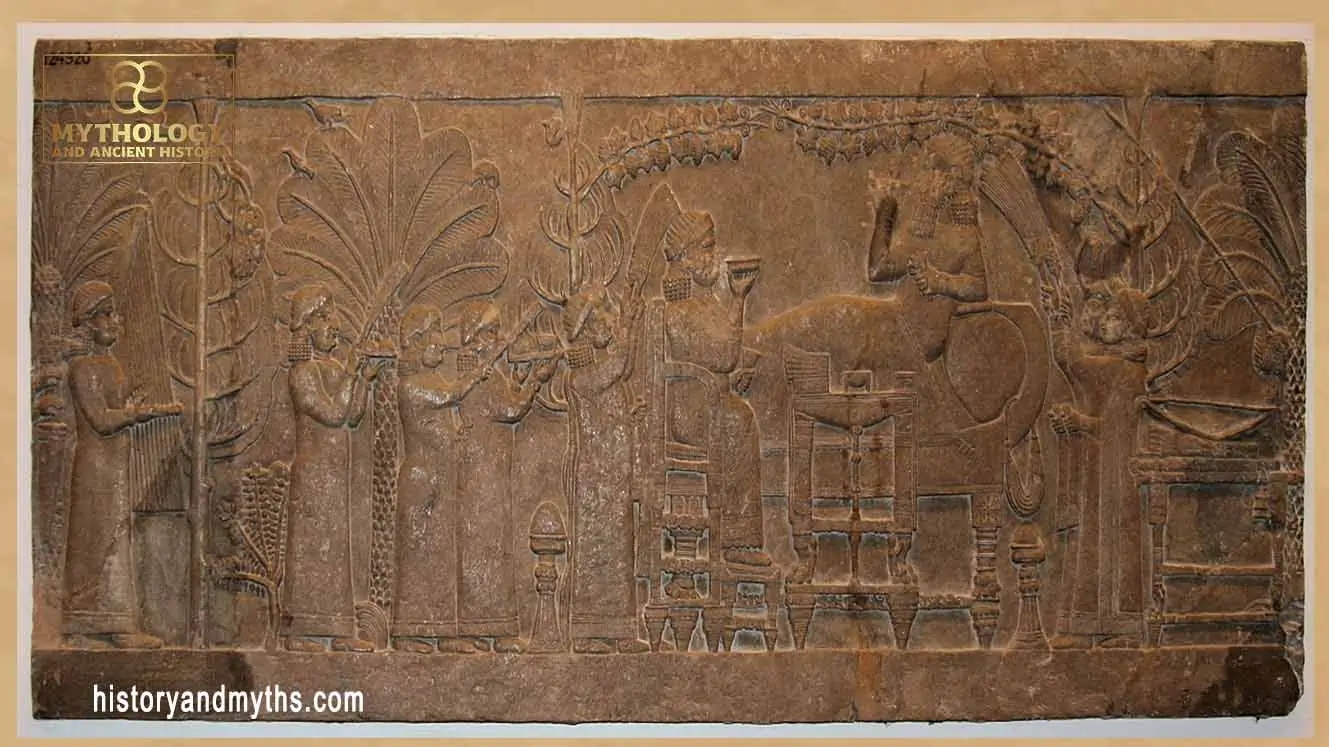
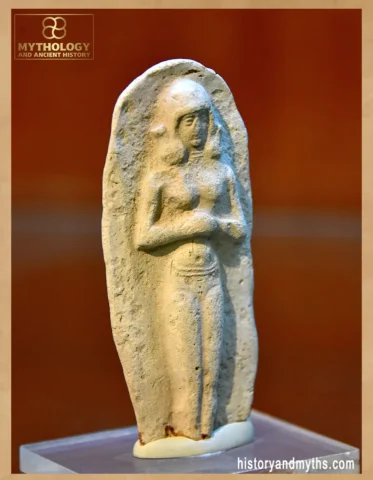
Extracted from the original photograph by Steve F-E-Cameron (Merlin-UK), 2020.
Licensed under Creative Commons Attribution-ShareAlike (CC BY-SA 3.0) and GNU Free Documentation License (GFDL) via Wikimedia Commons.
What “Social Class” Meant in Mesopotamian Society
In Mesopotamia, social class was not defined by income or lifestyle alone. It was a legal position embedded in economic relationships—a person’s standing depended on their rights, obligations, and degree of autonomy within institutions such as the household, the temple, or the palace. Class described how an individual was positioned inside these structures, not simply where they stood on a ladder of wealth.
This system produced clearly differentiated statuses: individuals with full legal capacity, people whose autonomy was limited by service or obligation, and those treated primarily as property. These categories were not abstract ideals; they functioned as administrative tools that allowed authorities to assign labor, manage resources, and allocate responsibility.
Understanding social class this way avoids modern assumptions. Mesopotamian hierarchy was not primarily about prestige or consumption—it was about control, access, and accountability. Class determined how a person interacted with the law, the economy, and institutions, forming the backbone of social organization rather than a loose social ranking.
| Social Category | Legal Capacity | Relation to Institutions |
|---|---|---|
| Fully Free Individuals | Full legal autonomy | Direct interaction with household, temple, or palace |
| Dependents | Limited legal autonomy | Bound by service, debt, or institutional attachment |
| Enslaved People | No independent legal capacity | Fully controlled by owners or institutions |
How Institutions Shaped the Social Hierarchy
Social classes in Mesopotamia did not emerge spontaneously from wealth differences; they were produced and maintained by institutions. The household, the temple, and the palace acted as organizing centers that defined access to land, labor, protection, and legal authority. A person’s class was largely determined by their relationship to one of these institutions.
The household formed the basic unit of status, but temples and palaces expanded this structure on a larger scale. By controlling land, storage, and redistribution, these institutions created layers of dependence and autonomy. Individuals tied to them occupied different legal and economic positions depending on the nature of their service and the degree of control exercised over them.
Through this system, hierarchy became functional. Institutions did not simply reflect social classes; they actively generated them, assigning roles and obligations that stabilized production and governance. Social class, therefore, was less a personal attribute and more a structural outcome of institutional organization.
The institutional mechanisms that created dependency and limited autonomy are examined in detail in a dedicated article on free people and dependents in Mesopotamian society.
The Main Social Categories Within the System
Mesopotamian society was organized around a small number of distinct social categories, each defined by its legal capacity and relationship to authority. These categories were not equal in rights or obligations, but they were interdependent within a single social system.
At the top stood individuals with full legal autonomy. They could own property, enter contracts independently, and bear personal legal responsibility. Their status allowed them to interact directly with institutions rather than through intermediaries.
Below them were people whose legal autonomy was limited by obligation. Their position was shaped by service, debt, or institutional attachment rather than by ownership. While they remained legally recognized persons, their capacity to act independently was constrained.
At the bottom were those treated primarily as property rather than legal agents. Their social role was defined less by rights and more by control and management. This category completed the hierarchy by providing a labor base fully absorbed into the authority of others.
These categories should not be understood as isolated groups. They functioned together, forming a layered structure in which autonomy, obligation, and control were distributed unevenly but systematically across society.
The legal distinctions between free individuals, dependents, and enslaved people are examined in detail in separate articles dedicated to each group within Mesopotamian society.
Core Framework
- Social class in Mesopotamia was a legal and institutional position.
- Hierarchy was shaped by access to authority, not income alone.
- Institutions actively produced and maintained social categories.
- The system balanced control, obligation, and stability.
© historyandmyths.com — Educational use
Was the Social System Rigid or Flexible?
Mesopotamian social hierarchy was neither completely fixed nor fully open. Status was anchored in legal position and institutional attachment, which made class boundaries stable in principle. At the same time, economic pressure, debt, service, and institutional needs introduced limited forms of movement within the system.
This flexibility did not mean equality of opportunity. Movement usually occurred within controlled pathways, often downward rather than upward, and was shaped by circumstances rather than personal choice. Individuals could lose autonomy through obligation, while regaining full independence required institutional approval and economic recovery.
Social class, therefore, functioned as a managed hierarchy. It allowed adjustment in response to economic stress without dissolving the structure itself. The system absorbed change while preserving order, balancing rigidity with controlled adaptability.
The conditions under which individuals could move between social positions are examined in detail in a dedicated article on social mobility in Mesopotamia.
How Social Class Structured Rights and Obligations
In Mesopotamian society, rights and obligations were distributed according to social class rather than granted uniformly. Legal capacity determined what an individual could own, decide, or be held accountable for, while obligation defined the limits placed on action and responsibility. Class was therefore the framework through which access and duty were organized.
Individuals with full legal autonomy carried personal responsibility for contracts, property, and liability. Those with limited autonomy operated within boundaries set by service, debt, or institutional attachment, which shaped their daily obligations and restricted independent decision-making. At the lowest level, control replaced obligation, and responsibility was absorbed by those who exercised authority over them.
This structure ensured predictability. Rights were matched to capacity, and obligations were aligned with control. Rather than treating everyone the same, the system allocated responsibility in ways that kept labor, resources, and authority functioning without constant renegotiation.
How Social Classes Interacted in Everyday Life
Daily life in Mesopotamia was shaped by constant interaction between social classes rather than strict separation. Markets, workshops, agricultural labor, and legal transactions brought free individuals, dependents, and enslaved people into regular contact. These interactions were structured by hierarchy, but they were also routine and functional.
Free individuals acted as household heads, employers, creditors, and legal agents. Dependents worked within these frameworks as laborers, retainers, or institutional workers, often embedded in households or attached to temples and palaces. Enslaved people performed tasks under direct control, forming part of the same productive environments rather than existing apart from society.
What defined these interactions was not isolation, but role differentiation. Each class occupied a predictable position within shared spaces, allowing economic and administrative life to function smoothly. Social distance existed, but it was managed through obligation, supervision, and authority rather than physical segregation.
Everyday interaction thus reinforced hierarchy without requiring constant coercion. The social system operated through familiarity and routine, making class distinctions visible, normalized, and continuously reproduced in daily practice.
Social classes in Mesopotamian society were not accidental divisions or symbolic rankings. They formed a structured system through which authority, labor, and responsibility were distributed and managed. Class determined how individuals related to institutions, how they interacted with one another, and how stability was maintained across economic and legal life. Understanding this hierarchy as a functional framework—rather than a simple scale of privilege—provides the foundation for analyzing law, dependency, mobility, and power in Mesopotamia as interconnected elements of a single social order.
Key Takeaways
- Mesopotamian society was structured around legal status, not wealth.
- Institutions played a central role in shaping social hierarchy.
- Social classes were interdependent, not isolated.
- Hierarchy allowed flexibility without dissolving order.
- Class structured daily interaction, rights, and obligations.
FAQ
What defined social class in Mesopotamia?
Social class was defined by legal capacity, obligation, and relationship to institutions rather than by wealth alone.
Were Mesopotamian social classes fixed?
No. The system allowed limited movement while preserving overall hierarchy.
What role did temples and palaces play?
They acted as major institutions shaping access to land, labor, and authority.
Were dependents considered slaves?
No. Dependents were legally recognized persons with limited autonomy.
Did social class affect daily life?
Yes. It structured work, interaction, responsibility, and access to protection.
Why did the system remain stable?
Because hierarchy aligned control, obligation, and economic function.
Sources & Rights
- Postgate, J. N. Early Mesopotamia: Society and Economy at the Dawn of History. London: Routledge, 1992.
- Oppenheim, A. Leo. Ancient Mesopotamia: Portrait of a Dead Civilization. Chicago: University of Chicago Press, 1977.
- Van de Mieroop, Marc. A History of the Ancient Near East. 3rd ed. Malden, MA: Wiley-Blackwell, 2016.
- Westbrook, Raymond, ed. A History of Ancient Near Eastern Law. Leiden: Brill, 2003.
- Snell, Daniel C. Life in the Ancient Near East. New Haven: Yale University Press, 1997.
Written by H. Moses — All rights reserved © Mythology and History