Daily Life of Farmers in Mesopotamia: Work, Risk, and Survival
What was life really like for farmers in ancient Mesopotamia?
It was harsh, uncertain, and tightly controlled. Mesopotamian farmers lived under constant pressure—from floods and droughts, heavy taxation, forced labor, and the authority of temples and palaces. Their survival depended not only on water and land, but on obedience to gods, priests, and rulers.
This article explores the daily life of Mesopotamian farmers as real people, not abstract laborers. By examining land ownership, irrigation systems, taxation, religious fear, and seasonal risk, we reveal how agriculture shaped one of the world’s first civilizations—and why farming in Mesopotamia was as much about endurance as it was about cultivation.
Who Were the Farmers of Mesopotamia?
Farmers formed the backbone of Mesopotamian civilization, but they were not a single, uniform class. Most agricultural workers lived in rural villages clustered around rivers and canals, yet their legal and economic status varied sharply. Some were free smallholders cultivating family plots, while many others worked land owned by temples or royal palaces under systems of obligation rather than choice.
Land in Mesopotamia was rarely independent of power. Large tracts belonged to religious institutions and the state, and farmers assigned to these lands were bound by duties that included crop quotas, seasonal labor, and participation in public works such as canal maintenance. In return, they received rations, protection, and access to irrigation—yet this relationship placed them in a constant state of dependency.
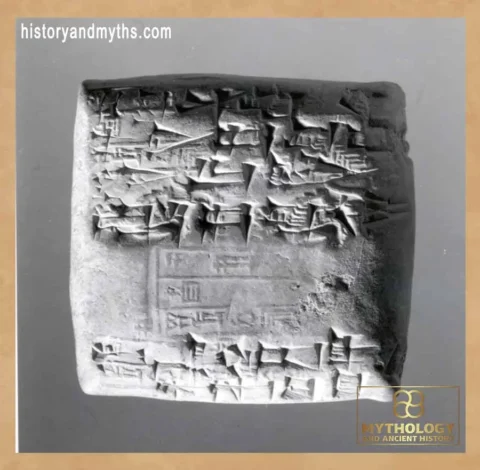
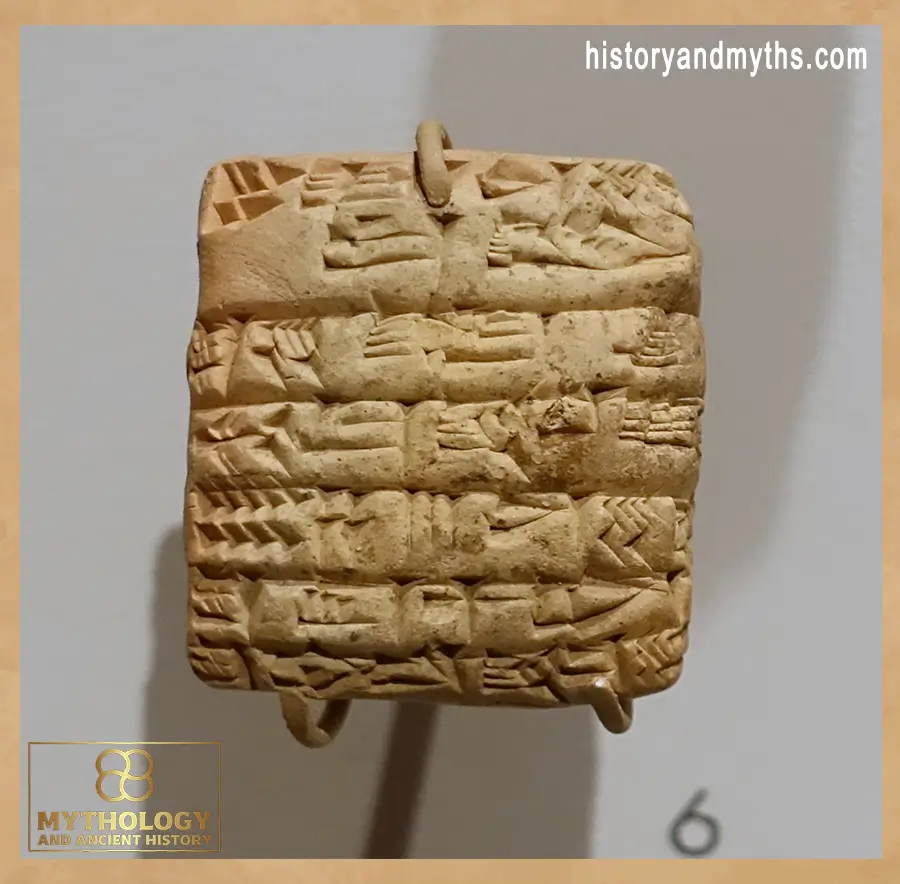
Unlike later agrarian societies where private land ownership became dominant, Mesopotamian farming operated within a managed economy. Written records from cities like Uruk and Lagash show that agricultural production was closely monitored, measured, and redistributed. Farmers were accountable not only to local officials but ultimately to divine authority, since temples claimed that the land itself belonged to the gods.
This structure shaped how farmers understood their place in the world. They were not simply producers of food; they were participants in a cosmic and political order where successful harvests reflected divine favor and failure implied disorder, neglect, or guilt. Farming, therefore, was never just labor—it was obedience, ritual, and survival combined.
| Aspect | Reality of Farming in Mesopotamia |
|---|---|
| Land Ownership | Mostly controlled by temples and palaces, not individual farmers |
| Water & Irrigation | State-managed canals maintained through compulsory labor |
| Economic System | Quotas and taxes paid in crops, regardless of harvest success |
| Daily Labor | Seasonal, physically demanding work involving entire households |
| Religious Dimension | Farming seen as obedience to divine order, not private enterprise |
| Main Risks | Floods, drought, soil salinity, debt, and institutional punishment |
Land, Water, and Irrigation: Controlling the Rivers
Agriculture in Mesopotamia depended entirely on controlling water, but that control was never individual. The rivers were unpredictable—flooding violently or receding without warning—so irrigation required coordinated labor, planning, and authority. Canals, dikes, and reservoirs were built and maintained collectively, usually under the supervision of temples or palace officials rather than by farmers themselves.
Irrigation systems tied farmers directly to institutions of power. Maintaining canals was not optional work; it was a civic and religious obligation. Farmers were regularly summoned for corvée labor to dredge canals, repair embankments, and manage water flow during critical seasons. Failure to participate threatened not only crops but social order, making water management a political issue as much as an environmental one.
Control over water also meant control over land productivity. Fields closer to primary canals were more fertile and more valuable, and these were typically assigned to temples or elites. Peripheral lands, more vulnerable to drought or salinization, were worked by dependent farmers who bore the greatest risk. Over time, poor drainage and excessive irrigation led to soil salinity, reducing yields and forcing shifts from wheat to barley—an adjustment visible in administrative records from cities such as Uruk and Lagash.
For the farmer, water was both a lifeline and a threat. A well-managed canal meant survival; a broken embankment could erase an entire year’s labor overnight. This constant uncertainty shaped agricultural life into a cycle of vigilance rather than abundance. Farming in Mesopotamia was not about mastering nature—it was about negotiating with it under strict institutional control.
Taxes, Rations, and Agricultural Obligation
Mesopotamian farmers did not farm solely for their own subsistence. A significant portion of their production was claimed by temples and palaces in the form of taxes, quotas, and obligatory deliveries. These were not symbolic offerings; they were fixed expectations recorded in administrative texts and enforced by officials. Grain, dates, wool, and livestock moved upward from villages into institutional storehouses that sustained cities, priesthoods, and the ruling elite.
Payment was often calculated in kind rather than coin. Farmers attached to temple or palace land received standardized rations—barley, oil, and sometimes beer—in exchange for their labor. These rations were sufficient for survival but left little margin for failure. A poor harvest did not cancel obligations; it increased debt. Many farmers fell into cycles of borrowing grain from institutions that already controlled their land, binding them more tightly to systems of dependency.
Debt and obligation blurred the line between free farmers and coerced laborers. Legal texts indicate that failure to meet agricultural quotas could result in loss of land, forced service, or the transfer of family members into debt bondage. Farming, therefore, carried constant economic pressure. Productivity was not rewarded with autonomy; it was absorbed into a redistributive system that prioritized stability over individual prosperity.
This structure explains why Mesopotamian agriculture was deeply conservative. Farmers avoided experimentation and risk because failure carried severe consequences. Their primary goal was not surplus or innovation but compliance. To meet quotas was to survive; to exceed them rarely changed one’s status. Agriculture functioned less as a path to wealth and more as a mechanism that sustained institutional power across generations.
Agriculture as a System of Control
Mesopotamian agriculture was designed to ensure institutional stability rather than farmer prosperity.
While farmers absorbed environmental and economic risks, temples and palaces controlled land, water, and surplus,
turning farming into a mechanism of obedience and endurance rather than social mobility.
© historyandmyths.com — Educational use
Daily Life of a Mesopotamian Farmer: Work, Seasons, and Survival
The daily life of a Mesopotamian farmer was governed by seasonal rhythms rather than personal choice. Agricultural work followed the cycle of flooding, planting, harvesting, and maintenance, leaving little room for rest outside brief intervals between seasons. From early morning to sunset, farmers labored in the fields, managed irrigation channels, tended livestock, and transported produce, often with simple tools and heavy physical strain.
Work intensified during planting and harvest seasons, when entire households—including women and older children—were drawn into agricultural labor. Tasks were repetitive but demanding: plowing hardened soil, sowing seeds by hand, cutting grain with sickles, and carrying heavy loads to storage facilities. These activities were not merely economic; they were acts of survival in an environment where a single failed season could lead to hunger or debt.
Life was also shaped by constant uncertainty. Floods could destroy crops overnight, while droughts threatened entire regions. Farmers had no reliable means to predict these events beyond observation and ritual. As a result, agricultural life fostered caution rather than ambition. The aim was consistency—producing enough to meet obligations and sustain the household, not to expand or accumulate wealth.
Despite this hardship, farming communities maintained strong social bonds. Shared labor, collective canal maintenance, and seasonal cooperation created networks of mutual reliance. These ties were essential, because individual resilience was limited. The farmer’s life was defined less by personal agency than by endurance within a system that demanded labor, obedience, and adaptation year after year.
Continue Reading
Religion, Fear, and the Farmer’s Worldview
For Mesopotamian farmers, agriculture was inseparable from religion. The success or failure of crops was never understood as a purely natural process; it reflected the will of the gods. Floods, droughts, pests, and soil exhaustion were interpreted as signs of divine anger, neglect, or imbalance. Farming, therefore, was practiced under a constant sense of uncertainty shaped by fear rather than confidence.
Farmers believed that the land ultimately belonged to the gods, not to humans. Deities such as Enlil and Enki were thought to control weather, fertility, and water, making ritual compliance essential to survival. Offerings, prayers, and seasonal rites were not acts of devotion alone; they were practical strategies aimed at securing divine stability. A neglected ritual could be as dangerous as a broken canal.
This religious worldview reinforced obedience to institutions. Since temples claimed to act on behalf of the gods, agricultural obligations carried moral weight. Paying taxes, delivering quotas, and participating in communal labor were framed not only as civic duties but as religious responsibilities. Disobedience risked divine punishment, which could manifest as crop failure or illness rather than direct retribution.
Fear played a central role in shaping agricultural mentality. Farmers lived with the belief that they were always one misstep away from disaster—whether human or divine. Religion did not offer reassurance so much as explanation. It gave meaning to suffering and failure, even when it provided no escape from them. In this way, belief systems helped farmers endure a life defined by labor, uncertainty, and submission to forces beyond their control.
Risks, Failure, and Punishment in Agricultural Life
Agricultural failure in Mesopotamia was never treated as a neutral outcome of nature. When crops failed, responsibility fell on the farmer long before it fell on rivers or weather. Poor yields were often interpreted as evidence of negligence, disobedience, or divine displeasure, and the consequences could be severe. Failure meant hunger, debt, or loss of land—but it could also mean punishment.
Legal and administrative texts show that farmers were held accountable for meeting quotas regardless of circumstances. Flood damage, drought, or soil exhaustion did not automatically excuse shortfalls. Those who failed to deliver expected produce could lose access to land, be reassigned to forced labor, or fall into long-term dependency on temple or palace institutions. In extreme cases, entire households were absorbed into debt bondage.
Risk was therefore unevenly distributed. Farmers working marginal lands—areas vulnerable to salinization or irregular water supply—faced greater danger than those assigned fertile plots near major canals. Yet these risks were not matched by greater protection. The system prioritized continuity of production, not fairness. Agricultural life demanded endurance, not innovation, because experimentation increased the likelihood of failure and punishment.
This constant exposure to loss shaped a cautious, conservative farming culture. Survival depended on meeting expectations rather than improving conditions. The farmer’s world was defined by limits—environmental, economic, and religious—and these limits reinforced one another. Agriculture sustained Mesopotamian civilization, but it did so by placing its greatest burden on those least able to escape it.
- Farmers formed the backbone of Mesopotamian civilization but lacked autonomy.
- Land and irrigation systems were controlled by temples and royal palaces.
- Taxes and quotas were enforced regardless of natural conditions.
- Daily agricultural life was physically exhausting and economically restrictive.
- Religion framed farming success or failure as divine judgment.
- Agriculture sustained the state while limiting farmer mobility.
Frequently Asked Questions
Did Mesopotamian farmers own their land?
Most farmland belonged to temples or royal palaces, with farmers working it under obligation rather than ownership.
How were farmers compensated for their work?
They were usually paid in rations such as barley, oil, and beer instead of wages.
What happened if a farmer failed to meet quotas?
Failure could result in debt, loss of land, or forced labor.
Was farming linked to religion?
Yes. Agricultural success or failure was seen as a sign of divine favor or punishment.
Why was farming so risky in Mesopotamia?
Unpredictable rivers, soil salinity, and rigid institutional demands made farming unstable.
Sources & Rights
- Adams, Robert McC. The Land Behind Baghdad: A History of Settlement on the Diyala Plains. Chicago: University of Chicago Press, 1965.
- Algaze, Guillermo. The Uruk World System: The Dynamics of Expansion of Early Mesopotamian Civilization. Chicago: University of Chicago Press, 2005.
- Bottéro, Jean. Mesopotamia: Writing, Reasoning, and the Gods. Chicago: University of Chicago Press, 1992.
- Childe, V. Gordon. Man Makes Himself. London: Watts & Co., 1936.
- Crawford, Harriet. Sumer and the Sumerians. Cambridge: Cambridge University Press, 2004.
- Foster, Benjamin R. Before the Muses: An Anthology of Akkadian Literature. Bethesda: CDL Press, 2005.
- Gelb, Ignace J. Ancient Mesopotamia: Society and Economy. Chicago: University of Chicago Press, 1965.
- Jacobsen, Thorkild. The Treasures of Darkness: A History of Mesopotamian Religion. New Haven: Yale University Press, 1976.
- Nissen, Hans J. The Early History of the Ancient Near East, 9000–2000 B.C.. Chicago: University of Chicago Press, 1988.
- Postgate, J. Nicholas. Early Mesopotamia: Society and Economy at the Dawn of History. London: Routledge, 1992.
- Roux, Georges. Ancient Iraq. London: Penguin Books, 1992.
- Steinkeller, Piotr. “The Economic Organization of the Ur III State.” In Power and Economic Structure in Ancient Mesopotamia. Madrid: Consejo Superior de Investigaciones Científicas, 2004.
- Van De Mieroop, Marc. A History of the Ancient Near East. Oxford: Blackwell Publishing, 2007.
Written by H. Moses — All rights reserved © Mythology and History