Mesopotamian Statues: Religion, Power, and Political Art
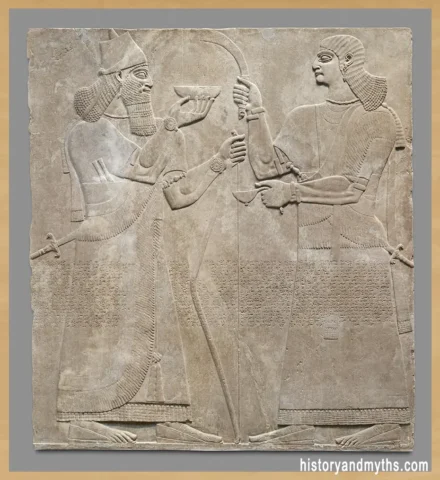
Mesopotamian statues were not created as decorative objects. They functioned as permanent substitutes for worshippers, visual representations of royal authority, and tools for projecting social status inside temples and public spaces.
Placed before gods or displayed in political contexts, these figures were believed to “act” on behalf of their owners—praying, witnessing, and symbolizing loyalty even in physical absence. Their materials, scale, and posture were carefully chosen to communicate legitimacy and hierarchy.
This article examines Mesopotamian statues as instruments of power, devotion, and institutional control, explaining how sculpted bodies became central to religious practice and political identity in the ancient Near East.
What Were Mesopotamian Statues?
Mesopotamian statues were three-dimensional sculpted figures created for religious, political, and institutional purposes rather than aesthetic display. They were designed to represent humans, rulers, or symbolic beings in permanent physical form.
Most statues functioned as substitutes for real individuals. When placed in temples, they were believed to stand before the gods on behalf of their owners, maintaining continuous prayer and devotion. In political contexts, statues projected royal presence and authority beyond the ruler’s physical location.
Their poses, clothing, and inscriptions were standardized to communicate status, loyalty, and legitimacy. Nothing in their design was accidental. Each element served a social or religious function.
Unlike reliefs, which addressed large audiences, statues operated on a more personal and institutional level. They connected individual identity directly to divine and political systems.
| Aspect | Details |
|---|---|
| Primary Function | Religious representation and political authority |
| Main Locations | Temples, palaces, public courtyards |
| Common Materials | Limestone, alabaster, diorite, bronze |
| Typical Subjects | Worshippers, kings, symbolic figures |
| Political Role | Projection of royal legitimacy |
| Religious Role | Permanent devotional presence |
Statues in Temples and Worship
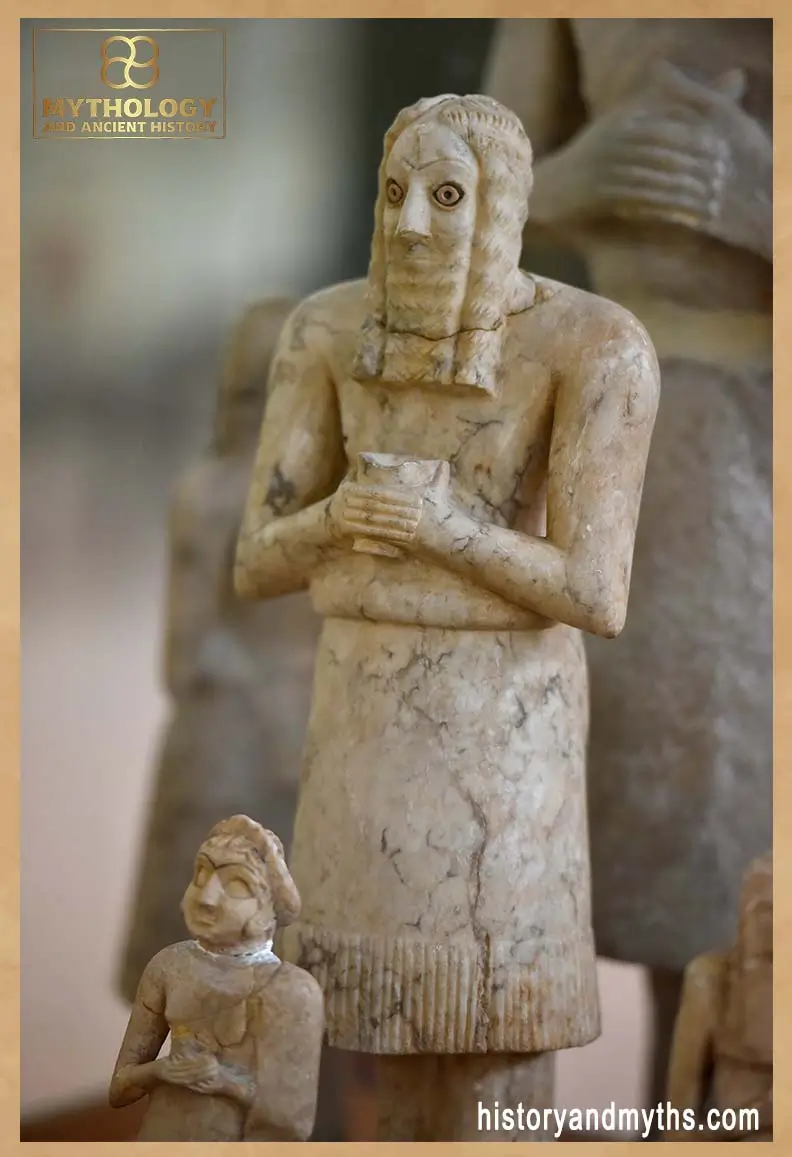
In Mesopotamian religion, statues placed inside temples served as permanent representatives of worshippers. Individuals donated these figures to stand before the gods in continuous acts of prayer and loyalty.
These statues were believed to “see,” “listen,” and “speak” symbolically on behalf of their owners. Large, wide-open eyes—common in early Sumerian statues—expressed constant attention to the divine presence.
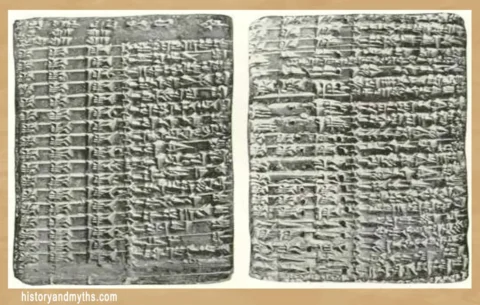
Many temple statues carried inscriptions stating the donor’s name and purpose. This transformed the sculpture into a legal-religious record, linking devotion to personal identity and social standing.
By filling temples with human figures, religious institutions created visual communities of loyalty around major deities. Worship was no longer limited to physical attendance; it became materially permanent.
Statues in temples therefore functioned as tools of spiritual continuity, reinforcing both individual piety and institutional authority.
Royal Statues and Political Power
Royal statues in Mesopotamia were instruments of political communication rather than commemorative art. They projected the ruler’s authority into temples, cities, and conquered territories.
By installing statues in sacred and administrative spaces, kings extended their presence beyond physical boundaries. Even in absence, the ruler remained symbolically visible, watching, judging, and legitimizing decisions.
These statues emphasized hierarchy through scale, posture, and materials. Larger size, rigid stance, and costly stone or metal signaled dominance and divine favor. Inscriptions reinforced this message by linking kingship to gods and military success.
Some royal statues functioned as boundary markers or diplomatic symbols, asserting control over contested regions. Their destruction by enemies was therefore a political act aimed at erasing legitimacy.
Royal sculpture, in this context, was a form of permanent propaganda. It transformed political power into physical form and embedded authority within everyday religious and civic life.
Materials, Craftsmanship, and Scale
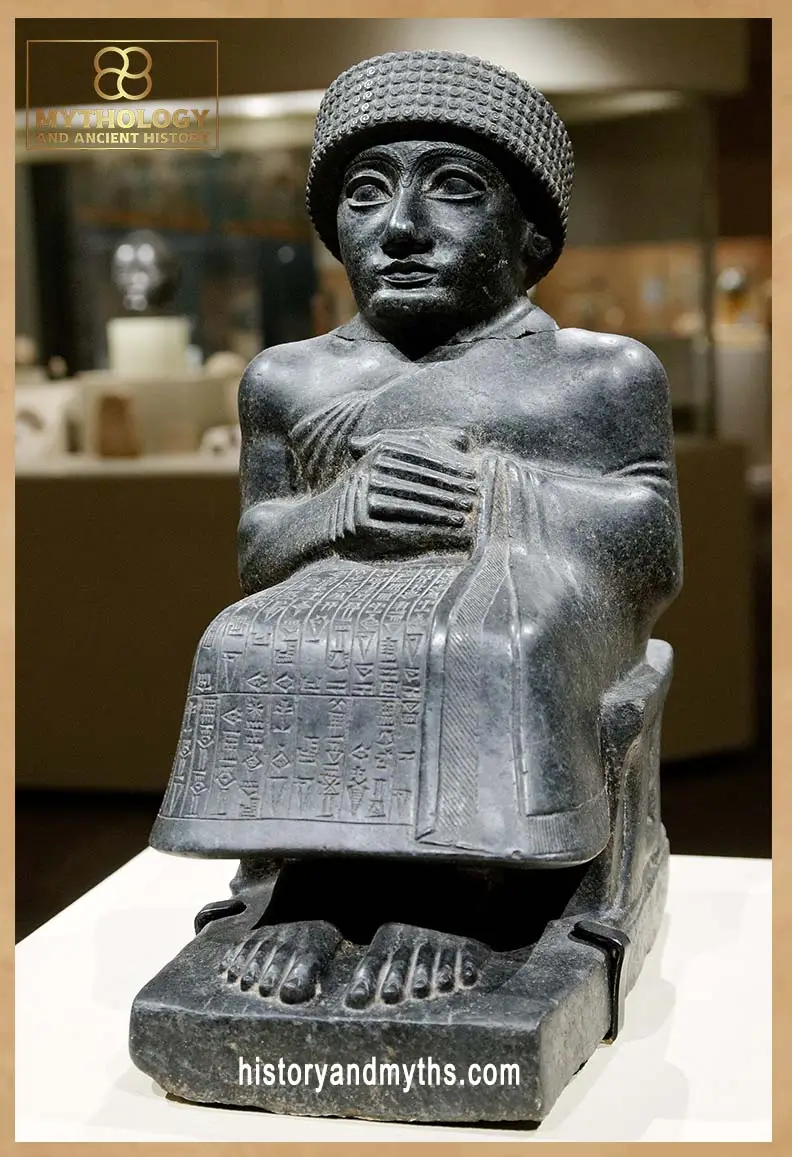
The materials and size of Mesopotamian statues were deliberate indicators of status and authority. Stone, metal, and imported materials were costly and difficult to obtain, making their use a visible display of wealth and institutional power.
Common materials included limestone, alabaster, diorite, and bronze. Hard stones required advanced tools and skilled labor, restricting high-quality sculpture to elite patrons and state-sponsored workshops.
Craftsmanship followed controlled standards. Proportions, facial features, and surface finishing were carefully regulated to ensure symbolic clarity and durability. Imperfect work risked undermining the statue’s religious or political credibility.
Scale also carried meaning. Small figures emphasized personal devotion, while monumental statues asserted public authority. Size reflected the social distance between ruler, elite, and common worshipper.
Production was typically centralized in workshops linked to temples and palaces. This ensured stylistic consistency and reinforced institutional control over visual culture.
How Statues Shaped Power in Mesopotamia
- Represented worshippers before the gods.
- Extended royal presence into public space.
- Reinforced institutional hierarchy.
- Linked authority to divine legitimacy.
- Preserved social memory.
- Controlled visual access to power.
© historyandmyths.com — Educational use
Public Spaces and Sacred Contexts
The placement of statues in Mesopotamia determined how they were perceived and how they functioned. Location was a key factor in shaping religious meaning and political influence.
Inside temples, statues operated within controlled sacred environments. Their access was limited, reinforcing elite mediation between gods and the wider population. Visibility was restricted, but authority was intensified.
In public and administrative spaces, statues communicated power to broader audiences. Positioned in courtyards, gateways, and official buildings, they framed daily activities within a visual hierarchy of rule and loyalty.
Some statues were placed along processional routes and ceremonial paths. These locations linked sculpture to ritual movement, reinforcing collective identity and state ideology.
The division between sacred and public settings allowed statues to operate on multiple social levels—personal devotion, institutional control, and political messaging—simultaneously.
Destruction, Removal, and Political Control
The destruction and relocation of statues in Mesopotamia were deliberate political acts, not accidental damage. Controlling images meant controlling legitimacy.
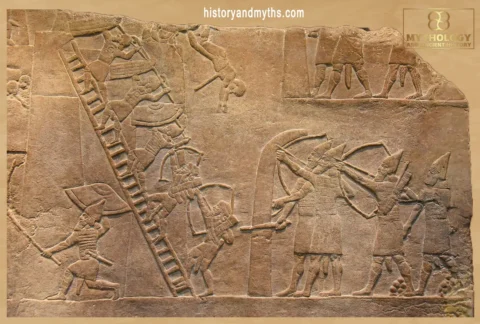
When cities were conquered, invading rulers often smashed, buried, or removed royal and temple statues. This symbolically stripped defeated regimes of divine support and public authority.
Defaced faces, broken heads, and erased inscriptions were common forms of visual punishment. By damaging key features, enemies aimed to neutralize a statue’s religious and political function.
Some statues were taken as trophies and displayed in foreign capitals. This practice transformed sacred and royal images into symbols of domination and humiliation.
Internal political changes also led to removals. Disgraced officials or fallen dynasties sometimes had their statues hidden or destroyed to erase their public memory.
Statue destruction was therefore a form of historical rewriting. Power was not only exercised through creation, but through controlled erasure.
Continue Reading
Archaeology, Survival, and Legacy
Most Mesopotamian statues survive today by accident rather than intention. Their preservation depends on burial conditions, destruction events, and later excavation practices.
Many statues were found hidden beneath temple floors, buried during political crises, or sealed inside abandoned buildings. These contexts often protected them from weathering and reuse. In contrast, statues left in open spaces were frequently recycled or destroyed.
Archaeological discoveries rarely represent complete original settings. Statues are often separated from inscriptions, architectural contexts, and associated objects, limiting full historical reconstruction. What survives reflects patterns of collapse more than everyday life.
Modern museum collections preserve major examples, but early excavations sometimes removed objects without detailed documentation. This has shaped modern interpretations as much as ancient practices.
Despite these limitations, Mesopotamian statues remain essential historical sources. They preserve information about identity, hierarchy, devotion, and political ideology that is absent from many written records.
Their long-term legacy lies in establishing sculpture as a medium of authority. Later Near Eastern, Mediterranean, and imperial traditions continued to use statues as tools of representation, memory, and control—following patterns first developed in Mesopotamia.
Key Takeaways
- Statues served religious and political functions.
- They represented individuals and rulers permanently.
- Materials reflected social hierarchy.
- Placement shaped authority.
- Destruction was a political tool.
- Surviving statues preserve lost systems of power.
Frequently Asked Questions
What were Mesopotamian statues used for?
They represented worshippers and rulers in religious and political contexts.
Where were these statues placed?
Mainly in temples, palaces, and official spaces.
Why did statues have large eyes?
To symbolize constant attention to the gods.
Were statues only for kings?
No, elites and devotees also commissioned statues.
Why were statues destroyed?
To erase political legitimacy.
What materials were most valued?
Diorite, alabaster, and bronze were associated with status.
Why are these statues important today?
They reveal ancient systems of authority and belief.
Sources & Rights
- Frankfort, Henri. Sculpture of the Ancient Near East.
- Winter, Irene J. On Art in the Ancient Near East.
- Van De Mieroop, Marc. A History of the Ancient Near East.
- Kuhrt, Amélie. The Ancient Near East.
- Bahrani, Zainab. The Graven Image.
- Collon, Dominique. First Impressions.
- Crawford, Harriet. Sumer and the Sumerians.
- Postgate, J. N. Early Mesopotamia.
- Oates, Joan. Babylon.
- Roaf, Michael. Cultural Atlas of Mesopotamia.
- Hallo, William. The Context of Scripture.
- Snell, Daniel. Life in the Ancient Near East.
- Reade, Julian. Assyrian Sculpture.
- Pittman, Holly. Studies in Near Eastern Art.
- Porada, Edith. Ancient Near Eastern Glyptic.
- British Museum Catalogues.
- Metropolitan Museum of Art Catalogues.
- Louvre Near Eastern Collections.
- Cambridge Ancient History.
- Oxford Handbook of Ancient Mesopotamia.
Written by H. Moses — All rights reserved © Mythology and History