Ancient Egyptian Temple Communities: Work, Markets, and Control
Community life in Ancient Egypt often revolved around temples, not because everyone was a priest, but because temples functioned as local power centers. They created jobs, controlled storage and distribution, attracted markets, and shaped daily routines for the neighborhoods around them. Living in a temple’s shadow meant living close to resources—and close to authority.
Most articles describe temples as religious monuments and stop there. But for ordinary families, the temple was also an employer, a warehouse system, a seasonal festival engine, and a place where order was enforced. Its influence reached beyond rituals into wages, work schedules, local trade, and even conflict.
This guide focuses on the practical reality: who lived near temples, what work existed beyond priesthood, how temple economies affected food and trade, and why sacred institutions could stabilize communities—while also creating tension, inequality, and surveillance.
What “Temples’ Shadow” Really Means (In Real Life)
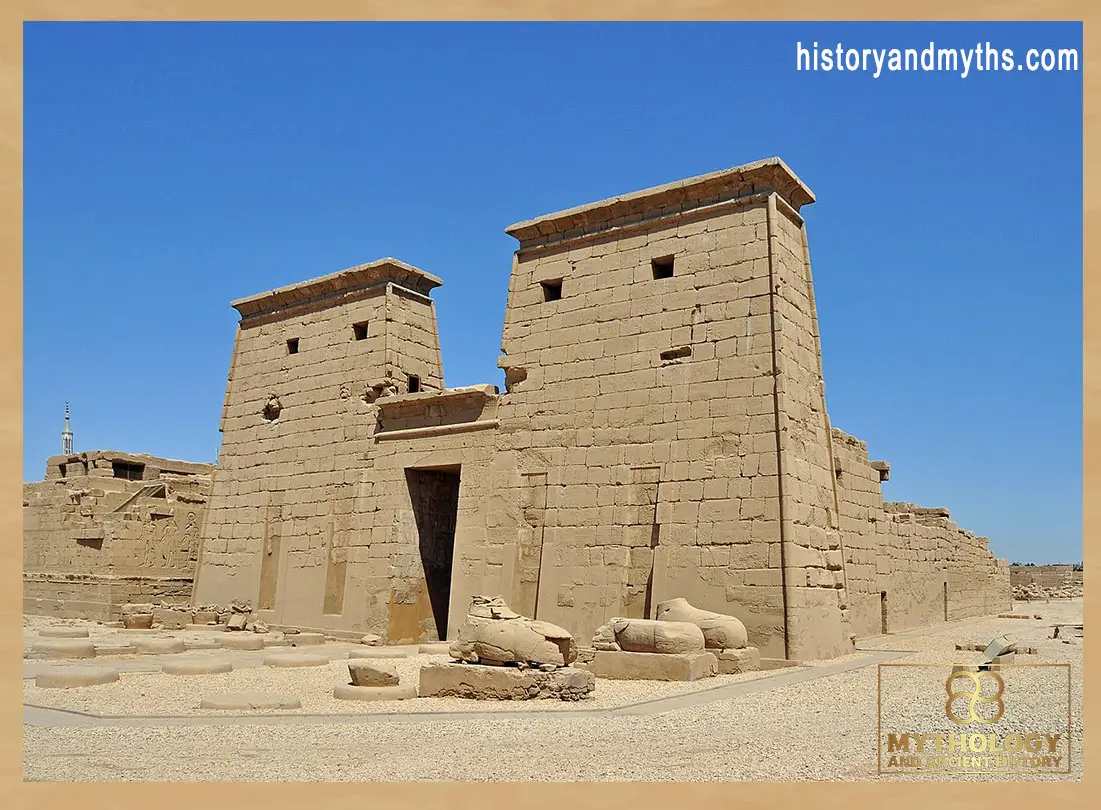
When we say “community life in a temple’s shadow,” we don’t mean religious emotion or constant worship. We mean institutional gravity. A major temple pulled people, work, and resources toward it the way a port pulls trade. If you lived nearby, your daily life was shaped by what the temple needed, what it stored, and what it controlled.
The shadow worked through three practical forces:
First: employment.
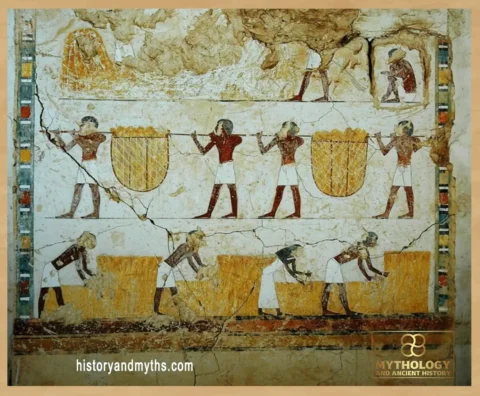
Temples required a constant workforce: not only priests, but scribes, guards, cleaners, porters, craftsmen, cooks, and delivery teams. Many families near temples survived on temple-linked work even if they had no formal religious role.
Second: supply chains.
Temples handled goods at scale—grain, linen, oils, meat, beer, incense, and offerings. That meant storage rooms, inventories, distribution routines, and transport. Communities nearby often became part of this flow as suppliers, laborers, and service providers.
Third: authority.
A temple wasn’t only sacred; it was organized. It had hierarchy, records, discipline, and boundaries. The closer you lived to that structure, the more your life was shaped by rules, supervision, and reputational pressure—sometimes stabilizing, sometimes oppressive.
So the real starting point is this: temples were not passive landmarks. They were systems that turned belief into logistics—and logistics into community life.
| Temple Influence | What It Looked Like in Daily Life | Who It Affected Most | Hidden Cost |
|---|---|---|---|
| Jobs & Employment | Regular roles beyond priests (scribes, guards, porters, repair crews) | Local families near active temples | Dependence on institutional access |
| Storage & Distribution | Warehouses, accounting, measuring, controlled release of goods | Workers, suppliers, transport networks | Surveillance, conflict over allocation |
| Markets & Festivals | Crowds, temporary trade, seasonal income spikes | Sellers, service providers, small traders | Shortages, disputes, crowd tension |
| Authority & Social Control | Rules, records, reputational pressure, exclusion from work | Anyone relying on temple-linked roles | Less privacy, higher risk of accusation |
| Local Networks | Contacts, patronage, opportunity through proximity | Families, women, informal workers | Opportunity tied to visibility |
Who Lived Near Temples (Beyond Priests)
A temple neighborhood was not a uniform “religious community.” It was a service ecosystem. Priests were the visible core, but most people living nearby were there because the temple generated work, demand, and protection. If you want the real picture, think in roles—not social labels.
1) Administrative staff (the quiet elite)
Temples ran on records. Scribes and overseers tracked deliveries, stored goods, assigned labor, and reported shortages. These people often had stable status because they sat inside the paperwork that governed resources.
2) Security and control roles
Guards, gatekeepers, and patrol workers were essential. A major temple had valuable assets and restricted spaces. Control of entry and movement wasn’t symbolic—it was practical.
3) Skilled specialists and maintenance workers
Temples needed constant repair: woodwork, stonework, metal fittings, painting, carpentry, water handling, and tool upkeep. Many of these roles created long-term employment because sacred buildings were expected to last, not to be “finished.”
4) Logistics labor (the invisible engine)
Porters, carriers, boat crews, and delivery hands formed the muscle of the system. Goods had to move daily. When a temple was active, transport was never seasonal—it was routine.
5) Food and drink providers
Temples operated like large households. Preparing offerings, feeding staff, and supplying events required bakers, brewers, cooks, and storage helpers. Even when the work was informal, demand was consistent.
6) Market-adjacent families
Where there is regular distribution and gatherings, sellers appear: small traders, crafts vendors, and service providers. The temple created foot traffic and predictable consumption—especially during festival seasons.
The result was a community shaped by institutional demand. People didn’t have to be religious professionals to be economically dependent on the sacred center. They only had to be close enough to serve it.
Temple Work as a Local Economy (Jobs, Stability, and Dependence)
For families living near a major temple, the temple wasn’t an abstract symbol—it was a job market. The simplest way to understand temple-based community life is to see the temple as a local economy with predictable demand, in a country where many livelihoods were otherwise seasonal.
Temples created two layers of work:
Direct employment meant roles paid and organized inside the institution: administration, security, ritual maintenance, cleaning, and skilled repairs. These workers gained stability because the temple’s calendar kept running even when farming cycles were uncertain.
Indirect employment came from everything the temple pulled into motion: supply, transport, small trade, food preparation, and support services. Even people with no official position could survive by working around the flow the temple generated.
This stability had a cost: dependence. When an economy is temple-centered, families near it become sensitive to temple decisions—who gets assigned work, who is trusted, who gets excluded, and how goods are distributed. A shortage in temple supply chains could ripple outward. A management change could rearrange local opportunity overnight.
That’s why “living in the shadow” wasn’t always comfortable. It could be safer than pure subsistence farming, but it also meant living under a system that could reward loyalty, enforce rules, and quietly decide who belongs inside the circle of reliable people.
Storage and Distribution: Why Temples Controlled Everyday Goods
A major Egyptian temple didn’t influence community life only through belief. It influenced it through storage and distribution. When a place controls where goods are kept, recorded, and released, it becomes a center of power—even for people who never enter the sanctuary.
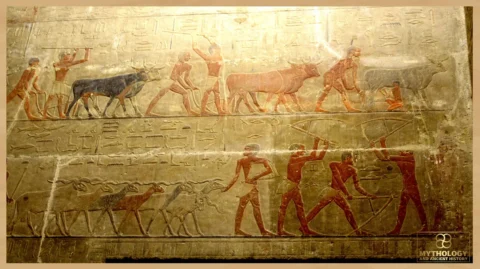
Temples handled large flows of essentials: grain, beer, bread, oils, linen, and animal products. This required more than “offerings.” It required infrastructure: storerooms, sealed containers, inventories, and staff whose daily work was measuring, recording, and preventing loss. In practical terms, the temple behaved like a regulated warehouse system.
That mattered to the surrounding community for three reasons:
First: regular supply created regular work.
If a temple receives goods continuously, it needs continuous labor to unload, count, store, and distribute. That pulls nearby people into predictable routines.
Second: distribution created social leverage.
When goods are allocated through an institution, access becomes a quiet form of control. Those inside the system can redirect opportunity; those outside must negotiate, wait, or rely on informal networks.
Third: storage attracted risk and surveillance.
Where valuable goods accumulate, theft and conflict follow. That increases security roles, inspections, and reputational pressure. A temple neighborhood could feel “safe,” but it could also feel watched—because losing resources was not a minor mistake.
This is why temples shaped daily life even beyond worship: they created a controlled environment where food, materials, and work moved through official hands.
Markets and Festival Seasons: When the Temple Turned into a City Center
Temples didn’t shape communities only through routine work. They reshaped them through festival seasons, when sacred time produced real economic pressure and opportunity. On normal days, the temple acted like a regulated institution. During festivals, it could behave like a public magnet—drawing crowds, demand, and temporary markets.
This is where many communities around temples gained income that didn’t exist in ordinary weeks. More visitors meant more food sold, more transport hired, more small goods exchanged, and more services needed. Even families who had no formal role inside the temple could profit from the predictable surge of people.
Festivals also changed social life. They brought mixing: locals with outsiders, workers with officials, sellers with pilgrims. That created moments when reputation could rise—through contact, opportunity, or patronage—but also moments when conflict could surface: crowd tension, shortages, accusations, and disputes over access.
The key point is simple: the temple calendar was an economic calendar. If you lived in its shadow, your year wasn’t only marked by harvest seasons—it was shaped by sacred seasons that controlled crowds, demand, and local income.
Social Control and Conflict: Order, Pressure, and Real Tension
A temple-centered community could feel stable, but it wasn’t neutral. Stability came from structure—and structure produces control. In temple neighborhoods, authority was not only political; it was institutional and moral. People lived close to a system that kept records, enforced rules, and treated disorder as a threat to both resources and sacred order.
This created a distinctive kind of social pressure.
First: reputation mattered more near temples.
When work depends on trust and access, reputation becomes currency. A person known for reliability could stay inside temple-linked routines. A person suspected of theft, dishonesty, or trouble could be quietly excluded.
Second: conflict was unavoidable because resources were concentrated.
Storage and distribution systems attract disputes: missing goods, unfair allocation, accusations, or rival claims over work. Even when we don’t always see the full stories, the logic is clear: a place that gathers wealth and controls access will generate friction.
Third: sacred authority intensified enforcement.
In a normal workplace, punishment is administrative. Near temples, it could also feel moral—because failure could be framed as a violation of order. That doesn’t mean everyone lived in fear, but it does mean temple life carried a stronger sense of scrutiny than purely private economic life.
So the shadow of the temple wasn’t only bread, wages, and festivals. It was also supervision, discipline, and the everyday tension that comes from living beside concentrated power.
Families and Women Around Temples (Work, Networks, and Daily Reality)
Temple-centered community life was not only defined by male titles and formal jobs. Families were part of the system, and women often interacted with temple economies through practical, local channels rather than official hierarchies.
Some roles were directly connected to temple demand: food preparation, textile handling, cleaning work, and small service tasks that kept institutional routines running. Other roles were indirect but economically real: supplying goods, managing household production that could be traded, or benefiting from festival seasons when local demand expanded sharply.
The most important point is that temple proximity created networks. Living near a temple meant living near regular movement—workers, deliveries, officials, visitors. Networks form where movement is predictable, and networks affect opportunity: who hears about work, who can sell to whom, and who gains informal support during shortages.
But this also worked as a constraint. Temple-centered life could tighten social visibility. In dense institutional neighborhoods, people notice behavior quickly. Families could benefit from stable routines, yet also face stronger reputational pressure—because trust and access were always at stake.
It means living beside an institution that controlled work, storage, and public order. Temples shaped communities through logistics—jobs, goods, festivals, and supervision—often benefiting locals with stability while also creating dependence and pressure.
Thebes vs Provincial Temples: Why Geography Changed Community Life
Not every temple cast the same kind of shadow. Geography shaped how powerful a temple could become, and how strongly it could organize the community around it. A major temple in a high-density religious region—especially around Thebes—had a broader reach: more staff, deeper storage capacity, larger festival calendars, and stronger institutional presence. That created a “temple economy” that could dominate local routines and opportunities.
Provincial temples could still be influential, but the community dynamics were often tighter and more limited. The labor pool was smaller, the market radius was narrower, and institutional power was more localized. In those settings, temple-linked work could stabilize families, but it also meant the social circle was harder to escape. When there are fewer institutions nearby, one dominant center can feel like the entire system.
This difference matters because it prevents a common mistake: treating temple life as a single universal Egyptian experience. “Living in a temple’s shadow” depended on scale—how much the temple controlled, how many people it employed, and how large its sacred calendar was in practice.
- Temples shaped daily life through work, storage, and authority, not only worship.
- Most temple neighborhoods were service ecosystems involving many non-priest roles.
- Temple supply systems created stability, but also dependence and surveillance.
- Festivals acted as economic seasons, creating crowds and local income spikes.
- Community life near temples could feel secure, yet social pressure and conflict were built into concentrated power.
Frequently Asked Questions
Did people actually live around Egyptian temples?
Yes. Major temples created neighborhoods built around work, supply routines, and institutional demand—not only ritual activity.
Were temples economic centers in Ancient Egypt?
Yes. Temples managed goods, storage, labor, and distribution systems that shaped local livelihoods.
What jobs existed near temples besides priests?
Scribes, guards, gatekeepers, porters, repair workers, delivery labor, and food-related roles often depended on temple activity.
How did festivals affect temple communities?
Festivals brought crowds, seasonal trade, and temporary income opportunities, but also shortages and social tension.
Did temple life create social control?
Often. Temples concentrated resources and authority, so reputations, access to work, and local order were closely watched.
Was temple life the same everywhere in Egypt?
No. Large religious centers created broader economic pull, while provincial temple communities were smaller and more tightly controlled.
Sources & Rights
- Kemp, Barry J. Ancient Egypt: Anatomy of a Civilization. 2nd ed. London: Routledge, 2006.
- Quirke, Stephen. The Cult of Ra: Sun-Worship in Ancient Egypt. London: Thames & Hudson, 2001.
- Shafer, Byron E., ed. Temples of Ancient Egypt. Ithaca: Cornell University Press, 1997.
- Wilkinson, Richard H. The Complete Temples of Ancient Egypt. London: Thames & Hudson, 2000.
- Trigger, Bruce G., Barry J. Kemp, David O’Connor, and Alan B. Lloyd. Ancient Egypt: A Social History. Cambridge: Cambridge University Press, 1983.
Written by H. Moses — All rights reserved © Mythology and History