Ancient Egyptian Law Explained: How Justice Worked Under Maat
Ancient Egyptian law was not a rigid code carved into a single statute, but a living system of justice rooted in everyday practice. It governed disputes over land, labor, contracts, crime, and personal conduct, shaping how people lived together for more than three millennia. What made this system distinctive was its balance between authority and fairness: law existed to restore order, not merely to punish, and justice was expected to be visible, reasoned, and socially stabilizing.
At the heart of this system stood Maʿat—not as an abstract religious ideal, but as a practical legal standard. Judges, officials, and administrators were expected to apply Maʿat when weighing evidence, hearing witnesses, and issuing judgments. This article explains how justice actually worked in ancient Egypt: who made legal decisions, how courts functioned, what evidence survives in texts and papyri, how crimes were punished, and what rights ordinary people—men and women alike—could realistically claim under the law.
Maʿat as Law in Practice
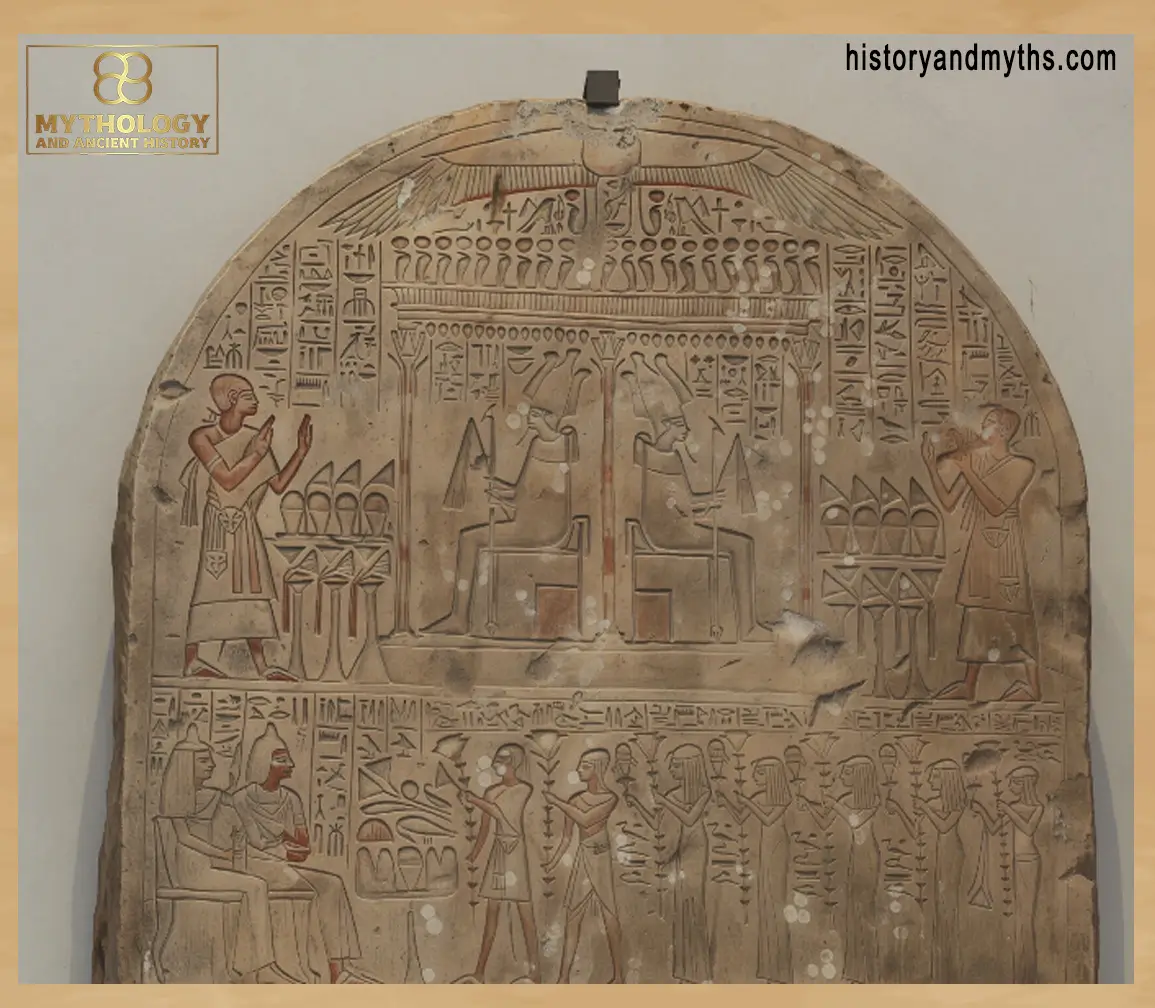
In ancient Egypt, Maat was not a symbolic virtue reserved for temples and funerary texts; it functioned as the operative principle of law. Justice was defined as the restoration of balance—social, moral, and economic—whenever disorder occurred. Legal decisions were therefore judged not by strict codification, but by whether they re-established Maʿat in the community.
This meant that Egyptian law emphasized equity over formalism. Judges were expected to evaluate intent, context, and testimony rather than apply fixed penalties mechanically. Legal texts repeatedly stress ideals such as impartiality, truthfulness, and resistance to corruption. Instructions to officials—especially those addressed to viziers—explicitly warn against favoritism, bribery, or abuse of authority, framing such acts as violations of Maʿat rather than mere administrative faults.
Importantly, Maʿat also imposed limits on power. Although the king was the ultimate source of justice, he was portrayed as bound by Maʿat, not above it. Royal decrees justified legal reforms by claiming to “restore Maʿat” where injustice had spread, presenting law as corrective rather than arbitrary. In this sense, Maʿat operated as an ethical constitution: unwritten, but universally acknowledged, guiding both rulers and judges in the daily administration of justice.
| Aspect | How Law Worked in Ancient Egypt |
|---|---|
| Legal Foundation | Maʿat as a practical standard of justice, balance, and social order |
| Source of Authority | The pharaoh as guarantor of justice, with administration delegated to the vizier |
| Judicial Officials | Vizier, local judges, scribes, and administrative councils |
| Court Structure | Local courts attached to towns, temples, and estates |
| Legal Procedure | Formal complaints, witness testimony, written records, collective judgments |
| Evidence Used | Contracts, oaths, witness statements, confessions, papyri |
| Crimes & Punishment | Restitution preferred; severe penalties for threats to state or Maʿat |
| Civil Rights | Property ownership, contracts, inheritance, legal standing for men and women |
| Legal Documentation | Royal decrees, judicial papyri, private contracts, trial records |
| Continuity Over Time | Stable principles with administrative evolution across dynasties |
Legal Authority: Pharaoh, Vizier, and Judges
The authority of law in ancient Egypt flowed through a clear hierarchical structure, but it was not arbitrary. Each level of authority was expected to act as a guardian of Maʿat, ensuring that justice was applied consistently and visibly.
At the apex stood the pharaoh, regarded as the ultimate source of law. He did not function as a daily judge, nor did he issue comprehensive law codes. Instead, his role was symbolic and corrective: to uphold Maʿat across the land. Royal decrees intervened when corruption, abuse of office, or social imbalance became widespread. Such decrees framed legal reform as a restoration of order, reinforcing the idea that even royal authority existed to serve justice rather than override it.
Direct responsibility for legal administration rested with the vizier, the highest official of the state. The vizier oversaw courts, supervised judges, and ensured that procedures followed accepted standards. Instructional texts addressed to viziers describe them as “judges of Maʿat,” explicitly linking administrative power to moral accountability. The vizier also acted as a final appellate authority in serious or complex cases, especially those involving officials or state property.
Beneath the vizier operated local courts and judges, typically composed of officials, scribes, and respected community members. These courts handled most legal disputes, from property claims to criminal accusations. Judges were not independent in a modern sense, but they were expected to act impartially. Surviving texts emphasize that judges who distorted justice faced both legal consequences and moral condemnation, suggesting that judicial integrity was a central concern of the system.
Together, this structure formed a legal system that combined centralized authority with local accessibility. Justice was administered close to the people, yet grounded in a broader ideological framework that linked law, morality, and state order.
Court System & Judicial Procedures
Legal cases in ancient Egypt followed a structured and practical process, designed to resolve disputes efficiently rather than theatrically. Most cases began with a formal complaint, submitted orally or in writing to a local court. These courts were typically attached to administrative centers—town halls, temples, or estates—making access to justice relatively direct for ordinary people.
Once a case was opened, the court focused on testimony and evidence. Written contracts, witness statements, and sworn oaths played a central role. Scribes recorded proceedings, preserving claims and counterclaims with notable precision. Unlike later legal traditions that relied heavily on professional advocates, Egyptian litigants often represented themselves, reinforcing the expectation that justice should be understandable and accessible.
Witnesses were crucial. Courts evaluated not only what was said, but who said it and under what circumstances. Oaths sworn in the presence of gods carried legal weight, as false testimony was seen as both a crime and a moral offense against Maʿat. Confessions, when obtained, were treated as decisive, though surviving records suggest that judges still sought corroboration rather than relying on admission alone.
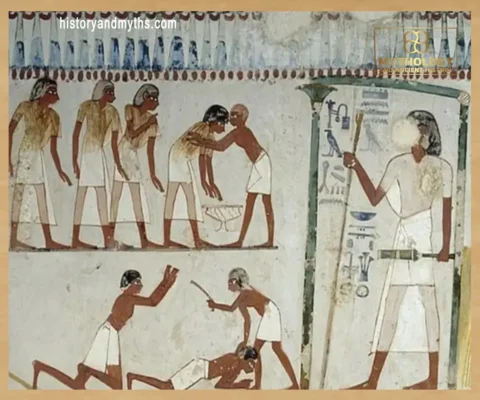
Judgments were typically issued by collective decision, not by a single judge. The goal was consensus grounded in fairness, not speed. Sentences and rulings emphasized restoration—returning stolen property, enforcing contracts, or compensating the injured—before punitive measures were considered. Only in cases involving serious crimes against the state, temples, or royal authority did penalties become severe.
This procedural model reveals a legal culture focused on resolution and social stability. Courts functioned less as instruments of intimidation and more as mechanisms to reaffirm order, credibility, and trust within the community.
Primary Legal Evidence: Decrees, Papyri, and Trial Records
Our understanding of ancient Egyptian law rests not on a single legal code, but on a body of surviving legal texts that document how justice was applied in real situations. These sources reveal a system grounded in precedent, administrative practice, and corrective intervention rather than abstract legislation.
One of the most important sources is the Edict of Horemheb (late 18th Dynasty). Issued in response to widespread corruption, the decree outlines abuses committed by officials—illegal taxation, bribery, seizure of property—and prescribes corrective measures. Its significance lies not in listing crimes alone, but in showing how royal authority was used to restore legal order when justice had failed. The edict makes clear that law was reactive and reformative, addressing concrete social problems rather than theoretical ones.
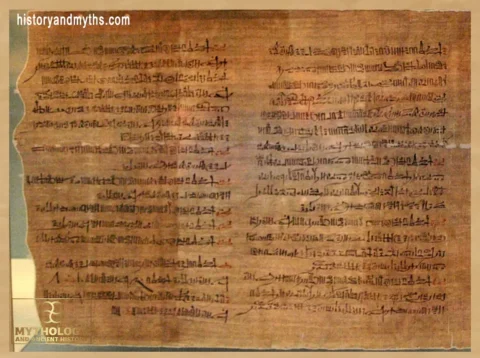
Equally valuable are judicial papyri, which preserve records of actual trials. The Judicial Papyrus of Turin, for example, documents the investigation and prosecution of a conspiracy against the royal family during the reign of Ramesses III. It details interrogations, verdicts, and punishments, providing rare insight into high-level criminal procedure. Unlike royal decrees, these records expose the inner workings of courts: how evidence was gathered, how guilt was established, and how sentences were enforced.
Additional evidence comes from private legal documents—contracts, wills, land transfers, and sworn statements—written on papyrus or ostraca. These texts show that ordinary Egyptians regularly engaged with the legal system to protect property, formalize agreements, and resolve disputes. Their standardized language indicates shared legal conventions, even in the absence of a codified law book.
Taken together, these sources demonstrate that Egyptian law was document-based, procedural, and adaptive. Justice was recorded, reviewed, and enforced through texts that bridged ideology and practice, allowing us to reconstruct not merely what Egyptians believed about justice, but how they actively pursued it.
Crimes, Punishments, and Legal Reasoning
Ancient Egyptian law did not operate on fixed penal codes with standardized sentences. Instead, punishment was guided by legal reasoning rooted in Maʿat, where the seriousness of an offense was measured by the degree to which it disrupted social and moral order. The goal was not uniform retribution, but proportionate correction.
Crimes were broadly understood in three overlapping categories:
offenses against individuals, offenses against institutions, and offenses against Maʿat itself. Personal disputes—such as theft, assault, or breach of contract—were typically resolved through restitution. Returning stolen property, compensating losses, or reaffirming contractual obligations was preferred whenever possible, reinforcing stability rather than escalating conflict.
More severe penalties appeared when crimes threatened state authority, temple property, or public trust. Corruption by officials, falsification of records, tax abuse, or conspiracy were treated as systemic dangers. In such cases, punishments could include forced labor, corporal punishment, exile, or execution. These measures were justified not as vengeance, but as necessary acts to reassert Maʿat where imbalance had become dangerous.
Legal reasoning also accounted for intent and status, but not always in ways modern systems would expect. While officials were held to higher moral standards, ordinary individuals—men and women alike—could bring accusations against them. This reflects a legal culture where authority increased responsibility rather than immunity. Surviving texts repeatedly emphasize that injustice committed by those in power was especially destructive and demanded correction.
Importantly, punishment was rarely theatrical. Legal records show a preference for practical enforcement over symbolic cruelty. Even harsh sentences were framed as administrative outcomes, reinforcing the idea that law functioned as a mechanism of order, not spectacle.
Civil Rights, Contracts, and Legal Equality
One of the most striking features of ancient Egyptian law is the breadth of civil rights it recognized in practice. Legal documents show that individuals could own property, enter contracts, inherit assets, and seek redress through the courts—rights that were not limited to elite males alone.
Contracts formed the backbone of civil law. Sales, leases, labor agreements, loans, and marriage settlements were routinely documented in writing and witnessed. These contracts were legally binding and enforceable in court. When disputes arose, judges examined the terms, verified witnesses, and ordered compliance or restitution. This reliance on written agreements reflects a legal culture that valued clarity, record-keeping, and mutual obligation.
Women enjoyed notable legal capacity by ancient standards. They could own and dispose of property independently, initiate legal actions, serve as witnesses, and inherit wealth. Marriage did not erase a woman’s legal identity; instead, marriage contracts often protected her financial interests, specifying property rights and provisions in the event of separation. Court records confirm that women appeared as plaintiffs and defendants, indicating real—not merely theoretical—access to justice.
Inheritance practices further illustrate legal pragmatism. Property could pass through both male and female lines, and wills allowed individuals to distribute assets according to personal choice rather than rigid custom. Disputes over inheritance were common enough to suggest both the value of private property and the expectation that courts would adjudicate fairly.
Legal equality, however, was not absolute. Social status influenced outcomes, and power imbalances existed. Yet the system consistently projected an ideal in which law applied to all participants in society, and surviving evidence shows that this ideal was often actively pursued. The ability of ordinary people to defend rights through documentation and legal process was a defining strength of Egyptian justice.
How Justice Worked in Ancient Egypt
- Law without a code: Egyptian justice relied on precedent, procedure, and ethical judgment rather than fixed statutes.
- Maʿat in action: Courts aimed to restore balance, not simply punish wrongdoing.
- Accessible justice: Ordinary people could bring cases, present evidence, and defend rights.
- Written culture: Contracts, testimonies, and verdicts were formally recorded by scribes.
- Accountable authority: Officials were judged more harshly for abuses of power.
- Long-term stability: Core legal principles endured across dynasties with minimal disruption.
© historyandmyths.com — Educational use
Change Over Time: Continuity and Legal Evolution
Across more than three thousand years of history, ancient Egyptian law showed remarkable continuity alongside selective adaptation. The core principles—Maʿat, procedural justice, reliance on testimony and documentation—remained stable from the Old Kingdom through the New Kingdom and into the Late Period. This stability reflects a legal culture focused on order and predictability, essential for a long-lived civilization.
What changed was administrative reach and enforcement, not the foundations. During periods of strong central authority, courts operated more consistently, records were better preserved, and royal intervention—through decrees and reforms—was more visible. In times of political fragmentation, local courts gained greater autonomy, yet they continued to apply the same legal logic grounded in Maʿat and precedent.
The New Kingdom, in particular, offers the richest legal documentation. Increased bureaucracy, expanded scribal activity, and heightened concern over corruption produced detailed records of trials, investigations, and reforms. These texts do not represent a new legal philosophy, but a more explicit articulation of long-standing practices.
Overall, Egyptian law evolved administratively while remaining conceptually conservative. Its endurance lay in its flexibility: a system strong enough to preserve order, yet adaptable enough to respond to changing social and political realities without abandoning its core ideals.
Summary of Legal Principles
Ancient Egyptian law functioned as a practical system of justice, not a rigid code. It was grounded in Maʿat as an operative standard, guiding judges to restore balance rather than impose automatic punishment. Legal authority flowed from the pharaoh through the vizier to local courts, ensuring both centralized oversight and local accessibility.
Court procedures emphasized evidence, testimony, and written documentation, allowing ordinary people to defend property, contracts, and personal rights. Punishment was proportional and corrective, escalating only when offenses threatened social or institutional order. Across centuries, the legal system remained conceptually stable while adapting administratively, proving resilient, coherent, and deeply integrated into daily life.
Key Takeaways: Ancient Egyptian Law
- Ancient Egyptian law focused on restoring balance rather than enforcing rigid legal codes.
- Maʿat functioned as a practical legal standard guiding judges and officials.
- Justice was administered through local courts under centralized moral authority.
- Written documents and witness testimony formed the core of legal evidence.
- Both men and women could own property, sign contracts, and appear in court.
- The legal system remained stable for centuries while adapting administratively.
Frequently Asked Questions about Ancient Egyptian Law
Did ancient Egypt have written law codes?
No. Ancient Egypt did not rely on a single written law code. Justice was applied through precedent, ethical judgment, and administrative practice guided by Maʿat.
What was Maʿat in the legal system?
Maʿat functioned as a practical standard of justice, representing balance, truth, and fairness used by judges when issuing legal decisions.
Who judged legal cases in ancient Egypt?
Most cases were judged by local courts composed of officials and scribes, under the supervision of the vizier, with the pharaoh as ultimate authority.
How did court trials work?
Cases relied on formal complaints, witness testimony, written contracts, sworn oaths, and collective judicial decisions.
What types of punishment were used?
Punishment focused on restitution and correction, with harsher penalties reserved for crimes threatening the state or social order.
Did women have legal rights?
Yes. Women could own property, sign contracts, inherit assets, and appear in court independently.
How do we know how Egyptian law worked?
Evidence comes from royal decrees, judicial papyri, trial records, contracts, and administrative documents.
Sources & Rights
- Breasted, James Henry. A History of Egypt from the Earliest Times to the Persian Conquest. New York: Charles Scribner’s Sons, 1905.
- Breasted, James Henry. Ancient Records of Egypt, Vols. I–V. Chicago: University of Chicago Press, 1906–1907.
- Gardiner, Alan H. Egypt of the Pharaohs: An Introduction. Oxford: Oxford University Press, 1961.
- Assmann, Jan. Ma’at: Gerechtigkeit und Unsterblichkeit im Alten Ägypten. Munich: C.H. Beck, 1990.
- Assmann, Jan. The Mind of Egypt: History and Meaning in the Time of the Pharaohs. Cambridge, MA: Harvard University Press, 2002.
- Van Blerk, Nicolaas Johannes. The Concept of Law and Justice in Ancient Egypt. PhD diss., University of South Africa, 2018.
- McDowell, Andrea G. Village Life in Ancient Egypt: Laundry Lists and Love Songs. Oxford: Oxford University Press, 1999.
- Allam, Schafik. Juristische und soziale Stellung der Frau im pharaonischen Ägypten. Berlin: Akademie-Verlag, 1963.
- Menu, Bernadette. Recherches sur l’histoire juridique, économique et sociale de l’Égypte ancienne. Cairo: Institut Français d’Archéologie Orientale, 2001.
- Johnson, Janet H. The Legal System of Ancient Egypt. Chicago: Oriental Institute of the University of Chicago, 1992.
- Lorton, David. The Juridical Terminology of International Relations in Egyptian Texts through Dyn. XVIII. Baltimore: Johns Hopkins University Press, 1974.
- Trigger, Bruce G., et al. Ancient Egypt: A Social History. Cambridge: Cambridge University Press, 1983.
- Haring, Ben J. J. Divine Households: Administrative and Economic Aspects of the New Kingdom Royal Memorial Temples. Leiden: Brill, 1997.
- Goedicke, Hans. Studies in the Hekanakhte Papers. Baltimore: Johns Hopkins University Press, 1959.
- Peet, Thomas Eric. The Great Tomb-Robberies of the Twentieth Egyptian Dynasty. Oxford: Clarendon Press, 1930.
- Redford, Donald B. The Oxford Encyclopedia of Ancient Egypt. Oxford: Oxford University Press, 2001.
- Shaw, Ian, ed. The Oxford History of Ancient Egypt. Oxford: Oxford University Press, 2000.
Written by H. Moses — All rights reserved © Mythology and History