The Journey of the Soul After Death in Ancient Egypt
For the ancient Egyptians, death was not a sudden break from life, but the beginning of a carefully imagined journey. When a person died, their existence did not simply pause or dissolve. Instead, the soul set out on a path shaped by ritual, knowledge, and moral balance a journey that determined whether life could continue beyond the grave or come to a final end. Understanding this journey was not optional; it was essential to survival in the afterlife.
This journey was neither random nor symbolic fantasy. It followed a structured progression, beginning at the moment of death and moving through hidden realms, tests of identity, and moral judgment. Along the way, the soul encountered divine forces, gates, and decisions that reflected how the Egyptians understood order, responsibility, and truth. Every stage had meaning, and every mistake carried consequences.
This article explores how the ancient Egyptians imagined the journey of the soul after death, step by step. Rather than focusing on isolated myths or rituals, it presents the journey as a complete process from death to judgment and final destiny explaining how and why the afterlife mattered so deeply in Egyptian belief.
What Happened at the Moment of Death?
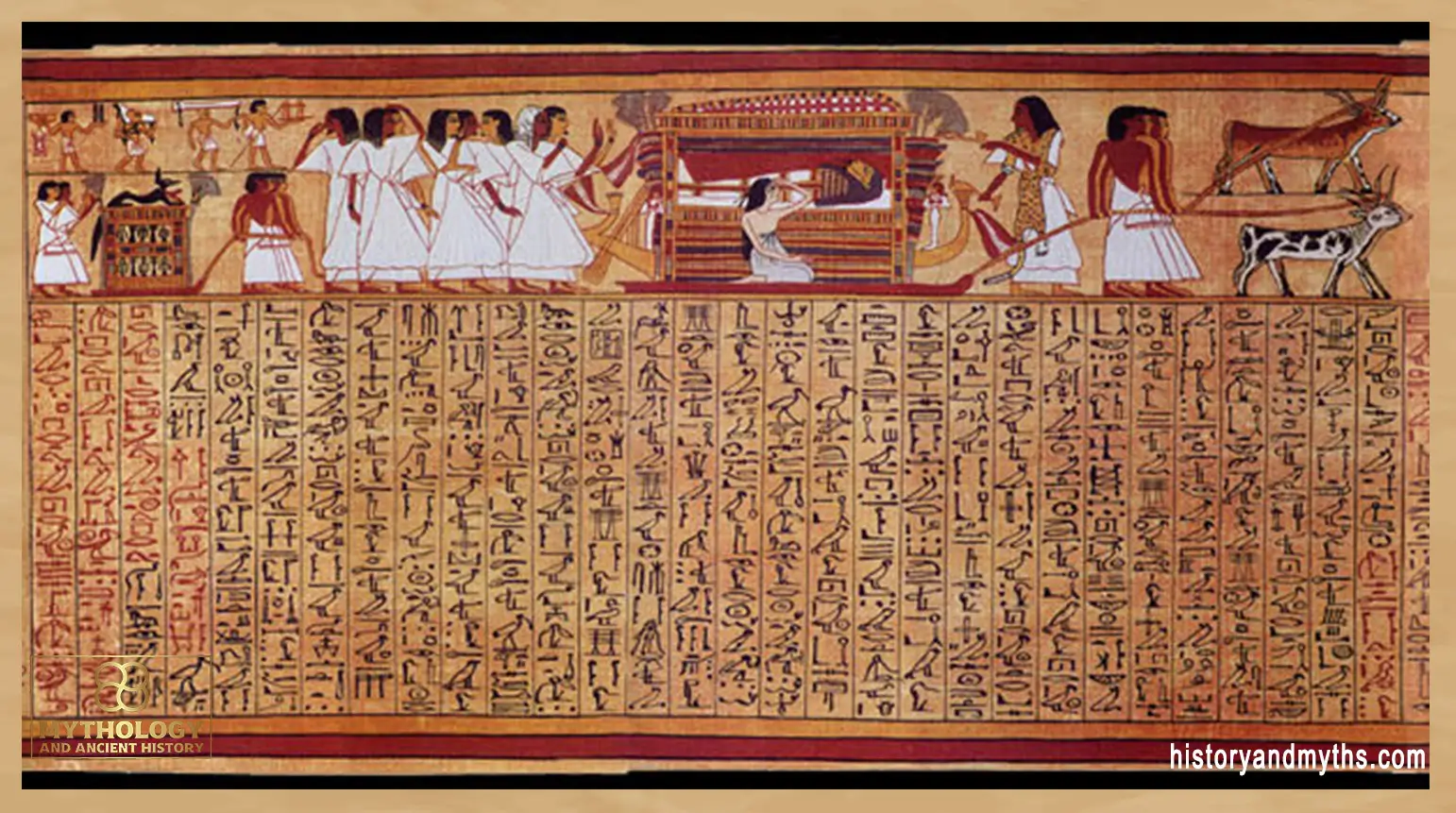
For the ancient Egyptians, the moment of death marked a transition, not a disappearance. Life did not end when breathing stopped; it shifted from the visible world to an unseen process governed by cosmic rules. Death opened the passage between two states of existence, setting the journey of the soul in motion.
At this moment, the individual became vulnerable. Without proper preparation, the soul could lose direction, identity, or coherence. This is why death was surrounded by ritual actions, spoken formulas, and careful handling of the body. These were not gestures of grief alone they were protective measures, meant to stabilize the soul as it separated from physical life and prepared to move onward.
Death as a Transition, Not an End
The Egyptians believed that death released the soul from the body but did not free it from responsibility. What a person had been in life mattered deeply at this stage. Memory, moral character, and personal identity carried forward. The journey ahead would test whether these elements could remain intact without the support of the living world.
This idea explains why death was never treated casually. Tombs, prayers, and funerary texts all worked toward the same goal: ensuring that the soul crossed safely from life into the journey beyond. Without this transition being properly managed, the soul risked confusion, fragmentation, or permanent loss before the journey even truly began.
| Stage | What Happens to the Soul |
|---|---|
| Moment of Death | Death marks a transition, releasing the soul from the body and beginning the journey beyond the living world. |
| Separation of the Soul | The Ka, Ba, and Ib continue independently, each preserving vital force, identity, and moral memory. |
| Preparation and Burial | Rituals, preservation of the body, and funerary texts prepare the soul with stability and knowledge. |
| Entry into the Duat | The soul crosses into the hidden realm, leaving the world of the living behind. |
| Trials and Recognition | Gates, guardians, and encounters test the soul’s identity, knowledge, and clarity. |
| Judgment | In the Hall of Two Truths, the heart reveals whether the soul aligns with Ma’at. |
| Outcome | The soul either endures and transforms into an Akh or is erased from existence. |
| Final Destination | Successful souls reach Aaru, where life continues in a perfected and stable form. |
The Soul and Its Parts — What Continued After Death?
Death did not carry the whole person into the afterlife as a single, unified entity. Instead, the Egyptians believed that a human being was made up of several interdependent parts, each with its own role. After death, these parts had to function together correctly for the journey to succeed. If one failed, the entire process was at risk.
This belief explains why the afterlife was complex rather than automatic. Survival depended on balance not only moral balance, but structural balance within the soul itself.
Ka, Ba, Ib, and the Identity of the Dead
The Ka represented vital force the energy that sustained life. After death, it still required nourishment through offerings, which is why food, drink, and rituals remained essential. The Ka anchored continuity, ensuring that life-force did not simply fade away.
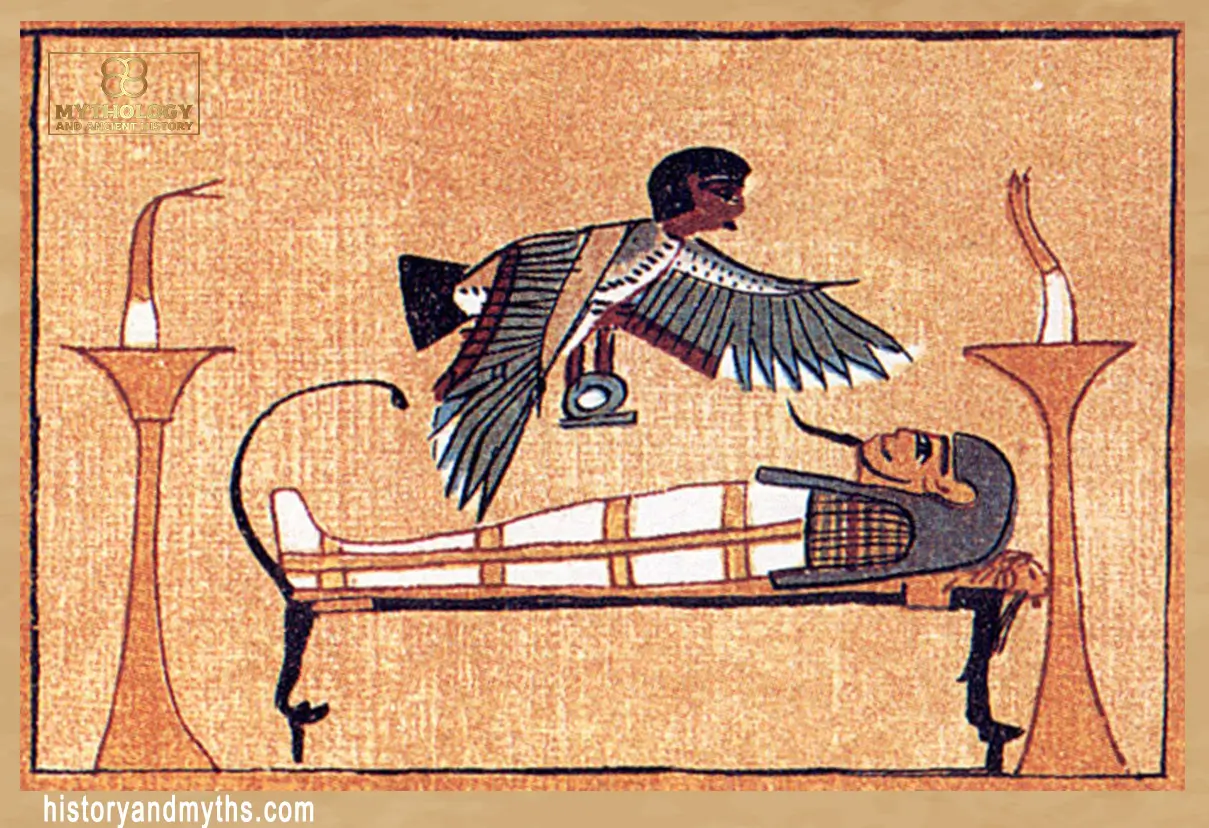
The Ba expressed personality and individuality. Often imagined as mobile, the Ba allowed the deceased to move between realms, returning to the tomb or traveling onward. Without the Ba, the soul could not act or recognize itself within the afterlife.
The Ib, or heart, carried memory, intention, and moral awareness. It was not a symbolic organ, but the core of personal truth. Everything the individual had thought, chosen, or felt remained within it making it central to judgment later in the journey.
Together, these elements preserved identity. Death did not erase the self; it tested whether the self could remain coherent without the physical world.
Why the Body Still Mattered
Despite this focus on the soul, the body remained essential. It served as a point of return and recognition, allowing the Ba and Ka to reconnect. This is why preservation mattered so deeply. Damage or loss of the body threatened the stability of the soul’s parts, weakening the journey before it fully began.
In this system, the afterlife was not spiritual escape. It was continuity through structure. The soul moved forward only if its components remained intact, aligned, and properly supported.
Preparing the Soul for the Journey
The journey after death did not begin blindly. The Egyptians believed that the soul needed preparation, just as a traveler needed supplies and instructions before entering dangerous territory. Without this preparation, even a morally upright soul could fail not because it was unworthy, but because it lacked the knowledge and support required to move forward.
Preparation began while the person was still alive and continued through burial rituals. Every action had a purpose: to equip the soul with stability, recognition, and direction once it left the world of the living.
Burial, Rituals, and the Role of Funerary Texts
Burial was not simply about honoring the dead. It was a functional act meant to secure the soul’s future. The tomb acted as a safe point of return, while offerings sustained the Ka and maintained the bond between the living and the dead.
Funerary texts played an even more critical role. These texts were not prayers in the modern sense; they were instructions. They contained names, formulas, and declarations the soul would need to speak or recognize during its journey. Knowing the correct words was a form of protection, allowing the soul to pass obstacles that could not be overcome by force.
Importantly, these texts did not promise success automatically. They provided tools but the soul still had to use them correctly.
Why Knowledge Was Essential for Survival
In the Egyptian afterlife, ignorance was dangerous. The Duat was governed by order, and order depended on recognition. Gates opened only to those who knew their names. Guardians allowed passage only to those who could identify them properly. Knowledge proved that the soul belonged within the system of existence.
This focus on knowledge explains why preparation mattered as much as moral behavior. A soul that lived well but lacked understanding risked confusion and failure. Survival required both truth and awareness alignment with cosmic order and the ability to navigate it consciously.
For the Egyptians, the journey after death was not a leap of faith. It was a path that demanded readiness, memory, and understanding from the very first step.
Why Did Egyptians Imagine Death as a Journey, Not a Destination?
The ancient Egyptians did not imagine death as immediate arrival in another world. They imagined it as a journey because survival after death required process, preparation, and verification. A soul did not simply “go” to the afterlife. It had to prove that it remained coherent, morally balanced, and capable of recognizing the order that governed existence.
This idea reflects a broader Egyptian way of thinking. Life itself depended on structured movement: the Nile flooded and withdrew, the sun crossed the sky and returned through the night, and rituals repeated daily to preserve Ma’at. The soul’s journey followed the same pattern. It moved through stages because order was never assumed; it had to be renewed, confirmed, and protected at every threshold.
By presenting death as a journey, Egyptian religion turned the afterlife into a final test of civilization itself. The successful soul was not merely rewarded. It showed that identity, memory, knowledge, and moral balance could survive the collapse of the body. This is what made the Egyptian afterlife so distinctive: eternity was not a place waiting passively for the dead, but a system that only the prepared and ordered soul could enter.
Entering the Duat — The First Stage of the Journey
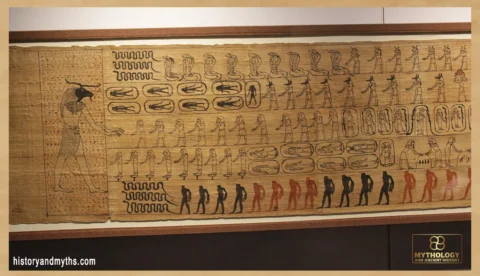
Once prepared, the soul crossed the boundary that separated the world of the living from the hidden realm beyond. This moment marked the true beginning of the journey. The Duat was not entered automatically or effortlessly; it had to be approached, recognized, and endured. Crossing into it meant leaving behind familiar order and stepping into a space where reality followed different rules.
The transition into the Duat was often imagined as movement through darkness, water, or concealed passages. These images were not meant to describe a physical route, but a state of uncertainty. The soul no longer had the protection of daily rituals or social structure. From this point forward, survival depended on inner stability, memory, and knowledge.
Crossing from the World of the Living
The boundary between life and the Duat was fragile. Without proper rites, the soul could become disoriented, unable to move forward or return. This is why the dead were addressed directly through spells and declarations reminding them who they were, where they were going, and what awaited them.
Crossing this threshold did not mean instant danger, but it demanded awareness. The soul had to recognize that it was no longer among the living and that the journey ahead required a different kind of existence one defined by testing rather than routine.
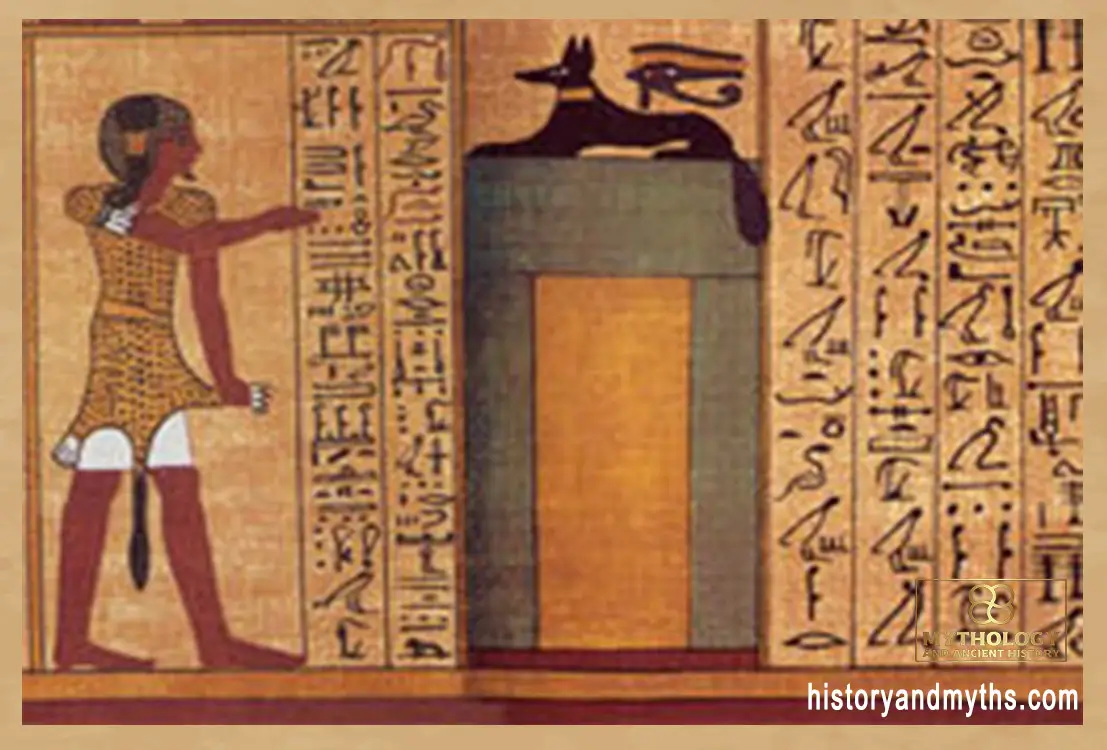
Facing the Hidden Realm
The Duat revealed itself gradually. It was not a single place, but a sequence of regions, each governed by its own conditions. Light and darkness alternated, order and chaos stood in tension, and every step forward required confirmation. The soul was no longer passive. It had to act, speak, and identify itself correctly.
At this stage, fear alone was not the threat loss of identity was. A soul that forgot its name, its purpose, or its alignment with order risked dissolving into the chaos that surrounded it. Entering the Duat was therefore not about bravery, but about clarity. The journey advanced only as long as the soul remained whole, aware, and recognized by the system it had entered.
Trials, Recognition, and the Logic of Passage
Movement through the Duat was never automatic. Each stage of the journey required the soul to prove itself repeatedly, not through strength or obedience, but through recognition. The Duat functioned as a system that responded to knowledge, clarity, and alignment with order. Every advance depended on the soul’s ability to show that it understood where it was—and why it belonged there.
This is why the journey was filled with encounters rather than simple paths. The soul did not walk freely; it was questioned, challenged, and identified at every point.
Names, Gates, and Divine Encounters
Gates marked transitions between regions of the Duat. They were not barriers meant to trap the soul, but filters that separated order from chaos. Each gate had a name, and each was guarded by divine beings who demanded proper recognition. Knowing these names was not a magical trick it was proof of awareness. A soul that could name correctly demonstrated memory, identity, and preparedness.
Encounters with divine figures followed the same logic. These beings did not offer guidance freely. They required acknowledgment, correct address, and confidence. Silence or confusion signaled instability. In a realm governed by order, uncertainty was dangerous.
Order Versus Chaos Along the Way
The greatest threat during these trials was not hostility, but loss of coherence. Chaos in Egyptian belief was not random violence it was the absence of structure. A soul that failed to recognize names, directions, or roles risked slipping into that formless state.
Each successful passage reinforced order. Each correct response confirmed that the soul remained intact. The journey was not about overcoming enemies, but about maintaining clarity under pressure. To move forward, the soul had to demonstrate that it still belonged within the ordered universe even in its most hidden and dangerous realm.
Judgment and Moral Testing
The journey of the soul did not continue endlessly through trials and gates. At its center stood judgment the moment when the soul’s worth was measured and its fate decided. This stage was not about punishment for its own sake. It was about determining whether the soul could remain part of the ordered universe or had become incompatible with it.
Judgment was inevitable. No amount of preparation or knowledge could bypass it. Everything the soul had carried from life memory, intention, and moral character was brought into focus here.
The Hall of Two Truths
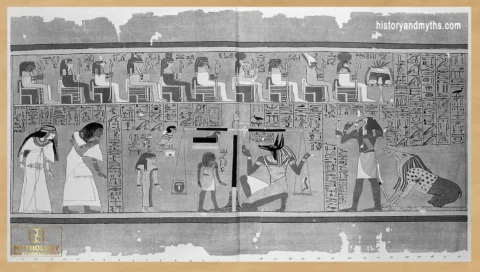
Judgment took place in what was known as the Hall of Two Truths, a space defined by balance and order. This was not a court of emotion or mercy, but one of precision. The soul stood before divine authority and was required to affirm its alignment with Ma’at, the principle of truth, justice, and cosmic balance.
Declarations spoken here were not excuses or pleas. They were statements of identity: claims that the soul had lived without becoming a source of chaos. The hall represented the idea that truth was objective and measurable, not subjective or negotiable.
Why the Heart Determined the Soul’s Fate
At the center of judgment stood the heart (Ib). Unlike words or rituals, the heart could not be manipulated. It contained the record of the individual’s life intentions, choices, and moral awareness. The heart revealed whether the soul had maintained balance or disrupted it.
If the heart aligned with truth, the journey could continue. If it did not, the outcome was final. There was no extended punishment, no second trial. Failure meant erasure, the end of existence itself.
This moment explains why judgment was feared yet respected. It was not cruel, but absolute. The Egyptians believed that survival after death depended not on belief alone, but on whether one’s life had been structurally compatible with order. Judgment was the point where that compatibility was tested and either confirmed or denied.
Outcomes of the Journey
Judgment did not end the journey it resolved it. What followed depended entirely on the result of moral testing. The Egyptians did not imagine multiple vague afterlives or endless wandering. The journey led to clear outcomes, each reflecting whether the soul could continue to exist within the framework of cosmic order.
There was no neutrality at this stage. The soul either endured, transformed, or ceased to be.
Endurance, Transformation, or Erasure
For a soul that passed judgment, endurance meant continued existence. But this continuation was not identical to life on earth. The soul entered a new state, one that required stability and balance to maintain. Survival was not passive; it was the reward of having remained coherent under testing.
Failure, however, led to erasure. This was the most feared outcome in Egyptian belief. The soul was not punished endlessly or tortured. Instead, it was destroyed, dissolved into non-being. To the Egyptians, this fate was worse than suffering it was the complete loss of identity, memory, and presence.
There was no return from erasure. The journey ended absolutely.
Becoming an Akh
Successful souls did not remain unchanged. Through judgment and survival, they became an Akh a transformed, effective spirit. The Akh was not a ghost or shadow. It was a perfected state of being, capable of interacting with gods, influencing the world of the living, and existing in harmony with cosmic forces.
Becoming an Akh represented the ultimate goal of the journey. It meant that the soul had proven itself not only worthy of survival, but capable of functioning within the divine order. Transformation was the final confirmation that life had meaning beyond death and that existence, once earned, could truly endure.
Reaching the Final Destination
For those who endured judgment and completed the journey, the afterlife did not remain a realm of trials. The soul reached a state of stability and fulfillment, where existence could continue without constant threat. This destination was not imagined as escape from life, but as its ideal continuation.
The Egyptians believed that the journey had meaning only if it led somewhere purposeful. Survival alone was not enough; what mattered was the quality of existence that followed.
Aaru and the Ideal Continuation of Life
The final destination was Aaru, often described as a perfected landscape of fields, waterways, and abundance. It reflected the world the Egyptians knew, but without its fragility. Crops grew reliably, labor had meaning, and harmony replaced uncertainty. Aaru was not fantasy it was life functioning correctly.
In Aaru, the soul retained identity, memory, and agency. The deceased did not become distant spirits detached from reality. They lived, worked, and interacted, but within a system free from chaos. This continuity explains why daily life mattered so deeply in Egyptian belief: how one lived determined whether one could live again under ideal conditions.
What “Eternal Life” Really Meant to the Egyptians
Eternal life was never imagined as endless rest or reward without effort. It was lasting participation in order. The soul continued to exist because it had proven capable of maintaining balance, truth, and responsibility.
This understanding reshapes how we see Egyptian afterlife belief. Eternity was not guaranteed by faith alone. It was earned through coherence through living, knowing, and acting in ways that allowed existence to remain meaningful beyond death. Reaching the final destination was not an escape from life, but its ultimate confirmation.
The Soul’s Journey After Death — Step by Step
- Death as transition: Life ends, but the soul begins its journey beyond the visible world.
- Separation of the soul: Ka, Ba, and Ib continue with distinct roles that preserve identity.
- Preparation matters: Rituals and funerary texts equip the soul with knowledge and stability.
- Entry into the Duat: The soul crosses into a hidden realm governed by order and recognition.
- Trials and passage: Gates and guardians test clarity, memory, and awareness.
- Judgment: The heart reveals whether the soul aligns with Ma’at.
- Final outcome: Survival leads to transformation and life in Aaru; failure leads to erasure.
© historyandmyths.com — Educational use
Why the Journey of the Soul Mattered So Deeply
The journey of the soul after death was not a distant myth reserved for priests or kings. It shaped how ordinary people understood life itself. Every stage of the journey reflected values that mattered in the living world: truth, balance, responsibility, and awareness. To prepare for death was, in many ways, to learn how to live correctly.
Belief in this journey gave meaning to daily actions. Choices were not isolated moments; they were part of a larger structure that extended beyond death. The Egyptians did not separate ethics from survival. Living in harmony with order was not only socially important it was existentially necessary.
How Afterlife Belief Shaped Daily Life
Because the soul would later be tested, self-control, honesty, and balance became practical virtues. The journey after death reinforced the idea that nothing was truly hidden. Words spoken, actions taken, and intentions formed the record the heart would carry forward.
This belief also strengthened bonds between the living and the dead. Offerings, remembrance, and rituals were not empty traditions. They maintained continuity across worlds, ensuring that the journey did not sever identity or purpose.
The Journey as a Reflection of Cosmic Order
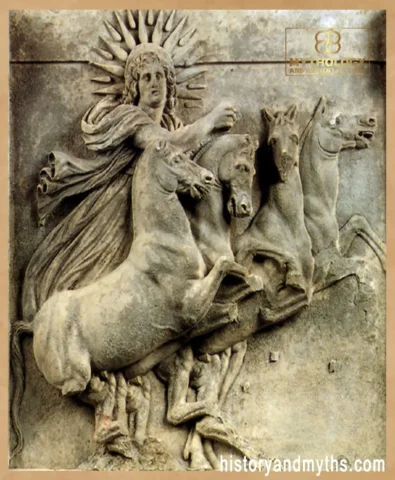
Ultimately, the journey of the soul mirrored the structure of the universe itself. Just as the sun faced danger and renewal each night, the soul faced judgment and transformation once. Both journeys affirmed the same truth: order could survive chaos, but only through effort and balance.
By imagining death as a journey rather than an end, the Egyptians created one of the most coherent afterlife systems in ancient thought. It offered neither blind comfort nor meaningless fear. Instead, it presented a clear message existence continued only if it deserved to continue, and the journey of the soul was the final measure of that worth.
Key Takeaways — The Journey of the Soul After Death
- Death marked a transition, not an end, beginning the soul’s journey beyond the living world.
- The soul was made of multiple parts that had to remain balanced for survival.
- Preparation through rituals and knowledge was essential, not optional.
- The Duat tested clarity, identity, and alignment with cosmic order.
- Judgment determined whether the soul could continue to exist.
- Successful souls transformed into an Akh and reached Aaru.
- Failure did not mean punishment, but complete erasure from existence.
Frequently Asked Questions About the Journey of the Soul
What did ancient Egyptians believe happened to the soul after death?
They believed the soul began a journey through the Duat, facing trials and judgment that determined whether existence could continue.
Was death considered the end of life in ancient Egypt?
No. Death was seen as a transition from the visible world to a new stage of existence that required preparation and balance.
What parts of the soul continued after death?
The Ka, Ba, and Ib continued after death, each preserving vital force, identity, and moral memory.
Why was knowledge important in the afterlife journey?
Knowledge allowed the soul to recognize gates, guardians, and divine beings, proving its alignment with order.
What was the Duat in the soul’s journey?
The Duat was the hidden realm the soul had to pass through, governed by tests of identity, recognition, and judgment.
How was the soul judged after death?
Judgment focused on the heart, which revealed whether the soul lived in harmony with Ma’at.
What happened to souls that failed judgment?
Souls that failed were erased from existence, a fate considered worse than punishment.
What was the final goal of the soul’s journey?
The goal was to reach Aaru, where life continued in a perfected and stable form.
Sources & Rights
- Assmann, Jan. Death and Salvation in Ancient Egypt. Cornell University Press, 2005.
- Allen, James P. The Ancient Egyptian Pyramid Texts. Society of Biblical Literature, 2005.
- Allen, James P. Middle Egyptian: An Introduction to the Language and Culture of Hieroglyphs. 3rd ed. Cambridge University Press, 2014.
- Faulkner, Raymond O. The Ancient Egyptian Book of the Dead. Revised ed. University of Texas Press, 2010.
- Hornung, Erik. The Ancient Egyptian Books of the Afterlife. Cornell University Press, 1999.
- Hornung, Erik. Conceptions of God in Ancient Egypt: The One and the Many. Cornell University Press, 1996.
- Pinch, Geraldine. Handbook of Egyptian Mythology. ABC-CLIO, 2002.
- Quirke, Stephen. Exploring Religion in Ancient Egypt. Wiley-Blackwell, 2015.
- Taylor, John H. Death and the Afterlife in Ancient Egypt. British Museum Press, 2001.
- Wilkinson, Richard H. The Complete Gods and Goddesses of Ancient Egypt. Thames & Hudson, 2003.
- British Museum. Collection Online: Papyrus of Ani and Book of the Dead Collection.
- The Griffith Institute, University of Oxford. Topographical Bibliography of Ancient Egyptian Hieroglyphic Texts.
- UCLA Encyclopedia of Egyptology. Afterlife, Funerary Beliefs, Book of the Dead, and Egyptian Religion.
- Digital Egypt for Universities (University College London). Death, Burial, and the Afterlife in Ancient Egypt.
- World History Encyclopedia. Egyptian Afterlife.
Written by H. Moses — All rights reserved © Mythology and History