Gates of the Duat in the Egyptian Afterlife, Soul Journey
In ancient Egyptian belief, the journey through the Duat was not a single, open path. It was structured by a series of gates points of transition that controlled movement between one stage of the afterlife and the next. These gates were not decorative details or mythical obstacles added for drama. They were essential mechanisms that defined how the world beyond death functioned and who was allowed to pass through it.
Unlike simple doors, the Gates of the Duat tested awareness, identity, and belonging. Passing them depended on recognition, knowledge, and alignment with order rather than strength or favor. For the ancient Egyptians, the afterlife was not chaotic or arbitrary; it was regulated, organized, and deliberate.
What Were the Gates of the Duat?
The Gates of the Duat were points of controlled passage, not physical doors in a human sense. Each gate marked a boundary between one state of existence and another within the underworld. To the Egyptians, movement in the afterlife was never free or automatic. Every transition had to be justified, acknowledged, and permitted.
These gates defined the structure of the Duat itself. They divided the underworld into ordered zones, preventing chaos from spreading unchecked. Without gates, the Duat would have been an unstable realm where souls drifted without direction or identity. The presence of gates ensured that the afterlife functioned as a system rather than a void.
Importantly, the gates were not designed to trap souls. Their purpose was regulation, not punishment. A soul that belonged within the ordered universe could pass, provided it demonstrated awareness and legitimacy. A soul that lacked knowledge or coherence could not move forward—not because it was attacked, but because it failed to meet the conditions of passage.
This concept reflects a broader Egyptian worldview: existence continued only where order was maintained. The gates were the tools that enforced that principle, turning the journey after death into a structured progression instead of an uncontrolled descent.
| Element | Function in the Duat |
|---|---|
| Gates | Controlled points of passage that regulate movement between stages of the afterlife. |
| Guardians | Figures of verification who confirm identity and awareness rather than enforce punishment. |
| Names | Essential knowledge proving recognition, legitimacy, and alignment with cosmic order. |
| Knowledge | The primary requirement for passage, replacing force or divine favor. |
| Failure to Pass | Results in halted progress rather than punishment, reflecting loss of coherence. |
| Cosmic Role | Maintains order within the Duat by separating coherence from chaos. |
Why Did the Soul Have to Pass Through Gates?
In Egyptian belief, the afterlife was not a place one simply entered and wandered through freely. Movement itself required justification. The soul had to prove that it belonged within the ordered structure of the Duat, and the gates were the means by which this was tested.
Each gate functioned as a moment of verification. Passing through it showed that the soul retained identity, memory, and awareness after death. The Egyptians feared not judgment alone, but loss of self—the danger that a soul might dissolve into chaos if it could no longer recognize who it was or where it stood. The gates prevented this by demanding clarity at every stage.
The requirement to pass through gates also reinforced a moral logic. Life on earth was governed by order, balance, and responsibility, and the same rules continued after death. The soul could not escape the structure of existence simply by dying. Instead, death exposed whether the individual had truly internalized order or merely followed it outwardly.
In this sense, the gates were not obstacles placed against the soul, but filters. They ensured that only souls capable of maintaining coherence could move forward. Passage was less about being worthy and more about being compatible with the system of the cosmos itself.
Gates in Different Funerary Texts
The idea of gates did not come from a single text or a fixed system. It developed over time and appeared in different forms across Egyptian funerary literature. This is important, because it shows that the gates were a flexible concept, not a rigid map that every soul followed in exactly the same way.
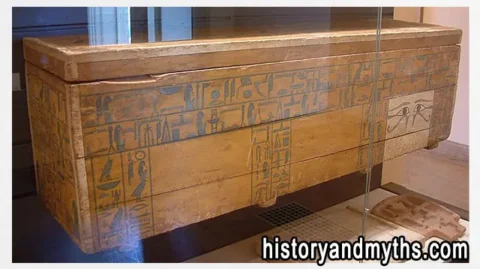
In the Coffin Texts, the underworld is often described as having a smaller number of gates, sometimes seven, each guarded by multiple beings. Here, the emphasis is on recognition and correct speech. Knowing the names of the gates and their guardians was essential, and failure meant being halted rather than attacked. The gates functioned as checkpoints of identity.
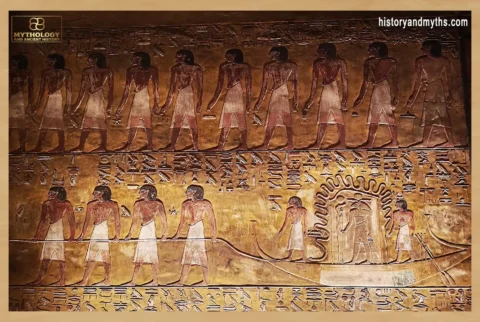
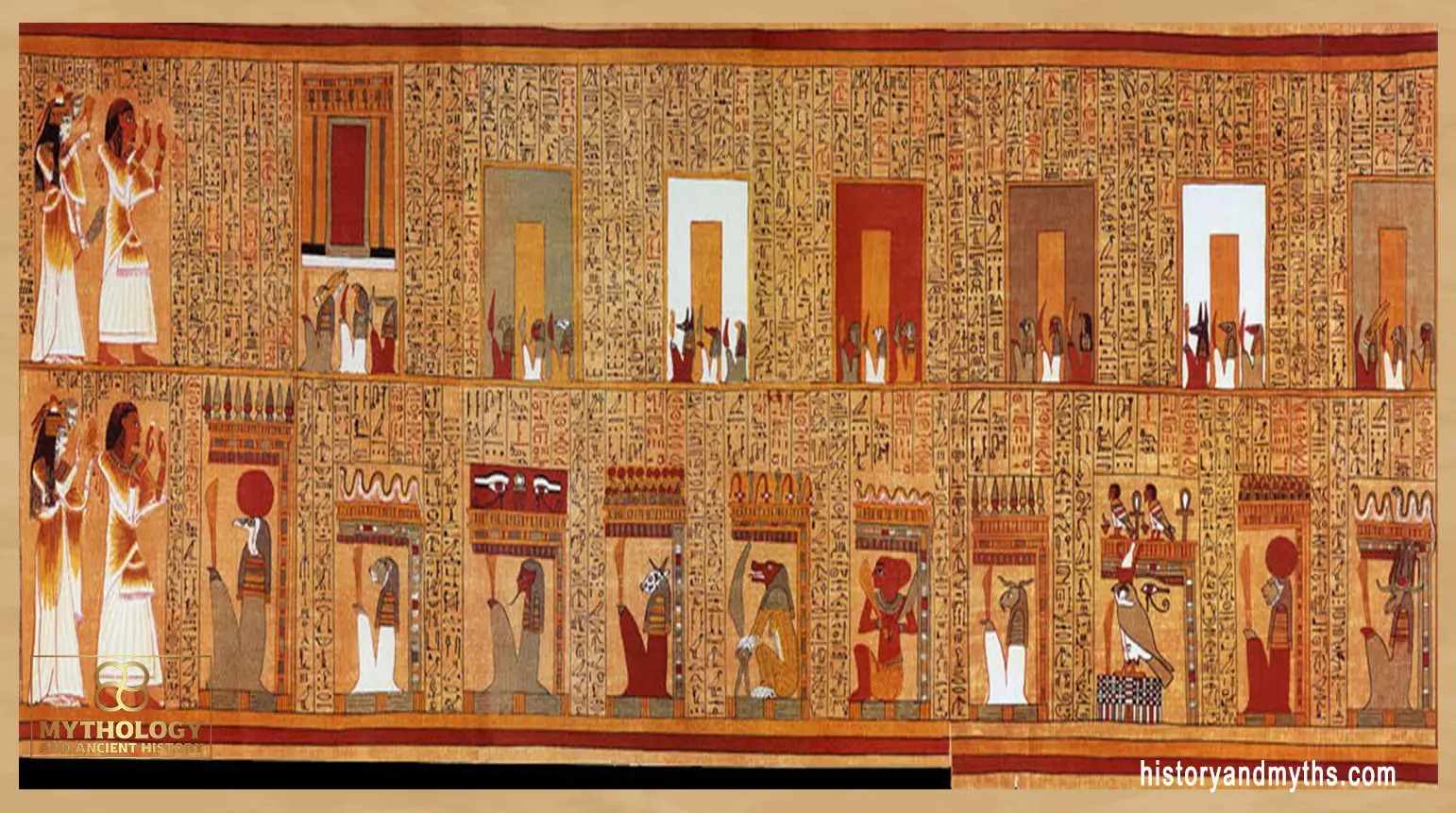
Later, in the Book of Gates, the system becomes more structured and closely tied to the nightly journey of the sun. The Duat is divided into stages associated with the hours of the night, each marked by a gate. These gates still test knowledge and legitimacy, but they also reflect a cosmic rhythm rather than a purely individual journey.
What matters is not the number of gates, but their role. Across all texts, gates serve the same function: they separate order from disorder and ensure that movement through the afterlife follows rules. The variation between texts shows that the Egyptians were less concerned with exact geography and more focused on the principle of controlled passage.
This flexibility allowed the concept of gates to remain meaningful across centuries, adapting to new religious ideas while preserving the same underlying logic of order and verification.
How Many Gates Did the Duat Have?
Ancient Egyptian texts do not describe a single, fixed number of gates in the Duat. Instead, the number varies depending on the funerary tradition and the purpose of the text. Some versions of the Coffin Texts describe seven gates guarded by supernatural beings, while later compositions, especially the Book of Gates, organize the underworld into twelve divisions linked to the twelve hours of the night, each separated by its own gate.
These differences do not represent conflicting beliefs. Rather, they reflect the evolution of Egyptian religious literature over many centuries. Each tradition used the image of gates to express the same underlying idea: the afterlife was an ordered realm where progress depended on knowledge, recognition, and divine order, not on physical strength.
For the ancient Egyptians, the exact number of gates was less important than their purpose. Every gate marked a controlled transition, reminding the soul that moving through the Duat required awareness, legitimacy, and harmony with the cosmic order established by the gods.
Guardians, Names, and Recognition
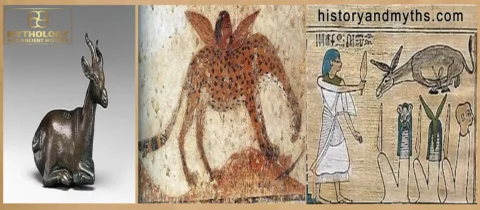
No gate in the Duat stood unprotected. Each was associated with guardians, not as enemies waiting to strike, but as figures of verification. Their role was to confirm that the soul approaching the gate was legitimate—aware of where it was, who it was, and why it sought passage.
Recognition was the key element here. The soul was expected to know the names of the gate and its guardians. In Egyptian thought, a name was not a label; it was the essence of a being. Knowing a name meant understanding nature, function, and place within the cosmic order. When a soul spoke a name correctly, it demonstrated alignment with that order.
This is why force had no role in passing the gates. Strength, courage, or divine favor could not replace knowledge. Silence or confusion signaled instability, suggesting that the soul had lost coherence since death. In such cases, the gate did not need to punish the soul—it simply did not open.
The presence of guardians also reinforced accountability. Every transition required acknowledgment, making it impossible for a soul to drift forward unconsciously. Passage through the Duat depended on active awareness, not passive survival. The gates ensured that only souls capable of recognition could continue their journey, preserving order at every level of the afterlife.
Gates of the Duat — What They Really Meant
- Not random doors: gates mark controlled transitions between stages of the underworld.
- Order over chaos: each gate protects structure, keeping the Duat from becoming formless.
- Guardians verify: they test legitimacy and awareness rather than punish blindly.
- Names matter: correct naming proves recognition and belonging within cosmic order.
- Knowledge is survival: passage depends on clarity, memory, and identity.
- Failure stops progress: the gate does not “attack”—it simply does not open.
- Builds toward judgment: gates filter and prepare the soul before later evaluation.
© historyandmyths.com — Educational use
How the Gates Fit into the Journey of the Soul
The Gates of the Duat were not separate challenges added onto the journey; they were integral to its structure. Each gate marked a shift in state—moving the soul from one condition of existence to another. Without these transitions, the journey would lose direction and meaning.
In practical terms, the gates organized the afterlife into manageable stages. Rather than facing judgment or transformation all at once, the soul progressed step by step. Each successful passage confirmed that the soul remained intact—aware, recognized, and capable of continuing. Failure at any point did not imply sudden punishment; it meant the journey simply could not proceed.
This placement also explains why gates appear before final judgment in many traditions. The soul was not judged immediately upon entering the Duat. First, it had to demonstrate stability and legitimacy through controlled passage. Only a soul that could navigate these transitions was considered ready to face deeper evaluation.
Seen this way, the gates act as preparatory filters. They connect the moment of death to later stages of judgment and destiny, ensuring that the soul arriving at those moments is not fragmented or confused. The gates keep the journey coherent—turning movement through the afterlife into a deliberate process rather than an uncontrolled descent.
What the Gates Reveal About Egyptian Beliefs
The Gates of the Duat reveal that the ancient Egyptians did not imagine the afterlife as a realm of random danger or divine unpredictability. Instead, they envisioned it as a system governed by rules, where order had to be maintained at every stage. The gates express a deep confidence that the universe—seen and unseen—operated according to principles that could be understood and respected.
One of the clearest ideas behind the gates is that existence required awareness. Survival after death was not automatic, and it was not granted through favor alone. A soul continued only if it could recognize its place within the cosmic structure. The gates enforced this idea by demanding knowledge, clarity, and identity rather than obedience or strength.
The gates also show how closely the Egyptians linked morality, knowledge, and structure. Living according to order in the human world prepared the soul to recognize order beyond it. The afterlife did not overturn earthly values; it extended them. In this sense, the Gates of the Duat were not barriers meant to frighten the dead, but expressions of a worldview where order protected existence itself.
By imagining the afterlife as a sequence of controlled passages, the Egyptians created a vision of death that was neither chaotic nor arbitrary. The gates ensured continuity, filtering chaos away and allowing only coherence to move forward. They stand as one of the clearest symbols of how ancient Egyptian thought connected life, death, and the structure of the universe into a single, unified system.
Key Takeaways — Gates of the Duat
- The Gates of the Duat were controlled points of passage, not random obstacles.
- Passing a gate required awareness, identity, and recognition rather than force.
- Guardians acted as verifiers, confirming legitimacy instead of inflicting punishment.
- Knowing names was essential because names represented essence and order.
- Different funerary texts describe the gates in varied forms, but with the same function.
- Failure to pass a gate meant halted progress, not automatic punishment.
- The gates prepared the soul for later judgment by filtering chaos from coherence.
Frequently Asked Questions About the Gates of the Duat
What were the Gates of the Duat in ancient Egyptian belief?
The Gates of the Duat were controlled points of passage that regulated movement through the underworld and tested a soul’s awareness and legitimacy.
Were the gates physical doors or symbolic barriers?
The gates were not physical doors but symbolic transitions marking changes in state within the afterlife.
Why did the soul need to pass through gates after death?
Passing through gates proved that the soul retained identity, knowledge, and alignment with cosmic order.
What role did guardians play at the gates?
Guardians verified the soul’s identity and knowledge rather than acting as punishers or attackers.
Why were names important at the Gates of the Duat?
Knowing names demonstrated recognition and understanding of the cosmic order governing the underworld.
Did all Egyptian texts describe the same number of gates?
No. Different funerary texts describe varying numbers of gates, but their function remained the same.
What happened if a soul failed to pass a gate?
Failure meant the soul could not progress further, not that it was immediately punished.
How do the gates fit into the journey of the soul?
The gates structured the journey, preparing the soul for later judgment and final destiny.
Sources & Rights
- Hornung, Erik. The Ancient Egyptian Books of the Afterlife. Cornell University Press, 1999.
- Hornung, Erik, and Theodor Abt. The Egyptian Book of Gates. Living Human Heritage Publications, 2014.
- Assmann, Jan. Death and Salvation in Ancient Egypt. Cornell University Press, 2005.
- Taylor, John H. Death and the Afterlife in Ancient Egypt. British Museum Press, 2001.
- Faulkner, Raymond O. The Ancient Egyptian Coffin Texts. 3 vols. Aris & Phillips, 1973–1978.
- Allen, James P. The Ancient Egyptian Pyramid Texts. Society of Biblical Literature, 2005.
- Allen, James P. Middle Egyptian: An Introduction to the Language and Culture of Hieroglyphs. 2nd ed. Cambridge University Press, 2010.
- Quirke, Stephen. Exploring Religion in Ancient Egypt. Wiley-Blackwell, 2015.
- Piankoff, Alexandre. The Tomb of Ramesses VI. Bollingen Foundation, 1954.
- Wilkinson, Richard H. The Complete Gods and Goddesses of Ancient Egypt. Thames & Hudson, 2003.
- British Museum. Papyrus of Ani Collection and Ancient Egyptian Funerary Texts.
- UCLA Encyclopedia of Egyptology. Articles on the Duat, Egyptian Funerary Literature, and the Afterlife. :contentReference[oaicite:0]{index=0}
Written by H. Moses — All rights reserved © Mythology and History