Ka — The Egyptian “Soul” That Was Really a Life Force
To the ancient Egyptians, a human being was never just a body. A person was a network of forces moving through flesh, memory, breath, and identity. And among all these forces, none was more essential to being alive than the Ka.
The Ka was not a soul in the modern sense. It was not a ghost, a conscience, or a spirit that appeared after death. It was the power that made life possible at all. When the Ka entered the body, a human became alive. When it departed, death followed—not as destruction, but as separation.
The Egyptians believed you were born with a Ka and you carried it invisibly through every breath, every step, every thought. It was your unseen double, your inner vitality, your spiritual hunger, your personal reservoir of life itself. You did not “have” a Ka. You were sustained by it.
And yet, unlike breath, the Ka never vanished when the body failed.
Death did not destroy the Ka.
It displaced it.
The Ka demanded its life to continue—even in the grave.
That is why Egyptian tombs are not silent places. They were built as life-support systems for the Ka. Walls were inscribed not merely with prayers, but with survival mechanisms. Food scenes were carved not as decoration, but as nourishment. Statues were sculpted not as art, but as alternative bodies in case the original decayed.
Where modern cultures treat death as an end, Egyptian religion treated it as a logistical problem.
And the Ka was the reason.
This article is not about mythology alone—it is about a civilization’s refusal to let life end quietly. It is about how the Egyptians engineered the afterlife not with hope, but with infrastructure. It is about how the Ka reshaped tombs, crowns, families, and even kingship itself.
Most people today translate Ka as “life-force.”
But that term is too thin.
Too weak.
Too vague.
The Ka was not energy.
It was existence in reserve.
And once you understand it, Egyptian burial practices, ancestor cults, and royal rituals stop looking strange — and start looking brilliantly logical.
To understand the Ka is to understand how the Egyptians thought life itself should never be allowed to stop.
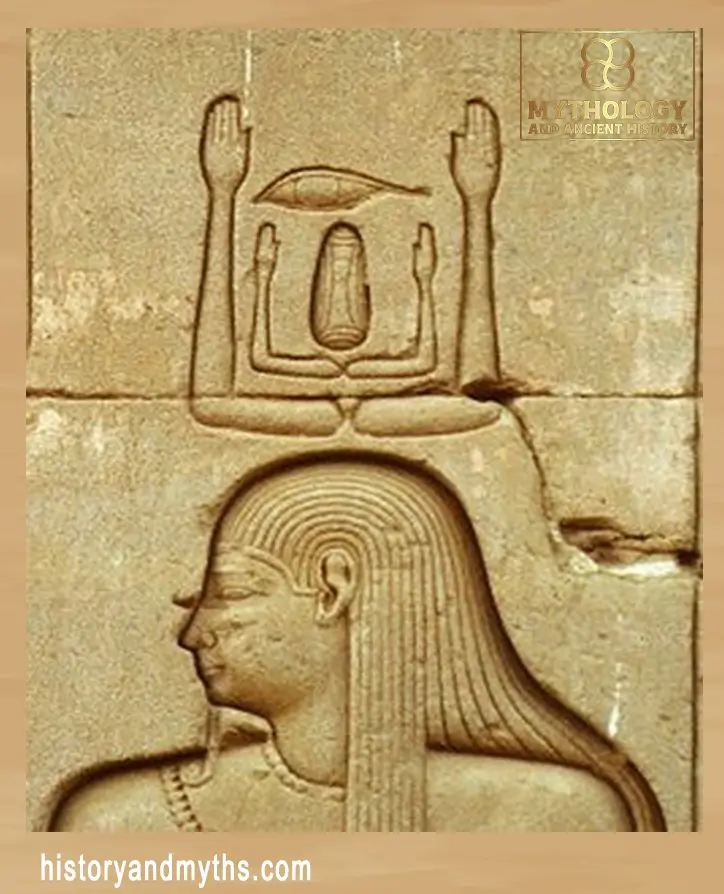
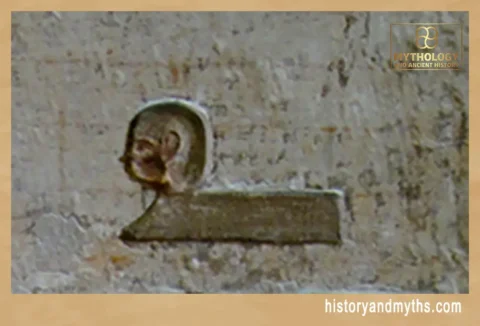
Note: The symbol represents the ancient Egyptian concept of life-force and spiritual continuity after death.
What Is the Ka? — Life as a Separate Entity
The Egyptians did not think of life as something the body simply possessed. Life was a presence that entered the body and could also leave it.
That presence was the Ka.
It was not imagination, metaphor, or theology in the abstract. The Ka was treated as a real component of a person—as real as bones or blood, just invisible.
To explain it simply:
- The body was the vessel.
- The Ka was what animated it.
- Without the Ka, the body was only material.
- With the Ka, the body became a person.
This is why death was not described as “dying,” but as the Ka’s departure.
A human did not stop being.
They were no longer inhabited by life.
Not a Soul. Not a Ghost. Not a Personality.
Modern language fails the Ka because we have no exact equivalent.
The Ka was:
- not memory (that was something else),
- not character,
- not moral judgment,
- not consciousness.
The Ka was vital presence — the fact of being alive.
It did not judge you.
It did not comfort you.
It did not guide you.
It sustained you.
Your hunger was linked to it.
Your strength was tied to it.
Your survival depended on it.
If your Ka weakened, you weakened.
That was literal belief — not poetry.
The Ka Was Personal
Every person had one Ka.
But kings had more than one.
This believed fact alone tells us something important:
The Ka was not just biology.
It was status-aware.
A king did not merely rule people.
He contained more life than ordinary men.
To the Egyptian mind, political authority was not abstract.
It was biological and spiritual.
The king’s Ka overflowed into the state.
The Ka Could Hunger
The Ka needed food.
Not as flesh, not as smell, not as symbol.
It consumed the essence of food.
This is why offerings were practical, not symbolic.
Bread was not left in tombs as decoration.
It was not sentimental.
It was maintenance.
The Ka required sustenance just as the living did.
The Egyptians did not fear ghosts.
They feared starving life.
The Ka Never Meant to Die
Death was not the destruction of the Ka.
It was its displacement.
Once separated from the body, the Ka still demanded:
- shelter,
- identity,
- nourishment,
- continuity.
And if it did not receive them, existence did not “end.”
It decayed.
This is the core of Egyptian afterlife theology:
Death was not annihilation.
It was mismanagement.
You did not defeat death by hoping.
You prevented it with architecture, ritual, and logistics.
The Ka required engineering.
The tomb was not a monument.
It was a maintenance system.
| Aspect | Ka in Egyptian Belief | Meaning & Impact |
|---|---|---|
| Nature | Vital life-force | Makes a body alive rather than inert. |
| At Birth | Given by the gods | A person becomes truly alive only when the Ka enters. |
| At Death | Leaves the body | Death occurs when the Ka departs, not when the heart stops. |
| Afterlife Role | Requires nourishment | Fed through offerings and images of food. |
| Relation to Tomb | Anchored to place and name | Needs body, statue, or name to remain intact. |
| Relation to Ba | Complementary | Ka provides life; Ba provides movement and personality. |
| Royal Ka | Multiple and national | King contains life-force for the whole land. |
| Philosophical Role | Life as entity | Life exists apart from the body itself. |
The Ka and the Tomb — Architecture of Survival
Egyptian tombs were not built as memorials.
They were built as machines.
Every corridor, every inscription, every sealed chamber served one function only:
to keep the Ka alive when the body no longer could.
The Ka was not expected to disappear quietly into the afterlife.
It stayed.
It lingered.
It demanded care.
And the tomb existed to provide it.
The Tomb Was a Feeding Station
Offering tables were not artistic furniture.
They were supply stations.
Food scenes carved on walls were not decoration.
They were renewable nourishment.
The Egyptians believed that images could substitute for reality. If bread was carved in stone, its essence still existed for the Ka to consume. If a servant was painted on plaster, his action still operated.
The tomb became a factory of invisible sustenance.
Life did not end.
It was reproduced symbolically and absorbed spiritually.
Statues Were Not Art — They Were Backup Bodies
If the mummy decayed, the Ka needed another anchor.
That anchor was the statue.
Statues were not sentimental portraits. They were contingency plans. If flesh failed, carved stone stood ready.
This is why statues inside tombs were idealized, precise, durable.
They were constructed like replacements, not remembrances.
Names Kept the Ka Found
If the Ka could not locate you, you dissolved.
Your name was its map.
Lose the name, and you lost existence.
Erase the name, and you murdered survival.
That is why Egyptians carved names everywhere.
Not from vanity.
From terror.
To exist forever, you had to remain identifiable.
Ka in a Nutshell — Life That Refused to End
- Essence: Ka is the life-force that makes a body alive.
- At birth: Given by the gods, not generated by the body.
- At death: Leaves the body but does not vanish.
- In the tomb: Fed through offerings, scenes, and statues.
- Royal Ka: Kings carried multiple Ka, making power biological.
- Big idea: Life is an entity — not just a condition.
In Ka, the Egyptians defined life not as chemistry, but as a force that could travel, hunger, and survive death itself.
Ka and Family — The Afterlife Was a Social Contract
The Ka did not survive alone.
It depended on the living.
Ancient Egyptians did not abandon their dead to fate. They entered a long-term contract with them.
Children fed their parents’ Ka.
Grandchildren visited names they never met.
Families maintained tombs like homes.
You were not remembered out of sentiment.
You were remembered out of necessity.
Offering Was Obligation, Not Emotion
To neglect a Ka was not rude.
It was dangerous.
A forgotten Ka weakened.
A starving Ka degraded.
A neglected Ka became unstable.
The living were not just mourners.
They were caretakers of life beyond death.
This is why priesthoods were hereditary.
This is why tomb duties were inherited.
Death never ended responsibility.
It formalized it.
Society Was Built on the Dead
Egyptian civilization was not obsessed with the past.
It was dependent on it.
The dead were not gone.
They participated.
Every offering linked a generation to every one before it.
Egyptian society was vertical.
Not horizontal.
You did not just live near others.
You lived on top of ancestors.
And the Ka of the dead remained woven into the life of the living.
Ka and Kingship — Life as Political Force
To rule Egypt was not merely to govern people.
It was to contain more life than any other human being.
This is how the Egyptians understood kingship.
A pharaoh did not possess authority.
He radiated it.
And that authority flowed directly from his Ka.
The King Did Not Have One Ka
He had many.
While ordinary people possessed a single Ka, the king carried several. His Ka was not personal — it was national.
It did not belong to him alone.
It belonged to Egypt.
This belief explains something modern political theory cannot:
Why kingship was sacred.
Not because of power.
But because the king was thought to contain more life than any other person alive.
The Royal Ka Was the State
The king’s Ka extended through the land.
Into crops.
Into river floods.
Into warfare and peace treaties.
When the king’s Ka was strong, Egypt was healthy.
When his Ka failed, famine followed.
Politics was not debated.
It was biologized.
Coronation Was Not Ceremony — It Was Activation
When a man mounted the throne, his Ka changed status.
He did not merely become king.
He became overflowing life.
Royal names.
Royal titles.
Royal rituals.
These were not traditions.
They were upgrades.
Every coronation reconfigured the Ka.
And with it, the universe.
Key Takeaways — The Ka Explained
- The Ka was Egypt’s answer to what makes life alive.
- Death meant the Ka left the body, not that it ended.
- Tombs fed and preserved the Ka through ritual and design.
- Every person had a Ka, but kings had many.
- Life itself was treated as a force, not a condition.
FAQ — The Ka in Ancient Egyptian Belief
What was the Ka in ancient Egypt?
The Ka was the vital life-force that made a person alive. When the Ka entered the body, life began.
Did the Ka die when the body died?
No. Death meant separation. The Ka left the body but continued to exist and required care.
Why did the Ka need food and offerings?
The Ka absorbed the spiritual essence of food. Offerings were meant to keep it strong after death.
What was the difference between Ka and Ba?
The Ka was life-force; the Ba was personality and mobility. One sustained life, the other expressed identity.
Could the Ka live inside a statue?
Yes. Statues acted as alternative bodies if the mummy decayed, allowing the Ka to remain anchored.
Did kings have special Ka?
Yes. Pharaohs were believed to possess multiple Ka, making kingship a form of biological and spiritual power.
Was the Ka the same as the soul?
No. It was not conscience or personality. It was the force of being alive.
Why is the Ka still important to understand today?
Because it shows how the Egyptians treated life as something that could continue, weaken, or be sustained beyond death.
Sources & Rights
- Assmann, Jan. Death and Salvation in Ancient Egypt. Translated by David Lorton. Ithaca: Cornell University Press, 2005.
- Allen, James P. Middle Egyptian: An Introduction to the Language and Culture of Hieroglyphs. Cambridge: Cambridge University Press, 2010.
- Baines, John. “Society, Morality, and Religious Practice.” In Religion in Ancient Egypt, edited by Byron E. Shafer. Ithaca: Cornell University Press, 1991.
- Faulkner, Raymond O. The Ancient Egyptian Coffin Texts, Vols. I–III. Warminster: Aris & Phillips, 1973–1978.
- Hornung, Erik. Conceptions of God in Ancient Egypt: The One and the Many. Translated by John Baines. Ithaca: Cornell University Press, 1982.
- Lichtheim, Miriam. Ancient Egyptian Literature, Vol. I: The Old and Middle Kingdoms. Berkeley: University of California Press, 1973.
- Pinch, Geraldine. Egyptian Mythology: A Guide to the Gods, Goddesses, and Traditions of Ancient Egypt. Oxford: Oxford University Press, 2002.
- Wilkinson, Richard H. The Complete Gods and Goddesses of Ancient Egypt. London: Thames & Hudson, 2003.
- Quirke, Stephen. Ancient Egyptian Religion. London: British Museum Press, 1992.
- Ikram, Salima. Death and Burial in Ancient Egypt. Cairo: American University in Cairo Press, 2003.
Written by H. Moses — All rights reserved © Mythology and History