Ba — The Egyptian “Soul” That Carried Identity Beyond Death
The ancient Egyptians did not believe that a person ended at death. But they also did not imagine survival as a floating soul drifting away from the world. What survived was something more intimate — something personal, recognizable, and restless.
They called it Ba.
If the Ka was the power that made you alive, then the Ba was the part that made you you.
The Ba carried your temperament, your habits, your voice, your emotional shadow. It remembered your home. It knew your name. And when the body failed, it did not vanish into abstraction — it moved. It wandered. It visited. It returned.
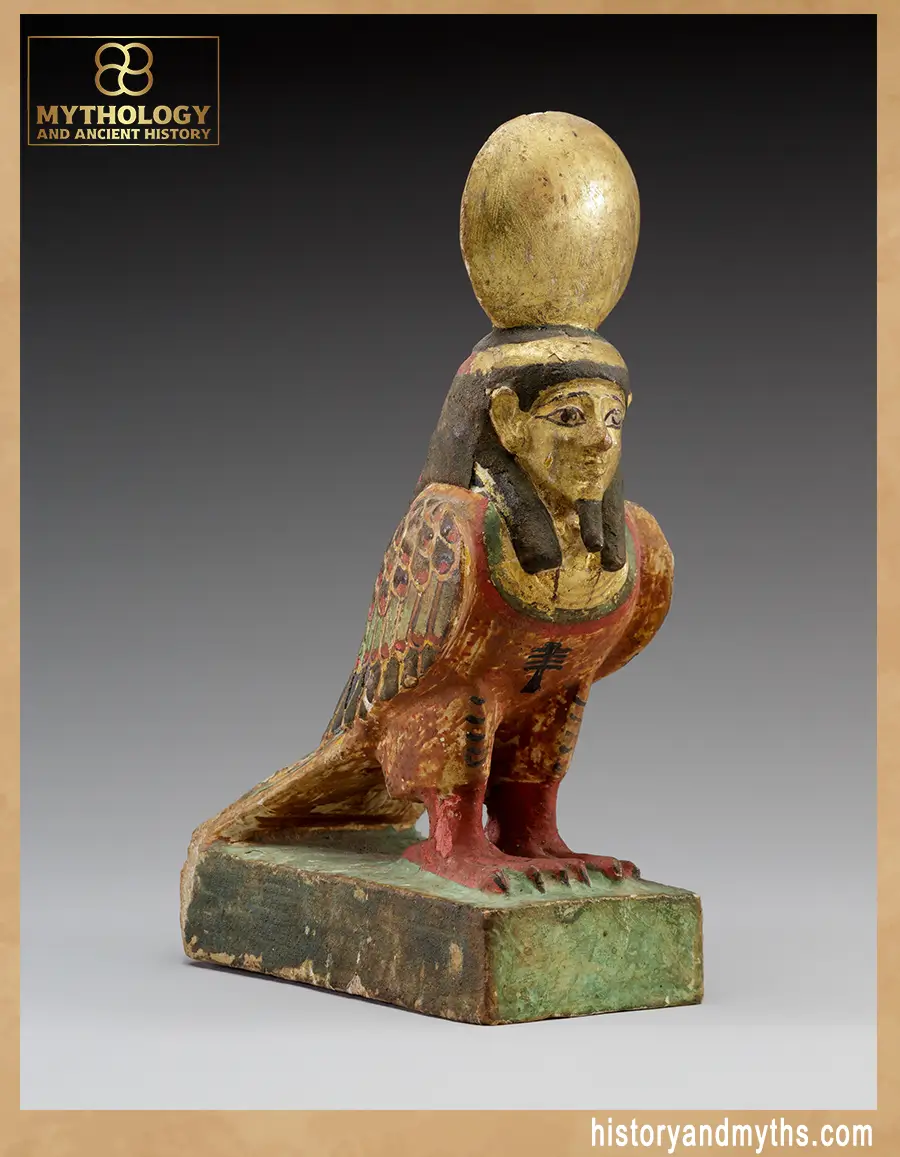
This is why the Ba was imagined not as a flame or mist, but as a bird with a human head. It could fly from the tomb at dawn and come back at night. It could stand on temple roofs and peer into villages where it once lived. It was not imprisoned by death. It was merely redirected by it.
In modern language, people call Ba “the Egyptian soul.”
That translation is convenient — and dangerously incomplete.
The Ba was not an invisible conscience. It was not a moral scoreboard. It was not an afterlife vapor.
It was identity in motion.
Unlike the Ka, which stayed tethered to tombs and offerings, the Ba was free. It crossed thresholds. It crossed time. It was not confined to stone.
And that made it dangerous.
A Ba that could not reunite with its Ka did not reach peace.
A Ba that lost its name dissolved.
A Ba that wandered too long became untethered.
Egyptian religion did not fear hell.
It feared fracture.
The nightmare was not punishment.
The nightmare was separation.
This article is not about spirits in the ordinary sense. It is about how the Egyptians understood the most difficult question of all:
What part of you is allowed to leave — and what part must remain?
The answer was Ba.
And once you understand it, Egyptian tombs stop looking like graves.
They start looking like harbors.
License: Public Domain (CC0 1.0)
What the Ba Really Was — Identity with Wings
The Ba was not a mystical replacement for the body.
It was not an immortal copy.
It was not a second personality.
It was the same self—untethered.
The Egyptians believed that what made a person recognizable did not die with flesh. The Ba carried the voice people remembered, the habits they recognized, the emotional weight they associated with a face and a name. If someone laughed a certain way, loved fiercely, feared quietly, or judged sharply—those qualities did not rot in the grave.
They traveled.
In the Egyptian view, identity itself became mobile.
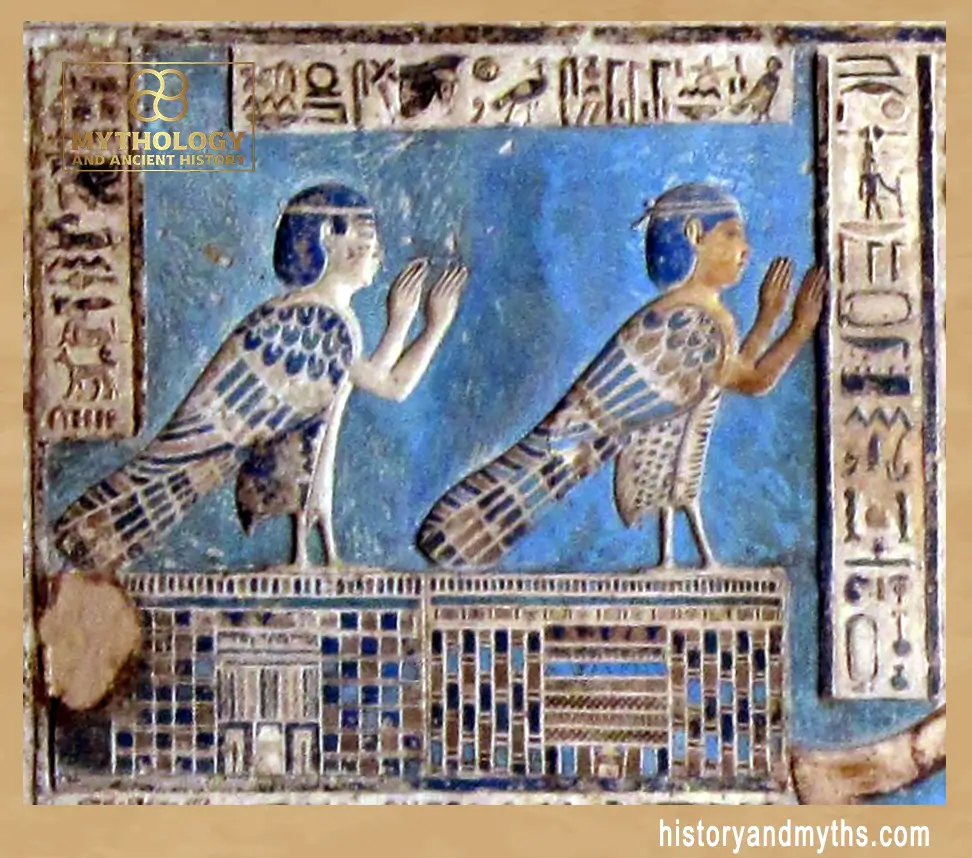
That is why Ba was depicted as a bird with a human head—not as metaphor, but as function. The bird did not symbolize the Ba; it expressed its behavior. The Ba moved exactly as a bird does: between worlds, above walls, beyond borders.
The Ba Did Not Escape the Body — It Outgrew It
Death was not a release for the Ba.
It was a liberation with consequences.
Unlike Ka—which needed structure, feeding, and ritual—Ba needed direction.
It could wander.
It could linger.
It could become lost.
Freedom, in Egyptian thought, was not safe by default.
A Ba could roam too far.
It could forget its center.
It could fail to return.
That was the fear—not flames or judgment, but disconnection.
To live after death meant:
- The Ba must be free enough to move.
- But tethered enough to return.
Too much freedom led to dissolution.
Too much confinement led to stagnation.
The perfect afterlife was balance.
The Ba Was Awake
If the Ka sustained existence, the Ba experienced it.
It was with the Ba that a person:
- felt joy,
- remembered pain,
- carried longing,
- retained personality.
That is why some Egyptian texts describe a person arguing with their Ba. Not metaphorically. Literally.
The Ba could disagree.
It could advise.
It could resist despair.
The Egyptians did not imagine the self as a single voice. They understood inner conflict long before psychology named it.
The Ba was the self that spoke back.
The Ba and the Name Were Bound Together
A Ba without a name did not survive.
Identity was not abstract.
It was anchored in language.
If your name faded, your Ba weakened.
If your name vanished, your Ba fractured.
This is why names were carved obsessively, repeated endlessly, defended fiercely. To erase a name was to hunt a Ba.
And to destroy a Ba was worse than death.
It meant you were not punished.
You were forgotten.
| Aspect | Ba in Egyptian Belief | Meaning & Impact |
|---|---|---|
| Nature | Personal identity | Defines individuality, memory, and emotional self. |
| Form | Human-headed bird | Represents freedom with preserved identity. |
| Function | Mobility after death | Allows movement between worlds and return to the tomb. |
| Relation to Ka | Complementary | Ba carries identity; Ka supplies life-force. |
| Requirement | Name and return | Needs anchor back to body, statue, or tomb. |
| In Judgment | Carrier of selfhood | Judgment impossible without full identity present. |
| Threat | Fragmentation | Loss of name or reunion meant erasure of self. |
The Ba After Death — Freedom with Conditions
Once the body died, the Ba did not disappear.
It moved.
And movement, in Egyptian belief, was not chaos — it followed invisible rules.
The Ba was allowed to leave the tomb.
Visit familiar places.
Glide through cities it once knew.
Return to temples where its name was spoken.
Death did not exile the Ba from the world.
It merely changed the way it moved through it.
Not Trapped — But Not Free Without Limits
The Ba enjoyed freedom, but not independence.
Its true survival depended on a constant reunion with the Ka.
If the Ba wandered and failed to return to its Ka, the person did not achieve wholeness.
The Egyptian afterlife was not about escape.
It was about reconstitution.
Ba without Ka was not a triumph.
It was a fracture.
This is why tombs were not locked prisons, but return points.
They were ports of re-entry.
The Ba could explore, but it had to come back.
The Risk of the Wilderness
The Egyptian afterlife was filled with dangers not because of monsters, but because of forgetfulness.
A Ba could forget its route.
It could fail to recognize itself.
It could drift too long without anchors.
The underworld was not hell.
It was a place of disorientation.
To survive it, the Ba needed:
- its correct name,
- intact memory,
- ritual guidance.
And that is why the Egyptians filled coffins, walls, and shrouds with texts.
They were not decorative.
They were maps.
No Judgment Without Identity
Later Egyptian belief introduced judgment.
But judgment required something first:
A recognizable self.
If the Ba could not present itself — name intact, identity intact — there was nothing to judge.
Justice came later.
Identity came first.
The Ba had to arrive whole.
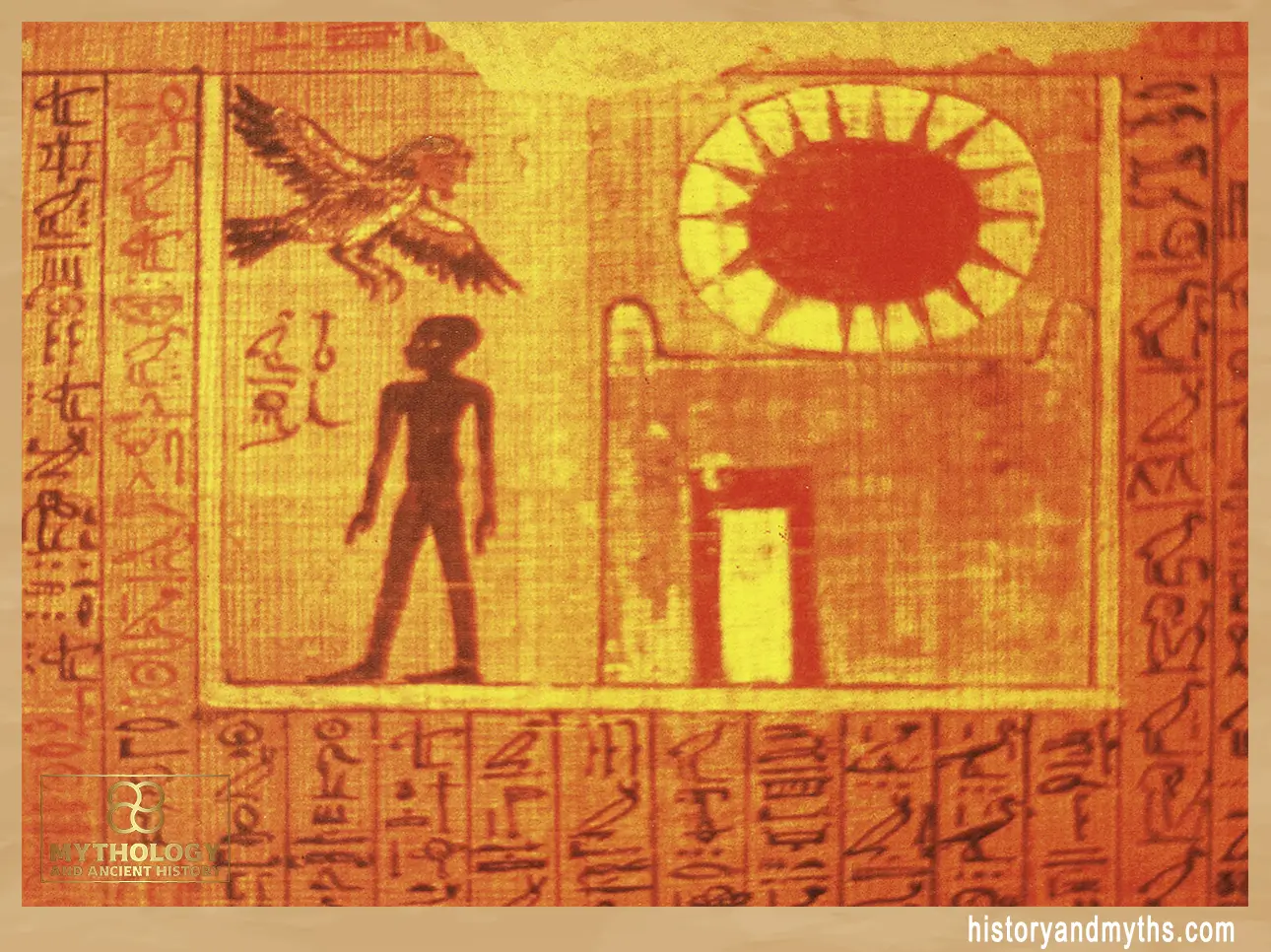
The Ba in Egyptian Art — Why It Had a Human Face and Wings
The Egyptians did not imagine the Ba vaguely.
They gave it a body.
Not a human body.
Not a spirit-cloud body.
A hybrid one.
A bird with a human head.
This was not decoration.
It was theology in stone.
Wings Meant Movement, Not Escape
The wings did not symbolize heaven.
They symbolized permission.
Permission to move between worlds.
A Ba with wings was not flying away from life.
It was circulating through it.
Birds in Egypt were not mythic creatures — they were everyday witnesses to space the human body could not reach. Sky, rooftops, courtyards, desert, riverbanks. Birds crossed borders naturally.
Putting wings on the Ba meant one thing only:
Identity was no longer trapped in flesh.
It could rise.
Return.
Hover.
Move freely without being erased.
The Human Head Was Not Artistic — It Was Legal
If the Ba had been drawn only as a bird, it would lose its owner.
The human head locked identity into the image.
Face = recognition.
Face = individuality.
Face = continuity.
The Ba did not become anonymous in death.
It remained you.
That’s why no two human-headed Ba figures look exactly alike in detail.
They carried facial hints — not portrait realism, but recognition codes.
Enough to say:
“This is not a soul.”
“This is a person.”
The Ba Appears Where It Needs to Be Remembered
You do not find Ba imagery only in tombs.
You find it:
- on coffins
- on tomb walls
- on papyri
- on amulets
- in funerary reliefs
Not for beauty.
For survival.
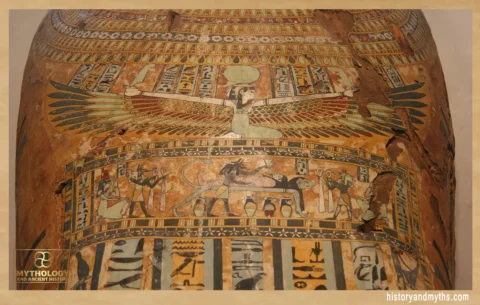
Every image worked as a reminder and an anchor.
A picture of a Ba was not art.
It was identity insurance.
If words failed…
…images remained.
The Art Was Not Symbolic. It Was Operational.
Egyptian religious art did not exist to express.
It existed to function.
Carving a Ba on a wall did not illustrate belief.
It activated it.
Names + Images + Text = Identity Machinery.
And the Ba sat at its core.
Not as a concept.
As a presence.
Ba in a Nutshell — Identity on the Move
- Essence: Ba is personal identity — memory, personality, and recognizable self.
- Form: Shown as a human-headed bird to express mobility with individuality.
- After death: Free to travel, yet required to return and reunite with the Ka.
- Anchor: Needs name, tomb, or statue to avoid losing identity.
- Risk: The true danger was fragmentation, not punishment.
- Big idea: Survival meant staying whole.
In Ba, the Egyptians defined the afterlife as movement without erasure — freedom that never breaks identity.
Ba and Judgment — Why the Soul Had to Arrive Whole
Egyptian judgment in the afterlife did not begin with morality.
It began with identity.
The heart could not be weighed if the self was incomplete.
Truth could not be tested if the person had not fully arrived.
And arrival meant one thing above all:
The Ba had to return.
Judgment Was Impossible Without the Ba
If the Ka sustained existence and the body preserved form, the Ba carried the person into court.
Without the Ba, there was only a shell standing before the scales.
The Ba brought:
- memory,
- emotional history,
- recognizable selfhood.
Judgment was not performed on a corpse.
It was performed on a person.
And the Ba was what made a person present.
Wholeness Was the First Requirement
To the Egyptians, failing judgment did not begin with sin.
It began with being fragmented.
A Ba that had wandered too long,
a Ba that forgot its name,
a Ba that failed to reunite with its Ka—
did not face punishment.
It faced dissolution.
Not hell.
Not torture.
Erasure.
You could not be judged if you no longer fully existed.
This Is Why the Afterlife Was Architectural
Every inscription, every amulet, every image inside a tomb aimed at one goal:
Bring the Ba back.
Keep it whole.
Make the person complete again.
Judgment was not something you walked into.
It was something you were rebuilt for.
Character did not matter until you were intact.
Truth did not matter until you were recognizable.
Only then could the heart be weighed.
Only then did morality begin.
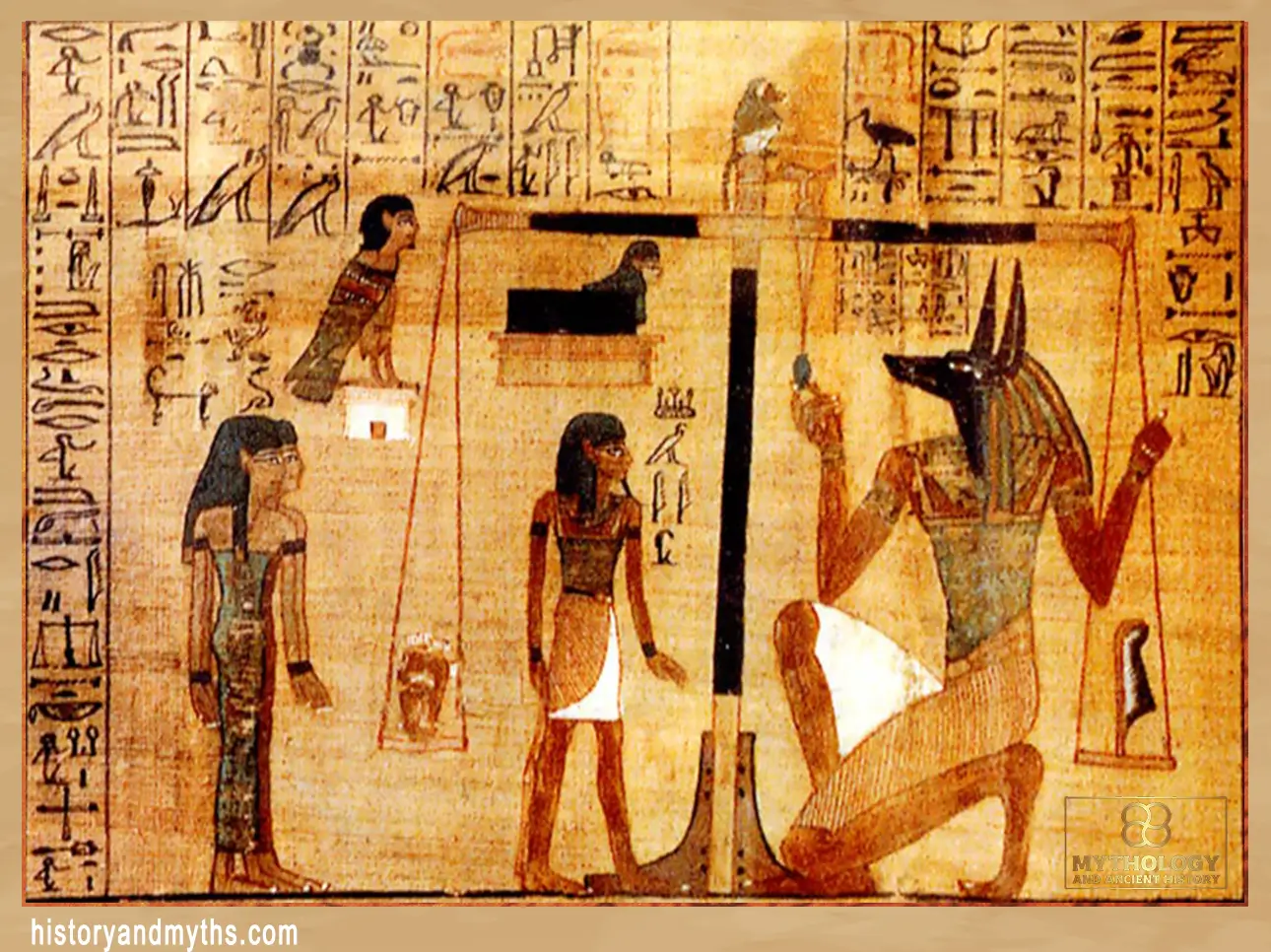
Source: Wikimedia Commons | Author: FinnBjo~commonswiki | License: Public Domain
Caption: The Ba (human-headed bird) appears at judgment — identity entering the weighing of the heart.
Why Ba Still Matters — The Ancient Question of Identity
The Ba is not just an artifact of ancient Egypt.
It is a confrontation.
It forces a question most modern cultures avoid:
What part of you is allowed to survive change — and what part must remain?
We like to separate life into body and soul.
The Egyptians did not.
They divided identity into functions, roles, and risks.
The Ba was the part that carried you forward — not permanently, not safely, not automatically — but conditionally.
It could move.
But it could also disappear.
It could survive.
But only if it remained you.
The Ba Refuses Modern Comfort
Modern spirituality promises continuation.
The Ba offered something harsher:
Continuation only if cohesion is preserved.
Not memory.
Not belief.
Not morality alone.
But identity itself.
You did not pass into the next world simply by dying.
You arrived only if you:
- remembered yourself,
- were remembered by others,
- were named,
- were anchored.
Death did not transform you.
It challenged you to remain intact.
The Ba’s Final Lesson
The Egyptians did not build tombs to preserve bodies.
They built them to preserve selves.
We bury our dead and speak of closure.
They preserved their dead and feared loss.
Not loss of flesh.
Loss of self.
The Ba teaches that identity is not a given.
It is a fragile structure.
Something built, protected, sustained.
Even then…
Not guaranteed.
The Oldest Warning About Being Human
Long before psychology and theology tried to define who we are, the Egyptians arrived at a chilling conclusion:
Survival is not physical.
Not spiritual.
Not emotional.
Survival is continuity of personhood.
And that is the Ba.
Not an ornament of belief.
A threat and a promise.
At the same time.
Key Takeaways — The Ba at a Glance
- Ba represents personal identity — not just “a soul.”
- It could travel after death but had to return to reunite with the Ka.
- Names and images anchored the Ba and protected identity.
- The true danger was fragmentation, not punishment.
- Survival meant remaining whole.
FAQ — The Ba in Ancient Egyptian Belief
What was the Ba in ancient Egypt?
The Ba was personal identity — the part of a person that carried memory, character, and individuality beyond death.
Was the Ba the same as the soul?
No. The Ba was not a moral soul or conscience. It was the recognizable self rather than an abstract spirit.
Why was the Ba shown as a bird with a human head?
The bird represented freedom and movement; the human head preserved personal identity.
Could the Ba leave the tomb?
Yes. The Ba was believed to travel freely between worlds but had to return to remain whole.
What happened if the Ba did not reunite with the Ka?
The individual became incomplete and risked erasure rather than survival.
Why were names so important to the Ba?
A name anchored identity. Losing it meant losing the self.
Did the Ba face judgment after death?
Only once identity was restored. Judgment required a complete self.
Why does the Ba still matter today?
It raises the same question we still ask: what part of us truly defines who we are?
Sources & Rights
- Assmann, Jan. Death and Salvation in Ancient Egypt. Translated by David Lorton. Ithaca: Cornell University Press, 2005.
- Allen, James P. Middle Egyptian: An Introduction to the Language and Culture of Hieroglyphs. Cambridge: Cambridge University Press, 2010.
- Baines, John. “Communication and Display: The Integration of Early Egyptian Art and Writing.” Antiquity 63, no. 240 (1989): 471–482.
- Faulkner, Raymond O. The Ancient Egyptian Coffin Texts. 3 vols. Warminster: Aris & Phillips, 1973–1978.
- Hornung, Erik. Conceptions of God in Ancient Egypt: The One and the Many. Translated by John Baines. Ithaca: Cornell University Press, 1982.
- Lichtheim, Miriam. Ancient Egyptian Literature. Vol. 1, The Old and Middle Kingdoms. Berkeley: University of California Press, 1973.
- Pinch, Geraldine. Egyptian Mythology: A Guide to the Gods, Goddesses, and Traditions of Ancient Egypt. Oxford: Oxford University Press, 2002.
- Quirke, Stephen. Ancient Egyptian Religion. London: British Museum Press, 1992.
- Wilkinson, Richard H. The Complete Gods and Goddesses of Ancient Egypt. London: Thames & Hudson, 2003.
- Ikram, Salima. Death and Burial in Ancient Egypt. Cairo: American University in Cairo Press, 2003.
Written by H. Moses — All rights reserved © Mythology and History