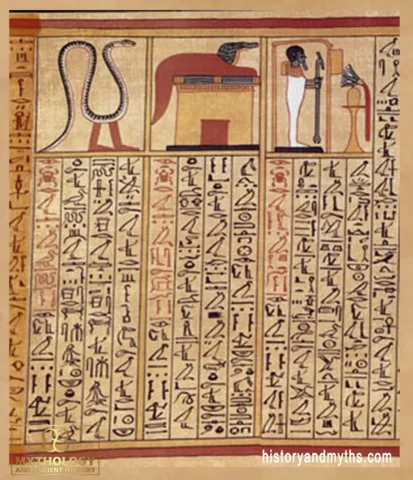
Resurrection and Rebirth in Ancient Egypt — The Return to Life
In ancient Egyptian belief, resurrection and rebirth were not rewards granted at the end of judgment. They were complex processes that determined whether existence itself could continue. Death was not automatically followed by renewal. It marked a critical interruption, and only through specific conditions could that interruption be reversed.
Resurrection referred to the reactivation of the dead after the stillness of death—restoring awareness, identity, and function. Rebirth went further. It meant entering a new cycle of existence within the cosmic order, no longer bound to mortal life but still subject to balance and regulation. These two ideas were connected but not identical, and confusing them has led to major misunderstandings in modern explanations.
This distinction reveals how carefully structured the Egyptian afterlife was. Survival depended on more than morality alone. The dead had to be reassembled, reawakened, and reintegrated into Ma’at through ritual knowledge, divine cooperation, and personal integrity. Resurrection and rebirth were therefore not promises, but outcomes—earned only by those capable of sustaining order beyond death.
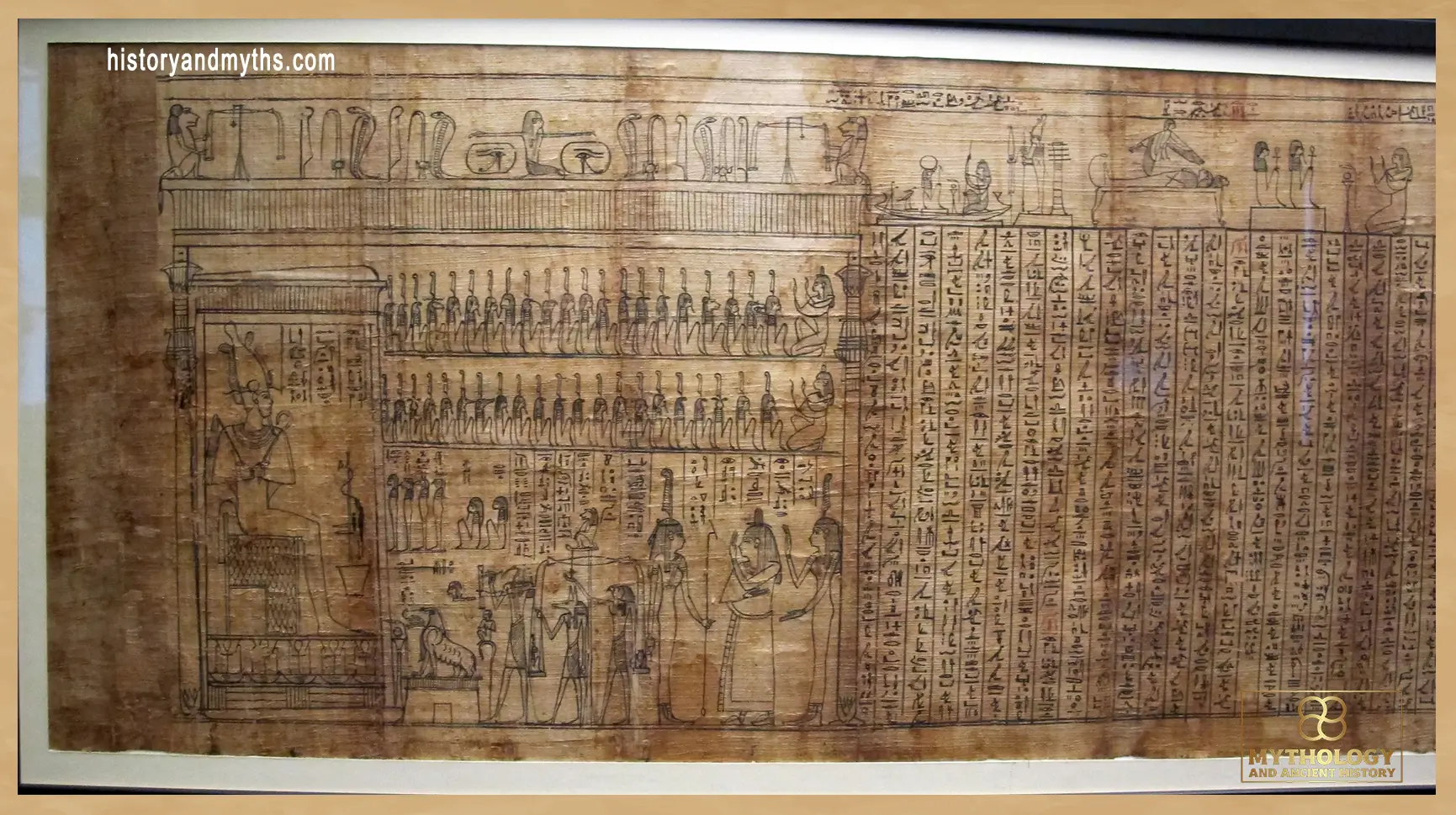
What Resurrection and Rebirth Meant in Ancient Egypt
For the ancient Egyptians, resurrection and rebirth described how existence resumes, not what the dead receive. These concepts addressed the problem created by death itself: the interruption of function, awareness, and participation in cosmic order. The afterlife was not assumed. It had to be rebuilt.
Resurrection meant restoring activity after death. It involved awakening the senses, reactivating consciousness, and allowing the dead to function again. Texts speak of seeing, hearing, speaking, and moving—abilities that had been suspended by death. Without resurrection, the dead remained inert, unable to participate in any further stage of existence.
Rebirth described the next step. Once restored, the dead had to be placed back into a living system. Rebirth allowed entry into a renewed cycle governed by Ma’at, where existence continued in a transformed state. This was not a return to earthly life, but a regulated continuation beyond it.
Together, resurrection and rebirth formed a sequential process. One reactivated the dead; the other reintegrated them. Neither was automatic. Both depended on conditions that had to be met before death and maintained after it. This framework shows that the Egyptian afterlife was not an open promise, but a carefully controlled system in which continued existence had to be sustained.
| Aspect | Resurrection and Rebirth |
|---|---|
| Core Purpose | Restores existence after death and reintegrates the dead into cosmic order. |
| Resurrection | Reactivates awareness, identity, and function after the stillness of death. |
| Rebirth | Places restored existence into a renewed and sustainable cosmic cycle. |
| Required Elements | Preserved body, intact identity (name), restored awareness, and ritual knowledge. |
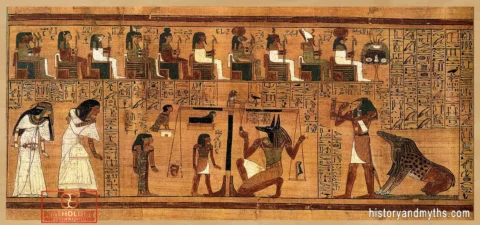
| Relation to Judgment | Occurs only after judgment has been passed and survival is permitted. |
| Stability of Existence | Resurrection restores life; rebirth secures it within cosmic balance. |
| Failure Outcome | Incomplete or denied resurrection results in dormancy or loss of continuation. |
| Theological Meaning | Continuation of existence is conditional, structured, and dependent on order. |
Resurrection vs Rebirth: Two Different Stages
Modern explanations often treat resurrection and rebirth as interchangeable ideas, but ancient Egyptian texts do not. Each term described a different stage in the recovery of existence after death, and confusing them obscures how the system actually worked.
Resurrection was concerned with restoration. It addressed the immediate effects of death: silence, immobility, and loss of awareness. Through ritual speech, preservation of the body, and divine assistance, the dead were reactivated. The goal was not eternal life yet, but basic functionality—being able to perceive, respond, and exist again as a conscious entity.
Rebirth, by contrast, was about continuation. Once restored, the dead had to be placed into a renewed cosmic cycle. Rebirth transformed restored existence into sustainable existence. It aligned the individual with recurring patterns of renewal seen in nature and the cosmos, especially the daily rebirth of the sun. Without rebirth, resurrection remained incomplete.
This distinction explains why Egyptian texts repeatedly emphasize both awakening and renewal. Awakening alone left the dead active but unstable. Renewal without restoration was impossible. Only when both stages were completed could existence move forward in a permanent and ordered form.
Understanding this separation reveals a system built on process rather than promise. The afterlife was not granted in a single moment. It unfolded through stages, each with its own requirements, risks, and limits.
The Elements Required for Resurrection
Resurrection in ancient Egyptian belief did not depend on a single factor. It required the successful reassembly of multiple elements that death had separated. If even one component failed, resurrection could not occur.
The physical body remained essential. Preservation was not symbolic but functional. Without an intact body, the dead lacked a stable anchor for reactivation. This explains the emphasis on mummification and protection of the corpse. The body was the platform upon which all other elements depended.
Equally important was the name. To lose one’s name was to lose identity. Funerary texts repeatedly insist that the dead must know and preserve their name in order to awaken. Without it, resurrection produced no recognizable self.
Conscious awareness also had to be restored. Spells in funerary texts focus on reopening the senses—seeing, hearing, speaking, and moving. Resurrection was incomplete if the dead remained mute or unaware. Awareness allowed interaction with gods, guardians, and the cosmic environment.
Finally, ritual knowledge activated the process. Texts were not decorative. They functioned as instructions and safeguards, enabling resurrection to occur correctly. The dead who lacked this knowledge risked remaining dormant, even if all other conditions were met.
Resurrection, therefore, was not a miracle. It was a technical process. Each element had to be present, protected, and correctly reconnected for existence to resume.
How Rebirth Restored the Dead to the Cosmic Order
Once resurrection had restored awareness and function, rebirth addressed a different problem: placement. A reactivated being still stood outside the cosmic system. Rebirth allowed that being to enter a renewed cycle governed by Ma’at, where existence could continue without destabilizing order.
Rebirth was modeled on cosmic repetition. The daily rebirth of the sun provided the primary framework. Just as Ra emerged renewed each morning after passing through the Duat, the dead sought entry into a recurring pattern of regeneration. This did not mean becoming the sun but aligning with the same principle of cyclical renewal.
Texts describe rebirth as a shift in state rather than location. The dead were no longer merely restored individuals; they became participants in a living system. Their existence gained rhythm, continuity, and protection through alignment with cosmic cycles. Without this step, resurrection remained fragile and temporary.
Rebirth also marked the transition from vulnerability to stability. Once reborn, the dead were no longer at constant risk of collapse or dissolution. They had been integrated into an ordered structure that sustained existence over time. This integration distinguished successful rebirth from mere survival.
In this way, rebirth completed what resurrection began. One restored life; the other secured it. Together, they ensured that continued existence served cosmic balance rather than threatening it.
Resurrection and Rebirth — Core Insights
- Resurrection and rebirth were structured processes, not automatic rewards.
- Resurrection restored awareness, identity, and function after death.
- Rebirth reintegrated restored existence into a stable cosmic cycle.
- Both stages required preparation, ritual knowledge, and preservation.
- Judgment permitted survival but did not guarantee resurrection.
- Failure at any stage could halt continuation permanently.
- The process protected Ma’at by allowing only compatible existence to continue.
Why Resurrection Was Not Automatic
Ancient Egyptian belief did not assume that resurrection followed death by default. This is one of the most misunderstood aspects of the afterlife. Texts make it clear that resurrection could fail, stall, or be denied if specific conditions were not met.
Moral alignment alone was not sufficient. Passing judgment protected the dead from condemnation, but it did not activate resurrection by itself. Without proper preparation—rituals, knowledge, and preservation—the dead could remain inert despite being justified. Survival required more than innocence.
Failure could occur at several levels. A damaged body disrupted the foundation of restoration. Loss of name erased identity. Ignorance of ritual language left the dead unable to respond or act. Any of these failures could halt resurrection permanently.
This explains why funerary practices were treated as necessities rather than symbols. Tombs, spells, names, and images existed to prevent breakdown at critical stages. The Egyptians prepared for resurrection as one prepares for a complex operation, not as one awaits a divine gift.
By denying automatic resurrection, Egyptian belief reinforced responsibility. Life after death was possible, but not guaranteed. It had to be maintained through foresight, knowledge, and continued alignment with order. Resurrection was therefore a conditional outcome, not an entitlement.
What Resurrection and Rebirth Meant for the Living
Belief in resurrection and rebirth shaped how the ancient Egyptians lived, not just how they prepared for death. Since continuation after death was conditional, life itself became a period of preparation. Actions, knowledge, and discipline all mattered because failure could not always be corrected later.
This belief encouraged responsibility rather than comfort. The Egyptians did not expect death to reset mistakes. They understood resurrection as something that had to be supported in advance—through ethical conduct, preservation of identity, and mastery of ritual language. Living correctly meant remaining compatible with order, both now and beyond death.
Rebirth also reframed immortality. Eternal existence was not static bliss, but sustained participation in a cosmic system. To be reborn was to accept structure, repetition, and balance. Those unwilling or unable to maintain that balance did not simply suffer; they ceased to continue.
In this way, resurrection and rebirth were not promises offered to everyone. They were possibilities shaped by preparation and integrity. For the living, this transformed the afterlife from a distant hope into an ongoing responsibility—one that extended the demands of Ma’at beyond death itself.
Key Takeaways
- Resurrection and rebirth were not rewards, but conditional processes.
- Resurrection restored awareness and function after death.
- Rebirth secured restored existence within the cosmic order.
- Passing judgment allowed continuation but did not activate resurrection.
- Preservation of the body, identity, and ritual knowledge was essential.
- Failure at any stage could permanently prevent continued existence.
Frequently Asked Questions
What did resurrection mean in ancient Egyptian belief?
Resurrection meant restoring awareness, identity, and function after death, allowing the dead to exist again as a conscious being.
How was rebirth different from resurrection?
Resurrection reactivated existence, while rebirth placed that restored existence into a renewed and stable cosmic cycle.
Was resurrection automatic after death?
No. Resurrection depended on multiple conditions, including preservation, ritual knowledge, and continued alignment with Ma’at.
Did passing judgment guarantee rebirth?
No. Judgment permitted survival, but resurrection and rebirth still required preparation and correct execution.
What elements were required for resurrection?
A preserved body, intact identity (name), restored awareness, and access to ritual texts and knowledge.
Why was rebirth important after resurrection?
Without rebirth, restored existence remained unstable and could not continue safely within cosmic order.
What happened if resurrection failed?
Failure resulted in dormancy or loss of continuation, preventing the dead from participating in renewed existence.
Why did these beliefs matter to the living?
They encouraged responsibility during life, as continuation after death depended on preparation, knowledge, and integrity.
Sources & Rights
- Assmann, Jan. Death and Salvation in Ancient Egypt. Cornell University Press, 2005.
- Hornung, Erik. The Ancient Egyptian Books of the Afterlife. Cornell University Press, 1999.
- Hornung, Erik. Conceptions of God in Ancient Egypt: The One and the Many. Cornell University Press, 1982.
- Allen, James P. The Ancient Egyptian Book of the Dead. University of Chicago Press, 2015.
- Allen, James P. Middle Egyptian: An Introduction to the Language and Culture of Hieroglyphs. Cambridge University Press, 2014.
- Taylor, John H. Journey through the Afterlife: Ancient Egyptian Book of the Dead. British Museum Press, 2010.
- Shafer, Byron E., ed. Religion in Ancient Egypt: Gods, Myths, and Personal Practice. Cornell University Press, 1991.
Written by H. Moses — All rights reserved © Mythology and History