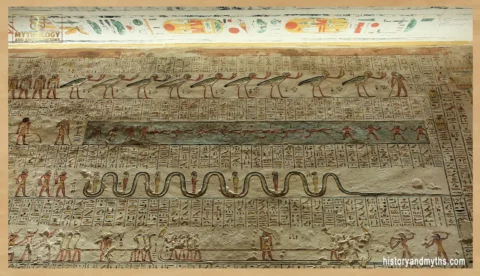
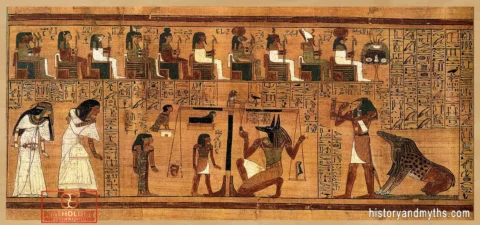
What Is the Book of Caverns? Egypt’s Darkest Afterlife Text
Not every soul was meant to be reborn. In ancient Egyptian belief, judgment did not always lead to renewal, and failure was not always followed by correction. The Book of Caverns presents the most uncompromising vision of the afterlife—a system designed not to test or transform, but to end existence altogether for those who did not belong.
Unlike other funerary texts that describe movement, progress, or guarded access, the Book of Caverns focuses on what happens after judgment fails. It introduces a final stage of the Duat where certain beings are permanently removed from the cycle of life, light, and rebirth. These souls are not tortured for spectacle or moral drama. They are rendered inactive, cut off, and erased from continuation.
This text reflects a late and hardened theological position. By the time the Book of Caverns appears, the Egyptian afterlife had become a strictly regulated system. Transformation was no longer universal, and renewal was no longer assumed. Order had to be protected, even if that meant eliminating those who threatened its balance.
This article explains the Book of Caverns as a doctrine of exclusion rather than punishment. It explores why the Egyptians imagined zones of obliteration within the underworld, how this text completes the logic of earlier afterlife books, and what it meant for the dead who faced the possibility that death might not lead to rebirth—but to permanent disappearance.
What Is the Book of Caverns?
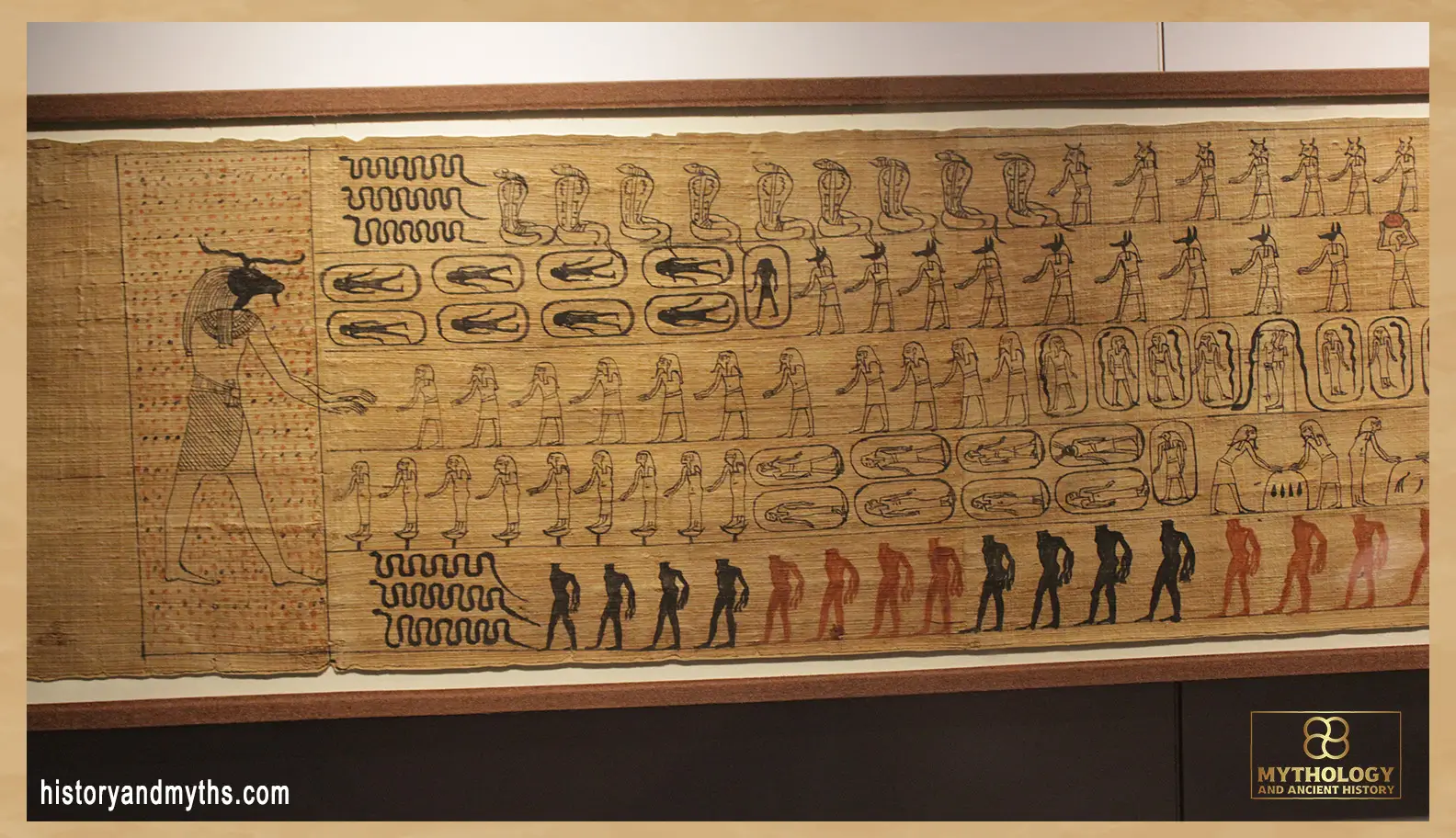
The Book of Caverns is a late New Kingdom funerary text that presents the underworld as a place of final resolution. Unlike earlier compositions, it does not guide the dead through stages of transformation or controlled access. Instead, it describes what happens to those who have already failed judgment. Its focus is not passage, but termination.
In this text, the Duat is divided into deep regions—caverns—where certain beings are confined in states of complete inactivity. These are not temporary holding areas. They are zones where renewal is deliberately denied. Light does not restore, movement does not resume, and time no longer progresses. Existence is suspended without return.
The Book of Caverns operates after the mechanisms described in other afterlife texts have completed their work. The Amduat explains how transformation through time occurs. The Book of Gates defines who is permitted to proceed. The Book of Caverns addresses those who remain once both systems have failed. It answers a question the earlier texts leave unresolved: what happens to souls that cannot be transformed and cannot be authorized?
This makes the Book of Caverns fundamentally different in tone and purpose. It is not instructional in the usual sense. There are no routes to follow, no names to recite for escape. The text records outcomes, not opportunities. Its role is to affirm that cosmic order is protected not only by renewal, but by removal.
For the Egyptians who commissioned and preserved this text, the message was stark. The afterlife was not endlessly forgiving. Order required limits, and some beings—human or otherwise—were not allowed to continue. The Book of Caverns exists to make that boundary explicit.
| Aspect | The Book of Caverns |
|---|---|
| Core Purpose | Enforces final exclusion by removing unfit beings from the cycle of rebirth. |
| Primary Focus | Consequence and obliteration rather than transformation or controlled passage. |
| Structure | Deep caverns that function as endpoints where movement and renewal cease. |
| Nature of Punishment | Suspension of existence and exclusion from cosmic rhythm, not physical torture. |
| Role of Ra | Overseer of enforcement who confirms judgment without intervening. |
| Relation to Judgment | Operates after judgment has failed, enforcing irreversible outcomes. |
| Difference from Other Texts | Completes the afterlife system by providing finality absent in the Amduat and Book of Gates. |
| Meaning for the Dead | Survival depends on remaining fit for order; failure results in permanent exclusion. |
Why the Book of Caverns Exists
The existence of the Book of Caverns reflects a growing anxiety within Egyptian theology. By the late New Kingdom, the afterlife was no longer imagined as a process that inevitably led to renewal. Earlier systems allowed for transformation through time or regulation through authority. But these mechanisms raised an unsettling question: what if some beings still remained unfit for continuation?
The Book of Caverns answers this by introducing finality. It closes the system. Where the Amduat allows change and the Book of Gates allows selection, the Book of Caverns enforces consequence. It ensures that failure has an endpoint and that cosmic order is not endlessly compromised by repeated attempts at renewal.
This shift reveals a hardened vision of Ma’at. Order was no longer maintained solely by balance and correction, but by removal. Certain beings—those who opposed order, disrupted balance, or failed judgment—were no longer worth transforming. Their continued existence was seen as a threat rather than a possibility for redemption.
The appearance of this text also coincides with a period of instability. Political fragmentation, religious consolidation, and growing concern over chaos influenced how the afterlife was imagined. The Book of Caverns reflects a worldview in which permanence mattered more than mercy. The cosmos had limits, and those limits had to be enforced absolutely.
In this context, the caverns are not expressions of cruelty. They are safeguards. They prevent disorder from re-entering the cycle of rebirth. The text exists because the Egyptians needed a final answer—one that ensured renewal remained meaningful by denying it to those who no longer belonged.
Punishment Without Torture
The punishment described in the Book of Caverns is often misunderstood when viewed through later religious frameworks. It is not a system of pain designed to inflict suffering. There are no scenes of eternal torment meant to shock or moralize. Instead, the punishment is far more severe by Egyptian standards: the suspension of existence itself.
In this text, condemned beings are rendered inert. They do not move, speak, or participate in the cycle of light and renewal. Fire appears, but not as an instrument of agony. It functions as a force of negation—burning away vitality rather than causing prolonged suffering. Darkness does not conceal; it neutralizes. The goal is not correction, but cessation.
This reflects a distinct Egyptian logic. Life was defined by participation in cosmic rhythm—movement, light, and repetition. To be removed from that rhythm was the ultimate failure. Pain could be endured; nonexistence could not. The Book of Caverns therefore presents punishment as exclusion from time itself.
The absence of torture also reinforces the text’s authority. There is no spectacle, no moral drama. Judgment has already occurred elsewhere. The caverns simply enforce the outcome. What remains is not anger or vengeance, but administration. Order is preserved by preventing the unfit from continuing.
For the living, this conveyed a sobering message. The afterlife was not a place of endless chances. Failure did not always lead to learning or redemption. In some cases, it led to silence. The Book of Caverns makes clear that the most feared outcome was not suffering after death, but the permanent loss of existence.
The Role of Ra in the Book of Caverns
In the Book of Caverns, Ra no longer functions as a guide, protector, or agent of renewal. His role is markedly reduced and fundamentally altered. He does not rescue, transform, or grant passage. Instead, he appears as a force that confirms outcomes already decided by cosmic order.
Unlike in earlier texts, Ra does not lead a journey through stages of the night. He does not battle chaos to restore balance. In the caverns, his presence is static and authoritative. He illuminates, but he does not intervene. Light reveals the condemned, but it does not save them. This distinction is crucial.
Ra’s function here is administrative rather than redemptive. He oversees the enforcement of Ma’at by ensuring that exclusion is carried out. The condemned are shown in relation to him, not because he offers hope, but because his light confirms their separation from renewal. They are seen—and then denied continuation.
This shift reflects a mature and severe theological stance. Even the sun god does not override judgment. Cosmic order is no longer dependent on divine compassion or struggle. It operates automatically. Ra’s authority lies in maintaining the system, not bending it.
For the dead, this was a powerful warning. Divine proximity did not guarantee salvation. Being seen by the sun god did not ensure rebirth. The Book of Caverns makes clear that once judgment has failed, even Ra cannot restore what has been removed. Order, once enforced, is final.
The Caverns as Zones of Obliteration
The caverns in this text are not landscapes to be crossed or spaces to be endured. They are endpoints. Each cavern functions as a zone where existence is deliberately brought to a halt. Nothing progresses, nothing transforms, and nothing returns. These regions exist outside the cycle that defines life, time, and rebirth.
Unlike gates, which regulate movement, or hours, which structure transformation, the caverns remove movement altogether. Beings confined within them are no longer participants in cosmic rhythm. They do not wait for another chance, nor do they suffer in anticipation of change. Their state is fixed and irreversible.
This distinction is essential. The Book of Caverns does not describe a parallel afterlife or an alternative destiny. It defines a limit. Once a soul enters a cavern, the process has ended. The system no longer evaluates, tests, or corrects. It concludes. Obliteration here does not mean violent destruction; it means permanent exclusion from continuity.
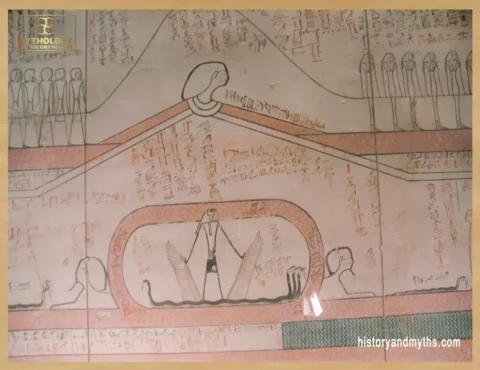
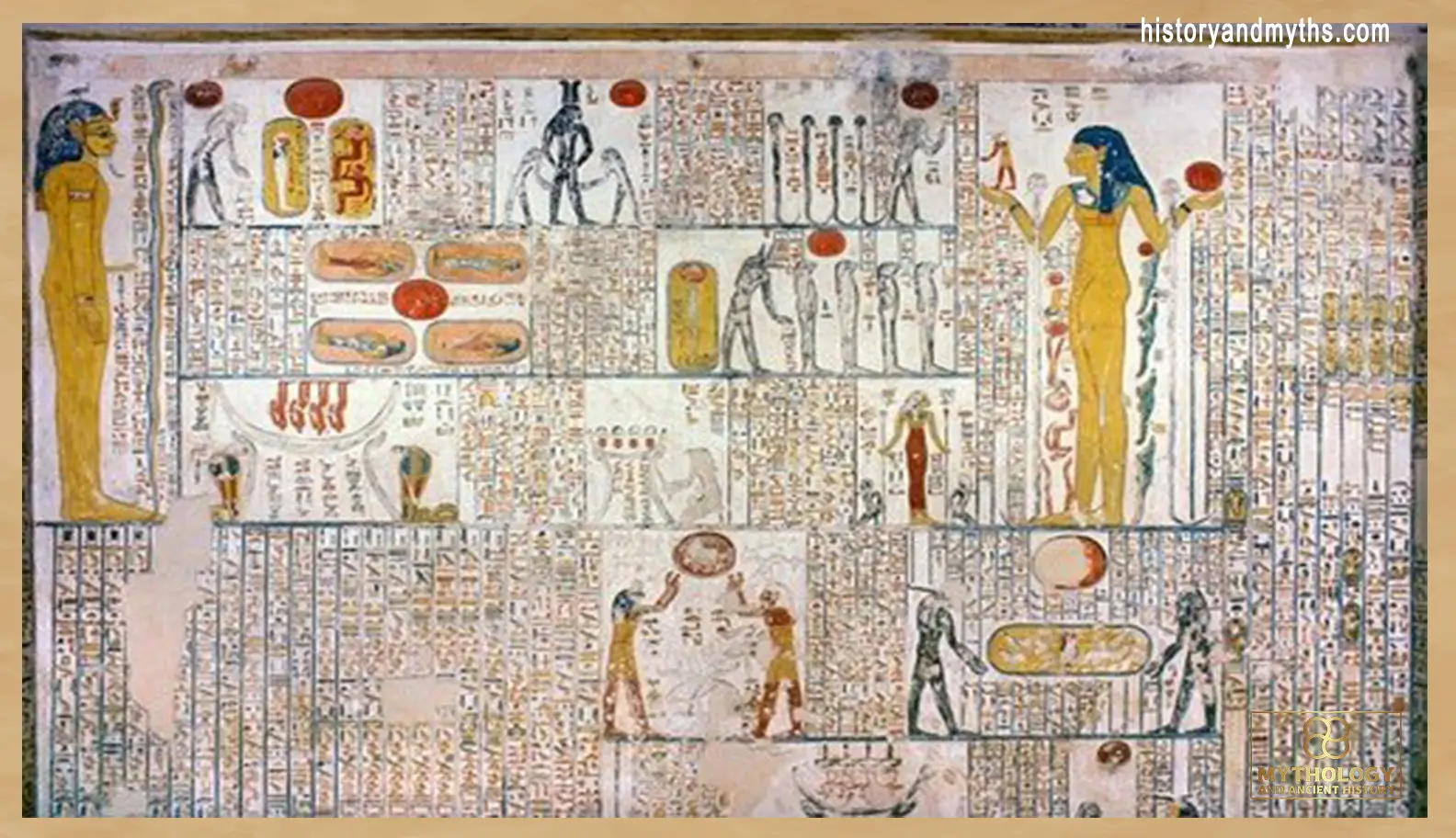
The imagery reinforces this logic. Figures appear bound, inverted, or extinguished, not to dramatize pain but to signal finality. Fire, darkness, and confinement serve as metaphors for removal rather than cruelty. The caverns are not chaotic spaces; they are controlled zones designed to protect order by eliminating what cannot be integrated.
Within the broader framework of Egyptian afterlife texts, the caverns complete the system. They ensure that renewal remains meaningful by denying it to those who threaten balance. Transformation without limits would weaken Ma’at. The Book of Caverns exists to prevent that outcome by enforcing absolute boundaries.
The Book of Caverns — Core Insights
- The Book of Caverns presents the afterlife’s final stage, where continuation is permanently denied.
- Punishment is defined as exclusion from cosmic rhythm, not physical torture or suffering.
- Caverns function as endpoints that halt movement, time, and renewal entirely.
- The text operates after judgment has failed, enforcing irreversible outcomes.
- Ra’s role shifts from renewer to overseer who confirms, but does not reverse, judgment.
- Obliteration protects Ma’at by removing beings that cannot be integrated into order.
- The Book of Caverns completes the afterlife system alongside the Amduat and Book of Gates.
Book of Caverns vs Amduat and Book of Gates
The Book of Caverns cannot be understood in isolation. It is the final component of a three-part system that defines how the ancient Egyptians imagined the fate of the soul after death. Each text addresses a different stage, and none of them replace the others.
The Amduat is concerned with transformation through time. It assumes movement. The night unfolds hour by hour, and renewal remains possible as long as the cycle is completed. Failure is not final; change can still occur. The core question is how rebirth happens.
The Book of Gates introduces control and authority. Movement is no longer automatic. Gates interrupt progress, and passage depends on permission. Judgment becomes procedural. The question shifts from how transformation occurs to who is allowed to continue.
The Book of Caverns addresses what remains when both systems have failed. It is not about time or access, but final exclusion. There is no movement to regulate and no authority to petition. Judgment has already concluded. The only remaining function is enforcement.
Together, these texts form a coherent progression. Transformation is offered, access is regulated, and continuation is ultimately denied when limits are crossed. The Book of Caverns exists to close the system. Without it, the afterlife would allow endless attempts at renewal, weakening the very concept of order.
This comparison reveals the severity of the Caverns. It is not a darker version of earlier texts, but a necessary conclusion. Where the Amduat gives hope and the Book of Gates gives structure, the Book of Caverns delivers finality. In doing so, it preserves the integrity of Ma’at by ensuring that renewal remains selective and meaningful.
What the Book of Caverns Meant for the Dead
For the ancient Egyptian, the Book of Caverns represented the ultimate warning. It made clear that the afterlife was not an endless system of chances. While earlier texts offered transformation or regulated access, this composition confronted the dead with the possibility of permanent failure. Existence itself could be withdrawn.
The text reframed fear. The greatest danger was not suffering after death, but disappearance from the cosmic cycle. To be denied light, movement, and renewal meant losing all connection to life’s defining rhythm. This made moral alignment, ritual knowledge, and respect for order essential long before death occurred.
The Book of Caverns also reinforced personal responsibility. No divine intervention would override judgment at this stage. Even proximity to Ra offered no protection. Once exclusion was enacted, it was final. The dead were expected to understand that survival depended not only on hope or faith, but on qualification.
For the living, the message was unmistakable. Preparation for the afterlife was not symbolic—it was practical. Failure carried consequences that could not be undone. By preserving this text in royal tombs, the Egyptians affirmed that cosmic order required limits, and that those limits applied to everyone.
In the end, the Book of Caverns completed the logic of the Egyptian afterlife. Transformation was possible, access was regulated, but continuation was never guaranteed. The fate of the soul depended on whether it could remain part of order—or whether it would be removed from existence altogether.
Key Takeaways
- The Book of Caverns describes the final stage of the Egyptian afterlife.
- It focuses on exclusion and obliteration, not transformation or redemption.
- Punishment is defined as removal from existence rather than physical torture.
- Caverns function as endpoints where time, movement, and renewal cease.
- Ra confirms judgment but does not intervene or restore the condemned.
- The text ensures that rebirth remains selective and meaningful.
Frequently Asked Questions
What is the Book of Caverns in ancient Egyptian belief?
The Book of Caverns is a funerary text that describes the final stage of the Egyptian afterlife, where unfit souls are permanently excluded from rebirth.
How is the Book of Caverns different from the Amduat?
The Amduat focuses on transformation through time, while the Book of Caverns deals with final exclusion after judgment has failed.
Is the Book of Caverns about torture or punishment?
No. Punishment in the Book of Caverns means suspension of existence, not physical torture or ongoing suffering.
Why do caverns play such an important role?
Caverns function as endpoints where movement, renewal, and cosmic participation permanently cease.
What role does Ra play in the Book of Caverns?
Ra acts as an overseer who confirms judgment but does not intervene to restore or save the condemned.
Who is affected by the Book of Caverns?
It applies to beings—human or divine—who fail judgment and can no longer be integrated into cosmic order.
Does the Book of Caverns allow any chance of rebirth?
No. Once exclusion is enforced, rebirth is permanently denied.
Why was the Book of Caverns important to the ancient Egyptians?
It reinforced the idea that cosmic order had limits and that renewal was selective, not guaranteed for all.
Sources & Rights
- Hornung, Erik. The Ancient Egyptian Books of the Afterlife. Cornell University Press, 1999.
- Hornung, Erik. The Book of Caverns. Living Human Heritage Publications, 2014.
- Assmann, Jan. Death and Salvation in Ancient Egypt. Cornell University Press, 2005.
- Allen, James P. Middle Egyptian: An Introduction to the Language and Culture of Hieroglyphs. Cambridge University Press, 2014.
- Shafer, Byron E., ed. Religion in Ancient Egypt: Gods, Myths, and Personal Practice. Cornell University Press, 1991.
Written by H. Moses — All rights reserved © Mythology and History