Who Were the Guardians of the Underworld Gates in Ancient Egypt?
In the Egyptian vision of the afterlife, gates alone were not enough to regulate the journey through the Duat. Every point of passage required watchers figures whose role was to observe, recognize, and confirm. These were the Guardians of the Gates. They were not executioners, monsters, or judges of morality, but agents of control whose presence ensured that movement through the underworld followed rules rather than chance.
Modern descriptions often reduce these guardians to frightening creatures or list their names without context. Ancient Egyptians understood them differently. A guardian existed to prevent confusion, not to create fear. Its task was to verify whether a soul approaching a gate belonged there whether it possessed awareness, identity, and the knowledge required to move forward. Without this verification, the afterlife would collapse into disorder.
This article explains who the Guardians of the Gates were, how they differed from demons and monsters, and why their role was essential to the structure of the Duat.
What Were the Guardians of the Gates?
The Guardians of the Gates were figures of regulation, not independent powers acting on their own will. Each guardian was assigned to a specific gate or threshold within the Duat and existed solely in relation to that point of passage. Without a gate, the guardian had no function; without a guardian, the gate had no authority.
Their primary role was verification. When a soul approached a gate, the guardian confirmed whether it was permitted to pass. This permission was not moral judgment in the modern sense. The guardian did not weigh deeds, measure sin, or decide punishment. Instead, it assessed recognition whether the soul understood where it was, who it was, and how the system of the Duat operated.
Guardians were therefore part of a larger administrative structure of the afterlife. They enforced order by preventing uncontrolled movement. A soul that lacked clarity could not advance, not because the guardian attacked it, but because passage itself required acknowledgment and consent. The guardian embodied that requirement.
Seen this way, guardians were not obstacles placed against the dead, but stabilizing forces. They ensured that the Duat remained structured and navigable, turning the journey after death into a regulated process rather than a chaotic drift.
| Element | Role in the Duat |
|---|---|
| Guardians | Assigned figures who verify identity and awareness at each gate. |
| Gates | Controlled thresholds that regulate movement between stages of the afterlife. |
| Names | Essential knowledge proving recognition and belonging within cosmic order. |
| Speech | Required interaction that confirms consciousness and presence of the soul. |
| Failure | Results in halted passage, not punishment or violence. |
| Cosmic Function | Maintains order by preventing uncontrolled movement through the Duat. |
Guardians vs Demons vs Monsters
Ancient Egyptian texts make a clear functional distinction between guardians, demons, and monsters, even though later interpretations often blur these categories. Understanding this difference is essential to grasping the true role of the Guardians of the Gates.
Guardians were stationary and assigned. They belonged to a specific gate and did not roam the Duat. Their authority came from their position, not from aggression or power. A guardian acted only when a soul attempted to pass, and its response depended entirely on recognition and knowledge.
Demons, by contrast, were active agents. They moved within the Duat and were often associated with punishment or enforcement. Demons carried out consequences after judgment or served higher authorities, but they did not control access points. Their role was corrective, not regulatory.
Monsters occupied a different space altogether. They represented chaos, danger, or annihilation rather than order. Monsters were not part of the system that maintained balance; they symbolized what existed outside it. Unlike guardians, monsters did not verify or recognize they threatened existence itself.
By separating these roles, Egyptian belief preserved clarity within the afterlife. The Guardians of the Gates were not meant to frighten the dead or destroy them. Their purpose was structural: to ensure that movement through the Duat occurred only within the boundaries of order.
Why Guardians Did Not Punish
One of the most misunderstood aspects of the Guardians of the Gates is the idea that they punished souls who failed to pass. Ancient Egyptian sources do not support this interpretation. Guardians were not instruments of punishment, and they did not inflict suffering on their own initiative.
Punishment in the Egyptian afterlife belonged to later stages of the journey and to different figures altogether. Demons, executioners, and devourers carried out consequences after judgment. Guardians operated before that point. Their responsibility ended at the gate itself.
If a soul could not pass a gate, the result was arrested movement, not violence. The guardian did not strike, torture, or destroy. Instead, the gate simply remained closed. This reflects a core Egyptian belief: existence continued only where order and awareness were present. A soul that lacked recognition could not advance because it no longer aligned with the system.
This distinction mattered deeply. It meant that the afterlife was not ruled by fear or arbitrary cruelty. Guardians enforced boundaries, not pain. Their role protected the structure of the Duat, ensuring that judgment and punishment when they occurred happened at the correct stage and under the proper authority.
Names, Forms, and Recognition
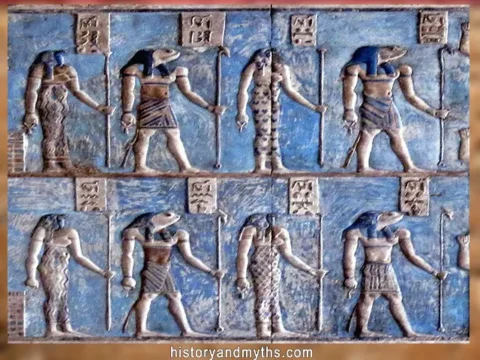
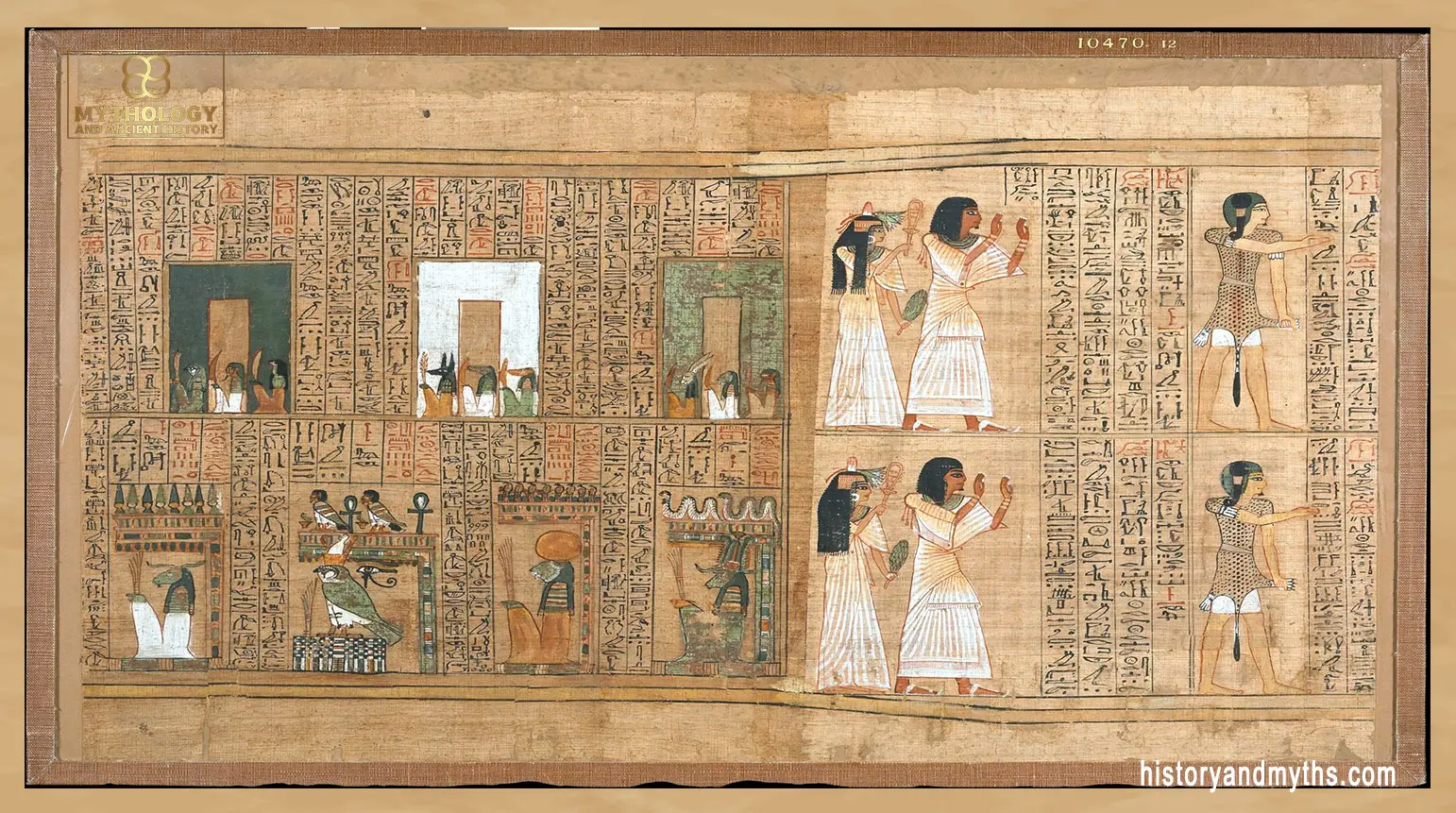
For the Guardians of the Gates, recognition mattered more than appearance. Egyptian texts describe guardians with striking and sometimes unsettling forms human bodies with animal heads, multiple faces, or hybrid features but these shapes were not meant to intimidate. They signaled function, authority, and association with a specific gate rather than raw threat.
What truly defined a guardian was its name. In Egyptian thought, a name contained essence. Knowing the guardian’s name meant understanding its role within the cosmic system. When a soul addressed a guardian correctly, it demonstrated awareness and alignment with order. Silence, confusion, or error revealed instability, not disobedience.
This is why funerary texts repeatedly emphasize speech and declaration. The soul was expected to speak to identify itself, to acknowledge the gate, and to recognize the guardian standing before it. The guardian’s response depended entirely on this exchange. There was no battle, no negotiation, only confirmation.
Forms reinforced identity, but names confirmed legitimacy. Together, they turned the encounter at each gate into a moment of clarity. The guardian did not need to test strength or morality; recognition alone was enough to determine whether the journey could continue.
Guardians in Funerary Texts
The Guardians of the Gates appear across multiple layers of Egyptian funerary literature, but their role remains consistent even as descriptions change. This consistency shows that guardians were not a late invention or a symbolic flourish they were a core structural concept within the afterlife.
In the Coffin Texts, guardians are often introduced without detailed imagery. The focus is on speech and recognition rather than form. The soul must address the guardian correctly, demonstrating knowledge of names and functions. Here, the guardian is less a figure to be seen and more a presence to be acknowledged.
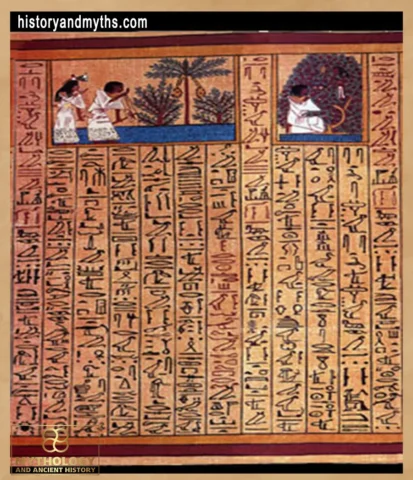
Later, in the Book of the Dead, guardians become more clearly defined. Specific spells especially those associated with the gates describe the guardians’ names, attributes, and positions. These texts were practical tools. They were not meant to entertain, but to prepare the deceased for precise encounters that required accuracy rather than courage.
In the Book of Gates, guardians are fully integrated into the cosmic journey of the sun. Each gate is paired with guardians who regulate passage during the sun god’s nightly transit. This reinforces the idea that guardians were not only relevant to human souls but were part of the universe’s daily maintenance of order.
Across all these sources, the pattern is clear: guardians exist wherever movement must be controlled. Their presence marks moments where awareness is required, turning funerary texts into manuals for navigating structure rather than myths of survival through danger.
Guardians of the Gates — The Core Idea
- Not punishers: guardians verify passage; punishment belongs elsewhere.
- Assigned to gates: each guardian exists to regulate a specific threshold.
- Recognition is everything: correct names and awareness allow movement forward.
- Speech proves presence: silence signals loss of coherence, not “disobedience.”
- They protect order: their role is to keep the Duat structured, not chaotic.
- They filter readiness: guardians prepare the soul for later judgment and destiny.
© historyandmyths.com — Educational use
How Guardians Maintained Order in the Duat
The Guardians of the Gates were essential to maintaining order within the Duat, not by force, but by consistency. Their presence ensured that every transition followed the same rule: passage depended on awareness and recognition, never on chance. In this way, guardians stabilized the afterlife as a system rather than a realm of improvisation.
Order in Egyptian thought was fragile. Without constant regulation, chaos could reassert itself even beyond death. Guardians prevented this by enforcing limits. A soul could not drift forward unconsciously, nor could it bypass stages of the journey. Every gate required acknowledgment, and every acknowledgment was overseen.
This system also protected the soul itself. By breaking the journey into controlled encounters, guardians prevented disorientation. Each successful passage confirmed that the soul remained coherent able to recognize structure and function within the Duat. Order was not imposed from above; it was reaffirmed at every threshold.
Through this mechanism, the Duat mirrored the living world. Just as offices, titles, and procedures organized earthly society, guardians organized the afterlife. Their role shows that the Egyptians imagined continuity between life and death, with structure preserved on both sides of the threshold.
Guardians and the Soul’s Awareness
At the deepest level, the Guardians of the Gates were concerned with awareness, not obedience. Their encounters with the soul tested whether consciousness survived death intact. A soul that could recognize a guardian, speak its name, and understand its role proved that it was still present as a thinking, coherent being.
For the ancient Egyptians, awareness was the foundation of continued existence. Memory, speech, and recognition were signs that the soul had not dissolved into chaos. The guardians served as mirrors in this process. They did not ask questions to trap the soul, but to reveal whether it still knew itself.
This explains why the journey through the Duat depended so heavily on dialogue. Silence was dangerous not because it offended the gods, but because it suggested absence. A soul that could not respond was a soul at risk of fading. Guardians prevented this by demanding interaction at every threshold.
In this sense, the Guardians of the Gates were not adversaries of the dead. They were checks on consciousness, ensuring that only souls capable of awareness could continue the journey. Their presence confirms a central Egyptian belief: survival after death required not strength or purity alone, but the ability to remain awake within the structure of the cosmos.
What the Guardians Ultimately Represented
The Guardians of the Gates were not threats standing in the way of the soul. They represented the final confirmation that order still existed after death. Their presence showed that the afterlife was governed by recognition, structure, and awareness just like the world of the living.
By requiring acknowledgment at every gate, the guardians ensured that movement through the Duat was deliberate, not accidental. A soul did not survive by force or fear, but by understanding its place within the system. In this way, guardians acted as silent enforcers of continuity, preserving the balance between life, death, and cosmic order.
Their role makes one idea clear: in ancient Egyptian belief, the greatest danger after death was not punishment, but loss of awareness and the guardians existed to prevent exactly that.
Key Takeaways — Guardians of the Gates
- The Guardians of the Gates were regulators of passage, not punishers.
- Each guardian was tied to a specific gate and existed only to control that threshold.
- Passing a guardian depended on recognition, names, and awareness.
- Guardians did not judge morality or inflict pain.
- Failure to pass resulted in halted movement, not punishment.
- Their role preserved order within the Duat and protected the soul’s coherence.
Frequently Asked Questions About the Guardians of the Gates
Who were the Guardians of the Gates in ancient Egyptian belief?
They were figures assigned to specific gates in the Duat whose role was to verify awareness and identity, not to punish souls.
Were the guardians gods, demons, or monsters?
The guardians were neither demons nor monsters. They functioned as regulators of passage rather than agents of punishment or chaos.
What did guardians test at the gates?
They tested recognition, knowledge of names, and the soul’s awareness of its place within the underworld.
Did the guardians harm souls who failed to pass?
No. Failure to pass meant halted progress, not physical or eternal punishment.
Why was speaking important when facing a guardian?
Speech demonstrated consciousness and identity. Silence suggested loss of awareness.
How are guardians different from demons in the Duat?
Guardians controlled access to gates, while demons acted as enforcers or agents of punishment after judgment.
In which texts do the Guardians of the Gates appear?
They appear in funerary texts such as the Coffin Texts, the Book of the Dead, and the Book of Gates.
Why were guardians essential to the structure of the afterlife?
They ensured that movement through the Duat followed order and prevented chaos or disorientation.
Sources & Rights
- Allen, James P. The Ancient Egyptian Book of the Dead. University of Chicago Press, 2015.
- Allen, James P. Middle Egyptian: An Introduction to the Language and Culture of Hieroglyphs. Cambridge University Press, 2014.
- Assmann, Jan. Death and Salvation in Ancient Egypt. Cornell University Press, 2005.
- Faulkner, Raymond O. The Ancient Egyptian Coffin Texts. 3 vols. Aris & Phillips, 1973–1978.
- Faulkner, Raymond O. The Ancient Egyptian Book of the Dead. British Museum Press, 1994.
- Hornung, Erik. The Ancient Egyptian Books of the Afterlife. Cornell University Press, 1999.
- Hornung, Erik. Conceptions of God in Ancient Egypt: The One and the Many. Cornell University Press, 1996.
- Hornung, Erik. The Valley of the Kings: Horizon of Eternity. Timken Publishers, 1990.
- Leprohon, Ronald J. The Great Name: Ancient Egyptian Royal Titulary. Society of Biblical Literature, 2013.
- Quirke, Stephen. Exploring Religion in Ancient Egypt. Wiley-Blackwell, 2015.
- Quirke, Stephen. Ancient Egyptian Religion. British Museum Press, 1992.
- Taylor, John H. Death and the Afterlife in Ancient Egypt. British Museum Press, 2001.
- Wilkinson, Richard H. The Complete Gods and Goddesses of Ancient Egypt. Thames & Hudson, 2003.
- Wilkinson, Toby A. H. The Rise and Fall of Ancient Egypt. Random House, 2010.
- British Museum. Papyrus of Ani (EA10470) Collection Online.
- The Griffith Institute, University of Oxford. Topographical Bibliography of Ancient Egyptian Hieroglyphic Texts.
- UCLA Encyclopedia of Egyptology. Afterlife, Book of Gates, and Funerary Literature.
- World History Encyclopedia. The Duat and the Egyptian Afterlife.
Written by H. Moses — All rights reserved © Mythology and History