Ancient Egyptian Treaties: Peace Deals, Alliances, and Power
Treaties and alliances in Ancient Egypt were not symbolic gestures—they were legal tools of survival. They defined who was a friend or enemy, locked in obligations after conflict, and created enforceable promises through oath, reputation, and mutual risk. In the New Kingdom, treaties could end war, secure borders, and even commit two powers to defend each other.
This article explains how Egyptian treaties actually worked: the difference between peace and alliance, the standard clauses ancient agreements relied on, why gods were listed as witnesses, how “enforcement” functioned without international courts, and why the Egyptian–Hittite treaty became the clearest example of diplomacy turned into durable policy.
Treaties and Alliances in Ancient Egypt
A treaty in Ancient Egypt was a formal agreement meant to control risk: it stopped a conflict, defined boundaries, and fixed obligations that both sides could reference later. An alliance went further. It created cooperation under pressure—often including commitments to support each other against enemies or internal threats.
Egypt used treaties when informal diplomacy was no longer enough. Once war had proven costly, or stability in Syria was at stake, a written agreement offered something armies could not: predictable rules. The point was not trust. The point was to make breaking the relationship expensive—politically, religiously, and strategically.
| Element | What It Means | Why It Exists | Typical Result |
|---|---|---|---|
| Preamble | Names the rulers and frames the agreement | Sets rank, legitimacy, and purpose | Clarifies status and intent |
| Non-aggression | Formal end of hostility | Stops costly escalation | Stabilizes borders short-term |
| Alliance obligations | Support under attack or crisis | Reduces uncertainty in a dangerous system | Deters rivals and limits shocks |
| Extradition clause | Return of runaways / fugitives | Protects regime security and loyalty | Blocks political sabotage |
| Divine witnesses | Gods listed as guarantors | Enforcement without courts | Raises moral & political cost of betrayal |
| Blessings & curses | Rewards for compliance, punishments for violation | Makes loyalty the safer option | Strengthens long-term stability |
Peace vs Alliance: Two Different Diplomatic Tools
Peace Treaty: “Stop Fighting and Freeze the Problem”
A peace treaty focused on ending hostility and preventing future attacks. Its core function was containment: stop the war now, reduce the chance of another one, and stabilize the borders or the disputed zone.
Alliance Treaty: “Cooperate When the System Gets Dangerous”
An alliance added obligations. It could require mutual support when attacked, help against rebellions, or cooperation against a third power. Alliances were not friendship. They were insurance policies in a dangerous international system.
Why This Difference Matters
Many popular summaries treat the Egyptian–Hittite agreement as “a peace treaty” only. In reality, the logic of the text and its purpose fits a broader category: peace plus alliance structure. That is why it became historically important—it was designed to hold even after the immediate crisis ended.
What a New Kingdom Treaty Actually Contained (The Core Clauses)
New Kingdom treaties were written to remove ambiguity. They followed a recognizable structure that made the agreement clear, repeatable, and politically usable.
1) Preamble: Who Is Agreeing and Why
Treaties typically began by naming the rulers and framing the agreement as a deliberate choice. This section mattered because it set status: it showed whether the relationship was treated as equal partnership or controlled hierarchy.
2) Non-Aggression: The Base Rule
The foundation clause was simple: no attacks, no renewed hostility. This turned “peace” from a temporary pause into a declared rule both sides were expected to respect.
3) Mutual Obligations: What Each Side Must Do
If the agreement was more than a ceasefire, it included obligations. These could involve cooperation under threat, support in emergencies, or commitments to preserve the stability of the relationship.
4) Extradition / Return of Runaways
One of the most revealing clauses is the demand to return fugitives or runaway individuals. This shows treaties were not only about armies and borders—they were also about controlling people, loyalty, and political security.
5) Divine Witnesses: Enforcement Without Courts
Ancient states had no international court to enforce agreements. The treaty solved that problem by calling the gods as witnesses. This created a moral and religious threat: breaking the treaty was not only political betrayal, but a sacrilegious act with consequences.
6) Blessings and Curses: The Cost of Compliance or Betrayal
Treaties often included rewards for keeping the agreement and punishments for breaking it. The logic is direct: the text tries to make loyalty feel safer than betrayal.
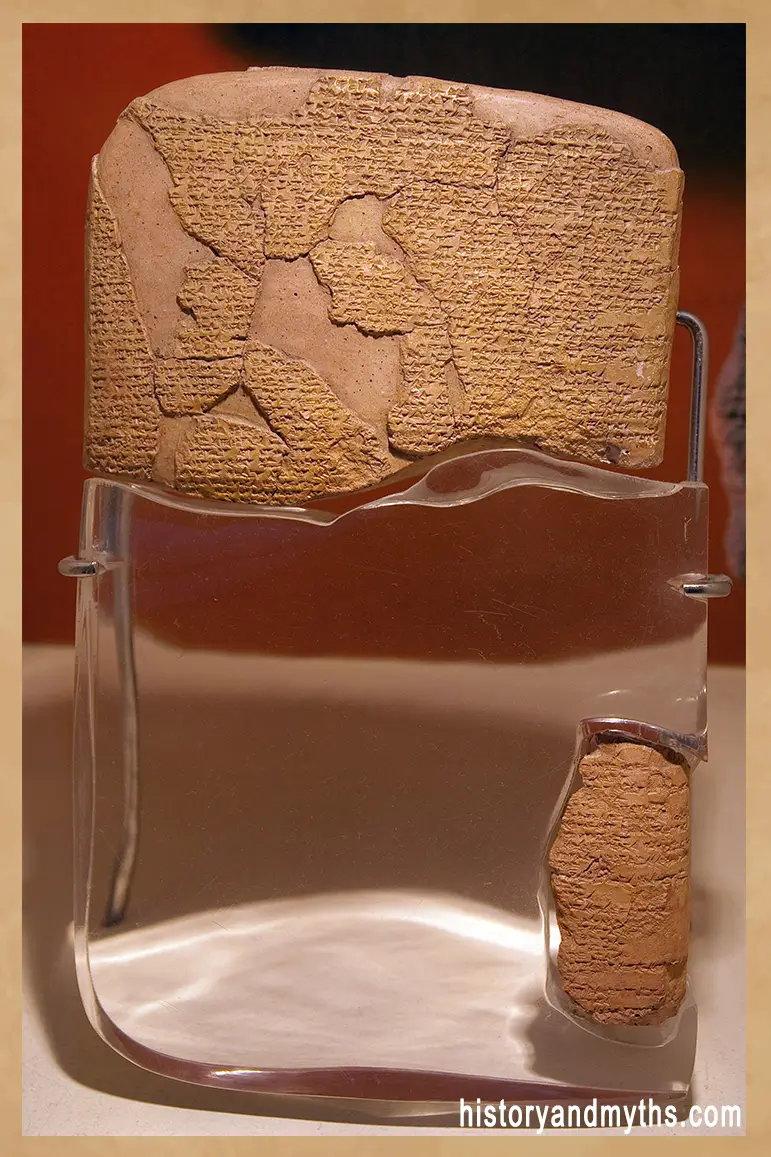
The Egyptian–Hittite Treaty: Why It Was Needed (Not Just “Peace After War”)
The Egyptian–Hittite treaty matters because it was not written to celebrate peace. It was written to control a strategic problem that neither side could solve cheaply by war.
1) Syria Was the Core Dispute
The Levant was not a side theater. It was the corridor of influence, trade access, and military positioning. As long as Syria remained contested, permanent stability was impossible. A treaty offered a way to stop bleeding resources without surrendering strategic interests.
2) War Had Reached the Point of Diminishing Returns
Both powers had reasons to avoid endless campaigning. Even strong states pay a price: logistics, manpower, and political risk at home. At that stage, diplomacy becomes rational—not because rulers become “peaceful,” but because war stops paying.
3) The Treaty Turned Rivalry into Controlled Competition
The most important function was predictability. The agreement defined a relationship where future conflict became less likely, and cooperation became possible when the international system demanded it. This is why treaties often included obligations beyond non-aggression: they were designed to hold under stress.
4) Why It Actually Worked (For a While)
It worked because both sides benefited at the same time. The treaty didn’t depend on idealism. It depended on aligned interests: stability was worth more than escalation—at least for that phase of the power balance.
Alliances as Risk Management (Not Friendship)
Ancient alliances were built for danger. They were not emotional bonds between kings. They were structured commitments designed to keep a crisis from becoming existential.
1) Alliances Reduced Uncertainty
The main value of an alliance was predictability. If one side was attacked, the other side’s response was no longer a mystery. That clarity alone could deter rivals, because it increased the expected cost of aggression.
2) Alliances Protected Regimes, Not Just Borders
Alliances were also about internal stability. A major power could promise support against rebellion or political collapse, because losing a partner state could destabilize the entire regional balance.
3) Alliances Were Built on Mutual Benefit, Not Trust
Trust was optional. Benefit was essential. Alliances lasted when both sides gained more from cooperation than from betrayal. The moment that calculation flipped, the alliance became fragile.
4) Alliances Created Obligations That Could Become Burdens
A strong alliance can also pull a state into problems it didn’t create. This is why alliances were negotiated carefully: they offered security, but they also imposed costs in future crises.
- Stop the war: non-aggression becomes an explicit rule, not a temporary pause.
- Fix obligations: alliance clauses define what happens during attacks or crises.
- Control people: extradition clauses block fugitives and political disruption.
- Add enforcement: gods are named as witnesses because there is no international court.
- Raise the price of betrayal: reputation and mutual risk make breaking the treaty costly.
- Make violation visible: written terms create proof, justification, and escalation triggers.
How Treaties Were Enforced Without International Courts
Ancient treaties had to solve a hard problem: agreements are useless if breaking them is easy. Without international courts, enforcement depended on pressure mechanisms that worked inside the ancient world.
1) Divine Witnesses as a Deterrent System
Treaties called the gods as witnesses because religion functioned as a real enforcement layer. If a king broke a sworn agreement, the treaty framed it as an offense against the divine order, not only against the other state. That raised the moral cost and made betrayal harder to justify publicly.
2) Reputation Was Strategic Capital
Kings ruled through recognition. If a ruler became known for breaking agreements, future partners would hesitate to cooperate, demand higher “prices,” or prepare for conflict immediately. Reputation was not social—it was geopolitical.
3) Mutual Risk Created Real Consequences
A treaty worked best when both sides had something to lose: stability in Syria, internal security, or the ability to focus on other threats. When both parties were exposed to risk, compliance became the rational choice.
4) Written Terms Made Violations Visible
A treaty created a reference point. It allowed each side to argue that the other had violated a clear rule, not an informal expectation. That mattered because “proof of betrayal” justified escalation and rallied allies.
- Treaties were legal risk-control tools, designed to freeze conflict and create predictable rules.
- An alliance is more than peace: it adds obligations for support during attacks or crises.
- New Kingdom treaties used standard clauses: preamble, non-aggression, obligations, extradition, divine witnesses.
- Extradition clauses reveal the real stakes: treaties protected political security, not just borders.
- Gods were enforcement: divine witnesses replaced courts by raising the cost of betrayal.
- Reputation was strategic capital: breaking agreements damaged future diplomacy and deterrence.
- Treaties worked when interests aligned: once the benefit vanished, stability became fragile.
FAQ — Treaties and Alliances in Ancient Egypt
What is the difference between a treaty and an alliance in Ancient Egypt?
A treaty usually formalized peace and rules of behavior, while an alliance added obligations such as mutual support during attacks or crises.
Were Egyptian treaties only about ending wars?
No. Many treaties aimed to control risk long-term by defining obligations, stabilizing contested regions, and reducing uncertainty in future crises.
Why is the Egyptian–Hittite treaty considered historically important?
Because it shows a durable diplomatic structure: non-aggression combined with alliance-style commitments intended to hold under pressure.
Did ancient treaties include real “legal clauses”?
Yes. Typical clauses covered non-aggression, mutual obligations, extradition of fugitives, divine witnesses, and penalties for violations.
What was the purpose of extradition clauses in treaties?
They protected political security. Returning runaways or fugitives reduced destabilization, sabotage, and regime threats across borders.
Why were gods listed as witnesses in ancient treaties?
Because there were no international courts. Divine witnesses increased the cost of betrayal by turning violation into a political and religious offense.
How were treaties enforced without international courts?
Enforcement relied on deterrence: oath sanctions, reputation costs, mutual risk, and the ability to justify escalation when terms were violated.
Did treaties guarantee permanent peace?
No. Treaties reduced risk when interests aligned, but they could fail when power balances shifted or strategic priorities changed.
Were alliances based on trust between kings?
Alliances were based on benefit and risk management, not trust. They lasted only as long as cooperation remained more profitable than betrayal.
Did Egypt use treaties with only major powers?
The best-documented examples involve major powers in the New Kingdom, but treaty-style thinking also shaped Egypt’s wider diplomatic control and vassal management.
Sources & Rights
- Moran, William L., ed. The Amarna Letters. Baltimore: Johns Hopkins University Press, 1992.
- Beckman, Gary. Hittite Diplomatic Texts. 2nd ed. Atlanta: Scholars Press, 1999.
- Bryce, Trevor. The Kingdom of the Hittites. Oxford: Oxford University Press, 2005.
- Kitchen, K. A. Pharaoh Triumphant: The Life and Times of Ramesses II. Warminster: Aris & Phillips, 1982.
- Liverani, Mario. International Relations in the Ancient Near East, 1600–1100 BC. New York: Palgrave Macmillan, 2001.
- Van De Mieroop, Marc. A History of the Ancient Near East, ca. 3000–323 BC. 3rd ed. Malden, MA: Wiley-Blackwell, 2016.
- Kuhrt, Amélie. The Ancient Near East, c. 3000–330 BC. London: Routledge, 1995.
- Redford, Donald B. Akhenaten: The Heretic King. Princeton: Princeton University Press, 1984.
- Tyldesley, Joyce. Egypt’s Golden Empire: The Age of the New Kingdom. London: Headline, 2001.
- Shaw, Ian, ed. The Oxford History of Ancient Egypt. Oxford: Oxford University Press, 2000.
- O’Connor, David, and Eric H. Cline, eds. Thutmose III: A New Biography. Ann Arbor: University of Michigan Press, 2006.
- Spalinger, Anthony J. War in Ancient Egypt: The New Kingdom. Malden, MA: Blackwell, 2005.
- Trigger, Bruce G., Barry J. Kemp, David O’Connor, and Alan B. Lloyd. Ancient Egypt: A Social History. Cambridge: Cambridge University Press, 1983.