Music and Dance in Ancient Egypt: Ritual, Festivals, and Daily Life
Ancient Egyptian music and dance were used for religious ritual, social celebration, and funerary ceremony, not just entertainment. Musicians and dancers performed in temples to support sacred rites, in banquets to display status and joy, and in rites of death to mark transition and memory.
Music in Egypt was functional. Instruments like harps, flutes, drums, and the sistrum shaped atmosphere, reinforced social order, and carried symbolic meaning—especially in temple contexts where sound became part of worship.
What Was Music and Dance Used For in Ancient Egypt?
Music and dance in ancient Egypt had one core purpose: they made important moments “work.” Not emotionally, but socially and ritually. They were used to structure ceremonies, mark hierarchy, and control the mood of public and private events. If you treat them as casual entertainment, you miss what ancient Egyptians were actually doing with performance.
1) Temple ritual: sound as a religious tool
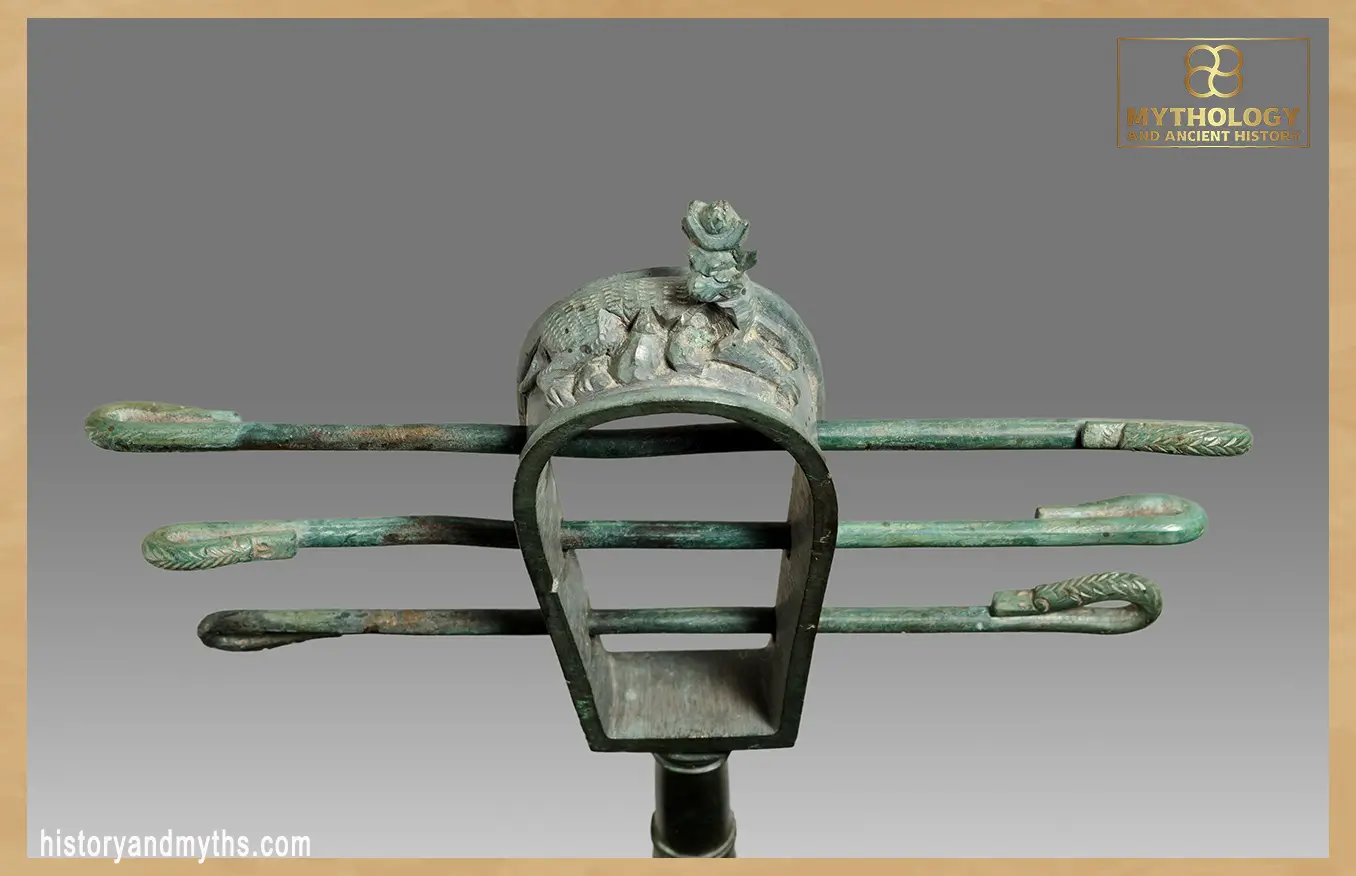
In temples, music wasn’t background—it was part of the ritual itself. Performance helped shape the sacred atmosphere and supported formal worship. Certain instruments carried specific ritual weight, and none is more iconic than the sistrum, strongly associated with cult practice and divine symbolism.
2) Banquets and celebrations: status on display
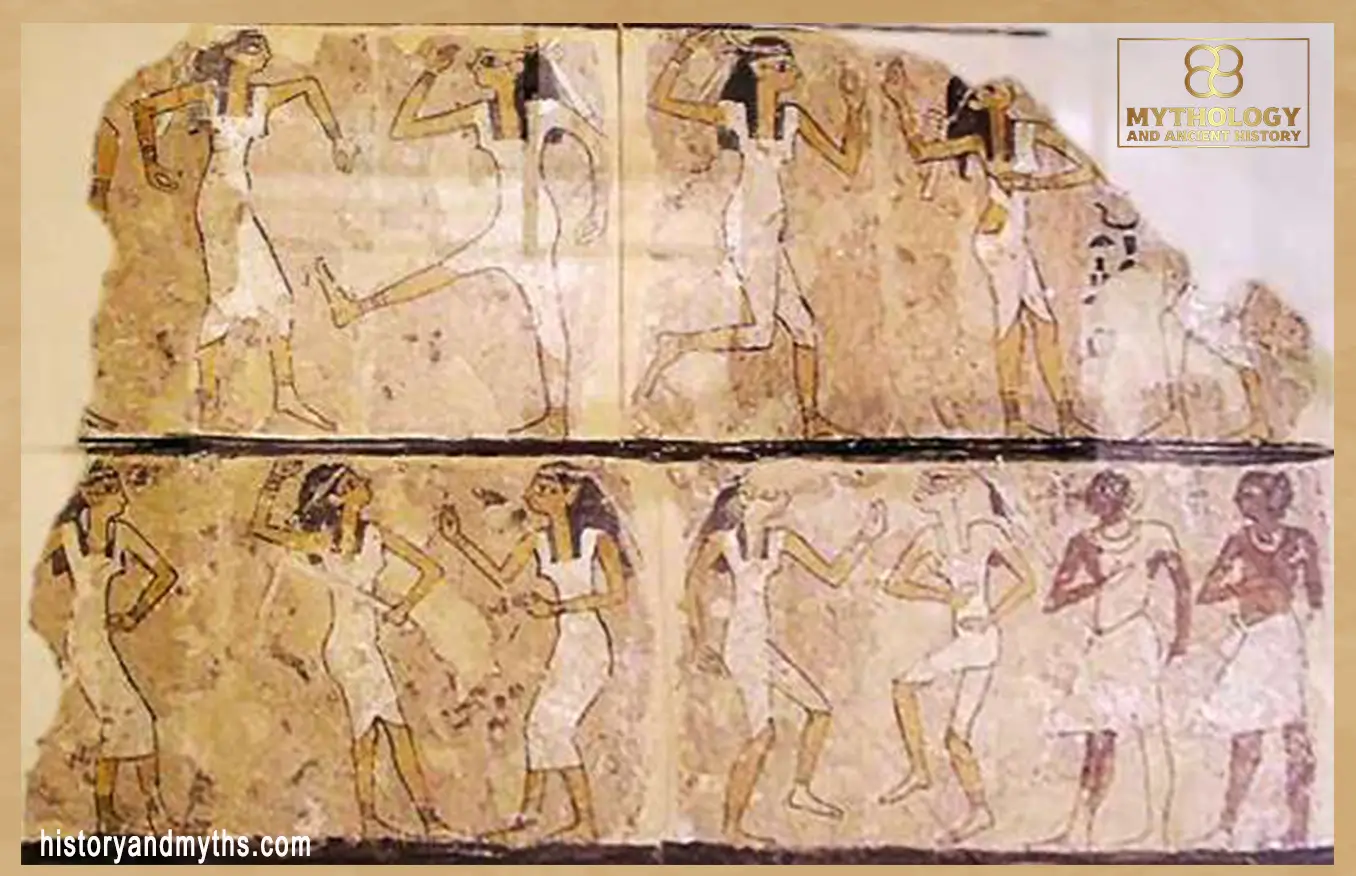
At elite banquets, music and dance were a visible sign that the event mattered. Performers weren’t there to “fill silence.” They turned a gathering into a public statement: wealth, control, refinement, and celebration. That’s why banquet scenes so often include musicians and dancers—because performance was part of how status was communicated.
3) Funerary context: performance marking transition
Music and dance also appear in funerary settings, where the goal wasn’t “fun,” but transition and meaning. Performance could frame mourning, accompany ritual acts, and support the social process around death. In other words, it helped people move through an event that demanded structure.
4) Everyday life: not everything was ceremonial, but it was still functional
Yes, Egyptians also enjoyed music in less formal contexts—but even then, it wasn’t random. Performance strengthened community bonds, coordinated collective moments, and reinforced shared cultural patterns. It sat between leisure and ritual, depending on who was present and why the gathering existed.
Elite banquets weren’t just about food—they were carefully staged social events where music signaled class and privilege. Read next: Social Classes in Ancient Egypt.
| Context | What Was Performed | Main Purpose | What It Signaled |
|---|---|---|---|
| Temples | Ritual music (e.g., sistrum) | Support worship + sacred order | Legitimacy and tradition |
| Banquets | Musicians + dancers | Elite celebration + atmosphere | Status and social control |
| Festivals | Public performance + group rhythm | Community bonding | Shared identity |
| Funerary moments | Ritualized performance | Mark transition + memory | Meaning and structure around death |
| Everyday life | Simple music/dance (informal) | Leisure + rhythm | Social connection, not “art for art’s sake” |
Music at Banquets: Status, Pleasure, and Performance
Banquets in ancient Egypt were not casual dinners. They were social displays where people proved their position through abundance, control, and atmosphere. Music and dance mattered in this context because they turned food and gathering into performance culture—a public signal that the hosts had resources and refinement, and that the event deserved to be remembered.
This is exactly why banquet scenes so often show musicians, dancers, and guests in structured settings. The entertainment wasn’t “extra.” It was part of the message.
Music created hierarchy without words
In an elite banquet, everyone could see who was being honored, who was hosting, and who was simply present. Music reinforced that hierarchy. It framed the event as formal and elevated, and it separated elite celebration from ordinary daily life. If you remove the performers, the banquet loses its social function and becomes just eating.
Dancers weren’t background—dance was a signal
Dance performed the same role as music, but visually. It shaped how the gathering felt and what it meant: joy, celebration, and controlled luxury. A banquet with dance implied more than wealth—it implied organization, because performance requires planning, space, and trained people. That’s why elite banquets display performers so consistently: the presence of dancers meant the household could afford not only food, but the culture of celebration.
Professional performers: why that detail matters
In many contexts, performers appear as specialists rather than random guests. That matters because it shows music and dance as a structured part of society—work for professionals, not only a casual hobby. The existence of trained performers implies demand, patronage, and repeated occasions where elite households or institutions needed music as part of event design.
The goal was pleasure—but controlled pleasure
Banquet music wasn’t chaotic. It was curated. The point was to produce enjoyment inside a socially acceptable framework. That’s why banquet performances feel predictable in Egyptian art: the same kinds of scenes repeat because the function repeats. The performance tells you what kind of moment this is and what status level it belongs to.
Banquets were one of the clearest places where food, wealth, and culture blended together. If you want the everyday diet behind these elite scenes, read next: Food and Drink in Ancient Egypt.
Temple Music: Why the Sistrum Was More Than an Instrument
Temple music in ancient Egypt wasn’t performed to entertain people—it was performed to support ritual order. Sound mattered because it shaped sacred space: it marked that an act was religious, controlled the rhythm of ceremonies, and reinforced the presence of divine power through repeated, formal performance.
The sistrum: a ritual object with sound
The clearest example is the sistrum. It’s often described as a “rattle,” but that’s too small a definition. In temple contexts, the sistrum functioned as a ritual tool: the sound, the act of shaking it, and the instrument’s symbolism were bound together. It wasn’t only “music.” It was part of doing religion correctly.
Why temple music was structured, not spontaneous
Temple performance had rules. That’s the difference between a religious system and casual music-making. Instruments like the sistrum didn’t just add atmosphere—they contributed to a controlled ritual environment where repetition and precision mattered. This is also why temple music doesn’t feel like “art for art’s sake.” It was functional.
Sound as authority
In a temple, sound carried authority. It reinforced that the space was not ordinary and that the actions happening inside were not negotiable. Music here wasn’t about individual expression—it was about maintaining order, tradition, and the continuity of cult practice across time.
The difference between temple performance and banquet entertainment
At banquets, music signaled status and pleasure. In temples, music signaled sacred legitimacy. Same society, same instruments in some cases, but completely different purpose: one is social theater, the other is ritual infrastructure.
Temple performance wasn’t separated from daily belief—it was part of how Egyptians made religion real in routine life. Read next: Religion as Daily Practice in Ancient Egypt.
Dance as Ritual and Social Language
Dance in ancient Egypt wasn’t “free expression” in the modern sense. It was a public language—a way to signal what kind of moment was happening, who it belonged to, and how people were expected to behave inside it. The meaning of dance came from context: the same movement can represent celebration in one setting and ritual seriousness in another.
Dance in festivals and celebrations: controlled joy
In festive settings, dance communicated energy, pleasure, and social success. But it wasn’t chaotic. It functioned like a designed part of the event—something planned, performed, and recognized by everyone watching. That’s why dancers appear so often alongside music: dance wasn’t separate entertainment; it was the visible form of the sound.
Dance in religious contexts: movement as ritual performance
In temple-related settings, dance could operate like music: not as “art,” but as a ritual act. Movement here served the ceremony, supported sacred atmosphere, and reinforced order. It wasn’t about individual talent—it was about correctness and meaning.
Dance and gender: performance roles mattered
Egyptian art frequently shows women as musicians and dancers, especially in banquet settings. That detail matters because it shows performance wasn’t treated as random participation—it had roles, expectations, and social framing. Dance existed inside a structured world of status and presentation, not informal fun.
Dance as a marker of class and access
Most Egyptians knew music, rhythm, and community celebration—but staged performance (with trained entertainers, space, and audience) signals resources. Dance becomes a status indicator because it requires time, organization, and the ability to host an “event” rather than just a meal.
Instruments: What Egyptians Actually Played
Ancient Egyptian music wasn’t built around one “national instrument.” It was a working toolkit of strings, winds, and percussion, selected based on where the performance happened—temple, banquet, procession, or ritual. Because most evidence comes from art and surviving objects, we can describe instrument types and settings more confidently than exact melodies.
1) String instruments: prestige and atmosphere
String instruments typically signal a more controlled, high-status performance. They fit settings where the goal was refinement and mood rather than volume.
- Harp (one of the most visible Egyptian instruments in depictions)
- Lyre and lute (common in richer performance contexts, especially in later periods)
Strings work well for banquets because they create atmosphere without overpowering conversation. In other words, they match a social event where performance is part of status.
2) Wind instruments: rhythm, motion, and public sound
Wind instruments were practical for moments that needed sound to travel across space, especially when people were moving rather than seated.
- Flutes and reed-based wind instruments appear often in performance scenes
They fit processions and public events because they cut through background noise and keep a strong musical presence even outside.
3) Percussion: timing, energy, and ritual impact
Percussion held performances together. It controlled tempo and made music usable in group settings where coordination mattered.
- Drums
- Clappers and hand percussion
- Sistrum (a rattle-like instrument used in ritual performance)
Percussion also matches dance naturally: it turns movement into something structured instead of spontaneous.
4) The sistrum: the “instrument” that functioned like a ritual object
The sistrum sits between music and sacred action. It wasn’t only used for sound—it was used because the act of playing it carried meaning inside temple ritual. That’s why it appears so strongly connected to religious contexts compared to other instruments.
The real takeaway is simple: Egyptians didn’t pick instruments randomly. They chose what fit the setting—soft strings for controlled elite moments, winds for public presence, and percussion for rhythm, dance, and ritual authority.
Who Were the Musicians and Dancers in Ancient Egypt?
Music and dance in ancient Egypt weren’t only “things people did.” In many settings, they were roles performed by specialists. That matters because it shows performance as part of social structure: some people hosted, some watched, and others were trained to create the atmosphere that made an event feel official, joyful, or sacred.
1) Performers could be professionals, not just guests
In banquet and elite contexts, performers often appear as part of the event design. That implies skill, repetition, and demand. A household capable of arranging music and dance wasn’t simply enjoying art—it was demonstrating organization, resources, and cultural control.
This is one of the clearest reasons performance links to status: it requires time, space, and trained people.
2) Women appear frequently in performance roles
Egyptian scenes commonly show women as musicians and dancers, especially in banquet settings. The significance isn’t just gender representation—it’s that performance roles were socially recognized and repeatedly depicted. Music and dance weren’t “random participation.” They followed patterns that everyone understood.
3) Temple performance required legitimacy and precision
In religious settings, the performer’s job wasn’t creativity. It was correctness. Temple music functioned as ritual support, which means performers were part of an institutional system where tradition and control mattered. The person performing wasn’t just playing sound—they were helping maintain sacred order.
4) Dance and music were labor when performed for others
The most important point is simple: when music and dance appear as staged performance, they are not leisure anymore. They become labor. The performer’s body, voice, rhythm, and timing are tools used to shape the event for the audience.
That turns performance into a social service: the musician or dancer produces atmosphere, meaning, and prestige for someone else’s gathering or ritual.
Quick Infographic: What Music and Dance “Did” in Ancient Egypt
- Temple music supported sacred ritual and authority.
- Banquet performance displayed wealth, status, and control.
- Dance worked like social language—it signaled the kind of event happening.
- Percussion shaped rhythm for movement and group coordination.
- The sistrum functioned as ritual sound + symbolic object.
- We know the contexts and instruments, but exact melodies are harder to recover.
What We Can (and Can’t) Know About Ancient Egyptian Music
We can describe ancient Egyptian music with confidence in one area: the material evidence. We know what instruments existed, because some survive and many are clearly shown in tomb and temple art. We also know where music and dance belonged socially, because Egyptian scenes repeat the same contexts—banquets, ritual settings, and formal occasions—often with consistent patterns of performers and audiences.
What we cannot recover with the same certainty is the exact sound. Ancient Egypt did not leave behind a musical record in the modern sense that allows us to reconstruct full melodies, tuning systems, or performance style with precision. Even when an instrument survives, its sound depends on details that rarely survive intact: string materials, tension, reed construction, playing technique, and the acoustic space where it was performed.
So the responsible conclusion is simple: the role of music and dance in Egyptian society is clear, but the “music itself” is partly out of reach. That does not weaken the topic—it strengthens it. Because what mattered most in Egypt was not the specific melody, but the function. Music and dance created sacred atmosphere, staged elite celebration, and marked transitions in life and death. The performance worked as a social and religious tool, even if the precise notes are lost.
Key Takeaways
- Music and dance in ancient Egypt were ritual and social tools, not just entertainment.
- Temples used sound to reinforce sacred order and legitimacy.
- Banquets used performers to signal status and staged celebration.
- Dance functioned as public language, shaped by setting and audience.
- Egyptian instruments followed a practical mix of strings, winds, and percussion.
- We can describe contexts and objects well, but exact melodies remain uncertain.
FAQ: Music and Dance in Ancient Egyptian Society
What was music used for in ancient Egypt?
Music supported religious ritual, social celebrations like banquets, festivals, and formal ceremonies including funerary contexts.
Did ancient Egyptians dance at banquets?
Yes. Dance was a common part of elite banquets and functioned as staged performance and social display.
What instruments did ancient Egyptians play?
Common instruments included harps, lyres, lutes, flutes, drums, clappers, and ritual instruments like the sistrum.
What is the sistrum in ancient Egypt?
The sistrum was a rattle-like instrument strongly linked to temple ritual and symbolic sacred performance.
Were musicians and dancers professionals?
In many contexts they appear as specialized performers, especially in elite and institutional settings.
Was Egyptian music mainly religious or entertainment?
It was both. The same culture used music for sacred ritual, elite status events, and community celebration.
How do we know what Egyptian music sounded like?
We know instruments and performance settings from art and surviving objects, but exact melodies are difficult to reconstruct.
Did women perform music and dance in ancient Egypt?
Women appear frequently in depictions of musicians and dancers, especially in banquet performance scenes.
Sources & Rights
- Anderson, Julie, and Derek B. Scott. Music and Performance Culture in Ancient Egypt. London: Routledge, 2016.
- Hickmann, Hans. “Music.” In The Oxford Encyclopedia of Ancient Egypt, edited by Donald B. Redford. Oxford: Oxford University Press, 2001.
- Manniche, Lise. Music and Musicians in Ancient Egypt. London: British Museum Press, 1991.
- Shaw, Ian, ed. The Oxford History of Ancient Egypt. Oxford: Oxford University Press, 2000.
- Kemp, Barry J. Ancient Egypt: Anatomy of a Civilization. 2nd ed. London: Routledge, 2006.
- Brewer, Douglas J., and Emily Teeter. Egypt and the Egyptians. 2nd ed. Cambridge: Cambridge University Press, 2007.
Written by H. Moses — All rights reserved © Mythology and History