Amulets and Protective Magic in Ancient Egypt: Guarding Daily Life
In ancient Egypt, protection was not abstract—it was practical, urgent, and woven into daily life. Illness, accidents, infertility, night terrors, and unseen forces were constant threats, and divine protection was expected to function here and now. Amulets were not lucky charms or decorative symbols; they were tools designed to guard the body, the home, and the vulnerable moments in between. To wear an amulet was to acknowledge danger—and to actively counter it.
What made Egyptian protective magic distinctive was its precision. Protection did not rely on belief alone, but on systems: a specific symbol, crafted from a meaningful material, placed on the right part of the body, and activated through words of power. A charm worn by a child, a pendant tied to a pregnant woman, or an object hung near a bed all served different purposes. Each responded to a particular fear, and each assumed that danger could be anticipated and managed rather than passively endured.
This article explores how amulets and protective magic actually worked in ancient Egyptian thought. It explains why certain symbols were trusted, how materials amplified their power, and how spoken magic—heka—turned objects into active guardians. By focusing on function instead of superstition, the goal is to answer a simple but essential question: how did Egyptians protect themselves in a world where danger was invisible, constant, and deeply personal?
What Protection Meant in Ancient Egypt
For the ancient Egyptians, protection was not a distant promise of divine mercy—it was a constant necessity. Life was surrounded by forces that could not be seen or predicted: illness that struck without warning, complications in childbirth, sudden death during travel, and malevolent influences believed to operate at night or in moments of weakness. Protection, therefore, was not optional or symbolic; it was a daily strategy for survival.
Crucially, protection was understood as preventive, not reactive. Egyptians did not wait for harm to occur before seeking help. Instead, they assumed danger was always present and acted accordingly. Amulets were worn before sickness appeared, not after. Protective objects were placed near beds, doors, and children long before any threat was visible. This mindset reveals a culture deeply aware of vulnerability and determined to reduce risk wherever possible.
Protection also operated on multiple levels at once. A person could be physically healthy yet spiritually exposed, or socially secure yet magically vulnerable. Amulets addressed this layered reality. They guarded the body, reinforced social roles (such as motherhood or kingship), and stabilized the invisible boundaries between the human world and hostile forces beyond it. In Egyptian thought, to be protected was not simply to be safe—it was to be properly aligned with order in a universe where disorder was always close at hand.
| Protective Element | Function | Meaning in Egyptian Thought |
|---|---|---|
| Symbol | Defines the type of protection needed | Each symbol targeted a specific threat such as illness, chaos, or vulnerability. |
| Material | Strengthens and directs magical power | Color and substance amplified meaning—life, blood, stability, or renewal. |
| Placement | Determines where protection is applied | Body, home, or burial spaces reflected different forms of vulnerability. |
| Heka (Words of Power) | Activates the amulet | Magic was spoken or invoked to transform objects into active guardians. |
| Duration | Provides continuous protection | Unlike ritual magic, protection was ongoing and preventive. |
| Context | Adapts to daily or transitional moments | Protection followed individuals through life, sleep, travel, and death. |
Amulets as a System, Not Objects
In ancient Egypt, an amulet was never powerful on its own. Its effectiveness depended on how it functioned within a system of protection. A symbol carried meaning, but meaning alone was insufficient. The object had to be made from the right material, placed in the correct location, and often accompanied by spoken or written words of power. Without this combination, an amulet was inert—recognizable, but inactive.
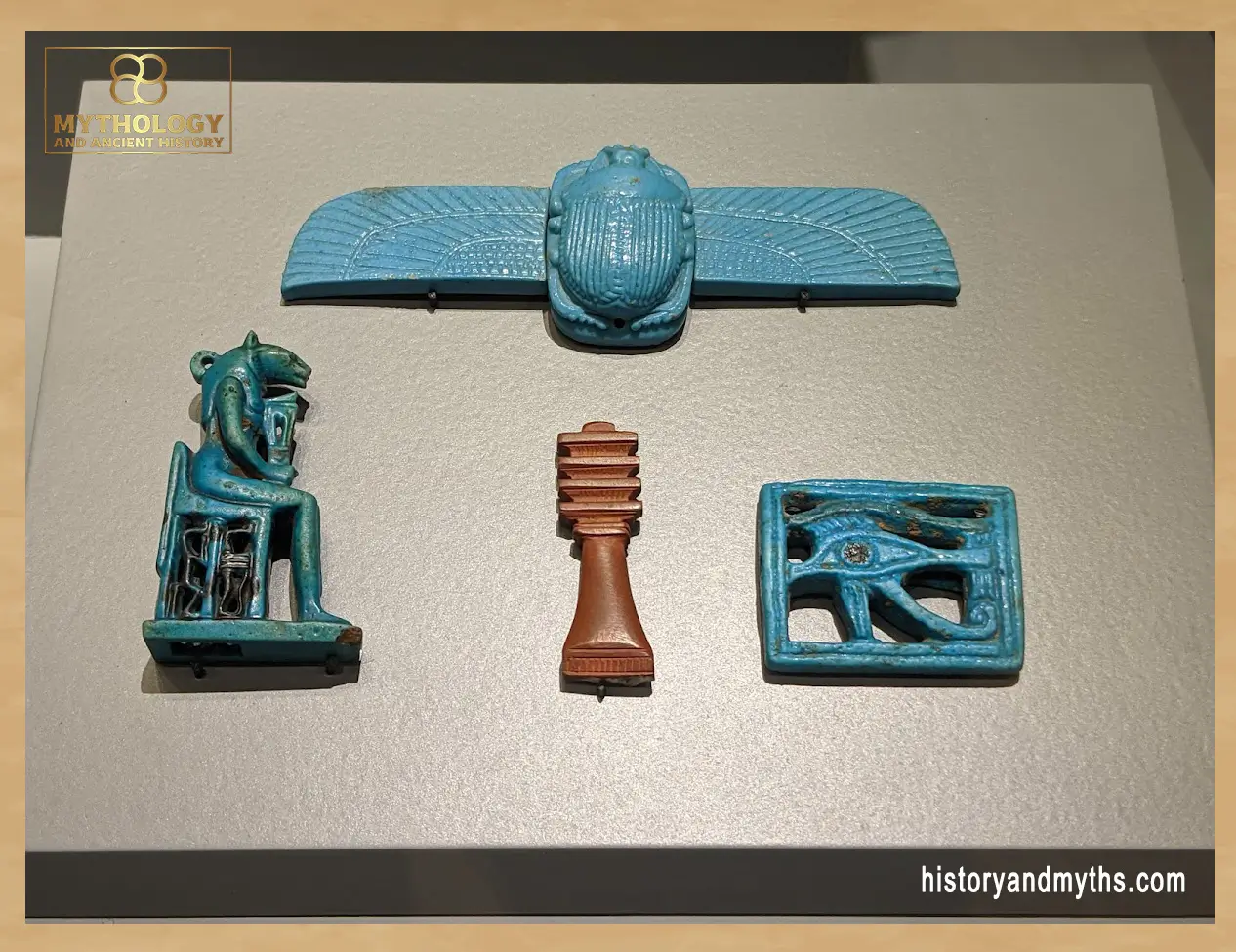
The symbol defined what kind of protection was needed. An eye guarded against envy and harm; a knot bound danger and restrained chaos; a protective deity ensured guardianship. The material determined how strongly that protection operated. Blue and green stones invoked renewal and life; red stones countered blood, danger, and disorder; metals signaled permanence and authority. Even inexpensive materials like faience were chosen deliberately for their color and sheen, not for their monetary value.
Placement completed the system. Amulets worn on the neck protected breath and speech; those tied to the wrist or waist guarded action and fertility; objects placed near beds defended the sleeper during the most vulnerable hours of the night. In some cases, the same symbol could be used differently depending on context—on the body for daily protection, or within burial wrappings for eternal safeguarding. What mattered was not the object itself, but its position within a carefully calibrated protective network.
This systemic thinking explains why Egyptian amulets appear in such variety. They were not mass-produced tokens of belief, but tailored responses to specific risks. Protection was engineered, not assumed. By treating amulets as components of a living system rather than isolated charms, Egyptians transformed fear into structure—and vulnerability into manageable order.
Everyday Protection — Children, Pregnancy, and Sleep
Protective magic in ancient Egypt was most visible where vulnerability was greatest. Children, pregnant women, and sleeping bodies were seen as especially exposed to unseen dangers, and amulets were designed to guard these moments of weakness long before any harm appeared. Protection was not reserved for crises; it was built into ordinary routines.
Children were surrounded by protective objects from birth. Amulets were sewn into clothing, tied to wrists, or hung near cradles to guard against illness, night terrors, and malevolent forces believed to target the young. These objects did not symbolize abstract blessings; they were understood as active defenders, standing watch when adults could not. Childhood, in Egyptian thought, was a fragile state that required constant reinforcement.
Pregnancy and childbirth demanded even greater protection. The body was undergoing transformation, and transformation was inherently dangerous. Amulets worn by pregnant women focused on containment, stability, and safe passage—from womb to birth, from risk to survival. Protective magic here was not about fate, but about control: reducing uncertainty in a process known to be unpredictable and often fatal.
Sleep was another critical threshold. At night, consciousness weakened and boundaries dissolved. Dreams, spirits, and hostile forces were believed to move more freely in darkness. Amulets placed near beds or worn during sleep guarded the body when awareness failed. To sleep unprotected was to surrender control. To sleep with amulets was to ensure that vigilance continued even in unconsciousness.
Through these practices, protective magic became inseparable from daily life. It did not interrupt routine—it structured it. Egyptians did not wait for danger to announce itself. They assumed vulnerability was constant and met it with preparation, turning ordinary moments into defended spaces.
The Role of Heka — Words That Activate Protection
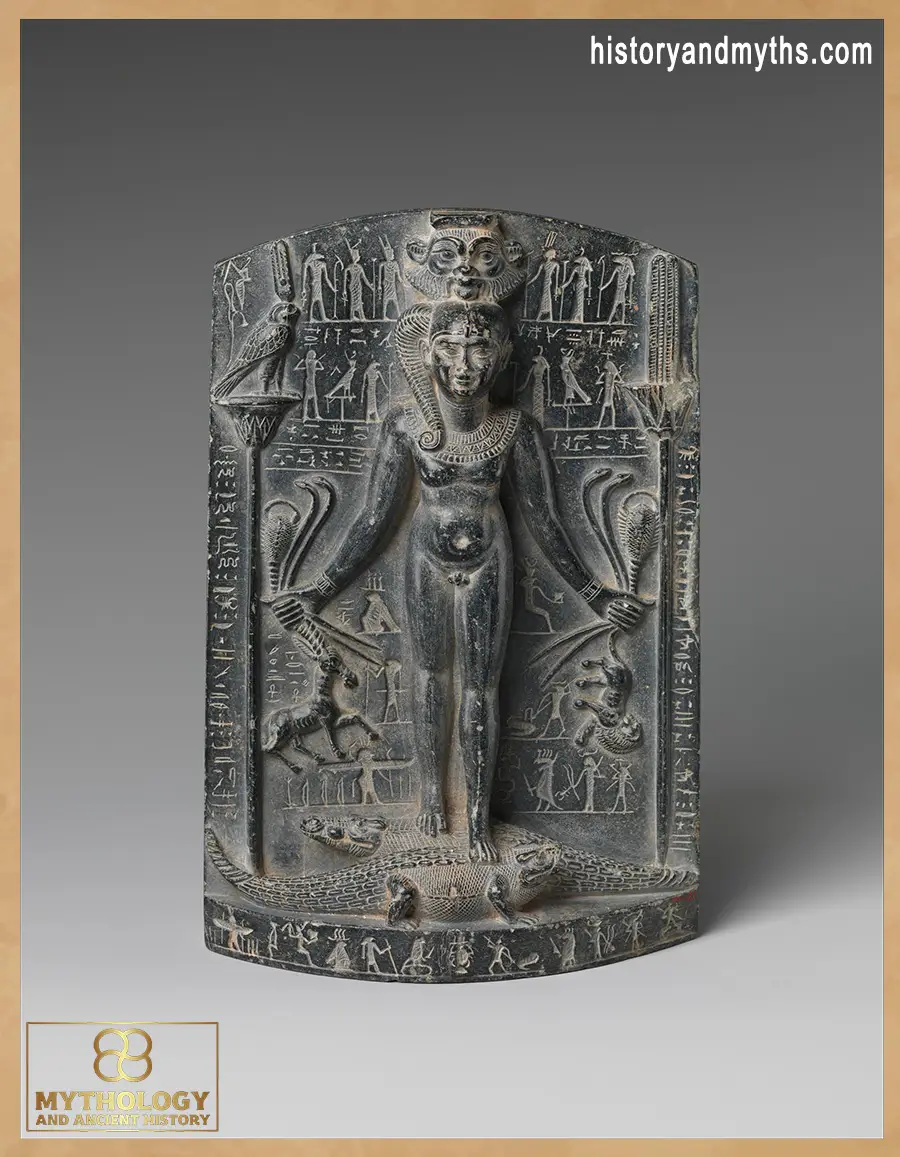
In ancient Egyptian thought, amulets did not protect by their presence alone. What truly activated them was heka—the force of magic expressed through words, names, and spoken formulae. Heka was not superstition or illusion; it was a recognized power that sustained the gods themselves and allowed humans to participate, in limited ways, in maintaining order. Without heka, an amulet remained a silent object. With it, the object became active.
Words were understood as actions. To name a threat was to limit it; to name a protective force was to summon it. Short spells, recited phrases, or even a single divine name could “switch on” an amulet’s function. These words did not need to be elaborate. Precision mattered more than length. A correctly spoken formula aligned the symbol, the material, and the intention into a single operative unit.
Importantly, heka was not reserved for priests alone. While formal rituals existed, everyday protective magic assumed that ordinary people could participate. A mother speaking protective words over a child, or a traveler reciting a brief invocation before a journey, was engaging the same principle on a smaller scale. The power did not come from social status, but from correct use.
This understanding explains why many amulets carry inscriptions or are associated with spoken rites. Protection was never passive. Objects required activation, repetition, and renewal. Words ensured that protection remained present, responsive, and alive. In a world where danger was invisible and persistent, heka provided a way to continuously reassert control—binding fear into form and turning language itself into a shield.
Where Amulets Were Used — Body, Home, and Burial
Protective magic in ancient Egypt followed the individual across every space of existence. Amulets were not confined to ritual moments or religious settings; they moved with the body, occupied the home, and accompanied the dead into the afterlife. Their placement reveals how Egyptians mapped vulnerability across different environments—and how protection was adjusted accordingly.
The body was the primary site of risk. Amulets worn on the neck, chest, waist, or wrists were meant to guard vital functions such as breath, fertility, movement, and speech. Placement was never arbitrary. Each position corresponded to a perceived point of exposure, reinforcing the idea that protection had to be localized and precise. To carry an amulet on the body was to remain continuously defended, even outside sacred spaces.
The home required a different strategy. Doors, thresholds, and sleeping areas were especially protected, as these were believed to be entry points for hostile forces. Amulets placed near beds or hung in domestic spaces did not protect a single person, but the household as a unit. Here, protection became collective. The home itself was treated as a vulnerable body, requiring its own layers of magical defense to maintain stability and peace.
Finally, protection extended beyond life. In burial contexts, amulets were embedded within wrappings, placed near the heart, or arranged along the body to guard the deceased during the journey into the afterlife. Death was not the end of danger; it was a transition into a realm filled with new risks. Amulets ensured continuity of protection when the individual could no longer speak or act. In this final setting, magic compensated for silence.
Across all three spaces, the logic remained consistent. Protection followed vulnerability. Wherever control weakened—through sleep, separation, or death—amulets filled the gap. This continuity shows that protective magic was not episodic but structural, woven into the full arc of human existence.
How Protective Magic Worked in Ancient Egypt
- Identify the threat: Illness, night danger, childbirth risks, travel vulnerability, or unseen harm.
- Choose the right symbol: The image carried the “type” of protection needed (guarding, binding, healing, renewal).
- Select a meaningful material: Color and substance amplified power—life, stability, blood-control, or rebirth.
- Place it precisely: On the body, at thresholds in the home, or within burial wrappings for afterlife defense.
- Activate it with heka: Words, names, and short formulas transformed objects into active guardians.
- Renew protection: Safeguards were maintained over time, because vulnerability was constant.
© historyandmyths.com — Educational use
Protection vs Ritual Magic — Drawing the Line
Although modern readers often group all Egyptian magic together, the ancient Egyptians themselves recognized a clear difference between protective magic and ritual magic. Protection was continuous, preventative, and embedded in daily life. Ritual magic, by contrast, was situational—performed to resolve a specific problem, alter a condition, or intervene in an exceptional moment.
Protective magic assumed that danger was always present. Its purpose was to reduce exposure before harm occurred. Amulets were worn constantly, not in response to a crisis. Their power did not aim to change fate, summon miracles, or disrupt the natural order. Instead, it reinforced stability. In this sense, protection worked with the structure of the world, maintaining balance rather than challenging it.
Ritual magic, on the other hand, was activated when balance had already failed. Healing rites, curse-breaking, or aggressive spells sought to correct an existing disruption. These actions required greater specialization, stricter conditions, and often priestly involvement. They were temporary measures, not permanent safeguards. Where protection was quiet and sustained, ritual magic was deliberate and targeted.
Understanding this distinction explains why amulets were so widespread. They did not threaten cosmic order or invite suspicion; they supported it. Protective magic was not an act of desperation—it was an act of responsibility. By wearing amulets and maintaining everyday safeguards, Egyptians demonstrated their commitment to preserving order in a world they believed was constantly under pressure.
Key Takeaways — Amulets and Protective Magic
- Protection was preventive: Egyptians assumed danger was constant and acted before harm appeared.
- Amulets worked as systems: Symbol, material, placement, and words of power had to function together.
- Everyday life mattered most: Children, pregnancy, sleep, and travel were primary targets of protection.
- Heka activated objects: Spoken words and divine names transformed items into active guardians.
- Placement defined function: Body, home, and burial each required different protective strategies.
- Protection supported order: Unlike ritual magic, amulets reinforced balance rather than changing fate.
Frequently Asked Questions About Amulets and Protective Magic
What were amulets used for in ancient Egypt?
Amulets were used to protect individuals from illness, danger, bad luck, and unseen forces. They guarded daily life, sleep, childbirth, travel, and even the journey into the afterlife.
Did Egyptians believe amulets worked on their own?
No. Amulets were believed to work only when properly activated through words of power (heka), correct materials, and precise placement on the body or in the home.
Who used protective amulets in ancient Egypt?
Protective amulets were used by everyone—children, adults, pregnant women, travelers, and the dead—regardless of social status.
What is the difference between protective magic and ritual magic?
Protective magic was preventive and continuous, while ritual magic was performed to address specific problems after harm or imbalance had already occurred.
Why were children especially protected with amulets?
Children were seen as highly vulnerable to illness and unseen dangers, so amulets were used to guard them during the most fragile stages of life.
Were amulets only worn on the body?
No. Amulets were also placed in homes, near beds, at doorways, and inside burial wrappings to extend protection beyond the living body.
Did amulets replace the role of the gods?
No. Amulets worked in cooperation with divine power, allowing individuals to participate in maintaining protection and order in daily life.
Sources & Rights
- Assmann, Jan. The Search for God in Ancient Egypt. Cornell University Press.
- Assmann, Jan. Death and Salvation in Ancient Egypt. Cornell University Press.
- Pinch, Geraldine. Magic in Ancient Egypt. University of Texas Press.
- Ritner, Robert K. The Mechanics of Ancient Egyptian Magical Practice. Oriental Institute, University of Chicago.
- Teeter, Emily. Religion and Ritual in Ancient Egypt. Cambridge University Press.
- Wilkinson, Richard H. The Complete Gods and Goddesses of Ancient Egypt. Thames & Hudson.
- Quirke, Stephen. Exploring Religion in Ancient Egypt. Wiley-Blackwell.
- Andrews, Carol. Amulets of Ancient Egypt. British Museum Press.
- Andrews, Carol. Ancient Egyptian Jewelry. British Museum Press.
- Hart, George. The Routledge Dictionary of Egyptian Gods and Goddesses. Routledge.
- British Museum Collection Online.
- The Metropolitan Museum of Art, Heilbrunn Timeline of Art History.
- UCL Petrie Museum of Egyptian Archaeology.
Written by H. Moses — All rights reserved © Mythology and History