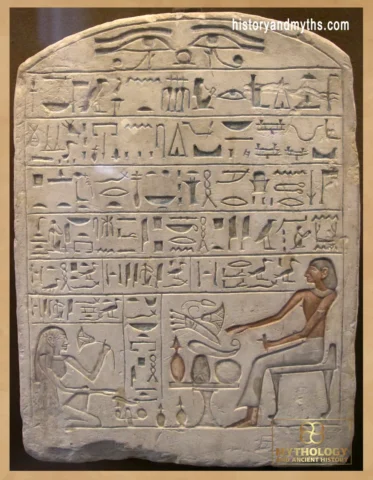
Gender Roles in Ancient Egypt, Work, Family, and Society
When people ask about gender roles in ancient Egypt, they often expect moral judgments: equality, inequality, privilege, or oppression. These questions miss the point. Gender roles in everyday Egyptian life were not ideological statements about value or identity. They were practical arrangements designed to keep households functioning, labor organized, and inheritance predictable.
Daily life required clear divisions of responsibility. Food production, child-rearing, household management, field labor, administration, and craftwork could not all be negotiated individually. Gender roles provided a stable framework that reduced conflict and ensured continuity across generations. What mattered was not abstract fairness, but reliability.
These roles were not identical across society. Class, location, and economic function shaped how strictly gender boundaries were applied. Yet the underlying logic remained consistent: men and women were assigned different responsibilities because those divisions made daily life manageable within a labor-dependent society.
Understanding gender roles in ancient Egypt therefore requires shifting focus away from modern debates and toward everyday function. This article examines how gender roles operated in practice-inside households, within labor systems, and across social classes-and why this division of roles helped maintain stability rather than ideology.
Gender Roles Inside the Household
The household was the core unit of Egyptian society, and gender roles were defined first and foremost by what was required to keep that unit stable. Roles were not symbolic; they were operational. Each responsibility existed because it solved a practical problem in daily life.
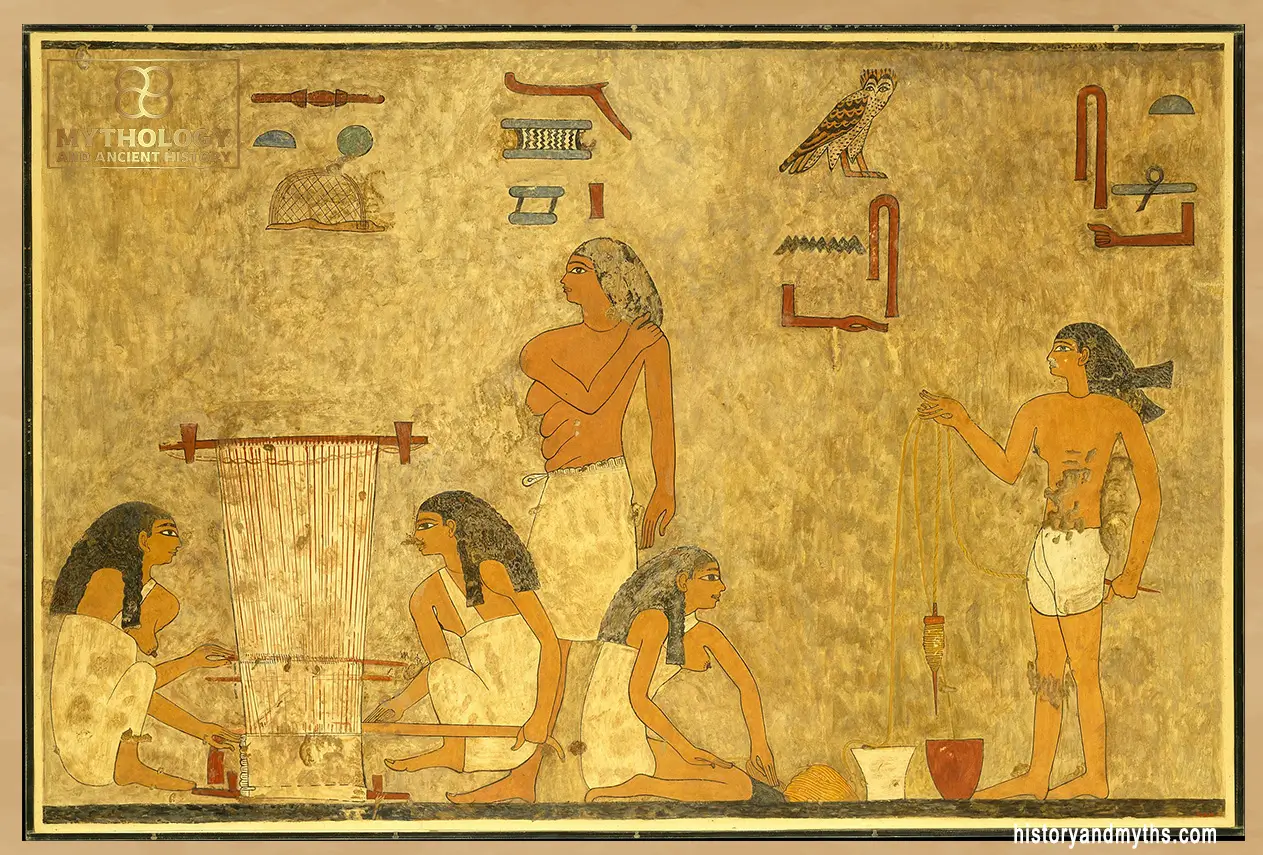
Women managed the internal economy of the household. This included food preparation, storage, textile production, and supervision of children. These tasks were continuous, time-sensitive, and closely tied to survival. Control over these processes gave women real authority inside the home, not because of ideology, but because daily function depended on it.
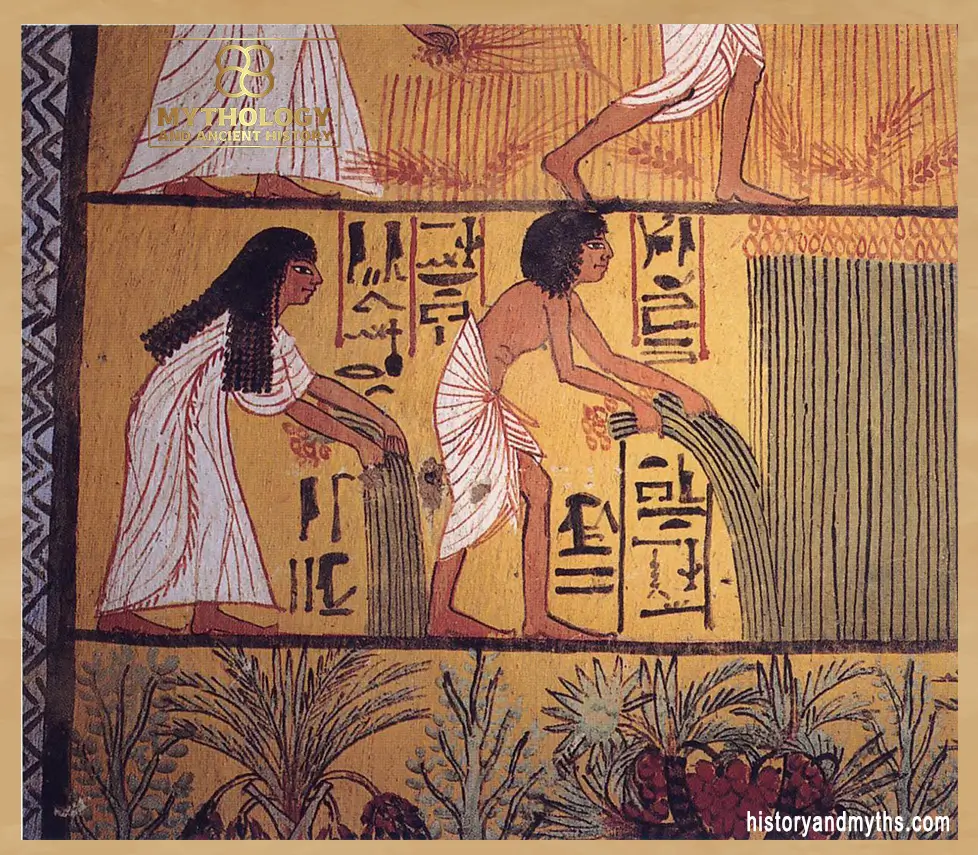
Men were primarily responsible for activities that connected the household to the outside world: agricultural labor, craft production, state service, taxation obligations, and legal representation. These roles required physical mobility, interaction with officials, and participation in labor systems beyond the family unit.
This division reduced overlap and conflict. Responsibilities were clearly assigned, and accountability was predictable. A household where both adults performed the same external or internal roles would have been inefficient in a subsistence-based economy.
Importantly, household authority did not mean identical power. Decision-making followed responsibility. Whoever controlled a process controlled its outcomes. Gender roles inside the home therefore created functional authority, not abstract dominance.
The household division also trained children early. Boys and girls observed different routines, expectations, and skills from childhood onward. Gender roles were learned through repetition and participation, not instruction or debate.
Inside the household, gender roles worked because they simplified daily life. They provided structure, continuity, and clarity in a society where survival depended on coordination rather than negotiation.
| Aspect | Men | Women |
|---|---|---|
| Primary Sphere | External labor, agriculture, state service | Household management and internal economy |
| Economic Role | Heavy labor, taxation obligations, craft and state work | Food processing, textile production, small-scale trade |
| Authority Context | Legal representation and interaction with officials | Control over domestic resources and daily decisions |
| Mobility and Presence | Frequent absence due to labor and state duties | Continuous presence within the household |
| Transmission to Children | Modeling external authority and public responsibility | Modeling domestic responsibility and routine labor |
| Underlying Function | Linking household to state and economy | Maintaining household stability and continuity |
Labor and Economic Division
Beyond the household, gender roles structured how labor was distributed and how resources flowed. This division was not based on abstract ideas of capability, but on economic efficiency in a labor-intensive society.
Men performed most forms of heavy agricultural labor, construction, long-distance transport, and state-assigned work. These tasks demanded sustained physical effort and absence from the household for long periods. The agricultural calendar, corvée labor, and state projects required predictable participation, which shaped male labor expectations.
Women’s economic roles were concentrated in activities compatible with household continuity. Textile production, food processing, brewing, and small-scale trade could be carried out alongside childcare and domestic management. These activities were not secondary; they formed a parallel economy that supported household survival and surplus.
This division ensured that production did not collapse when one adult was absent. While men were engaged in seasonal labor or state service, households continued to function through women’s control of food, storage, and domestic production.
Importantly, gendered labor was complementary, not hierarchical. Each role addressed different economic pressures. Men’s labor connected households to state systems; women’s labor buffered households against instability.
Class shaped these patterns. Elite households employed servants and specialists, reducing direct labor demands. Non-elite families relied heavily on women’s domestic production and men’s physical labor, making gender roles more rigid at lower social levels.
Economic division by gender worked because it minimized risk. In a society dependent on agriculture and state extraction, predictability mattered more than flexibility. Gender roles provided that predictability.
Authority, Property, and Responsibility
Authority in ancient Egyptian society followed responsibility, not gender in the abstract. Legal and social power was distributed according to who carried obligations that affected the household’s survival and standing.
Men generally represented the household in legal and administrative matters. They signed contracts, dealt with officials, and carried responsibility for taxation and labor duties. This outward-facing authority reflected their role as the household’s point of contact with the state, not a blanket dominance over family life.
Women, however, exercised authority where responsibility rested with them. They controlled domestic property, managed stored goods, oversaw production within the home, and made decisions affecting daily survival. Legal texts show that women could own property, initiate contracts, and manage assets, especially in matters tied to household continuity.
Property ownership did not imply identical power. Rights were functional. A woman’s control over food, textiles, and domestic labor gave her leverage inside the household, while a man’s control over legal obligations gave him leverage outside it. Authority was divided along operational lines.
Inheritance reinforced this structure. Property was transferred in ways that protected household stability rather than personal ambition. Gender influenced inheritance patterns, but responsibility remained the guiding principle. Assets followed those expected to maintain them.
This system reduced internal conflict. When authority was tied to specific duties, disputes over control were limited. Each adult knew where their power applied and where it did not.
Gender roles in authority were therefore not symbolic hierarchies. They were mechanisms that aligned power with obligation, ensuring that households could meet both internal needs and external demands without constant renegotiation.
Core Insight
In everyday Egyptian life, gender roles functioned as a coordination system.
By aligning authority with responsibility, they reduced conflict, stabilized households,
and kept labor and inheritance predictable.
© historyandmyths.com — Educational use
Evidence of Gender Roles in Ancient Egyptian Communities
Why Gender Roles Worked
Gender roles in everyday Egyptian life worked because they reduced uncertainty. In a society dependent on agriculture, seasonal labor, and state extraction, instability was dangerous. Clear divisions of responsibility minimized risk and friction.
Households functioned efficiently because tasks were not constantly renegotiated. Labor systems remained reliable because participation followed predictable patterns. Inheritance stayed manageable because responsibility was already defined. Gender roles provided a ready-made structure that aligned work, authority, and expectation.
These roles were not rigid ideals imposed from above. They were reinforced daily through routine. Children learned them by observation, not instruction. Adults followed them because deviation carried economic and social costs.
Importantly, the system did not require constant enforcement. Once internalized, gender roles regulated behavior on their own. This self-regulating quality explains why the model endured across centuries with limited structural change.
The effectiveness of gender roles lay in their practicality. They solved recurring problems of coordination, labor distribution, and household survival. As long as those problems remained the same, the roles remained useful.
Understanding gender roles in ancient Egypt therefore means recognizing them as tools of stability, not expressions of belief. They persisted because they worked.
Key Takeaways
- Gender roles in ancient Egypt were practical arrangements, not ideological statements about equality or value.
- Household stability depended on a clear division between internal management and external labor responsibilities.
- Authority followed responsibility: power was tied to specific duties rather than gender alone.
- These roles persisted because they reduced conflict and uncertainty in a labor-dependent society.
Frequently Asked Questions
Were gender roles in ancient Egypt strictly enforced?
They were strongly reinforced through daily routines and expectations, but flexibility existed depending on class, household needs, and economic context.
Did women work outside the household in ancient Egypt?
Yes. Women participated in textile production, food processing, brewing, and small-scale trade, especially when these activities supported household stability.
Did gender roles affect legal authority?
Authority followed responsibility. Men usually handled external legal matters, while women controlled domestic property and resources tied to daily survival.
Were gender roles the same across all social classes?
No. Elite households relied on servants and specialists, while non-elite families depended more rigidly on gendered labor divisions.
Sources & Rights
- Bagnall, Roger S. Reading Papyri, Writing Ancient History. London: Routledge, 1995.
- Cooney, Kara. When Women Ruled the World: Six Queens of Egypt. Washington, D.C.: National Geographic, 2018.
- Cribiore, Raffaella. Gymnastics of the Mind: Greek Education in Hellenistic and Roman Egypt. Princeton: Princeton University Press, 2001.
- Janssen, Jac. J. Village Varia: Ten Studies on the History and Administration of Deir el-Medina. Leiden: Brill, 1997.
- Kemp, Barry J. Ancient Egypt: Anatomy of a Civilization. 2nd ed. London: Routledge, 2006.
- Meskell, Lynn. Private Life in New Kingdom Egypt. Princeton: Princeton University Press, 2002.
- Parkinson, R. B. Voices from Ancient Egypt: An Anthology of Middle Kingdom Writings. London: British Museum Press, 1991.
- Quirke, Stephen. Ancient Egyptian Religion. London: British Museum Press, 1992.
- Robins, Gay. Women in Ancient Egypt. Cambridge, MA: Harvard University Press, 1993.
- Szpakowska, Kasia. Daily Life in Ancient Egypt: Recreating Lahun. Malden, MA: Blackwell Publishing, 2008.
- Trigger, Bruce G., Barry J. Kemp, David O’Connor, and Alan B. Lloyd. Ancient Egypt: A Social History. Cambridge: Cambridge University Press, 1983.
- Wilkinson, Toby. The Rise and Fall of Ancient Egypt. New York: Random House, 2010.
Written by H. Moses — All rights reserved © Mythology and History