Corruption in Ancient Egypt: Bribery, Abuse of Power, and Justice
Corruption and abuse of power existed in ancient Egypt because local officials-controlled taxes, labor, court access, and security—often with weak oversight. Surviving edicts, petitions, and trial records show bribery, extortion, forced requisitions, and protection networks. The state repeatedly responded with audits, investigations, and harsh penalties.
This article explains how corruption actually worked inside Egypt’s bureaucracy, where it appeared most often, and what real documents—like Horemheb’s reforms and tomb-robbery investigations—reveal about officials who exploited their office, as well as the systems designed to stop them.
What “Corruption” Meant in Pharaonic Egypt (Not a Modern Label)
In ancient Egypt, “corruption” wasn’t a single legal word stamped on a case file the way modern states define it. It was a pattern of power misuse that shows up across different genres of evidence: royal reform decrees, court disputes, petitions, and investigation records. When you read the sources closely, corruption is not presented as “people being immoral”—it’s presented as officials turning public authority into private profit, usually by exploiting the fact that ordinary people could not easily resist an office-holder without consequences.
At the practical level, corruption meant one or more of these behaviors:
- Extortion disguised as legal collection (taxes, deliveries, requisitions)
- Taking property “for the state” but keeping the best parts
- Using intimidation + administrative access as a weapon (blocking justice, pressuring witnesses, punishing complainants)
- Buying a role, decision, or protection through gifts/bribes
- Forcing people into extra labor, “double payment,” or repeated levies
This is exactly why Horemheb’s Edict matters so much for this topic: it reads like an anti-abuse manual, aimed at stopping officials from plundering common people under official pretexts—especially around tax collection and forced requisitions.
What’s important is that the text frames these actions as systemic administrative abuse, not rare accidents. The edict isn’t trying to “teach virtue.” It’s trying to repair a government that is losing legitimacy because local power is being used as a private racket.
And because Egypt’s state ran through human bottlenecks—scribes, inspectors, tax agents, police, foremen—corruption tends to concentrate where an official could do three things at once:
- control access (to courts, work assignments, supplies)
- create fear (through penalties or delays)
- rewrite reality (through records, reports, and witness handling)
This model becomes very visible later in the Ramesside documentary record too: cases like Papyrus Salt 124 show accusations that a position was effectively “secured” through an expensive “gift” to a superior—i.e., bribery framed as patronage.
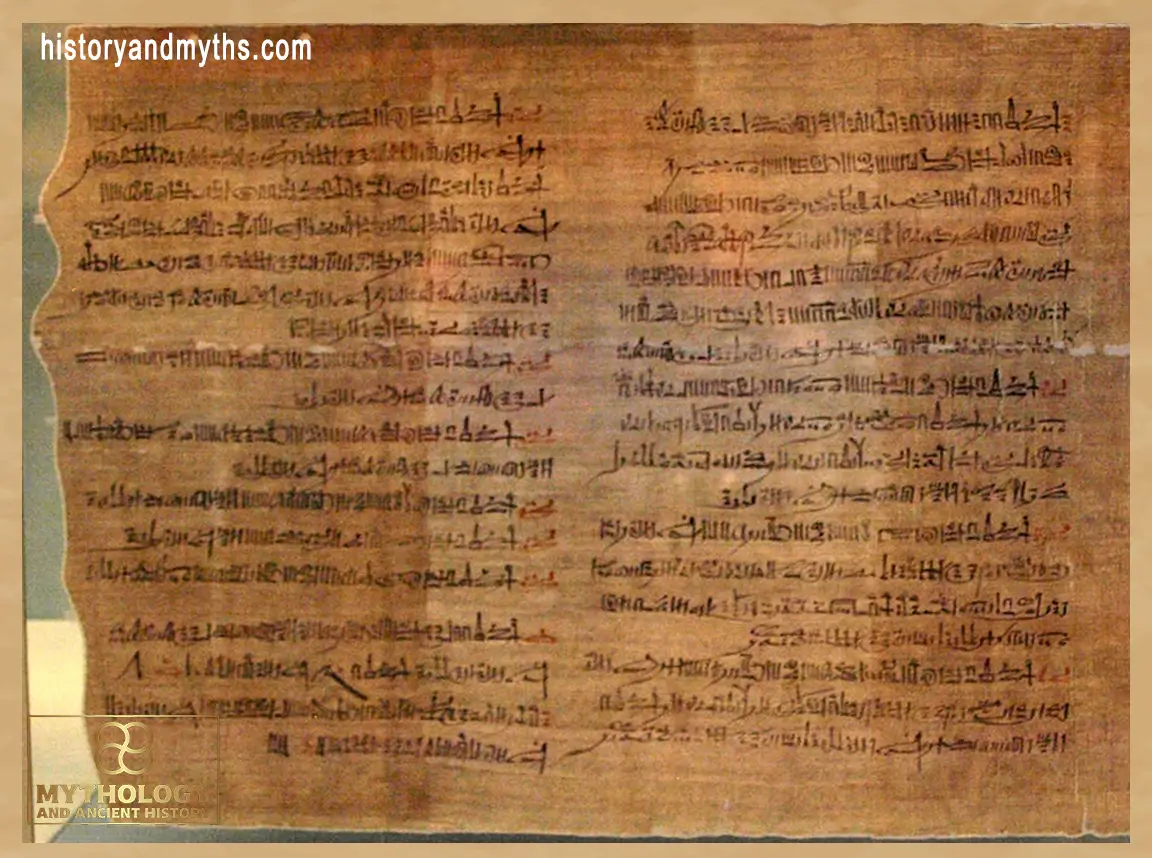
Image: Abbott Papyrus (official tomb inspection record, EA 10221) — cropped detail — Photo: Captmondo — Source: Wikimedia Commons (CC BY-SA 3.0)
| Where Power Concentrated | How Abuse Typically Happened | Why It Was Hard to Stop | Best Evidence |
|---|---|---|---|
| Tax collection | Inflated levies, repeated demands, extortion disguised as routine enforcement | Abuse could look “legal” and records were controlled locally | Royal reform decrees |
| Labor authority | Forced extra work, misuse of state crews and supplies, pressure on dependents | Work assignments were a daily chokepoint with fear-based compliance | Decrees and workplace dossiers |
| Local courts | Bribery, blocked hearings, delayed cases, witness pressure | Process control could shape outcomes more than written norms | Petitions and case records |
| Security and policing | Selective enforcement, intimidation, paid protection, cover-ups | Enforcement could become negotiable at the ground level | Investigations and inspection reports |
| Necropolis oversight | Complicity in tomb robbery, false reporting, abuse of access and silence | High-value crime needed inside knowledge and protected time | Tomb-robbery papyri |
Where Corruption Lived: The Everyday Points of Power
Corruption in ancient Egypt concentrated where officials controlled daily chokepoints: tax collection, labor demands, access to justice, and security. These were the points where “state authority” could be used as cover, because ordinary people couldn’t easily challenge a collector, a scribe, or a guard without risking punishment or delays.
Tax and requisition abuse was the easiest to hide because it could be presented as routine enforcement, even when demands were inflated or repeated. Judicial corruption often worked through process control rather than dramatic “sold verdicts”: delaying hearings, shaping witness access, and controlling what entered the record. Security corruption became most visible in high-value environments like the necropolis, where tomb-robbery cases suggest that theft at scale required compromised oversight.
This is exactly why state responses focus on administrative abuse, not isolated theft: the problem wasn’t just criminals—it was officials converting routine authority into private gain.
Horemheb’s Edict: A Map of Administrative Abuse (and the State’s Response)
Horemheb’s Edict matters because it treats corruption as an administrative disease, not a moral accident. Instead of describing a few “bad men,” it outlines recurring abuses by officials who used government functions—tax collection, requisitions, policing, and court access—to extract wealth, intimidate civilians, and shield themselves behind the language of public duty. That framing is valuable because it shows the state understood the pattern: when local authority becomes profitable, abuse repeats.
The edict’s solution is not subtle. It aims to restore order through enforcement, deterrence, and the threat of severe punishment, because the regime needed ordinary people to believe the state could still protect them from its own agents. Whether every measure worked in practice is a different question, but as a document, it proves two things: corruption was real enough to be addressed at the highest level, and it was tied to specific bureaucratic pressure points—not just general “crime.”
Case Files from Thebes: Tomb-Robbery Trials and Complicit Officials
The tomb-robbery investigations from Thebes show corruption in its most concrete form, because they expose the gap between “law on paper” and what actually happens when enforcement is compromised. These cases weren’t just about thieves breaking into graves; they were about whether guards, inspectors, and local authorities were doing their jobs—or profiting from the failure to do them.
What makes these records decisive is that large-scale tomb robbery is hard to explain as random street crime. It requires time, access, and silence. That usually means someone with authority either looked away, guided the operation, or protected the offenders after the fact. In that sense, the core scandal isn’t theft itself—it’s the conversion of public security into a paid service, where enforcement becomes negotiable and the state’s control of sacred spaces can be bought.
This is why documents like the Abbott Papyrus are so useful: they preserve an investigative mindset, focused on inspection, testimony, and responsibility, rather than vague storytelling. They don’t prove every official was corrupt, but they prove the state recognized a recurring pattern where crime and authority could become partners, not enemies.
The Paneb Dossier (Papyrus Salt 124): Power, Bribery, and Workplace Abuse
Papyrus Salt 124 is one of the clearest windows into how abuse of power could operate inside a state-run community. It isn’t a theoretical complaint about corruption; it’s an accusation file that frames authority as something that can be bought, used, and weaponized. The core idea is simple: once a person controls work assignments, discipline, and access to resources, he doesn’t need to steal in secret—he can extract benefits openly because resistance becomes costly.
The Paneb case also shows a realistic dynamic that many “corruption” articles miss: misconduct survives when it is socially protected. Even if a community knows an official is abusive, people still depend on him for labor placements, rations, and security from retaliation. That creates a climate where silence is rational, and complaints become rare until they are politically safe. In that sense, the document isn’t only about one man—it’s about how local power can harden into an informal regime, where authority becomes personal property rather than public duty.
Why Anti-Corruption Was Hard: Patronage, Dependency, and Fear
Ancient Egypt could punish corruption, investigate it, and publicly condemn it, yet it could never fully eliminate it because the state relied on the same local hierarchies that produced abuse. Officials were not just administrators; they were gatekeepers to food flows, work assignments, legal access, and personal safety. That meant corruption often wasn’t a separate “criminal world”—it was an unofficial layer inside normal government life, protected by dependency.
Patronage made the problem harder because careers were built through relationships as much as competence. If a job could be secured or defended through favors, then accountability became selective, and enforcement could turn into a weapon used against outsiders rather than a rule applied equally. Fear completed the system. When complaint itself could trigger retaliation, most people stayed quiet, and corruption survived not because everyone approved of it, but because challenging it was more dangerous than enduring it.
This is why the surviving texts repeatedly circle back to the same logic: corruption spreads fastest when ordinary people believe the system is closed, the record can be shaped by insiders, and justice depends on proximity to power rather than the strength of the claim.
How Corruption Actually Worked: The Mechanics Behind the Abuse
Corruption in ancient Egypt worked because power on the ground was practical, not symbolic. An official did not need a grand conspiracy to exploit people. He only needed control over one routine function—collecting dues, assigning labor, recording transactions, approving access, or enforcing discipline. Once that control became predictable, it turned into a private marketplace. People learned that rules could be made easier or harsher depending on what they offered, and the official learned that fear and paperwork could be more profitable than open theft.
The most effective form of corruption was the kind that looked legitimate. Inflated demands could be presented as “normal collection.” Confiscated goods could be justified as “state needs.” Extra labor could be explained as “urgent work.” Even intimidation could hide behind procedure: delays, repeated summons, sudden penalties, or selective enforcement. In all these cases, the victim’s problem was not proving the abuse morally, but proving it administratively, because the records, witnesses, and channels of appeal often depended on the same local authority causing the harm.
This is why corruption was not mainly a matter of criminals attacking the state. It was the state’s own interfaces becoming negotiable. Officials could turn public systems into toll gates: pay to pass, pay to avoid damage, pay to be heard, pay to be left alone. When that behavior becomes routine, corruption stops being an exception and becomes a parallel structure—informal, but stable, and hard to dismantle without threatening the entire network of local governance.
Detection and Control: How the State Tried to Catch Corruption
Ancient Egypt did not operate blindly. The surviving records show a state that understood abuse could spread inside its own machinery, and that legitimacy depended on stopping it when it became visible. The problem was that corruption rarely announced itself as corruption. It disguised itself as administration, so control depended on moments where the system produced contradictions: missing goods, inconsistent accounts, public complaints, or crimes too large to explain as isolated acts.
Investigations often had a practical logic. Inspectors looked for physical traces, questioned people under pressure, and compared stories for inconsistencies. When a case became serious, it could shift from a local problem into an administrative threat, because officials were expected to maintain order, protect assets, and ensure that “what belongs to the state” did not vanish. This is why certain scandals, especially large thefts and failures of security, triggered formal inquiries: they threatened not only property but also the credibility of state authority.
Yet the system’s weakness remained structural. If enforcement depended on local officials, and local officials were part of the problem, then control needed either outside intervention or exceptional political will. That is why reform and punishment needed to be visible: the state had to signal that office was not a private weapon, even if it could not guarantee perfect compliance everywhere.
Punishment Was a Message: Why the State Responded Harshly
Punishment for abuse of power was not only about correcting individual wrongdoing. It was about restoring confidence in the idea that authority still belonged to the state and not to whoever held the position. If ordinary people believed the system was permanently captured, they would stop cooperating, stop reporting, and quietly adapt through evasion, bribery, or resignation. That outcome would hollow out governance from the inside.
This is why Egyptian reforms are often framed with sharp language and severe consequences. Harsh penalties were a political tool, designed to deter officials who were tempted to treat their post as a private license. Whether such punishments were always applied consistently is uncertain, but the logic behind them is clear: corruption was dangerous because it made law feel like a performance, and the state could not afford that perception to become normal.
The deeper point is that punishment targeted the betrayal of function. Theft is damaging, but abuse of office is more corrosive, because it teaches the population that justice and administration are not systems—only negotiations. Once that belief spreads, the state’s strongest asset—obedience through routine—starts to fracture.
Corruption as a Network, Not a Lone Actor
The biggest mistake in most modern summaries is treating corruption as individual “bad behavior.” Ancient Egyptian evidence points repeatedly toward something more durable: corruption as a network that survives through mutual benefit and mutual silence. A guard who looks away may receive protection later. A scribe who adjusts records may gain favor. A supervisor who intimidates witnesses may keep control over labor. Each role gains something small, and the combined effect becomes powerful.
That is what makes corruption hard to erase even when the state wants to. Removing one official does not collapse the incentives that made the abuse profitable. And because communities were tightly connected, reporting corruption could also mean making enemies in the same space where you must continue living and working. Silence was often not loyalty—it was self-preservation.
When you combine dependency with fear, corruption becomes stable. People learn how to survive it. Officials learn what they can get away with. The state steps in when the damage becomes visible enough to threaten order, then the system reforms itself into a quieter form. That cycle is exactly what the surviving documentation implies: not constant chaos, but recurring pressure, periodic exposure, and repeated attempts at control.
Corruption in ancient Egypt was not a rare moral failure—it was a predictable risk wherever officials-controlled taxes, labor, justice, and security with limited oversight. The surviving decrees and investigation records show a state repeatedly fighting to keep authority public, not personal. What stands out is not only the abuse itself, but how seriously Egypt treated the damage corruption caused to trust, order, and governance.
- Corruption in ancient Egypt clustered around daily chokepoints: taxes, labor, courts, and security.
- The most durable abuse looked “legal” because it was hidden inside normal administrative routines.
- Tomb-robbery investigations reveal how large thefts often required compromised oversight and protected access.
- Royal reforms treated corruption as an administrative threat because it destroyed trust in state authority.
- Dependency and fear made corruption hard to remove, even when the state recognized the damage.
FAQ
Was corruption common in ancient Egypt?
It was common enough to trigger official reforms and investigations, especially where local officials controlled taxes, labor, and enforcement.
What counted as abuse of power in the Egyptian state?
Abuse of power meant using an official position to extract private benefit through coercion, selective enforcement, and control of procedures.
Did ancient Egypt have bribery?
Yes. Several surviving records imply that access, protection, and even positions could be influenced by gifts and patronage.
Why do tomb-robbery cases matter for understanding corruption?
Because theft at scale often requires compromised oversight, suggesting that protection or complicity could exist within security systems.
How did the government respond when corruption became visible?
The state used investigations, inspections, and harsh punishments to restore order and deter officials from exploiting authority.
Were punishments for corrupt officials different from ordinary criminals?
They could be, because corruption damaged trust in the state itself, so punishments often aimed at public deterrence and political control.
Why was corruption hard to eliminate permanently?
Because local power created dependency and fear, and officials controlled many of the administrative channels people needed to survive.
Sources & Rights
- Breasted, James Henry. Ancient Records of Egypt, Volume II: The Eighteenth Dynasty. Chicago: University of Chicago Press, 1906.
- Breasted, James Henry. Ancient Records of Egypt, Volume III: The Nineteenth Dynasty. Chicago: University of Chicago Press, 1906.
- Gardiner, Alan H. Egypt of the Pharaohs: An Introduction. Oxford: Oxford University Press, 1961.
- Janssen, Jac. J. Village Varia: Ten Studies on the History and Administration of Deir el-Medina. Leiden: Nederlands Instituut voor het Nabije Oosten, 1997.
- McDowell, Andrea G. Village Life in Ancient Egypt: Laundry Lists and Love Songs. Oxford: Oxford University Press, 1999.
- Peet, T. Eric. The Great Tomb-Robberies of the Twentieth Egyptian Dynasty. Oxford: Clarendon Press, 1930.
- Teeter, Emily. Religion and Ritual in Ancient Egypt. Cambridge: Cambridge University Press, 2011.
- Wilkinson, Richard H. The Complete Gods and Goddesses of Ancient Egypt. London: Thames & Hudson, 2003.