Did Children Work in Ancient Egypt? First Jobs & Early Responsibility
The first work experience in ancient Egypt was usually not a “job interview” or a single ceremony. It was the moment a child became regularly useful—assigned real responsibilities at home, placed into apprenticeship, or drawn into institutional service. That shift marked a social transition from childhood dependence to disciplined productivity.
This article explains when Egyptian children typically began working, what their first tasks looked like in real households, how apprenticeship functioned as training and control, why boys and girls faced different expectations, and how early work shaped reputation, adulthood, and lifelong status.
What “First Work Experience” Meant in Ancient Egypt
In ancient Egypt, “first work experience” did not begin with independence. It began with belonging. A child’s earliest work was almost always tied to the household, because the household was the real economic unit. You did not work to prove personal ambition; you worked because survival and stability depended on everyone contributing at the level they could handle. That made the first experience of work less about wages and more about learning the basic logic of responsibility.
The key change was regularity. Many children helped occasionally, but the transition into “work” happened when tasks became routine and expected rather than optional. Once a child was relied upon daily—carrying water, watching siblings, assisting in food preparation, helping in a workshop space, or running small errands—they crossed into a new social category. They were no longer treated only as someone being raised. They were treated as someone being shaped into a useful person under discipline.
That is why first work experience functions as a life transition. It is the moment the community starts measuring a child by reliability. Work taught obedience, timing, endurance, and awareness of authority. It also created early reputation: the child who performs well becomes trusted, while the child who fails becomes a problem that must be controlled. In a society built on order and hierarchy, that early shift mattered more than the work itself.
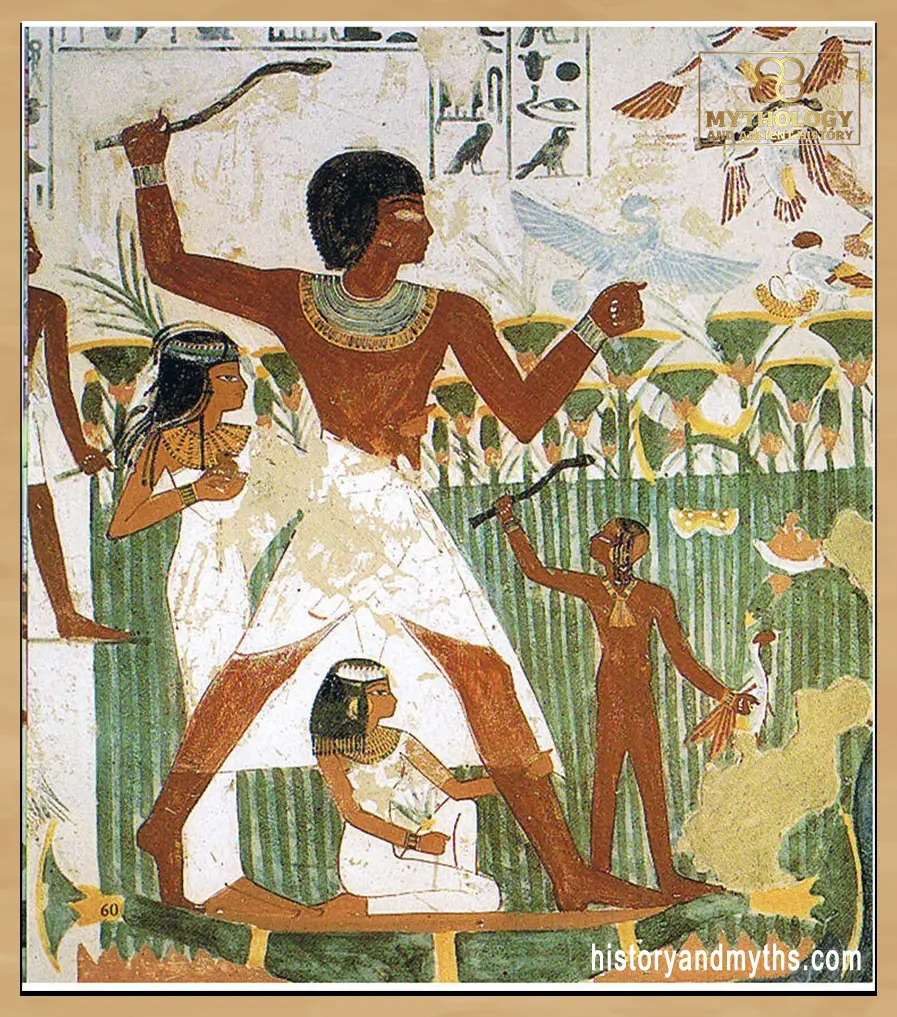
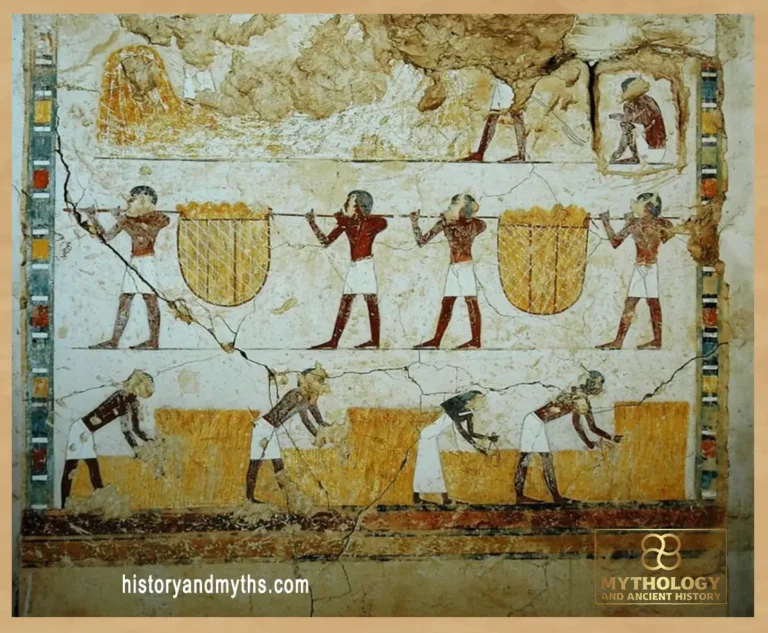
Image: Tomb of Nakht (TT52), Thebes — cropped detail — Source: Wikimedia Commons (Public Domain)
| Work Entry Type | What It Looked Like | What It Trained | Why It Marked a Transition |
|---|---|---|---|
| Household work | Daily tasks inside the home and family routine | Timing, repetition, obedience, reliability | The child becomes depended on, not just helped |
| Apprenticeship | Training under a skilled adult in a workshop setting | Skill, hierarchy, patience, correction under pressure | Work becomes public identity and long-term path |
| Institutional service | Work tied to estates, administration, temples, or elite households | Rule-following, accountability, controlled behavior | Adulthood is enforced through strict oversight |
| Boys’ early work | Increasing duties linked to tools, production, and outward roles | Endurance, obedience, productive discipline | Signals readiness for adult responsibility and authority |
| Girls’ early work | Domestic production, care duties, and precision routines | Consistency, accuracy, household stability | Creates adult usefulness and reputation inside the family system |
When Did Egyptian Children Start Working?
Egyptian children usually began working as soon as they were physically able to be useful without creating more risk than value. That did not always mean heavy labor, and it did not begin as a formal job. It began as small responsibilities inside the home, then expanded into steadier duties as the child grew stronger, quicker, and more reliable. In most households, waiting for a “proper age” would have been a luxury, because daily life demanded constant maintenance.
What changed over time was not just the child’s body, but the household’s expectations. Early tasks could be simple and repetitive, designed to train attention and obedience. Later tasks became more practical and higher-stakes: managing supplies, handling tools, assisting skilled adults, or doing work that affected time, food, and output. That gradual escalation is important because it shows how childhood ended in practice. It ended when responsibility became normal.
So the most accurate answer is not a fixed number. The start of work depended on the family’s situation and the type of work available. But the pattern is consistent: children moved from helping to contributing, and once contribution became routine, society began treating them as accountable rather than merely protected.
First Tasks at Home: Work Before “Work”
The first work experience for most Egyptian children happened inside the home, long before any apprenticeship or institutional role. These early tasks were not symbolic; they were practical. Households needed water carried, food prepared, fuel gathered, storage managed, and younger children watched. A child’s value was measured by whether they could reduce the workload of adults rather than add to it. That made “first work” feel ordinary, but socially it was a turning point.
These early responsibilities also trained discipline. A task like carrying water or helping with food preparation seems simple, but it requires timing, repetition, and obedience to instruction. A child learns quickly that mistakes cost real resources. Spilling water is not an inconvenience; it is lost labor. Forgetting an errand is not just forgetfulness; it delays the entire routine of the household. Work therefore became a method of teaching control through consequence, not through abstract rules.
What begins as small help becomes a test of reliability. Once the family can trust the child to do a task without supervision, the child is no longer treated as purely dependent. That trust is the real transition. It changes how adults speak to the child, how much freedom the child is allowed, and how much responsibility the child carries. In that sense, the home was the first workplace, and family routine was the first system of training.
Apprenticeship: The First “Real” Entry Into a Working World
The first moment that work became publicly visible was apprenticeship. A child who entered a workshop or trained under a skilled adult crossed from household contribution into social production. That shift mattered because the child’s labor was no longer only for family survival. It became part of an economic identity. The apprentice was being shaped into a craft worker, a service specialist, or a future professional, and that identity would follow them for life.
Apprenticeship was not only skill training. It was also training in hierarchy. The workshop had rules, pressure, and expectations that were different from home life. Time mattered more. Mistakes were more costly. Authority was stricter because output mattered. The child learned not only how to use tools or follow steps, but how to accept correction, tolerate repetition, and obey instruction without negotiation. In other words, apprenticeship converted childhood energy into controlled productivity.
This is where first work experience becomes a full social transition. The child is no longer judged only by family standards. They are judged by adult standards in a place where failure has consequences beyond embarrassment. A good apprentice builds a reputation early. A weak apprentice becomes a liability. That public evaluation is why apprenticeship was one of the strongest markers that childhood was ending. It didn’t just teach a job. It created a social position.
The first work experience in ancient Egypt was the moment a child became regularly useful and socially accountable. It began at home, expanded through apprenticeship, and hardened through discipline and hierarchy. Payment was often indirect, but the exchange was real: responsibility in return for security, and performance in return for opportunity.
Boys’ Work and Girls’ Work: Different Expectations, Same Pressure
The first work experience in ancient Egypt did not follow one universal path because boys and girls were often pushed toward different forms of usefulness. For many boys, early work increasingly pointed outward. They were moved toward tasks linked to tools, transport, craft training, and service roles where physical endurance and obedience mattered. The household used work to shape a boy into someone who could operate under authority, produce consistently, and eventually represent the family’s reliability in public spaces.
For many girls, early work was often tied more tightly to the inner economy of the home. The household depended on girls for labor that kept daily life functioning: preparation, storage, textile work, care duties, and routines that required precision and repetition. This was not “lighter” work. It was work with constant pressure, because mistakes affected food, hygiene, and household stability. The goal was to shape a girl into a steady adult presence inside the family system, where control and reputation were closely watched.
The difference is best understood as specialization under necessity. Both boys and girls were expected to become productive early, and both were trained through real duties rather than abstract lessons. The first work experience mattered because it made expectations visible. Childhood started shrinking as responsibility grew, and once performance became the measure, gender differences did not remove pressure. They only changed where the pressure was applied.
- Coming of Age in Ancient Egypt: Puberty, Work, and Adult Roles
- Childhood Discipline in Ancient Egypt | How Society Shaped Obedience
- Childhood in Ancient Egypt: How Children Lived, Learned, and Worked
- Family Life in Ancient Egypt: Inside the Egyptian Home
- Daily Life of Ordinary People in Ancient Egypt: Work, Family
Elite Youth vs. Ordinary Youth: Two Very Different “First Jobs”
For elite children, first work experience was often delayed and controlled. Their early responsibilities were less about survival labor and more about preparation for status. Instead of being pushed immediately into heavy contribution, elite youth could be trained through supervised tasks that taught behavior, presentation, and institutional discipline. Their “first work” might look like service inside an administrative household, early scribal training, or structured duties that built competence without exposing them to the harsher realities of common labor.
For ordinary families, first work experience started earlier and carried more weight. Work was not an optional life lesson; it was the household’s economic foundation. A child’s contribution reduced pressure on adults and increased the family’s resilience. That created a faster transition from “helping” to “being relied upon,” and once that reliance became routine, childhood effectively narrowed. The child’s role was not symbolic—it was functional.
This class difference shaped the entire meaning of first work. Among the elite, early duties could serve as a slow introduction to authority and future position. Among ordinary people, early duties were a direct entry into the realities of productivity and discipline. Both paths created social identity, but one path was built to protect status, while the other path was built to keep the household running.
Discipline, Authority, and the First Real Test
The first work experience in ancient Egypt was also the first serious encounter with authority. At home, a child could be corrected with patience because adults understood that learning takes time. But once responsibilities became routine, the tone changed. Work created a clear standard: you either perform reliably or you cause disorder. In a society that valued stability, disorder was not treated as a personal phase. It was treated as a problem that required control.
That is why early work functioned as training in obedience. It taught children how to take instructions, repeat tasks without complaint, and accept correction without collapsing. The first real test was not skill; it was self-management. Could the child keep focus? Could they handle repetitive labor? Could they respect hierarchy? This mattered because most work environments—whether a household, a workshop, or an institution—depended on predictable behavior more than natural talent.
Work also created a new kind of judgment. A child was no longer assessed only by affection or family loyalty, but by usefulness and trust. That shift is psychologically sharp. It turns daily tasks into a performance that can raise or damage status. Even when the labor looked simple, the social logic behind it was strict. First work experience was how society began shaping children into people who could be controlled, relied upon, and placed within a functioning order.
Did Children Get Paid? What “Reward” Looked Like
Most Egyptian children did not experience “payment” as a wage the way modern workers do, because early work usually belonged to the household economy. A child helped because the household needed labor, and the household provided food, shelter, and protection in return. In that setting, work was not exchanged for coins; it was exchanged for belonging. The child’s contribution was absorbed into family survival, and the reward was being kept, fed, and gradually trusted with more responsibility.
However, not all first work experiences stayed inside the family. Once a young person entered apprenticeship or a structured workplace, reward could take more tangible forms. It might not be a salary, but it could include daily rations, small goods, protection from hunger, or informal advantages that came with being useful to an adult authority. In practice, “reward” often meant stability rather than money. A youth who performed well could secure better treatment, gain access to better training, or earn opportunities that were closed to weaker workers.
This is why asking “were children paid?” can be the wrong question unless it is reframed. The more accurate question is what work bought them socially. Early work bought acceptance, trust, and a place in a functioning system. For some, it also opened a path to skilled labor and improved status over time. Payment was not always financial, but the exchange was real: responsibility in return for security, and performance in return for opportunity.
Discipline, Authority, and the First Real Test
First work experience in ancient Egypt was not designed to be gentle. It was designed to shape behavior. The household and the workplace used work as a method of control because control produced reliability, and reliability kept life stable. A child could be tolerated when they were small, but once they were useful, they became accountable. That accountability is what turned work into a test: not simply a test of strength, but a test of obedience, attention, and ability to function inside hierarchy.
This is where apprenticeship and supervised labor mattered more than simple household tasks. A workshop, estate, or institutional setting exposed young workers to adult authority that was less forgiving than family correction. Orders were expected to be followed. Timing mattered. Output mattered. A youth who could not handle discipline threatened efficiency and could not be trusted with tools, materials, or responsibilities. The first work environment therefore trained a person in the most important skill of Egyptian social life: learning to operate under structured authority without destabilizing the system.
That is why first work experience should be treated as a life transition rather than a background detail. It was often the moment a child learned that society rewards conformity and punishes unpredictability. Work taught self-control through consequences, not theories. When the household or workplace began enforcing those consequences consistently, the child crossed into a new reality: adulthood was no longer future. It was being rehearsed every day through discipline.
Why the First Job Shaped Status for Life
In ancient Egypt, the first work experience mattered because it did more than fill time—it created a social identity. Once a child became useful, people began seeing them through the lens of performance. Reliability, obedience, and competence were not private traits; they were social currency. The first tasks a young person handled successfully could turn into long-term trust, while early failure could label them as careless, unstable, or difficult to control. In a community where reputation shaped opportunity, the first workplace became a quiet gatekeeper of status.
Early work also determined the direction of adulthood. A child who entered a craft environment learned the habits of skilled labor and could grow into a specialized role. A child who remained in heavy routine labor was shaped toward endurance and submission rather than advancement. Even when movement between roles was possible, the first experience influenced how others evaluated the person and what kind of future they were considered fit for. The first job did not guarantee success, but it built the first version of a person’s public value.
That is why first work experience should be treated as a life transition. It was the moment the household and the wider community began measuring a young person as someone who could either strengthen the social order or disrupt it. The discipline learned early became the discipline expected later. The identity formed through work became the identity carried into marriage, household responsibility, and adult belonging. In practical terms, the first job was often the first step into a fixed social path.
Conclusion
First work experience in ancient Egypt was the shift from childhood dependence to real accountability. Children entered adult life through routine responsibility, apprenticeship, and discipline long before any modern idea of a “career” existed. What mattered most was not the first task itself, but the reputation and social identity that task began to build.
- First work experience began when tasks became routine and expected, not occasional help.
- Most early work was household-based and tied to family survival, not wages.
- Apprenticeship was the first “public” work identity and a strong marker of transition.
- Boys and girls often faced different work paths, but both were trained through pressure and duty.
- Elite children entered work in controlled steps, while ordinary children carried responsibility earlier.
- Early work shaped reputation, opportunity, and long-term social status.
FAQ
Did children work in ancient Egypt?
Yes. Most children contributed to household life early through routine tasks, and many entered apprenticeship or service as responsibilities increased.
What was the first kind of work most children did?
The earliest work usually came inside the home, where children helped with daily routines that supported food, water, storage, and care duties.
Was apprenticeship common in ancient Egypt?
Apprenticeship was a major pathway into skilled work. It trained discipline and hierarchy as much as technical ability.
Did boys and girls do the same kinds of work?
Not always. Boys often moved toward outward craft or service roles, while girls often carried domestic production and care responsibilities, though both faced real pressure.
At what age did Egyptian children start working?
There was no single fixed age. Children began contributing when they were physically able, and responsibilities increased as they proved reliable.
Did children get paid for their work?
Often not in wages. Early work was part of household survival, while apprenticeship or service could bring rations, goods, and long-term opportunity.
Why did the first job matter so much socially?
Because it created reputation early. Performance built trust and opportunity, while failure could limit future roles and status.
Sources & Rights
- Brier, Bob, and Hoyt Hobbs. Daily Life of the Ancient Egyptians. 2nd ed. Westport, CT: Greenwood Press, 2008.
- Ikram, Salima. Ancient Egypt: An Introduction. Cambridge: Cambridge University Press, 2011.
- Janssen, Jac. J. Village Varia: Ten Studies on the History and Administration of Deir el-Medina. Leiden: Nederlands Instituut voor the Nabije Oosten, 1997.
- McDowell, Andrea G. Village Life in Ancient Egypt: Laundry Lists and Love Songs. Oxford: Oxford University Press, 1999.
- Meskell, Lynn. Private Life in New Kingdom Egypt. Princeton: Princeton University Press, 2002.
- Redford, Donald B., ed. The Oxford Encyclopedia of Ancient Egypt. Oxford: Oxford University Press, 2001.
- Szpakowska, Kasia. Daily Life in Ancient Egypt: Recreating Lahun. Malden, MA: Blackwell Publishing, 2008.
- Teeter, Emily. Religion and Ritual in Ancient Egypt. Cambridge: Cambridge University Press, 2011.