Ancient Egypt Village vs City Life: What Changed for Ordinary People?
Life in ancient Egyptian villages was usually built around agriculture, local routines, and tight community networks, while city life offered greater access to markets, administration, and specialized work, but also more crowding and social pressure. The difference wasn’t simply “better vs worse”—it was two survival systems shaped by environment and opportunity.
Villagers lived closer to production: land, seasons, and household storage controlled daily stability. City residents lived closer to distribution: goods, services, and social competition created different advantages and risks. To compare village and city life honestly, you have to look at work, food access, privacy, housing pressure, and community control—not just wealth or architecture.
Work and Income: Farming Villages vs Urban Specialization
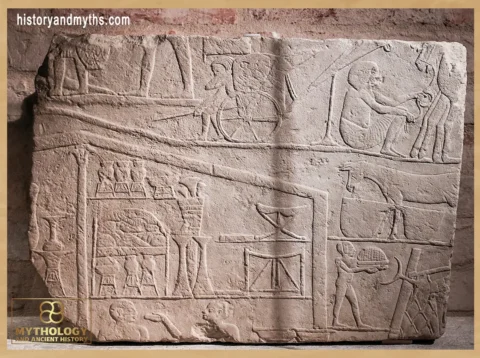
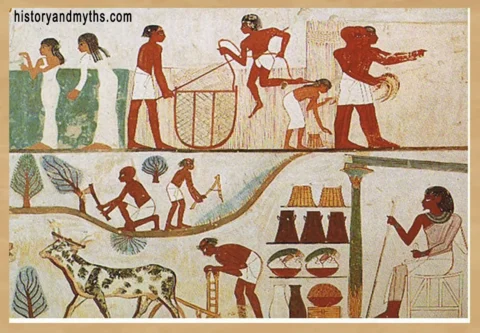
Village life in ancient Egypt was anchored to the land. Work followed predictable rhythms: sowing, irrigation, harvesting, storage, and the constant maintenance of tools and animals. That routine could be harsh, but it created a clear survival logic. If the household protected its grain, managed its labor, and stayed in good standing locally, life could be stable even without wealth.
But stability in villages came with limits. Most families had narrow career paths, and opportunities depended heavily on season, local conditions, and the power structures above them. A village economy could be resilient, yet it rarely offered the variety of work found in larger settlements.
City life worked differently because cities concentrated people, institutions, and demand. Urban living created more room for specialized roles: crafts, services, and work connected to administration and organized projects. Instead of being measured mainly by harvest output, urban income could be tied to skill, placement, or access to networks. That shift mattered because it changed how households planned survival: storage was still important, but so were wages, contacts, and reliable supply.
The trade-off is clear. Villages offered a working life that was physically demanding but familiar and locally structured. Cities offered more options and potentially higher status, but daily life became more competitive. A city household didn’t just have to “work hard”—it had to navigate proximity to power, crowding, and social comparison.
| Life Factor | Village Life | City Life | What It Changed |
|---|---|---|---|
| Work | Farming rhythms, seasonal routine | Specialized roles, administration, crafts | Income stability vs opportunity |
| Food access | Production + storage first | Markets + supply systems | Control vs dependence |
| Space & housing pressure | More flexible domestic space | Crowding, tighter boundaries | Privacy strategy becomes essential |
| Community | Tight networks, long memory | More strangers, more competition | Reputation vs constant visibility |
| Services & convenience | Limited access, slower solutions | Faster access to goods and tools | Convenience vs system reliance |
| Risk profile | Seasonal vulnerability, local disputes | Density stress, health exposure, social tension | Different threats, different coping |
Food Access and Markets: Local Production vs Urban Supply
In villages, food security was closely tied to production and storage. Households relied on what could be grown locally and preserved safely—grain first, then whatever seasonal foods and small livestock could support daily meals. This didn’t mean villagers never traded, but the village survival model was built around a simple assumption: if the household managed its harvest and storage well, it could endure.
That creates a certain kind of stability. When food comes from land and storage, the household controls more of its own supply. The daily diet may be simpler, but it’s structured and predictable. In this environment, scarcity is often seasonal, and solutions are practical: preservation, sharing, local exchange, or adjusting consumption patterns.
City life shifted food from “what you produce” to “what you can access.” Urban households lived closer to markets, temples, and redistribution systems, which could increase variety and availability. A city resident might obtain goods that were harder to find in a village, simply because supply channels were denser and trade networks were more visible.
But that advantage came with dependence. Cities made people more reliant on systems outside the household: prices, supply flow, and institutional stability. When everything ran smoothly, city food access was easier and more diverse. When distribution faltered—through disruption, pressure, or shortage—urban households had less direct control over survival compared to families whose baseline food came from land and storage.
So the real difference isn’t “villages had less food.” It’s that villages depended on production logic, while cities depended on access logic—and each had its own risks.
Housing and Space: Practical Living Differences Without the Myth
Village and city houses in ancient Egypt could look similar on the surface—mudbrick, flat roofs, practical layouts—but the experience of living inside them was often different. The difference wasn’t simply architecture. It was pressure: how much space you had, how close your neighbors were, and how easily your home could remain private and functional.
In villages, homes generally existed within a slower rhythm. Space around the household could feel less compressed, and daily life could expand outward more naturally. Tasks like food preparation, storage work, small repairs, and routine household labor had room to “breathe.” Even when homes were modest, the surrounding environment often gave families more flexibility in how they used their space.
Cities changed that. Urban density forces homes to work harder. When houses are close together, privacy becomes a daily problem instead of a preference. Noise, movement, and constant proximity to others reshape how households behave: when to open the home, how to host visitors, what can be seen, and how family routines are protected from public exposure.
This is why city living often meant stronger boundaries between “outside” and “inside.” The home became more defensive—not because people were paranoid, but because crowding makes domestic life visible unless it is controlled. Even small design choices—an entrance that blocks direct view, or the way rooms are arranged—become tools for managing social exposure.
The key point is that housing in villages and cities wasn’t just about materials. It was about how much control a household could realistically maintain over daily routine, family space, and privacy.
Community, Privacy, and Social Pressure: Tight Networks vs Constant Visibility
Village life was usually shaped by familiarity. People lived among neighbors they knew, often across generations, in a social world where reputation mattered but relationships were stable. That created a kind of predictable pressure: everyone knew everyone, and behavior spread through the community quickly. Privacy existed, but it wasn’t the same as modern privacy. It was more like controlled visibility inside a small network.
The advantage of this environment is trust and continuity. If a household had strong local ties, help could exist through shared labor, mutual support, and informal exchange. But there was a cost: social judgment was constant. A family couldn’t easily “disappear” inside a village. Everyday choices—conflict, marriage arrangements, disputes, even small signs of success—could become public knowledge.
Cities replaced that familiar pressure with a different one: density and visibility. Urban life exposed people to more strangers, more movement, and more contact points with institutions and markets. That created opportunity, but also new forms of stress. Privacy became harder because neighbors were closer, and households shared space more tightly. At the same time, social comparison became stronger—because city life places different levels of wealth, power, and access within the same physical area.
Another difference is control. In villages, social pressure came from the community itself. In cities, pressure could come from both community and system: supervision, regulations, work hierarchy, and formal authority were more present. That changes how people behave. A city household might have more options than a village household, but it also had to manage more risk from noise, conflict, competition, and institutional power.
So the difference isn’t that villages were “peaceful” and cities were “dangerous.” The difference is that villages were intimate and socially tight, while cities were crowded and socially complex—meaning privacy and stability required more strategy.
Services, Risks, and Daily Convenience: What Was Easier (and What Was Harder)
The easiest way to compare village and city life is to ask a simple question: what problems could a household solve quickly? In ancient Egypt, convenience wasn’t luxury—it was survival efficiency. Access to water, tools, food exchange, and help from others shaped daily stability more than any abstract idea of “urban progress.”
Water access and daily logistics
Water existed everywhere in Egypt conceptually, but daily access was never automatic. Village households often depended on nearby sources and routine collection. That could be time-consuming, but it was predictable and embedded in daily life. Cities could offer closer access points and more frequent movement of supplies, but they also increased competition. More people in one area means the same basic needs are concentrated and repeated constantly.
So urban life didn’t remove the burden of water—it simply changed it from “distance and routine” to “crowding and demand.”
Markets and tools: the city advantage
Cities usually offered faster access to exchange. If a household needed a replacement tool, a specialized service, or a non-local product, city life increased the chances of obtaining it. Villages could still access trade, but the process was slower and depended on timing, intermediaries, and local availability.
This is one of the clearest urban advantages: cities concentrate solutions. They don’t create them from nothing, but they make them reachable.
Health and density: the urban cost
Crowding creates problems that villages experience differently. Dense living increases exposure to noise, conflict, and environmental stress. It can also raise the risk of contagious illness simply through proximity. In villages, health risks exist too, but population density is lower and daily movement patterns are less compressed.
The difference isn’t that villages were healthy and cities were sick. The difference is that city life increases the number of daily interactions—and every interaction is a potential risk.
Security and conflict
Village conflict tends to be personal: disputes happen within familiar networks. That can be intense, but it’s contained. City conflict can be more complex: more strangers, more competition, more situations where people don’t share the same community expectations. At the same time, cities often have stronger formal authority nearby, which can reduce some risks but introduce others—because institutional power doesn’t always protect everyone equally.
The real conclusion: convenience trades stability for dependence
Urban living made certain problems easier to solve—especially access to goods, services, and specialized work. But it also increased dependence on systems outside the household: markets, institutions, and crowded living conditions.
Village living made fewer things instantly available, but it kept daily life closer to household control: production, storage, and familiar social structure. Each environment offered a different kind of stability—and a different kind of vulnerability.
Case Studies: Deir el-Medina vs Amarna (A Reality Check)
It’s easy to compare “villages” and “cities” in ancient Egypt in abstract terms—farmers versus craftsmen, simplicity versus complexity. But real life was messier. The clearest way to ground this comparison is to look at two archaeological contexts that show how different settlement types produced different daily realities: Deir el-Medina and Amarna.
Deir el-Medina: a “village” with urban-level organization
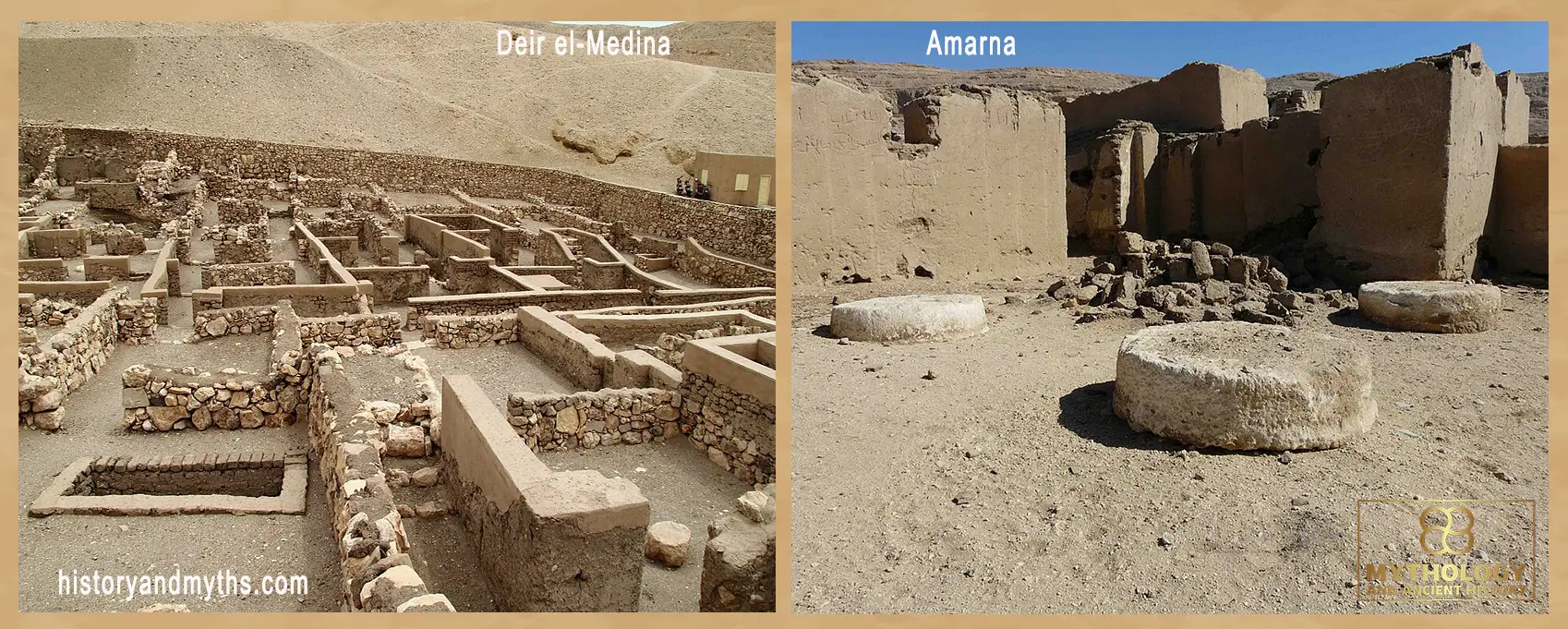
Deir el-Medina is often described as a village, but it wasn’t a typical farming settlement. It was a state-supported community of specialized workers tied to major royal projects. That changes everything about what “village life” means there.
Life in Deir el-Medina combined village-scale intimacy with institutional structure. People lived close together in a tightly defined community, which meant reputation and social friction mattered intensely. But unlike agricultural villages, the economy here was shaped by organized labor, skill-based identity, and direct connection to state administration. In terms of work culture, it behaves closer to an urban workforce than a rural farming community—even if the settlement itself is not a city.
So Deir el-Medina proves an important point: in Egypt, “village” doesn’t always mean “agriculture.” Sometimes it means a planned community built around state labor, where daily life is disciplined by schedules, hierarchy, and specialized work.
Amarna: an urban world built around administration, supply, and density
Amarna illustrates the opposite: a city environment where life was shaped by proximity to institutions, planning, and concentrated supply. The most important feature of a city like this isn’t “big buildings.” It’s the way daily life becomes dependent on access: to goods, to services, to authority, and to the networks that move resources around.
Amarna also highlights the human side of urban density. In cities, households exist inside a constantly shifting web of neighbors, competition, and visibility. Even when a household is not elite, its daily life becomes more exposed to public movement, economic fluctuation, and institutional pressure. The city can provide more options, but it also demands more navigation—of people, power, and daily logistics.
What these two examples prove
These case studies show that “village vs city” is not a simple ladder of progress. It’s a spectrum of settlement types with different survival mechanics:
- A village can be socially intense and economically specialized if it’s tied to state labor.
- A city can offer access and opportunity, but create pressure through density and dependence.
So the real question isn’t “Which life was better?” The real question is: Which system gave a household more control over survival, and which system demanded more negotiation with society and power?
Quick Infographic: Village vs City Life (The Real Difference)
- Villages ran on production — farming rhythm, storage, and household control.
- Cities ran on access — markets, services, institutions, and specialization.
- Village pressure was social — everyone knows you, reputation lasts.
- City pressure was structural — density, comparison, and constant visibility.
- Neither was “better” — they were different survival systems with different risks.
What We Can (and Can’t) Generalize About Village vs City Life
We can confidently say that villages tended to be closer to production and seasonal rhythm, while cities tended to be closer to markets, institutions, and specialized roles. We can also say that density made urban privacy harder and increased exposure to social pressure.
What we should not do is pretend every village was the same, or every city offered the same kind of advantage. Egypt’s settlements varied by region, period, and function. Some “villages” were agricultural, others were planned work communities. Some cities were administrative hubs, others were religious centers. The evidence is strong enough for comparison—but only when we treat village and city life as different survival systems, not as stereotypes.
Key Takeaways
- Village life was closer to land, seasons, and household control.
- City life offered more specialized work and market access, but higher pressure.
- The main difference was production vs access—not “rich vs poor.”
- Urban density made privacy harder and increased social visibility.
- Villages had strong community stability, but reputation and judgment were constant.
- Case studies show Egypt’s settlements were diverse—avoid stereotypes.
Continue Reading
- Housing and Domestic Life in Ancient Egypt — how home space and privacy worked day to day.
- How Ancient Egyptians Built Their Cities — city planning and infrastructure from the ground up.
- Daily Life of Ordinary People in Ancient Egypt — work, family, and survival beyond settlement type.
- Food and Drink in Ancient Egypt — how diet and access differed by environment.
- Social Classes in Ancient Egypt — why access and status shaped daily reality.
FAQ: Life in Villages vs Cities in Ancient Egypt
Was life better in ancient Egyptian cities or villages?
It depended on what a household needed. Villages offered stability through production and routine, while cities offered access to markets and specialized work but added crowding and social pressure.
What kind of jobs did villagers usually do?
Most village work centered on agriculture and seasonal labor, supported by household tasks like storage, food preparation, and local maintenance.
What kind of jobs existed in Egyptian cities?
Cities supported more specialized roles such as crafts, services, and work connected to administration, temples, and organized projects.
Did city people have better access to food?
Cities often offered easier access to markets and non-local goods, but households also depended more on supply systems and prices than rural producers did.
Was privacy harder in cities?
Yes. Higher density and close neighbors made privacy harder to protect, so city households relied more on strong boundaries between public and private space.
Did villages have stronger communities than cities?
Villages often had tighter networks and long-term familiarity, but that also increased social judgment and reputation pressure.
Why is Deir el-Medina often mentioned in discussions of village life?
Because it shows how a “village” could be a planned work community with specialized labor, not a typical farming settlement.
Can we generalize village life across all periods of ancient Egypt?
Not fully. Settlement type, region, and historical period mattered, so comparisons should be treated as patterns—not absolute rules.
Sources & Rights
- Kemp, Barry J. Ancient Egypt: Anatomy of a Civilization. 2nd ed. London: Routledge, 2006.
- Shaw, Ian, ed. The Oxford History of Ancient Egypt. Oxford: Oxford University Press, 2000.
- Brewer, Douglas J., and Emily Teeter. Egypt and the Egyptians. 2nd ed. Cambridge: Cambridge University Press, 2007.
- Bard, Kathryn A. An Introduction to the Archaeology of Ancient Egypt. Malden, MA: Wiley-Blackwell, 2008.
- Grajetzki, Wolfram. The People of the Pyramids: Everyday Life in Ancient Egypt. London: Duckworth, 2006.
- Meskell, Lynn. Private Life in New Kingdom Egypt. Princeton: Princeton University Press, 2002.
- David, Rosalie. Handbook to Life in Ancient Egypt. New York: Facts On File, 1998.
- Trigger, Bruce G., Barry J. Kemp, David O’Connor, and Alan B. Lloyd. Ancient Egypt: A Social History. Cambridge: Cambridge University Press, 1983.
Written by H. Moses — All rights reserved © Mythology and History