Ancient Greek Pottery: Styles, Techniques, Meaning in Greek Ceramics
Ancient Greek pottery was not just decorative art—it was a functional product, a communication tool, and one of the most widely traded goods in the Greek world. From storage jars to drinking vessels, pottery shaped how goods were stored, transported, and used in daily life.
Why does it matter so much? Because Greek pottery reveals how production, design, and meaning were combined in a single system. These objects were made in workshops using repeatable processes, but they also carried images that communicated identity, stories, and social norms. This made pottery both practical and expressive at the same time.
It also played a direct role in the economy. Durable, portable, and recognizable, Greek ceramics moved across regions through trade, spreading styles and influencing markets beyond the polis where they were produced.
This article explains how Greek pottery actually worked: how it was made, how styles developed, and why it became one of the most important products in the ancient Greek economy.
What Was Greek Pottery and Why Was It Important?
Greek pottery was a practical solution to everyday needs, not an optional art form. It was used to store, transport, and serve essential goods such as grain, oil, and wine. In a system without modern containers, pottery provided a durable and standardized way to manage resources.
Its importance comes from this function. Large storage jars allowed goods to be kept over time, while transport vessels made it possible to move products across distances without loss. Smaller vessels supported daily consumption, linking pottery directly to routine life.
At the same time, pottery carried information. The shapes of vessels indicated their use, while their decoration made them recognizable. This created consistency in both function and identity, allowing goods and containers to be understood across different regions.
This combination made pottery economically valuable. It supported trade by enabling goods to move safely and efficiently, and it became a product in its own right. Well-made vessels could circulate beyond their place of origin, contributing to wider exchange.
The key point is that Greek pottery mattered because it solved multiple problems at once. It was not only about storage or decoration—it was part of how the economic and daily systems operated.
| Aspect | Greek Pottery | Other Crafts |
|---|---|---|
| Function | Storage, transport, and daily use | Tools, textiles, specialized goods |
| Production | Repeatable and standardized | More varied, less uniform |
| Decoration | Structured visual communication | Limited or functional design |
| Trade Role | Widely exported and recognized | Mostly local or limited trade |
| Durability | High, suitable for transport | Varies by material |
| Scalability | Higher within manual limits | Generally lower |
How Greek Pottery Was Made
Greek pottery was produced through a controlled, repeatable process that combined material preparation with skilled execution. The goal was not only visual design, but consistent and functional output.
Production began with clay selection. Potters chose clay based on its workability and how it would behave during firing. The material was cleaned and refined to remove impurities, ensuring stability when shaped and heated.
Shaping followed. The potter’s wheel allowed vessels to be formed with speed and consistency compared to hand-building alone. This made it possible to produce standardized shapes, especially for commonly used containers. Larger vessels were often constructed in sections and then assembled before drying.
Decoration was applied before firing. This stage defined the visual character of Greek pottery. Designs were painted using slip—a refined clay mixture—that reacted differently under heat. The final appearance depended on technique, not just the drawing itself.
Firing was the most critical stage. Potters controlled the kiln environment by adjusting oxygen levels to produce specific color contrasts. This process hardened the vessel and fixed the decoration permanently. Precision at this stage determined the success of the entire piece.
What matters is the integration of these steps. Clay preparation, shaping, decoration, and firing formed a single, continuous process. Consistency depended on managing each stage carefully, not on any one step alone.
The key point is that Greek pottery was produced through a structured method. It allowed reliable output while still supporting variation in design.
Black-Figure vs Red-Figure: What Changed?
The shift from black-figure to red-figure pottery was not just a change in style—it was a technical improvement that expanded what could be represented on the surface of a vessel.
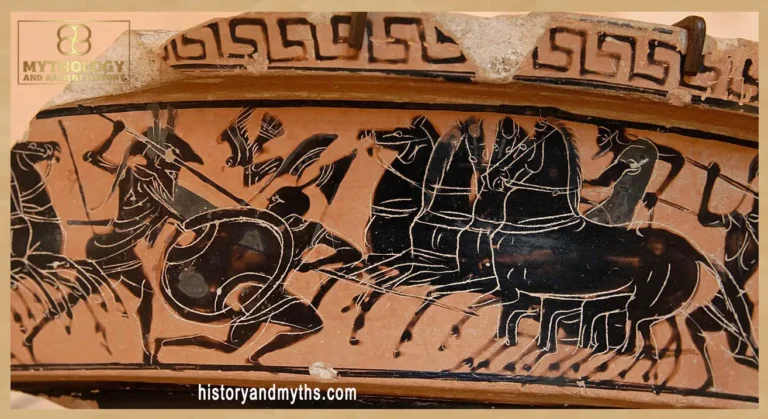
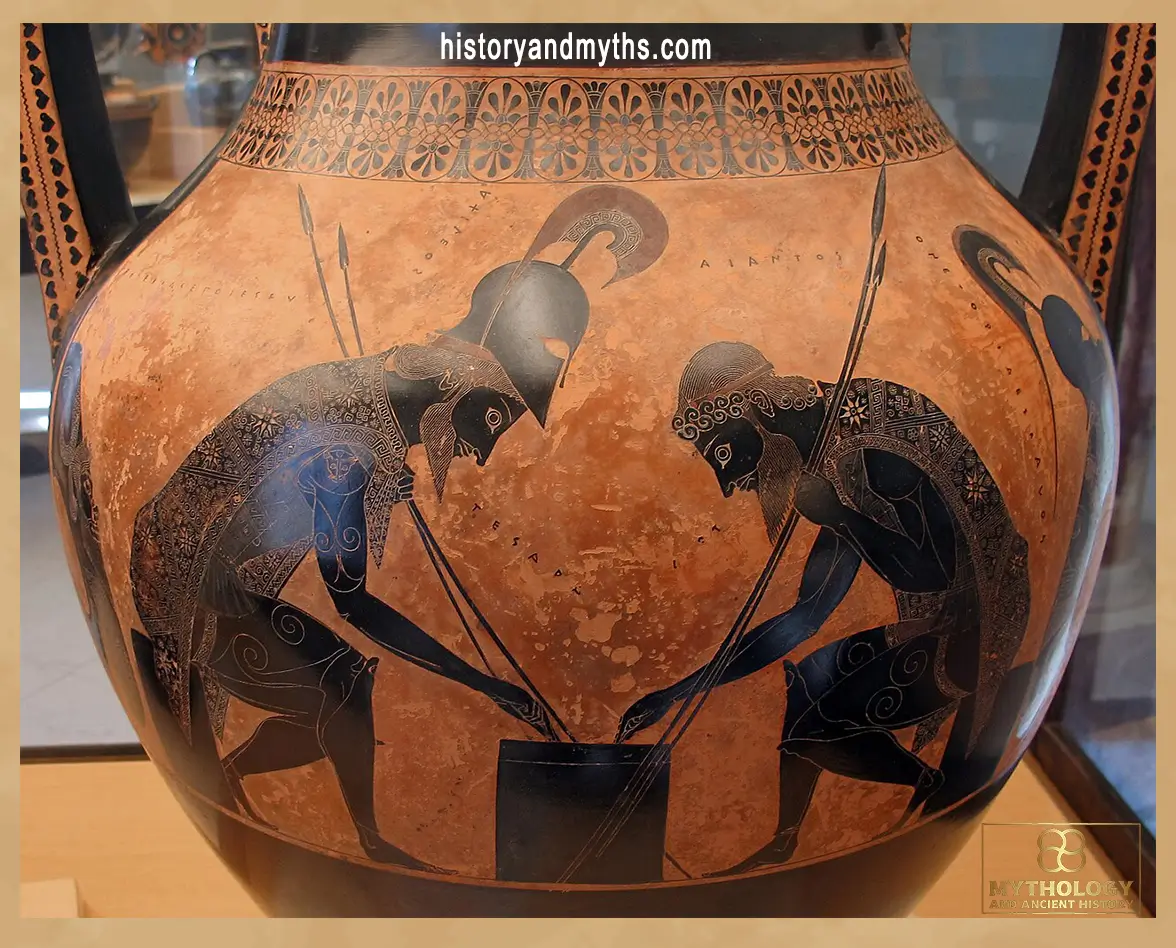
In the black-figure technique, figures were painted as solid silhouettes using slip, and details were carved into the surface before firing. This method produced strong, clear shapes, but it limited detail. Lines had to be incised, which made complex or flexible forms difficult to render.
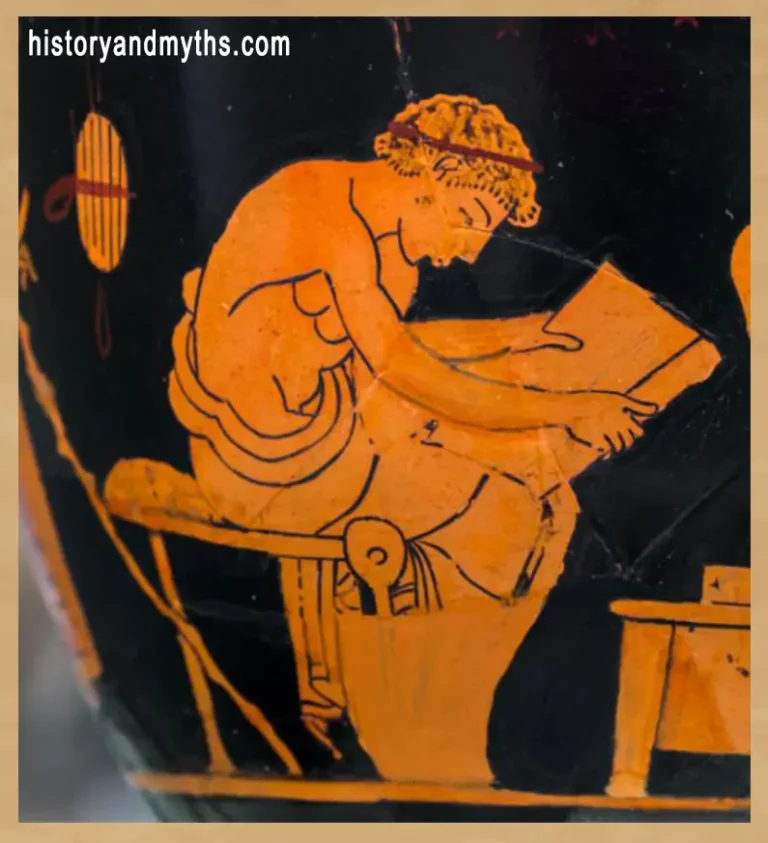
Red-figure reversed the process. Instead of painting the figures, the background was filled with slip, leaving the figures in the natural color of the clay. Details were then added with a brush rather than carved. This allowed finer lines, more variation, and greater control over movement and proportion.
The difference affected more than appearance. Red-figure made it possible to depict more naturalistic poses, internal details, and complex scenes. Artists could show muscles, clothing, and motion with greater precision, which expanded the visual language of pottery.
This change also influenced production. While both techniques used similar materials and firing methods, red-figure required a higher level of control during decoration. It did not increase output, but it increased the range of what could be produced.
The key point is that the transition was functional. Red-figure pottery did not replace black-figure because it looked different, but because it allowed more detailed and flexible representation within the same production system.
Pottery as Visual Communication
Greek pottery did more than serve practical functions—it carried images that communicated information. These images were not random decoration; they followed recognizable patterns that conveyed meaning to those who used and saw them.
Scenes often depicted mythology, daily activities, and social practices. Mythological images reinforced shared stories and cultural identity, while everyday scenes reflected familiar experiences such as work, rituals, or gatherings. This made pottery a medium through which ideas and norms were repeated and understood.
The placement and style of images mattered. Figures were arranged to fit the shape of the vessel, guiding how the viewer read the scene. Repetition of common themes created visual consistency, allowing similar messages to be recognized across different pieces.
This visual layer added value. A vessel was not only useful for storage or transport—it also carried meaning that could be interpreted by others. This made pottery both functional and expressive within the same object.
As pottery moved through trade, these images traveled with it. This extended communication beyond the local context, spreading styles and familiar scenes to other regions. Even without written explanation, the imagery remained understandable through shared visual conventions.
The key point is that Greek pottery functioned as a communication system. It transmitted ideas and identity alongside its practical use, making it more than a simple container.
- Pottery combined function, production, and visual meaning
- It was essential for storage, transport, and daily use
- Workshops produced standardized and repeatable forms
- Decoration acted as a system of visual communication
- Pottery supported trade both as container and product
- Production was efficient but limited by manual processes
Workshops and Production Scale
Pottery production was organized within workshops, but it developed a higher level of consistency than many other crafts. This made it one of the few areas where output could be scaled within the limits of manual production.
Workshops focused on repeatable forms. Common vessel types—such as storage jars, transport amphorae, and drinking cups—were produced in standardized shapes. This allowed potters to refine specific models and reproduce them efficiently over time.
Division of tasks supported this consistency. One individual might shape the vessel, another apply decoration, and others manage firing. This did not create full specialization, but it improved workflow within the workshop and increased output compared to single-person production.
Scale varied between workshops. Some remained small and produced for local use, while others expanded to meet broader demand. Larger workshops could produce higher volumes, especially when supported by additional labor, but they still operated within the same structural limits.
What distinguishes pottery is its balance between scale and control. The process allowed for repeated production of similar items without losing the ability to maintain quality and recognizable style.
The key point is that pottery workshops operated at the upper edge of what the Greek production system could sustain. They did not reach industrial scale, but they achieved a level of consistency and output that supported both local use and wider distribution.
Pottery in Trade and Economy
Greek pottery became one of the most widely circulated products in the ancient Mediterranean because it combined function, durability, and recognizability. It was not only used locally but moved across regions as part of trade networks.
Its role began with utility. Containers such as amphorae were essential for transporting goods like oil and wine. This made pottery a necessary part of trade, since many products could not be moved efficiently without it. In this sense, pottery supported exchange even when it was not the primary item being sold.
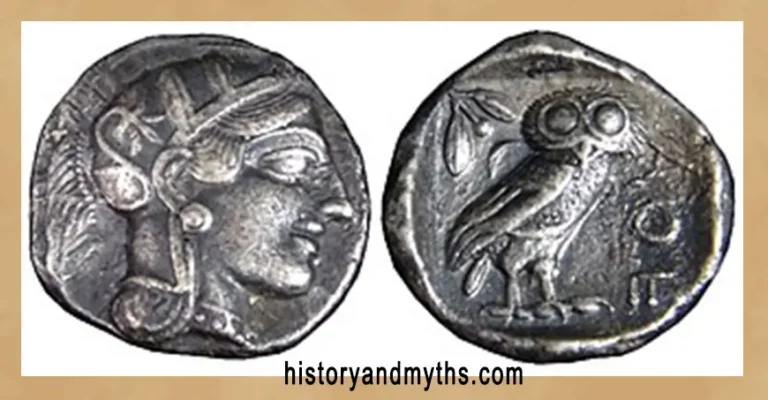
At the same time, pottery itself became a traded good. Well-made vessels, especially those with consistent forms and recognizable decoration, were exchanged beyond their place of origin. This created demand for certain styles and increased the economic value of production.
Distribution followed trade routes. As goods moved by sea, pottery traveled with them, either as containers or as products. This allowed Greek ceramics to appear in distant markets, extending their presence beyond local economies.
Recognition mattered. When a style became associated with a particular origin, it was easier to accept and exchange. This reduced uncertainty in trade and helped pottery circulate more widely.
The key point is that pottery operated on two levels within the economy. It was both a tool that made trade possible and a product that contributed to trade itself.
Standardization and Style
Greek pottery achieved a level of consistency that made it recognizable across regions. This was not enforced by a central authority, but developed through repeated production methods and shared visual conventions.
Standardization began with form. Common vessel types followed established shapes that matched specific functions. Once these forms proved effective, they were reproduced with minimal variation, allowing users to recognize purpose immediately.
Style added another layer. Decorative techniques and motifs were applied consistently within workshops and across regions. Over time, certain styles became associated with specific places, making it possible to identify origin through appearance alone.
This consistency supported exchange. When a vessel’s form and style were familiar, its function and quality were easier to assess. This reduced uncertainty in both local use and wider trade.
At the same time, variation still existed. Individual workshops and painters introduced differences within the broader system, creating identifiable patterns without breaking overall consistency.
The key point is that standardization and style worked together. Form ensured practical use, while visual consistency supported recognition and value within the market.
The Limits of Greek Pottery Production
Greek pottery reached a high level of consistency and distribution, but it remained constrained by the same limits that affected all forms of production in the Greek economy. These limits were structural, not temporary.
The first constraint was production capacity. Every stage—shaping, decorating, and firing—depended on manual labor. Even with organized workshops, output could only increase by adding more workers, and that expansion was restricted by space, tools, and coordination.
Kiln technology set another boundary. Firing required careful control, and each cycle handled a limited number of vessels. A failed firing could damage multiple pieces at once, making large increases in output risky.
Materials also imposed limits. Clay had to be sourced, prepared, and transported, and not all regions had equal access to high-quality material. This affected both production volume and consistency.
Demand influenced production as well. Workshops produced based on known needs. Without large storage systems, overproduction created risk, so output remained controlled rather than unlimited.
There was also no centralized system to coordinate pottery production across regions. Each workshop operated independently, which prevented large-scale integration and standard expansion.
The key point is that Greek pottery production was efficient within its structure but could not scale beyond it. It supported wide distribution and consistent output, but it never developed into large, industrial-level production.
- Greek pottery was both a functional product and a communication tool
- Production followed a structured and repeatable process
- Black-figure and red-figure techniques expanded visual detail
- Workshops achieved consistency without industrial scale
- Pottery played a major role in trade and economic exchange
- The system was effective but limited by manual production constraints
Frequently Asked Questions
What was Greek pottery used for?
It was used for storage, transport, and daily activities such as eating and drinking.
How was Greek pottery made?
It was made through a process of shaping clay, decorating it, and firing it in a kiln.
What is the difference between black-figure and red-figure pottery?
Black-figure used painted silhouettes with carved details, while red-figure reversed the technique to allow finer detail.
Was Greek pottery important for trade?
Yes, it was widely traded and also used to transport goods like oil and wine.
Did Greek pottery have artistic value?
Yes, it combined functional use with detailed visual designs and cultural meaning.
Who produced Greek pottery?
Skilled craftsmen working in organized workshops created pottery.
Why is Greek pottery important today?
It provides insight into ancient daily life, culture, and economic systems.
Sources & Rights
- Boardman, John. Greek Pottery: An Introduction. Thames & Hudson.
- Cook, R.M. Greek Painted Pottery. Routledge.
- Beazley, J.D. Attic Black-Figure Vase-Painters. Oxford.
- Beazley, J.D. Attic Red-Figure Vase-Painters. Oxford.
- Osborne, Robin. Classical Greece. Routledge.
- Harris, Edward. The Ancient Greek Economy. Cambridge.
- Finley, M.I. The Ancient Economy. University of California Press.
- Bresson, Alain. The Making of the Ancient Greek Economy. Princeton.
- Whitley, James. The Archaeology of Ancient Greece. Cambridge.
- Snodgrass, Anthony. Archaic Greece. University of California Press.
- Cartledge, Paul. Ancient Greece. Oxford.
- Hansen, Mogens Herman. Polis: An Introduction. Oxford.
- Herodotus. Histories.
- Thucydides. History of the Peloponnesian War.
- Xenophon. Oeconomicus.
- Aristotle. Politics.
- Strabo. Geography.
- Diodorus Siculus. Library of History.
- Oakley, John. Picturing Death in Classical Athens. Cambridge.
- Neer, Richard. Greek Art and Archaeology. Thames & Hudson.
Written by H. Moses — All rights reserved © Mythology and History