Ancient Greek Markets and Commerce: How the Economy Worked
Greek markets were not just places to buy and sell—they were the core mechanism that kept the economy running. At the center of every city, the agora functioned as a structured space where goods, prices, and exchanges were constantly negotiated. This is where agricultural products, imported goods, and everyday necessities moved through the system.
How did this economy actually work without banks, modern contracts, or centralized control? The answer lies in a combination of coin-based exchange, direct trade, and local regulation. Transactions were shaped by supply, demand, and oversight from city authorities, not by a single economic system imposed from above.
Greek commerce also operated on two levels at once. Local markets handled daily needs within the polis, while long-distance trade connected cities across the Mediterranean, bringing in resources that could not be produced locally. This created a layered economy—part local, part regional—held together by movement and exchange.
This article breaks down that system: how markets functioned, how trade was organized, and how economic activity was sustained in the ancient Greek world without the structures found in later economies.
What Was the Agora and How Did It Function?
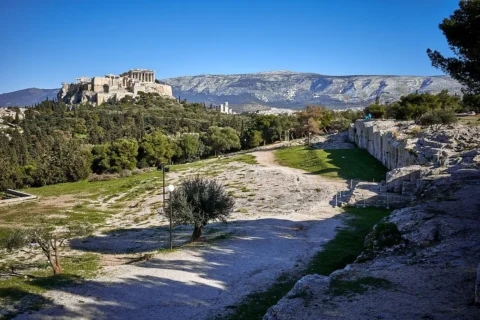
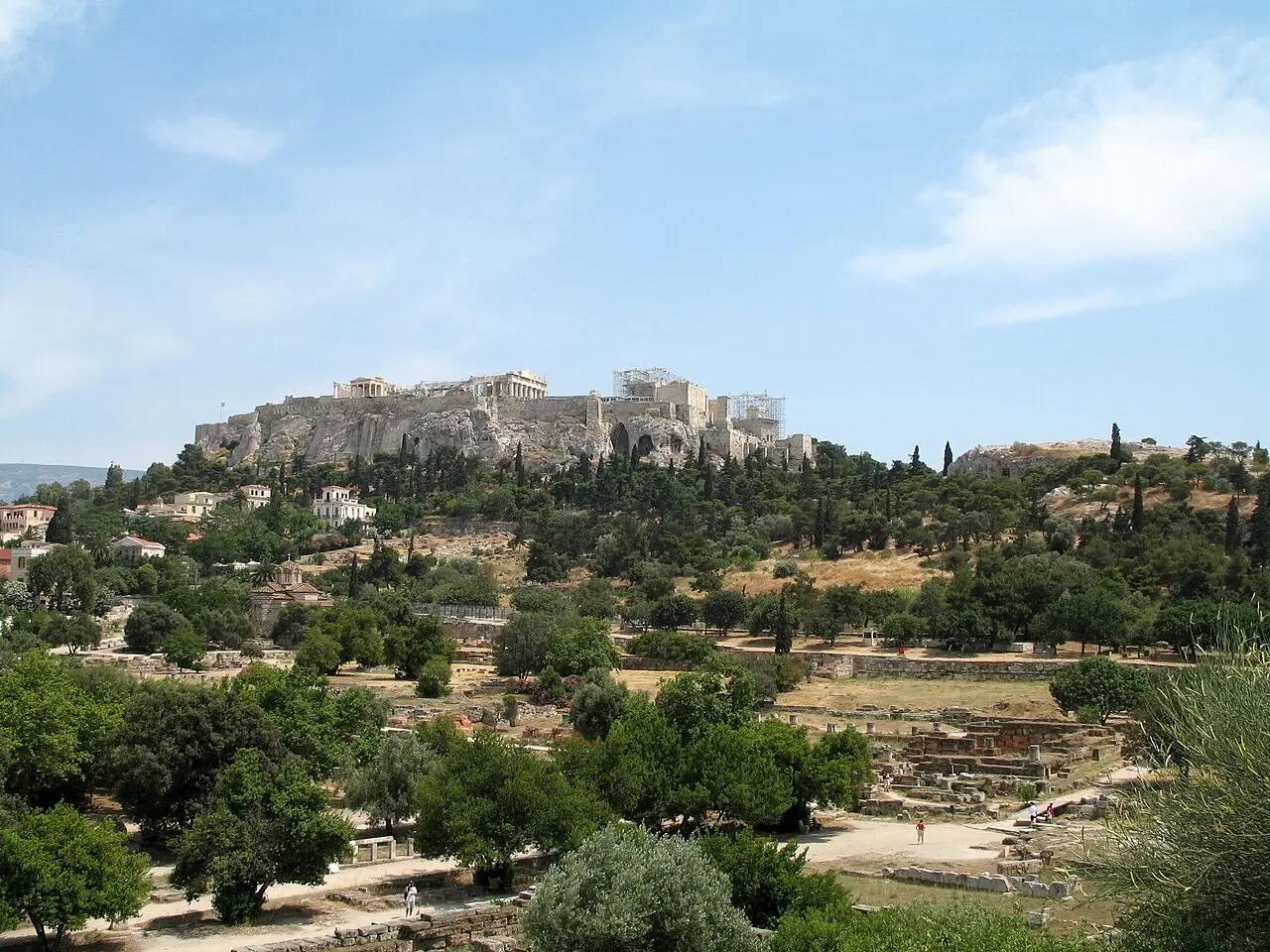
The agora was the operational center of the Greek market system. It was not just a public square—it was a structured environment where economic activity was concentrated, monitored, and repeated daily.
Function came from organization. Different types of goods were grouped in specific areas, creating predictable patterns of exchange. Food sellers, craftsmen, and traders operated within recognized zones, which made transactions faster and easier to manage. Buyers knew where to go; sellers knew where demand would be.
Access was open, but activity was not unregulated. City officials oversaw the market to maintain order and ensure basic standards. Weights and measures had to be consistent, and certain goods—especially essential items like grain—were subject to closer supervision. This prevented disruption in supply and reduced the risk of manipulation.
Transactions were direct. Most exchanges happened face-to-face, with prices negotiated or adjusted based on availability. There was no abstract pricing system detached from the market itself. Value was established in real time, influenced by supply, demand, and local conditions.
The agora also connected economic and social functions. Information moved alongside goods—news, agreements, and opportunities circulated within the same space. This made the market not just a place of exchange, but a point of coordination for the wider city.
In practical terms, the agora worked because it concentrated activity, standardized basic rules, and allowed constant interaction between buyers and sellers. It was simple in structure, but effective in operation.
| Aspect | Local Markets (Agora) | Long-Distance Trade |
|---|---|---|
| Scale | Small, daily transactions | Large, periodic shipments |
| Goods | Food, tools, basic items | Grain, metals, oil, high-value goods |
| Risk | Low and predictable | High (weather, distance, politics) |
| Pricing | Immediate, supply-based | Based on regional differences |
| Participants | Producers and local buyers | Merchants and intermediaries |
| Function | Daily consumption | Resource distribution and profit |
How Goods Were Traded in Greek Markets
Trade in Greek markets operated through direct exchange, but it was not unstructured. Movement of goods followed a clear flow—from production, to transport, to market distribution—each step shaping how and when goods were sold.
Most goods entered the market through producers or intermediaries. Farmers brought agricultural products from surrounding land into the city, while craftsmen sold items they produced locally. For goods coming from outside the polis—such as metals or grain from distant regions—merchants handled transport and resale. These intermediaries were essential for linking local demand to external supply.
Transactions were typically immediate. Buyers and sellers met, agreed on a price, and completed the exchange without delay. There was no deferred payment system comparable to later credit economies. This meant that liquidity—having coin available—was critical for consistent trade activity.
Scale varied by product. Everyday goods like food and simple tools moved in small, frequent transactions. Higher-value goods, especially imported items, were traded in lower volume but with greater margins. This created a layered market where different types of exchange coexisted without requiring a centralized system.
Bargaining played a role, but it operated within limits. Prices could adjust based on supply conditions—abundance lowered prices, scarcity raised them—but they were not entirely arbitrary. Regular market activity created informal expectations about value, which stabilized exchange over time.
Distribution did not stop at the agora. Goods could move through multiple hands—producer to merchant, merchant to seller, seller to buyer—before reaching final consumption. Each stage added cost but also extended reach, allowing goods to circulate beyond their point of origin.
The key point is that Greek trade relied on coordination through practice, not formal systems. Repeated interaction, predictable flow, and shared understanding of value allowed markets to function efficiently without centralized control.
Pricing, Money, and Exchange Systems
Greek markets did not rely on a single method of exchange. Instead, they operated through a combination of coinage, direct trade, and practical valuation shaped by daily activity.
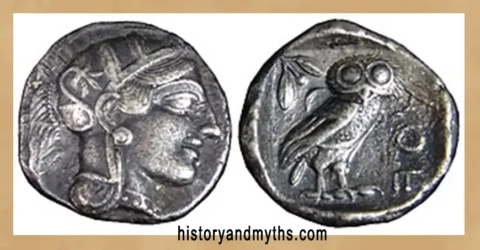
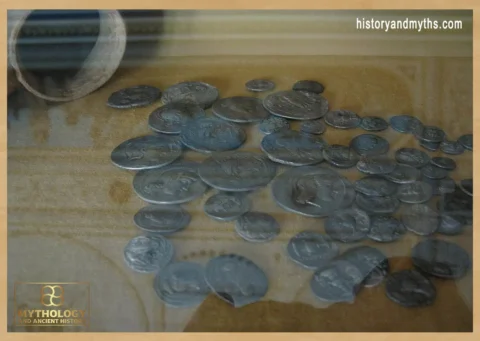
Coinage was the central tool. Once metal coins became widely used, they provided a common reference for value across transactions. Different city-states minted their own coins, but weight and metal content created a level of consistency that allowed them to circulate beyond their place of origin. This made trade faster and reduced the need to negotiate value from scratch in every exchange.
At the same time, coinage did not eliminate other forms of exchange. In smaller transactions or in areas with limited coin supply, goods could still be traded directly. This was not a separate system—it existed alongside coin-based exchange, depending on context and availability.
Pricing was not fixed in advance. It emerged inside the market. Sellers adjusted prices based on supply conditions, while buyers responded to availability and need. Essential goods—especially food—were more sensitive to supply fluctuations, which meant prices could shift quickly under pressure.
There was no centralized pricing authority, but markets were not uncontrolled. Local officials monitored transactions to prevent fraud and ensure that measurements remained consistent. This did not set prices directly, but it maintained the conditions under which fair exchange could occur.
Trust was part of the system. Repeated interaction between buyers, sellers, and intermediaries created expectations about value. Over time, this reduced uncertainty. Even without formal pricing mechanisms, markets developed a degree of stability through shared practice.
The result was a flexible system. Coins provided a standard, direct exchange handled immediate needs, and pricing adjusted to real conditions. Together, these elements allowed Greek markets to function without the financial structures found in later economies.
Local Markets vs Long-Distance Trade
Greek commerce operated on two interconnected levels, but each followed a different logic. Local markets handled daily exchange inside the polis, while long-distance trade extended beyond it to secure resources and profit from regional differences.
Local markets were built on immediacy. Goods moved quickly from producer to buyer, often within the same day. Transactions were small in scale, frequent, and predictable. Most of what was traded—food, tools, basic materials—came from nearby areas and was consumed locally. Stability depended on regular supply rather than large margins.
Long-distance trade worked differently. It was slower, riskier, and required coordination across regions. Merchants transported goods over sea routes, dealing with uncertainty in weather, timing, and access to ports. The scale was larger, and the goal was not daily exchange, but strategic movement of goods that were unavailable or limited in local markets.
The types of goods reflected this difference. Local markets focused on necessities, while long-distance trade concentrated on bulk commodities and high-value items—grain, metals, oil, and specialized products. These goods moved through a chain of transport and resale before reaching final markets.
Profit structure also changed. In local exchange, margins were narrow and based on volume. In long-distance trade, profits came from price differences between regions. The further a good moved from its source, the greater its potential value, but also the higher the risk.
Despite these differences, the two systems depended on each other. Long-distance trade supplied goods that local markets could not produce, while local markets provided the final point of distribution. One extended the economy outward; the other stabilized it internally.
The result was a layered system. Daily exchange maintained continuity inside the polis, while long-distance trade connected it to a wider economic network. Neither functioned effectively without the other.
- The agora functioned as the central hub of daily economic activity
- Trade combined coin-based exchange with direct transactions
- Local markets and long-distance trade operated as connected layers
- Merchants linked regions by moving goods across sea routes
- City authorities regulated markets to maintain trust and consistency
- Economic growth depended on connectivity, not centralized control
Who Controlled Trade and Market Rules
Greek markets did not operate without oversight. While there was no centralized economic authority across the Greek world, each polis imposed its own rules to keep trade functional and predictable.
Control was local and practical. City officials were responsible for maintaining order inside the market, ensuring that transactions followed basic standards. Their role was not to manage the economy as a whole, but to prevent disruption at the point where exchange actually happened.
One of the key responsibilities was enforcing consistency. Weights and measures had to match agreed standards, especially in the sale of essential goods. Without this, prices would lose meaning and trust would break down. Officials monitored scales, quantities, and quality to reduce manipulation.
Certain goods received closer attention, particularly those tied to stability, such as grain. Supply interruptions could quickly affect the population, so oversight aimed to keep these markets functioning without sudden breakdowns. This did not eliminate fluctuation, but it limited extreme cases.
There were also rules governing who could trade and how. Access to market space, positioning within the agora, and the conduct of transactions could be regulated to prevent disorder. These controls created structure without turning the market into a fully managed system.
Taxation existed, but it was tied to movement and activity rather than a uniform economic policy. Fees could be applied to goods entering or leaving certain points, especially in port areas. This generated revenue while also reinforcing control over trade routes.
The key point is that regulation supported the system rather than directing it. Markets were allowed to function through supply and demand, but within boundaries that preserved trust, consistency, and basic stability.
Key Goods in Greek Commerce
Greek markets were shaped by a limited number of core goods, but each played a specific role inside the economic system. Trade was not random; it focused on items that either sustained daily life or generated value through movement between regions.
Grain was the most critical commodity. Many Greek city-states could not produce enough food locally, which made external supply essential. Grain moved through long-distance trade networks into local markets, where it stabilized daily consumption. Its importance also meant it was closely monitored and more sensitive to disruption than other goods.
Olive oil functioned differently. It was both a staple and a trade product. Locally, it was used for cooking and daily needs; externally, it moved as a standardized, transportable good. Its durability and consistent demand made it ideal for exchange across regions.
Metals and raw materials entered the system through trade rather than local production in many areas. These goods supported craftsmanship—tools, weapons, and construction—linking long-distance supply to local manufacturing. Their value came from scarcity and utility, not volume.
Crafted goods completed the cycle. Items produced within the polis—pottery, textiles, tools—were sold in local markets and sometimes exported. These products reflected specialization within the economy, where production and trade reinforced each other.
What connects these goods is function. Some ensured survival, others enabled production, and others generated exchange value across regions. Together, they created a balanced system where local needs and external trade were tightly linked.
Trade Networks and Economic Expansion
Greek commerce expanded not by increasing production in one place, but by linking multiple regions into a single, functioning network. Cities did not need to be self-sufficient; they needed to be connected.
The structure was distributed. Different regions specialized in different goods, and trade routes moved those goods where they were needed. Coastal cities acted as entry and exit points, while inland areas supplied raw materials and agricultural output. Movement between these points created continuous economic activity.
Sea routes were the backbone of this system. Transport by water allowed larger volumes to move more efficiently than over land. This made long-distance exchange viable and enabled cities to access resources far beyond their immediate surroundings. Ports became critical nodes where goods were transferred, stored, and redistributed.
Expansion followed connectivity. As routes stabilized, new connections were added, extending the reach of the network. Cities that controlled key positions within these routes gained influence, not through size alone, but through their role in maintaining flow.
This system did not require central coordination. It relied on repeated interaction between merchants, consistent routes, and shared practices. Over time, these patterns created stability, allowing trade to scale without a single controlling authority.
The result was an economy that grew through linkage rather than concentration. Each new connection increased the system’s capacity, making Greek commerce more resilient and more extensive across the Mediterranean.
The Limits of the Greek Market System
Greek markets were effective, but they were not stable in all conditions. The system depended on continuous flow—of goods, coin, and access—and when that flow was disrupted, weaknesses appeared quickly.
The first limitation was supply vulnerability. Many cities relied on external sources for essential goods, especially grain. If trade routes were interrupted by conflict, weather, or political instability, local markets could not compensate fast enough. Shortages translated directly into rising prices and social pressure.
There was also no central mechanism to balance supply across regions. Each polis managed its own market, which meant coordination stopped at the city level. Surplus in one area did not automatically reach another in need. The system functioned through connection, but it lacked a unified structure to respond to large-scale disruption.
Financial limits mattered as well. Coinage improved exchange, but it did not create a full financial system. There were no institutions to stabilize markets during crises, no large-scale credit structures to absorb shocks, and limited capacity to delay or redistribute risk. Transactions depended on immediate exchange, which restricted flexibility.
Inequality was another factor. Access to trade opportunities and control over movement of goods were not evenly distributed. Merchants and intermediaries who operated across regions could accumulate advantage, while smaller producers remained tied to local conditions. This imbalance did not stop the system from working, but it shaped who benefited from it.
Finally, markets depended on trust and consistency. Repeated interaction created stability, but it could also break down. Fraud, inconsistent measures, or sudden changes in supply could weaken confidence and slow exchange.
The key point is that Greek markets were adaptive but not insulated. They functioned well under normal conditions, but they lacked the structural depth to absorb sustained disruption. Their strength came from movement and connection—and that was also their main vulnerability.
- Greek markets were structured around the agora, not random exchange
- Coinage enabled faster and more consistent transactions
- Local and long-distance trade formed a layered economic system
- Trade networks connected regions rather than centralizing control
- Market regulation ensured fairness without fixing prices
- The system was effective but vulnerable to supply disruption
Frequently Asked Questions
What was the agora in ancient Greece?
It was the central public space where economic, social, and political activities took place.
How did trade work in Greek markets?
Trade was based on direct exchange, supported by coinage and merchant networks.
Did ancient Greeks use money?
Yes, coinage was widely used, although barter still existed in some contexts.
Who controlled Greek markets?
Local city officials regulated markets to ensure fairness and consistency.
What goods were commonly traded?
Grain, olive oil, metals, and crafted goods were central to Greek commerce.
What is the difference between local and long-distance trade?
Local trade handled daily needs, while long-distance trade connected regions and moved large quantities of goods.
Why were Greek markets vulnerable?
They depended on continuous supply and lacked centralized systems to manage disruptions.
Sources & Rights
- Finley, M.I. The Ancient Economy. University of California Press.
- Harris, Edward. The Ancient Greek Economy. Cambridge University Press.
- Davies, J.K. Wealth and the Power of Wealth in Classical Athens. Arno Press.
- Cohen, Edward E. Athenian Economy and Society. Princeton University Press.
- Bresson, Alain. The Making of the Ancient Greek Economy. Princeton.
- Cartledge, Paul. Ancient Greece: A Very Short Introduction. Oxford.
- Hansen, Mogens Herman. Polis: An Introduction. Oxford University Press.
- Osborne, Robin. Greece in the Making. Routledge.
- Snodgrass, Anthony. Archaic Greece. University of California Press.
- Van Wees, Hans. Greek Warfare: Myths and Realities. Duckworth.
- Thucydides. History of the Peloponnesian War.
- Herodotus. Histories.
- Xenophon. Oeconomicus.
- Aristotle. Politics.
- Strabo. Geography.
- Diodorus Siculus. Library of History.
- Burkert, Walter. Greek Religion. Harvard University Press.
- Shipley, Graham. The Greek World After Alexander. Routledge.
- Whitley, James. The Archaeology of Ancient Greece. Cambridge.
- Hornblower, Simon. The Greek World 479–323 BC. Routledge.
Written by H. Moses — All rights reserved © Mythology and History