Ancient Greek Economy: Trade, Agriculture, and Markets
The economy of ancient Greece was built on three foundations: agriculture, trade, and local markets. Because the Greek mainland is mountainous and poor in fertile land, most communities could not produce enough grain to support their populations. As a result, city-states relied on a mixed economic system in which farming provided essential goods such as olives, wine, and barley, while maritime trade supplied grain, metals, timber, and other resources unavailable locally.
Daily economic life revolved around the agora, the central marketplace found in nearly every Greek city. Farmers, craftsmen, merchants, and sailors met there to exchange goods, negotiate prices, and maintain commercial networks that connected Greece to the wider Mediterranean world. Over time, the introduction of coinage and the expansion of sea trade allowed cities such as Athens and Corinth to become major commercial centers.
Understanding how this system worked explains several common questions about Greek civilization: Why did the Greeks trade so extensively? How did geography shape their economy? And why did certain cities become powerful commercial hubs while others remained agricultural societies? The answers lie in the interaction between land, sea routes, and the political independence of the Greek city-states, which together produced one of the most dynamic economic networks of the ancient Mediterranean.
Geography and the Foundations of the Greek Economy
The structure of the Greek economy cannot be understood without starting with geography. Mainland Greece is dominated by mountains, narrow valleys, and limited fertile plains. Large river systems like those of Egypt or Mesopotamia did not exist. Most communities therefore had only small areas of productive farmland. This physical environment shaped how Greeks produced food, organized labor, and interacted with other regions.
Because fertile land was scarce, Greek agriculture focused on crops that could survive poor soil and dry conditions. Barley was more common than wheat because it required less fertile ground. Olives and grapes became equally important, since they could grow on rocky slopes where grain could not. Olive oil and wine later turned into major export products across the Mediterranean.
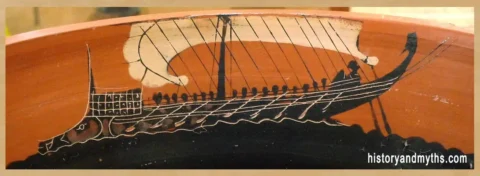
Geography also pushed Greek communities toward the sea. Mountains divided the mainland into isolated regions, making overland travel difficult. Maritime routes were therefore faster and often safer than land transport. Coastal settlements and island cities developed strong shipbuilding and navigation traditions, gradually transforming the Aegean into a dense network of commercial routes.
This environment produced an economy with two constant pressures. First, most cities had to import grain to feed their populations. Second, they needed export goods to pay for those imports. The solution was maritime trade supported by agricultural products, craft goods, and regional specialization. Geography did not merely influence the Greek economy; it defined its basic logic.
| Economic Sector | Main Activities | Importance |
|---|---|---|
| Agriculture | Barley farming, olive cultivation, wine production, livestock | Primary source of food and rural labor |
| Trade | Maritime trade across the Mediterranean and Black Sea | Provided grain, metals, timber, and luxury goods |
| Markets (Agora) | Local marketplaces where farmers, craftsmen, and merchants sold goods | Center of everyday economic exchange |
| Coinage | Silver coins minted by city-states such as Athens | Facilitated trade and standardized payments |
Agriculture and Rural Production
Agriculture formed the basic layer of the Greek economy. Most households depended on farming for survival, even in cities known for trade or craftsmanship. Land ownership carried social and political importance because agricultural production determined both wealth and stability within the polis.
Greek farms were usually small and family-run. Farmers cultivated mixed crops rather than large monoculture fields. The most common agricultural pattern combined grain cultivation with olive and grape production, often supported by small herds of sheep or goats. Barley dominated cereal production because it tolerated poorer soils, while olives and grapes thrived on rocky hillsides unsuitable for grain.
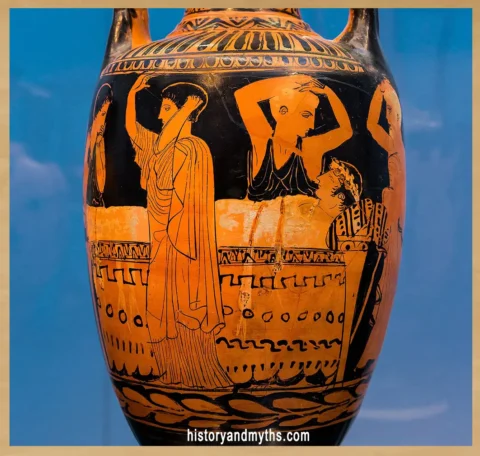
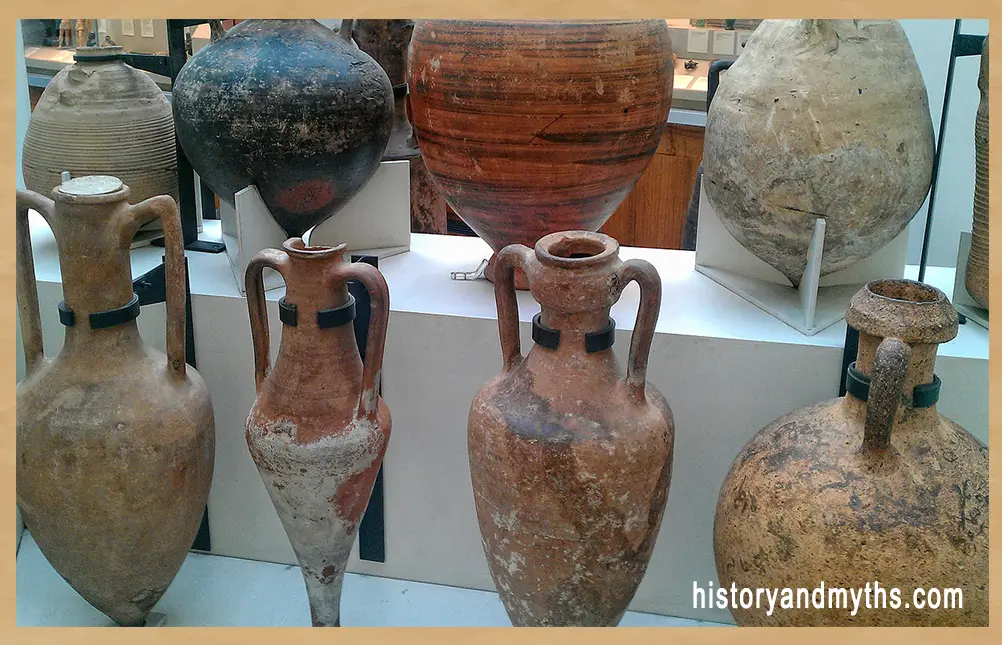
Olive oil and wine gradually became the most valuable agricultural commodities. Olive trees required years to mature, but once established they produced reliable harvests for generations. Oil served multiple purposes: cooking, lighting, religious offerings, and trade. Wine functioned similarly as both a staple product and a commercial export. Amphorae carrying these goods circulated widely across the Mediterranean, demonstrating the connection between agriculture and long-distance trade.
Agricultural labor varied across regions. In some city-states, farmers worked their own land with family members and seasonal laborers. In others, particularly Sparta, large agricultural estates depended on dependent populations such as the helots, who produced food for the Spartan elite. These differences reveal how agricultural systems could influence political and social structures within Greek society.
Trade Networks Across the Mediterranean
Trade was not a secondary activity in the Greek world; it was a structural necessity. Limited farmland meant that many city-states could not produce enough grain for their populations. To compensate, Greek merchants developed maritime trade networks that connected the Aegean to regions such as Egypt, the Black Sea, Anatolia, and the western Mediterranean. Through these routes, Greek cities obtained essential resources while exporting their own agricultural and craft products.
Greek exports were relatively specialized. Olive oil and wine remained the most consistent agricultural commodities, while pottery, metal goods, and crafted objects circulated widely in Mediterranean markets. Archaeological discoveries of Greek amphorae and ceramics from Spain to the Black Sea demonstrate the scale of this exchange. These goods were traded for grain, timber, metals, and other materials that were scarce in mainland Greece.
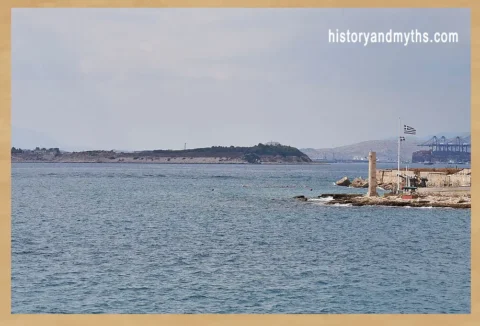
Sea travel made these networks possible. The Aegean Sea is filled with islands that functioned as natural stepping-stones for navigation, allowing ships to travel between ports without long open-sea journeys. This geography encouraged the development of merchant fleets and commercial ports in cities such as Athens, Corinth, and Miletus, which became major hubs of Mediterranean trade.
Over time, trade shaped both economic and political power. Cities with strong fleets and strategic ports could control important trade routes and access to grain supplies. Athens, for example, relied heavily on imported grain from the Black Sea region, and protecting these routes became a central priority of its naval policy. In this way, commerce and maritime power were closely connected in the Greek world.
How the Ancient Greek Economy Worked
- Limited farmland forced Greek city-states to rely on both agriculture and maritime trade.
- Olive oil and wine became major export products across the Mediterranean.
- Ports such as Athens, Corinth, and Miletus developed extensive trade networks.
- The agora served as the center of daily commercial life.
- The introduction of coinage simplified economic transactions and regional trade.
Markets and the Agora
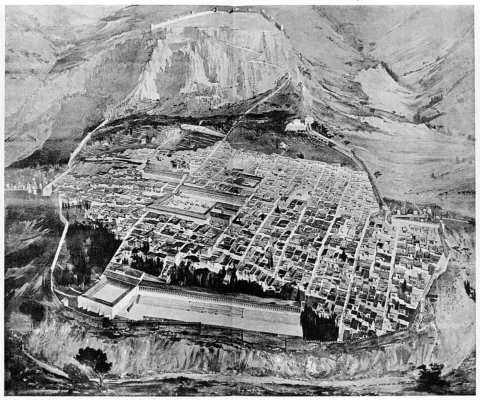
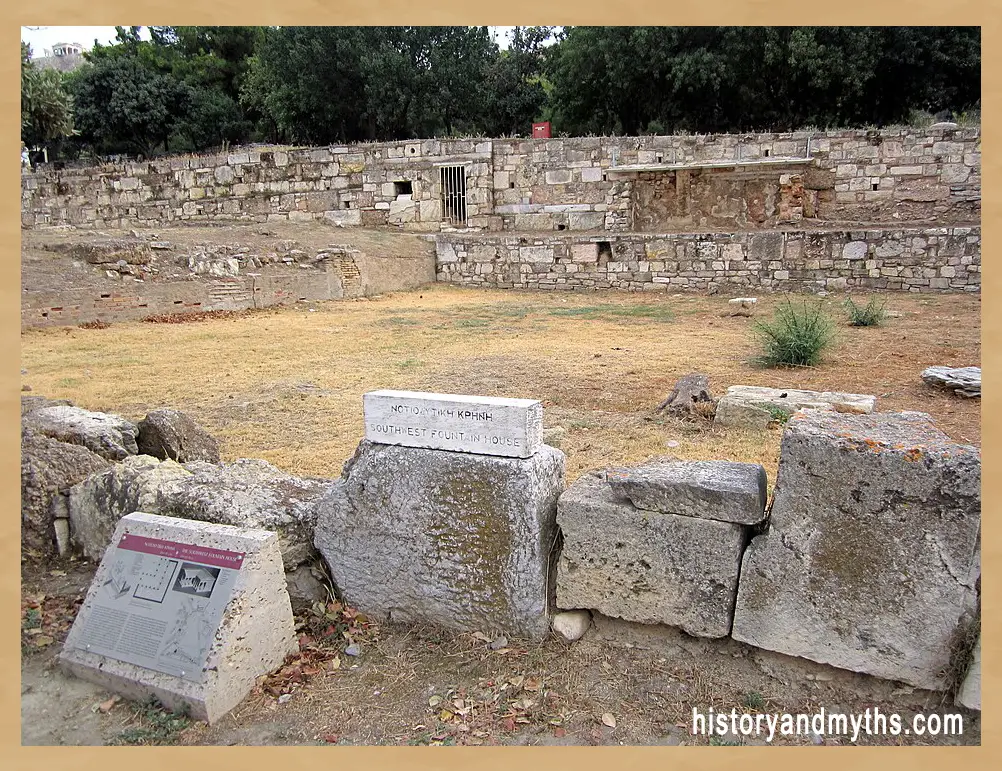
Economic exchange in Greek cities centered on the agora, the public marketplace that functioned as the commercial heart of the polis. Located near the civic center, the agora was not only a place for trade but also a space where social interaction, political discussion, and daily economic activity intersected. Farmers, craftsmen, and merchants gathered there to sell goods, negotiate prices, and maintain commercial relationships.
Most agricultural producers brought their surplus directly to the market. Grain, olives, wine, vegetables, fish, and livestock could all be found in different sections of the marketplace. At the same time, artisans sold pottery, metal tools, textiles, and other manufactured goods. This constant exchange created a local economic system in which rural production and urban consumption were closely connected.
City authorities also played a role in regulating markets. Officials supervised weights and measures, monitored prices, and enforced rules designed to prevent fraud or manipulation. These regulations helped maintain trust in commercial transactions and ensured that basic goods remained accessible to the population.
Although the agora served primarily as a local market, it was also linked to wider trade networks. Imported goods arriving through nearby ports eventually reached the marketplace, where they were distributed to consumers and merchants. In this way, the agora connected everyday economic life with the broader Mediterranean system of commerce.
Continue Reading
Coinage and Economic Exchange
The development of coinage transformed economic exchange in the Greek world. Before coins became common, transactions often relied on barter or on weighed pieces of metal such as silver. This system worked for small exchanges but created difficulties when trade expanded across different regions and markets. Standardized coinage solved this problem by providing a recognized medium of exchange with consistent value.
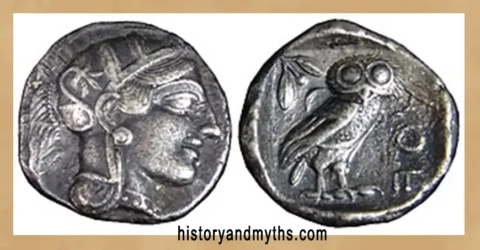
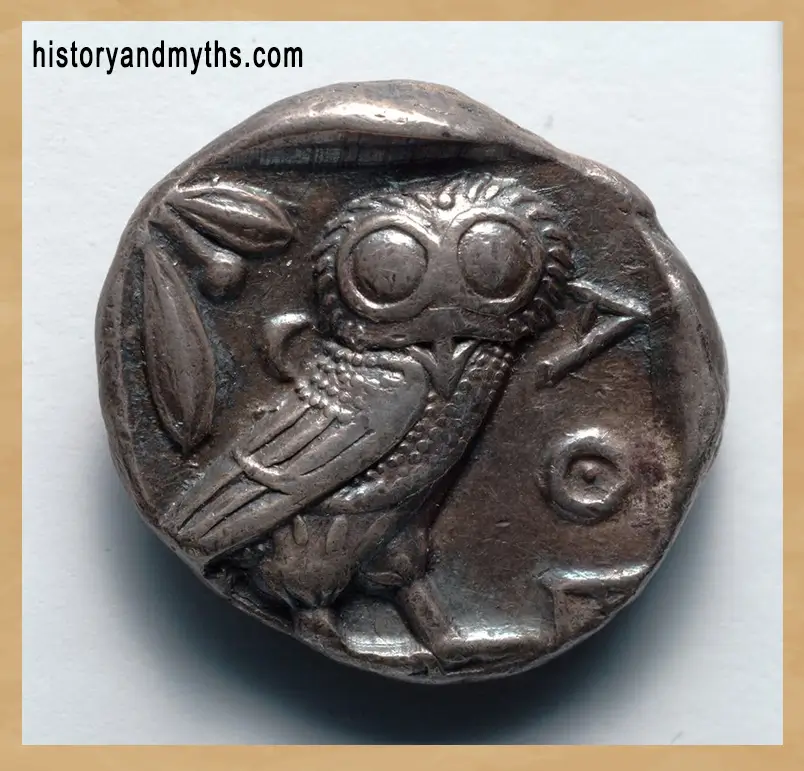
The first widely used Greek coins appeared in the late seventh and sixth centuries BCE, influenced by earlier coinage developed in Lydia in western Anatolia. Greek city-states soon began minting their own coins, typically made of silver and stamped with distinctive symbols that represented the issuing polis. Athens, for example, became famous for its silver tetradrachm bearing the image of Athena and an owl, a coin that circulated widely in Mediterranean trade.
Coinage simplified transactions in both local markets and long-distance trade. Merchants could calculate prices more easily, store wealth in portable form, and conduct business across different regions without constantly weighing metal. This monetary system helped integrate agricultural production, craft industries, and maritime commerce into a more flexible economic network.
At the same time, the ability to mint coins also reflected political autonomy. Each city-state controlled its own currency and used it as a symbol of identity and authority. In this way, coinage served not only an economic function but also a political one, reinforcing the independence of the Greek polis within a competitive and interconnected Mediterranean economy.
Economic Differences Between Greek City-States
The Greek economy was not a single unified system. Each city-state (polis) developed its own economic structure depending on geography, resources, and political priorities. While the same basic elements—agriculture, trade, and markets—existed across the Greek world, their importance varied significantly from one city to another.
Athens represents the most prominent commercial model. By the fifth century BCE, the city relied heavily on maritime trade and imported grain, particularly from the Black Sea region. Its powerful navy protected trade routes and ensured the steady supply of food to the growing population. Athens also benefited from the silver mines at Laurion, which supported coin production and facilitated large-scale commercial exchange.
Sparta developed a very different economic system. Instead of focusing on commerce, the Spartan economy depended primarily on agriculture supported by the labor of the helots, a dependent population that cultivated land for the Spartan elite. Trade and coinage played a limited role compared with other Greek cities, reflecting Sparta’s emphasis on military organization rather than commercial expansion.
Other cities occupied intermediate positions. Corinth, located near key maritime routes, became an important trading center linking the Aegean and western Mediterranean. Island cities such as Rhodes and Chios also developed strong maritime economies built on shipping and commerce. These regional differences illustrate that the Greek economic world was decentralized, shaped by the independent strategies of each polis rather than by a single economic authority.
Key Takeaways
- The Greek economy was based on agriculture, maritime trade, and urban marketplaces.
- Geography limited large-scale farming and encouraged seafaring commerce.
- Olive oil, wine, and pottery were major export products.
- The agora functioned as the economic center of Greek cities.
- Coinage introduced standardized payments that expanded commercial exchange.
Frequently Asked Questions
What was the ancient Greek economy based on?
The economy relied on agriculture, maritime trade, and local marketplaces. Limited farmland forced many Greek cities to import grain while exporting goods such as olive oil, wine, and pottery.
Why was trade important in ancient Greece?
Many Greek regions lacked sufficient fertile land. Maritime trade allowed cities to obtain grain, timber, and metals from other parts of the Mediterranean.
What goods did the Greeks export?
Major exports included olive oil, wine, pottery, and crafted goods, which circulated widely across Mediterranean markets.
What was the agora?
The agora was the central marketplace of a Greek city where farmers, merchants, and craftsmen sold goods and conducted economic exchange.
Did ancient Greece use money?
Yes. Greek city-states began minting coins in the sixth century BCE, usually made of silver and stamped with symbols representing the issuing city.
Sources & Rights
- Bresson, Alain. The Making of the Ancient Greek Economy. Princeton University Press.
- Davies, John K. The Greek World. Routledge.
- Cartledge, Paul. Ancient Greece: A Very Short Introduction. Oxford University Press.
- Encyclopaedia Britannica. Ancient Greece: Economy.
- World History Encyclopedia. Trade in Ancient Greece.
Written by H. Moses — All rights reserved © Mythology and History