Ancient Greek Trade Networks: Routes, Ports, and Commerce
Greek trade networks were not optional—they were necessary for survival. Most Greek city-states could not produce enough grain due to limited fertile land, so they depended on maritime trade to secure food and raw materials. As a result, the Greeks built a system of sea routes that connected the Aegean with the Black Sea, Egypt, Anatolia, and the western Mediterranean. Through these routes, they imported grain, timber, and metals while exporting olive oil, wine, and pottery.
What made this system effective was geography. The Aegean Sea, filled with islands and natural harbors, allowed ships to move in short, manageable stages rather than long open crossings. This reduced risk and encouraged regular commercial movement. Ports such as Athens (Piraeus), Corinth, and Miletus functioned as key nodes linking regional exchange to wider Mediterranean routes.
To understand Greek trade networks is to understand how this system actually worked: where goods moved, which routes mattered most, and how certain cities-controlled access to resources and trade flows. This network—built on routes, ports, and strategic control—turned fragmented city-states into active participants in a connected Mediterranean economy.
Why Greece Needed Trade Networks
Greek trade networks emerged from a structural problem: insufficient local production, especially of grain. Most city-states could not sustain their populations on domestic agriculture alone. Regions such as Attica, for example, relied heavily on imported grain to avoid shortages. Trade was therefore not a choice driven by expansion, but a requirement imposed by geography and demography.
This dependency created a constant economic pressure. Cities needed reliable access to external resources, which meant securing stable trade routes rather than occasional exchange. Grain from the Black Sea, timber from northern regions, and metals from Anatolia became essential inputs for survival and development. Without continuous trade, urban populations and political systems could not function effectively.
At the same time, Greek city-states had goods that were valuable in external markets. Olive oil, wine, and manufactured products such as pottery were not only local staples but also export commodities. This created a reciprocal system: imports solved shortages, while exports financed those imports. Trade networks were the mechanism that sustained this balance.
The result was a dependency cycle that shaped policy and strategy. Securing grain supplies, maintaining access to trade routes, and protecting maritime movement became central priorities. In this context, trade networks were not peripheral—they were the foundation that allowed Greek city-states to exist and compete within the Mediterranean world.
| Trade Route | Main Goods | Strategic Importance |
|---|---|---|
| Black Sea | Grain | Essential food supply for cities like Athens |
| Eastern Mediterranean | Timber, metals, luxury goods | Supported construction and production |
| Western Mediterranean | Agricultural resources, trade goods | Expansion and redistribution network |
| Aegean Network | Mixed goods | Core regional connectivity between cities |
Geography and Maritime Connectivity
Greek trade networks were shaped by the structure of the Aegean world. The mainland is fragmented by mountains, which limited overland movement and made large-scale internal trade inefficient. Moving goods by land was slow, costly, and often impractical across rugged terrain. This pushed economic activity toward the sea.
The Aegean Sea offered a different model of connectivity. It is not an open expanse but a network of islands and short-distance routes. Ships could travel from one point to another in stages, stopping at islands or coastal ports rather than crossing long stretches of open water. This reduced risk, supported regular navigation, and made maritime trade more predictable.
Natural harbors further reinforced this system. Many Greek cities were located near protected bays that could serve as ports. These locations allowed ships to dock, store goods, and redistribute cargo across different routes. Over time, these ports evolved into stable commercial hubs that connected local production with wider Mediterranean exchange.
This geography created a clear outcome: the sea became the primary infrastructure of the Greek economy. Trade networks did not develop despite geography, but because of it. The Aegean functioned as a connective system that linked otherwise isolated regions into a continuous flow of movement and exchange.
Major Greek Trade Routes
Greek trade operated through a set of stable maritime routes rather than random exchange. These routes connected specific regions that supplied essential resources, and over time they became predictable corridors of movement. The most critical of these was the Black Sea route, which provided large quantities of grain to cities that could not produce enough food locally. Control and access to this route were central to the survival of major populations, especially in Athens.
A second major axis linked the Aegean with Egypt and the eastern Mediterranean. Egypt, with its fertile Nile valley, functioned as a reliable grain supplier, while regions in the Levant provided timber, metals, and luxury goods. These connections were not occasional; they formed part of a continuous exchange system that integrated Greek markets into a wider economic zone.
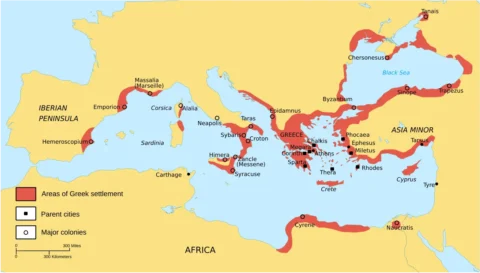
Trade also extended westward toward southern Italy, Sicily, and beyond. These regions offered agricultural resources and access to additional markets. Greek presence in these areas—often through colonies—strengthened commercial ties and allowed merchants to operate within familiar networks rather than foreign systems. This reduced risk and increased the efficiency of long-distance exchange.
Taken together, these routes formed a structured network rather than isolated paths. Each route had a defined economic role: the Black Sea for grain, Egypt and the east for raw materials, and the western Mediterranean for expansion and redistribution. Greek trade networks functioned through this division of supply zones, ensuring that resources moved consistently toward areas of demand.
Key Ports and Commercial Hubs
Greek trade networks depended on specific ports that acted as points of concentration and redistribution, not just places of arrival. These ports connected multiple routes, allowing goods to move between regions rather than simply pass through them. Their importance came from location, access to resources, and the ability to handle sustained commercial traffic.
Athens, through its port at Piraeus, represents the clearest example of a major hub. Piraeus was designed to manage large volumes of imports, particularly grain from the Black Sea. Its infrastructure—harbors, storage facilities, and market access—allowed Athens to secure a steady food supply and redistribute goods within its territory. This made the city economically dependent on, but also highly integrated into, long-distance trade.
Corinth occupied a different position. Located near the narrow land bridge (Isthmus), it connected the Aegean with western routes. Goods could be transferred across this point, reducing the need for long and risky sea voyages around the Peloponnese. This geographic advantage turned Corinth into a key intermediary within the network rather than a terminal destination.
Other cities functioned as regional connectors. Miletus linked the Greek world with Anatolia and eastern markets, while island centers such as Rhodes and Chios facilitated movement across the Aegean. These ports formed a distributed system of nodes, each supporting specific routes. Trade networks functioned effectively because these hubs allowed goods to be received, stored, and redirected across multiple directions rather than confined to a single path.
How Greek Trade Networks Functioned
- Trade operated through stable maritime routes connecting specific resource regions.
- Ports such as Piraeus and Corinth acted as redistribution hubs within the network.
- Grain imports were critical, especially from the Black Sea and Egypt.
- Colonies extended trade routes and secured access to key resources.
- Naval power ensured protection and continuity of trade flows.
Goods Moving Through the Network
Greek trade networks functioned through the continuous movement of specific goods tied to regional needs. The most critical import was grain, particularly from the Black Sea and Egypt. Many city-states could not sustain their populations on local production, making grain supply a central concern of trade policy and maritime activity.
Alongside grain, Greek merchants imported timber, metals, and raw materials required for construction, shipbuilding, and tool production. These resources were limited in mainland Greece but available in northern regions and Anatolia. Their movement through trade networks supported both economic activity and military capacity.
Exports followed a more specialized pattern. Olive oil and wine were the most consistent agricultural products sent abroad, while pottery served both practical and commercial purposes. Greek ceramics have been found across the Mediterranean, providing archaeological evidence of sustained trade routes and repeated exchange rather than isolated transactions.
These flows were not balanced in a simple sense. Greek cities often depended on imports to maintain stability, while exports functioned as the means to finance those imports. The trade network therefore operated as a system of resource movement toward demand, with essential goods like grain taking priority over all others.
Colonies and the Expansion of Trade
Greek colonization was closely tied to trade, not just expansion. From the eighth century BCE onward, city-states established settlements across the Mediterranean and the Black Sea to secure access to resources and stabilize supply routes. These colonies functioned as strategic extensions of the trade network, positioned near fertile land, key waterways, or resource-rich regions.
The Black Sea region provides the clearest example. Greek colonies along its coast became major sources of grain, which was exported back to mainland cities facing agricultural limitations. These settlements reduced dependence on external powers by placing production and trade under Greek control. In effect, colonization transformed distant regions into integrated parts of the economic system.
Colonies in southern Italy and Sicily served a similar function. They opened access to fertile land and created new markets for Greek goods, while also acting as intermediary points within wider trade routes. This allowed merchants to operate within familiar cultural and commercial environments, lowering the risks associated with long-distance exchange.
Colonization therefore extended the network beyond the Aegean. It ensured that key resources—especially grain—could be obtained more reliably, while also expanding the reach of Greek trade. Rather than isolated outposts, these settlements formed a distributed system that supported the long-term stability of Mediterranean commerce.
Continue Reading
Trade and Naval Power
Greek trade networks depended on protection as much as on access. Moving large volumes of goods across the Mediterranean exposed merchants to risks—piracy, interception, and disruption of supply routes. As a result, maintaining secure sea lanes became a strategic priority, especially for cities that relied heavily on imports.
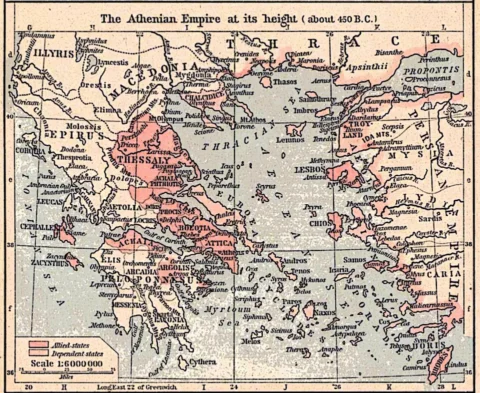
Athens provides the clearest example of this connection between trade and naval power. Its dependence on imported grain, particularly from the Black Sea, required a fleet capable of protecting long-distance routes. The Athenian navy was not only a military force but also an economic instrument, ensuring that essential supplies could reach the city without interruption.
Control of key maritime points also played a role. Strategic locations—narrow straits, coastal passages, and access points to major regions—could be monitored or defended to secure trade flow. This allowed powerful city-states to influence movement across the network, reinforcing their economic position through control rather than production alone.
In this context, trade and naval strength were inseparable. Economic stability depended on secure routes, and secure routes depended on maritime power. Greek trade networks functioned effectively because they were supported by fleets capable of maintaining order across a competitive and often contested Mediterranean environment.
How Greek Trade Networks Shaped the Mediterranean
Greek trade networks did more than move goods; they connected regions into a shared economic system. Regular exchange between the Aegean, the Black Sea, Egypt, and the western Mediterranean created stable patterns of movement in which supply and demand were linked across long distances. This reduced isolation and allowed resources to circulate beyond local limits.
These networks also encouraged standardization. Goods such as amphorae, weights, and coinage became more consistent across regions, making transactions more predictable and efficient. Merchants could operate across different markets with fewer barriers, which increased the scale and frequency of trade.
At the same time, trade strengthened the influence of key cities. Ports that controlled access to routes or resources gained economic and political leverage within the Mediterranean. Athens, for example, used its position within the network to secure grain supplies and extend its influence beyond its immediate territory.
The long-term effect was integration. Greek trade networks contributed to a Mediterranean world in which distant regions were economically interdependent rather than isolated. This system did not eliminate competition, but it created a framework in which exchange became a central feature of ancient economic life.
Key Takeaways
- Greek trade networks were structured systems of routes, ports, and resource flows.
- The Black Sea route was essential for grain supply.
- Major ports functioned as hubs connecting different regions.
- Colonies played a key role in securing trade and resources.
- Naval power was necessary to protect and control trade routes.
Frequently Asked Questions
What were Greek trade networks?
Greek trade networks were maritime systems connecting the Aegean with regions such as the Black Sea, Egypt, and the western Mediterranean.
Why were trade networks important in ancient Greece?
They allowed city-states to import essential resources like grain and raw materials that were not available locally.
What was the most important Greek trade route?
The Black Sea route was critical because it supplied large quantities of grain to major cities such as Athens.
Which cities controlled Greek trade?
Key commercial hubs included Athens (Piraeus), Corinth, and Miletus, which connected different trade routes.
What goods were traded in Greek networks?
Imports included grain, timber, and metals, while exports included olive oil, wine, and pottery.
Sources & Rights
- Bresson, Alain. The Making of the Ancient Greek Economy. Princeton University Press.
- Hansen, Mogens Herman. An Inventory of Archaic and Classical Poleis. Oxford University Press.
- Encyclopaedia Britannica. Ancient Greece: Economy.
- World History Encyclopedia. Trade in Ancient Greece.
- EH.net. The Economy of Ancient Greece.
Written by H. Moses — All rights reserved © Mythology and History