War and Daily Life in Ancient Egypt: Did Civilians Survive Conflict?
War in Ancient Egypt affected civilians long before it reached their towns. It reshaped taxes, food distribution, labor availability, and local security. Even when battles happened far away, ordinary households felt the pressure through shortages, forced mobilization, delayed rations, and tighter state control over daily resources.
Most histories describe war through kings and campaigns, but civilians experienced it through practical disruption. A village did not need an enemy at the gate to suffer. It only needed the state to divert grain, pull men away from fields, and push administrators to extract more from the same households.
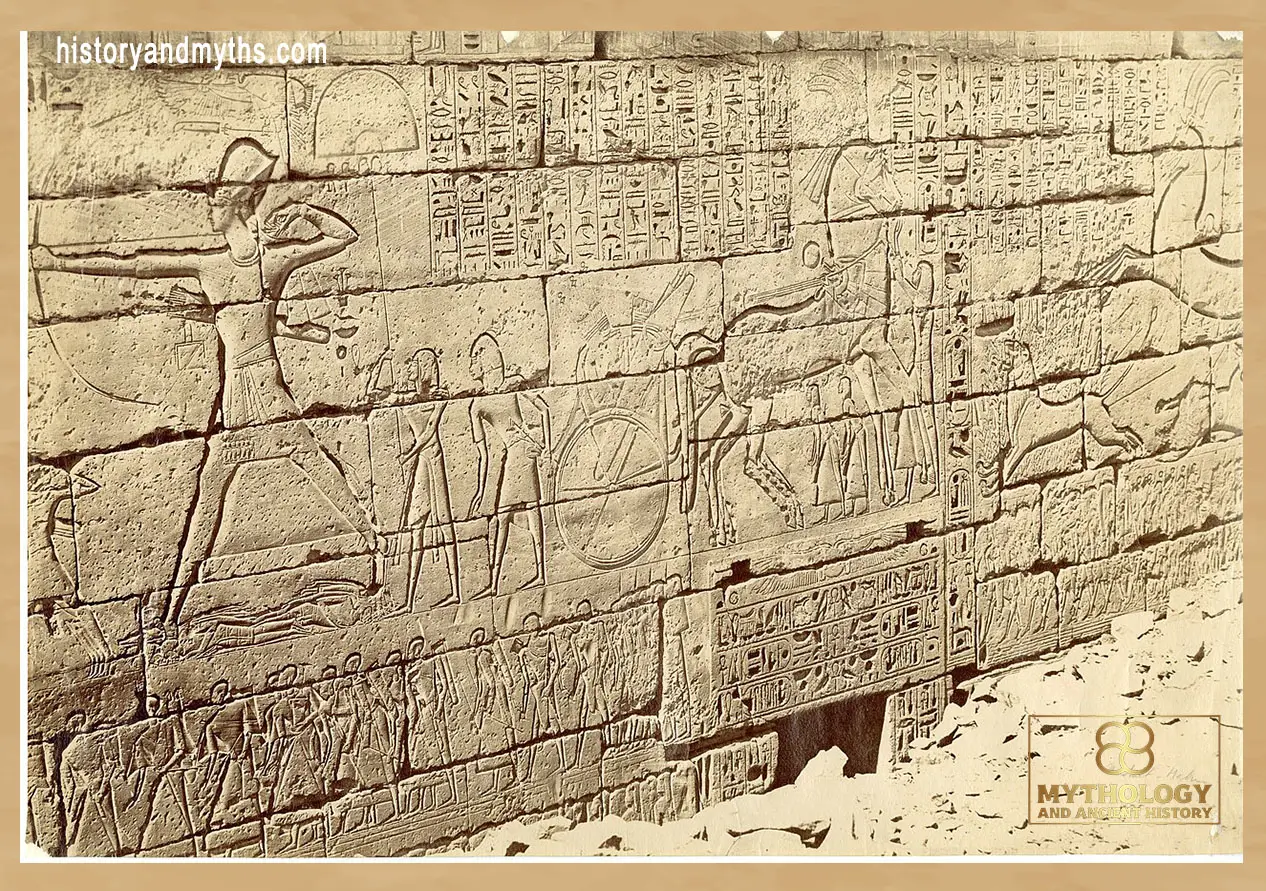
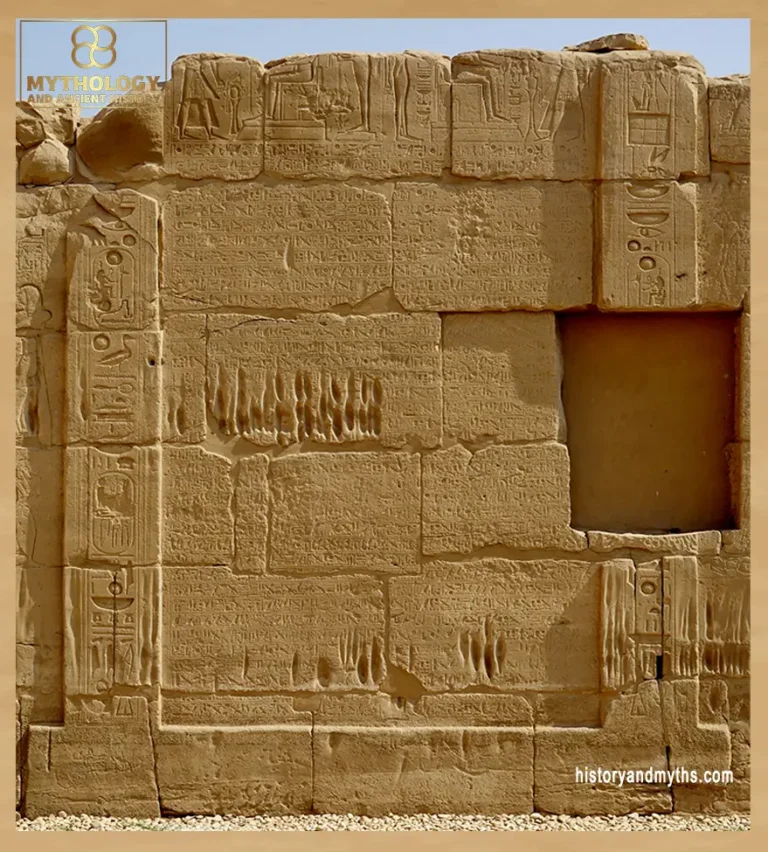
Image: Northern exterior wall reliefs, Temple of Medinet Habu (Ramesses III), photo attributed to Antonio Beato, 1870–1896 — Source: Wikimedia Commons (CC0 1.0)
War Changed the Economy First: Food, Rations, and Everyday Stability
For civilians, war was often an economic event before it was a military event. Egypt’s strength depended on predictable agricultural output and controlled redistribution. When wars expanded, the state had to feed and move men, supply equipment, and keep strategic zones stable. Those demands pulled resources toward the military machine and away from normal civilian routines.
The most direct civilian impact was pressure on food distribution. In a system where many workers depended on rations and institutional supply chains, delays were not a minor inconvenience. A delayed ration could become hunger, and hunger could become protest. War did not always cause shortages by destroying farms. It could cause shortages simply by forcing the state to prioritize supply elsewhere.
This is where civilian life becomes measurable. When people complain about missing grain, when work stops because food does not arrive, and when officials struggle to maintain deliveries, we are seeing war’s impact at ground level. Even a stable city could feel unstable if the distribution system became unreliable.
The economic pressure also created a chain reaction. If more resources were demanded from the same population, local households had fewer buffers against bad seasons, local disputes became sharper, and trust in administration weakened. In short: war did not only add danger. It removed stability.
War and Civilian Life in Ancient Egypt (Quick Framework)
| Civilian Impact Area | What Changed | How It Was Felt Daily | Typical Result |
|---|---|---|---|
| Food and rations | Resources diverted, distribution strained | Delayed grain, unstable supply | Hunger pressure and protest risk |
| Labor availability | Men mobilized for war and service | Fewer hands for fields and workshops | Lower resilience and local strain |
| Taxes and obligations | Increased extraction and urgency | More quotas, fewer exemptions | Exhaustion and noncompliance |
| Security and enforcement | Strained administration, weaker control | Theft, disputes, fear | Erosion of trust and order |
| Inequality | Power concentrates around institutions | Access becomes survival advantage | Uneven civilian outcomes |
Labor and Absence: What Happened When Men Were Taken from Fields and Workshops
War did not only consume grain. It consumed people. One of the fastest ways conflict entered civilian life was through the removal of working men from normal production. When the state needed soldiers, guards, transport crews, or organized manpower, it pulled labor away from farms, building work, and local trades. That absence created pressure inside households long before any battle affected them directly.
In agricultural communities, timing mattered as much as numbers. Losing manpower during critical seasons could weaken harvest output and reduce a household’s ability to meet obligations. Even short-term service could ripple into missed planting, weaker maintenance of irrigation routines, and a sharper dependence on family members who remained behind. Civilian life did not collapse instantly, but it became more fragile.
The burden shifted rather than disappearing. Families reorganized tasks, and communities redistributed responsibilities informally. This adaptation was one reason Egypt could mobilize manpower without destroying itself every time it fought. But adaptation had limits. When mobilization intensified, or when it overlapped with economic stress, everyday life could tilt from manageable strain into chronic instability.
Absence also changed the social texture of villages and towns. A community with fewer adult men present had different security needs, different patterns of authority, and more vulnerability to local intimidation. This is an overlooked point. War reshaped civilian life not only through hunger, but through the quiet erosion of normal balance inside the settlement.
When we talk about war and civilians in Ancient Egypt, this is the practical core. The state extracted service. Civilians absorbed the gap. And the cost was paid in lost labor time, reduced resilience, and rising dependence on a system that could fail under pressure.
Taxes and “Extra Demands”: How War Made the State Heavier
War expands the state’s appetite. Even if a campaign is far from the Nile Valley, the cost is local. Supplies must be gathered, transport must be organized, and institutions must keep running while resources are redirected outward. For civilians, this often appeared as a simple fact: the government asked for more.
These demands were not always presented as “new taxes” in a modern sense. They could be quotas in grain, additional deliveries, forced contributions, or increased labor obligations tied to state priorities. The result was the same. A household that already lived close to its margins could be pushed into vulnerability by a sudden rise in extraction.
Administrative pressure also tends to become harsher during war because failure becomes less tolerable. When the state needs steady flow, local officials are judged on delivery, not compassion. That shift changes civilian experience. The state becomes less flexible, penalties become more likely, and the space for negotiation shrinks. Even without corruption, civilians can feel the system turning from routine to urgency.
This helps explain why war can destabilize society without invasion. When the center’s needs rise, the local population feels it through officials and collections, not through enemy weapons. Civilian resentment is often built not by ideology, but by exhaustion. People do not need to oppose the king’s wars morally to resist the costs. They only need to feel that survival is becoming harder while obligations keep increasing.
So the war-state relationship is direct. War makes the government heavier. A heavier government makes civilian life narrower. And the narrower civilian life becomes, the easier it is for frustration, protest, or quiet noncompliance to appear.
Rations Failures and Civilian Protest: The Deir el-Medina Example
If you want a clear case where war-era pressure translated into civilian disruption, Deir el-Medina is the most useful example. This was a community of skilled workers responsible for royal tomb construction and related state work. Their lives depended on institutional supply, especially regular deliveries of grain.
When rations failed or were delayed, the system exposed its weakness immediately. The workers could not simply “wait” indefinitely. Food was not a bonus; it was the basis of survival. So when deliveries stopped arriving on time, frustration became organized action rather than silent suffering.
What makes this case valuable is that it shows protest as a rational response to administrative breakdown, not as chaos. The workers acted because the state’s promise had become unreliable. Their reaction reveals how close the margin could be even for specialized state employees. If a protected workforce inside a structured system could reach a breaking point, ordinary civilians with fewer protections would feel pressure even more sharply.
This is also where civilian war experience becomes visible in records. Shortages, delays, and administrative stress do not remain abstract. They become events: work stoppages, complaints, and public confrontation with officials. Deir el-Medina is not just a labor story. It is evidence that when the state is strained, civilian stability becomes negotiable.
The deeper lesson is simple. War does not need to destroy towns directly to cause disorder. It only needs to disrupt distribution enough that people lose confidence in the system that feeds them.
Security Breakdowns: When War Pressure Increased Violence at Home
War affects internal security even without invasion. When resources tighten and administration becomes strained, enforcement weakens in predictable ways. Officials may be less able to respond quickly, local supervision becomes inconsistent, and some communities feel the state’s presence fade just when pressure is rising.
This is the point where civilian life becomes riskier in everyday terms. Theft increases when food becomes uncertain. Conflicts inside communities sharpen when obligations pile up. People become more willing to bend rules when survival feels more urgent than compliance. War creates a background of stress, and stress makes societies less orderly.
Security breakdown is not only about crime. It is also about confidence. When civilians believe the state can no longer protect property or deliver basic stability, behavior changes. People hoard, hide production, rely more on family networks, and treat outsiders with suspicion. These are small decisions, but collectively they reshape daily life.
The effect is strongest when war coincides with weak central authority. In those moments, the difference between “order” and “disorder” becomes administrative rather than military. The question is not whether Egypt still has armies, but whether the state can still enforce routine. When routine collapses, civilian life becomes more exposed to local power, intimidation, and opportunistic violence.
So the civilian impact of war includes a less visible consequence: a slow erosion of safety. Not through a single dramatic event, but through the everyday reality that rules stop working the way people expect.
Continue Reading
Winners and Losers: How War Reshaped Civilian Inequality
War did not hit all civilians equally. Even inside the same society, conflict creates uneven exposure and uneven opportunity. Some groups gained stability and privilege because the state protected them. Others carried the cost because they were easier to extract from and harder to defend.
Institutional workers and people connected to administration could be relatively insulated, at least for a time. Their livelihood depended on state logistics, and the state had reasons to keep key nodes functioning. In contrast, ordinary rural households were more exposed. They provided labor, grain, and compliance, but they did not control the channels of distribution. When pressure rose, they had fewer buffers.
War also increased the power of the middle layers: officials who managed collection, delivery, and enforcement. Even without overt abuse, these roles gained leverage because they stood between the state’s demands and civilian survival. Access to grain, paperwork, and exemptions could become as important as wealth. A small decision by an administrator could determine whether a household stayed stable or broke.
This is why war reshaped inequality even when the enemy was far away. It increased the importance of proximity to power. People with connections could navigate the system. People without them experienced the system as pure pressure. Over time, that difference accumulates into real social stratification.
So civilian life under war is not only about suffering. It is also about redistribution of advantage. War reorganizes society by concentrating control in those who manage resources, while increasing vulnerability for those who only provide them.
War Hit Civilians Through Systems
In Ancient Egypt, war did not need to reach a town to disrupt it. The pressure traveled through grain distribution, labor extraction, taxation, and local enforcement. When those systems strained, civilian stability weakened even without direct invasion.
War Reached Civilians Through Systems, Not Just Battle
Civilian life in Ancient Egypt was shaped by war even when civilians never saw an enemy soldier. The impact travelled through systems: food distribution, labor extraction, administrative demand, and local security. War turned the state more urgent and more demanding, and that urgency narrowed civilian stability.
The most important point is that civilians experienced war as disruption. Grain arrived late or failed to arrive. Men were pulled from fields and workshops. Officials enforced quotas more aggressively. Security became less predictable. These pressures were not isolated. They reinforced each other until normal life became harder to maintain.
This is why war is not only a military topic in Egyptian history. It is a daily life topic. The state’s ability to fight depended on how much strain society could absorb without breaking. When the strain stayed manageable, Egypt remained stable. When it exceeded the system’s limits, civilian protest, violence, and administrative failure became part of the war story itself.
Key Takeaways
- War reshaped civilian life through food supply, labor removal, and heavier state demands.
- Shortages often came from strained distribution, not only from destroyed farms.
- Mobilization reduced household resilience by removing workers from fields and trades.
- Administrative pressure during war narrowed civilian flexibility and increased tension.
- Instability rises when the state cannot deliver routine stability consistently.
FAQ
Did civilians suffer during wars even if battles were far away?
Yes. Civilians often felt war through taxes, labor mobilization, food distribution strain, and tighter administrative pressure.
Why would food shortages happen without invasion?
Because war redirected grain and stressed distribution systems, making deliveries unreliable even in stable regions.
How did war affect village labor and farming?
Mobilization removed working men from fields and workshops, reducing household resilience and disrupting seasonal production.
What made civilian protest more likely during war?
When rations failed, obligations increased, and officials enforced quotas more harshly, frustration could become organized protest.
Did war increase crime and insecurity inside Egypt?
It could. Stress, shortages, and weaker administrative control often raised theft, disputes, and insecurity in daily life.
Who benefited from war inside society?
Groups close to institutions and administration could be more protected, while ordinary households carried heavier extraction pressure.
What is the simplest way to describe war’s civilian impact?
War reached civilians through systems: food, labor, taxes, and local enforcement, not only through direct violence.
Sources & Rights
- Kemp, Barry J. Ancient Egypt: Anatomy of a Civilization. 2nd ed. London: Routledge, 2006.
- Shaw, Ian, ed. The Oxford History of Ancient Egypt. Oxford: Oxford University Press, 2000.
- Spalinger, Anthony J. War in Ancient Egypt: The New Kingdom. Malden, MA: Blackwell Publishing, 2005.
- Van De Mieroop, Marc. A History of Ancient Egypt. Malden, MA: Wiley-Blackwell, 2011.
- Wente, Edward F. Letters from Ancient Egypt. Atlanta: Scholars Press, 1990.
- Wilkinson, Toby. The Rise and Fall of Ancient Egypt. New York: Random House, 2010.
Written by H. Moses — All rights reserved © Mythology and History