Foreign Policy in Ancient Egypt: Diplomacy, Trade, and Power
Foreign policy in Ancient Egypt was a practical system for protecting borders, securing trade routes, and projecting prestige. Diplomacy was the main tool: letters carried demands and guarantees, gifts priced relationships, and treaties formalized commitments—especially in the New Kingdom, when Egypt operated inside a “great powers” international order.
This article explains: what Egypt wanted, the diplomatic tools it used, how it managed vassals in Syria-Canaan, why Nubia was governed differently, and why diplomacy sometimes failed and war returned.
Egypt’s Foreign Policy Goals
Ancient Egyptian foreign policy was not driven by ideology alone. It was designed to protect the core of the state—the Nile Valley—while extracting predictable advantages from the world beyond it.
Security: Keeping Threats Far from the Nile
Egypt aimed to prevent hostile forces from approaching the heartland. The safest strategy was to control or influence border zones and key corridors, so conflicts could be contained outside Egypt rather than fought inside it.
Wealth and Supply: Trade Routes, Tribute, and Resources
Foreign policy also served the palace economy. Access to metals, timber, luxury goods, and reliable trade routes mattered because they strengthened the state’s ability to build, reward loyalty, and maintain large institutions.
Prestige: Why Reputation Was a Strategic Asset
In the international arena, rank mattered. Being treated as a “great king” changed the tone of negotiations, the size of gifts expected, and the willingness of other courts to cooperate. Prestige was not vanity—it was leverage.
| Tool | What It Did | Where It Shows Up | Strength | Limit |
|---|---|---|---|---|
| Letters & envoys | Command, negotiate, warn, and manage alliances | Court correspondence and diplomatic archives | Fast control at low cost | Fails if partners ignore pressure |
| Gifts & gold | Price relationships and signal rank | Great-power diplomacy and alliance upkeep | Builds commitment without war | Can trigger status disputes |
| Treaties | Formalize peace and obligations | Post-conflict settlements | Creates clear commitments | Breaks when interests shift |
| Vassal management | Reward loyalty, punish defiance, prevent collapse | Syria-Canaan sphere | Control without direct rule | High instability and constant crises |
| Trade control | Secure resources and protect corridors | Levant, Nubia, Red Sea routes | Turns supply into leverage | Vulnerable to disruption |
| Intelligence & border control | Detect threats early and enforce compliance | Fortresses, garrisons, monitored frontiers | Stabilizes diplomacy with pressure | Requires constant maintenance |
The Core Tools of Egyptian Diplomacy (How the System Worked)
Ancient Egyptian diplomacy was not one technique. It was a toolkit designed to produce predictable outcomes with minimum cost—especially when war was expensive, risky, or unnecessary.
Letters and Envoys: Diplomacy as Daily Administration
Diplomacy ran on written communication and trusted messengers. Letters were not “polite updates”—they were state instruments used to command, negotiate, reassure, and pressure. Through correspondence, Egypt could manage alliances, demand compliance from dependent rulers, and respond quickly to instability without sending an army every time.
Envoys mattered because they carried more than text. They carried tone, timing, and political intent. Their presence alone signaled whether Egypt was rewarding, monitoring, or warning the other side.
Gifts and Gold: Political Currency, Not Generosity
Gift exchange was one of Egypt’s strongest diplomatic tools. It worked like political currency: it proved commitment, tested respect, and priced the relationship in material terms.
Gold had special weight. It could buy cooperation, keep partners invested in friendship, and help Egypt maintain influence in contested zones. When gifts stopped or felt insulting, diplomacy could break down fast—because the message was not economic, it was political.
Treaties: Formalizing Commitments After Conflict
Treaties were used when ongoing tension threatened stability. They formalized commitments such as non-aggression, mutual obligations, and controlled boundaries. A treaty turned a fragile understanding into a documented relationship that could be referenced, defended, and publicly displayed.
But a treaty was never “the end of politics.” It worked only as long as both sides continued to see it as useful.
Managing Vassals: Rewards, Pressure, and Controlled Intervention
In Syria-Canaan, Egypt often ruled indirectly through local leaders. This required constant management. Egypt rewarded loyalty, punished disobedience, monitored rivalries, and intervened when necessary to prevent collapse of its influence.
This vassal system explains why diplomacy in this region was so intense: Egypt was not only dealing with foreign kings—it was also managing a network of smaller rulers whose survival depended on Egyptian support.
Diplomatic Marriage
Diplomatic marriage was one of the highest-cost alliance tools. It could reinforce cooperation between great powers and create a living link inside the royal court, but it was not a daily mechanism like letters or gifts. For the full breakdown, see our dedicated guide to Political Marriages in Ancient Egypt.
The Amarna Model: What Egyptian Diplomacy Looked Like in Practice
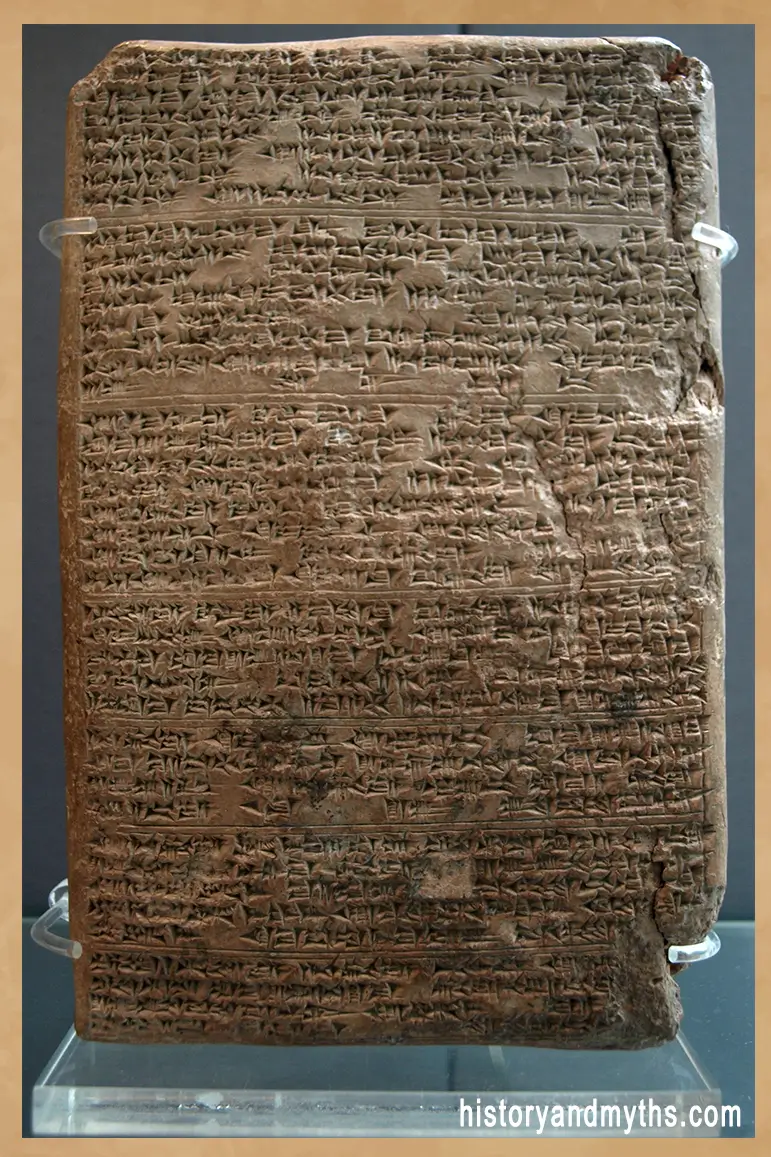
The clearest window into Egyptian diplomacy is the Amarna archive, because it captures foreign policy in motion rather than as later propaganda. Instead of speeches and monuments, it shows the daily mechanics: requests, complaints, reassurance, bargaining, and pressure.
Diplomacy Was Written as Management, Not Ceremony
Many messages are not “high diplomacy” between equals. They are operational communication about loyalty, disorder, and immediate needs. Rulers and local leaders write to secure support, report threats, and justify their own actions—because surviving depended on staying in Egypt’s favor.
Political Language Had a Function
Diplomatic writing used formal politeness, but it was rarely neutral. Respectful language could signal alignment; omission or cold tone could signal danger. Titles, greetings, and repeated phrases were part of diplomatic control—because protocol communicated rank and expectations without open confrontation.
Gifts and Requests Were Part of the Same Conversation
In the Amarna model, gift exchange is inseparable from diplomacy. Requests for gold or prestigious goods are not random greed—they are political bargaining. The flow of gifts confirmed the relationship and helped prevent partners from drifting toward rivals.
Egypt’s Leverage Was Often Indirect
Egypt did not need to occupy everything to dominate the system. It controlled outcomes by choosing when to respond, who to reward, and who to ignore. Silence could punish. Favor could stabilize. That ability to shape local politics through selective support is what made Egyptian diplomacy effective—until local conditions became too unstable to manage from a distance.
Trade as Foreign Policy (Power, Not Commerce)
Trade in Ancient Egypt was not just economic activity. It was a foreign policy tool that helped Egypt control access, reward cooperation, and secure resources the Nile Valley could not produce at scale.
Trade Protected the State’s Supply Chain
Certain materials were strategic: timber, metals, oils, luxury goods, and crafted prestige items. Foreign policy ensured these supplies remained predictable, because shortages weakened the court’s ability to build, pay, and maintain loyalty networks.
Trade Routes Were Political Infrastructure
Routes through the Levant, the Red Sea, and Nubia were not neutral highways. Controlling them meant controlling influence. Egypt’s diplomacy aimed to keep key corridors open, discourage rivals from disrupting them, and ensure that allies benefited more than enemies.
Tribute vs. Trade: Egypt Used Both
Egypt could receive goods in two different ways:
- Trade, where both sides gained economically.
- Tribute, where goods functioned as recognition of Egyptian dominance.
The line between them could be intentionally blurry, because ambiguity helped Egypt claim superiority while still maintaining practical cooperation.
Goods Were Also Signals
In elite politics, what arrived from abroad mattered as much as why it arrived. Exotic or high-status goods strengthened the image of the king as a provider and a global ruler. That image was not decoration—it helped stabilize authority at home.
Two Models of Empire: Nubia vs Syria-Canaan
Egypt did not manage all foreign regions the same way. Its diplomacy and control depended on geography, risk, and how easy it was to enforce authority.
Nubia: Direct Control and Administrative Power
In Nubia, Egypt could exercise stronger and more direct control. The region was closer, strategically vital, and easier to dominate through permanent structures of governance. Control here relied less on constant negotiation with semi-independent rulers and more on administration, supervision, and predictable extraction of resources.
This model created stability because Egypt could enforce decisions locally, not just demand them from afar.
Syria-Canaan: Indirect Rule Through Dependent Rulers
In Syria-Canaan, Egypt’s influence was often indirect. Instead of ruling every city directly, Egypt relied on a network of local leaders who governed their territories under Egyptian supremacy.
That model required constant diplomacy because local politics were unstable. Rivalries between city rulers, external pressure, and shifting loyalties meant Egypt had to manage relationships continuously: reward allies, punish disobedience, and intervene selectively to prevent total breakdown.
Why the Difference Matters
This contrast explains why Egyptian diplomacy looks so intense in the Levant. It was not simply “foreign relations”—it was crisis management across many smaller actors. In Nubia, administration could replace negotiation. In Syria-Canaan, negotiation was the administration.
Intelligence, Hostages, and Border Control (Soft Power with Hard Edges)
Egyptian diplomacy did not rely on trust alone. It was reinforced by systems that reduced uncertainty and made disloyalty costly, especially in unstable frontier regions.
Border Control Was Information Control
Fortresses, garrisons, and checkpoints were not only military assets. They were filters. They controlled movement, monitored threats, and kept Egypt informed about what was happening beyond its borders before crises reached the Nile Valley.
Intelligence Was Built into the Diplomatic Network
Envoys, local allies, and dependent rulers were sources of information as much as they were political partners. Egypt’s strongest advantage was often early awareness: knowing who was shifting sides, who was under pressure, and which city was about to collapse.
Hostages as Guarantees of Loyalty
In many ancient Near Eastern political systems, loyalty could be secured by holding high-status individuals as guarantees. Egypt could achieve control without constant warfare by turning obedience into a matter of personal risk for ruling families.
This did not replace diplomacy—it strengthened it. Negotiation works better when the consequences of betrayal are real and immediate.
Why This Matters for Understanding Egyptian Power
These tools explain how Egypt could project influence with limited direct occupation. Diplomacy persuaded and managed relationships—but intelligence and controlled pressure made the system stable enough to function.
- Define the goal: security, resources, or prestige.
- Start with letters: requests, warnings, and loyalty management.
- Reinforce with gifts: gold and prestige items “price” the relationship.
- Stabilize trade corridors: routes are policy infrastructure, not commerce.
- Control vassals indirectly: rewards, pressure, and selective intervention.
- Back it with enforcement: border control and intelligence reduce betrayal risk.
- Use treaties after shocks: formal commitments when tension becomes costly.
- Escalate only when needed: war restores credibility when diplomacy stops working.
When Diplomacy Failed: Why Egypt Still Fought Wars
Diplomacy was Egypt’s preferred tool, but it had limits. When those limits were reached, Egypt used military force—not as a habit, but as a corrective mechanism to restore credibility and control.
1) When Local Alliances Collapsed
In vassal territories, diplomacy could fail simply because the system became unstable. If local rulers turned on each other, stopped cooperating, or lost power, Egyptian influence could unravel fast. At that point, letters and gifts were no longer enough—Egypt needed visible intervention to reset the balance.
2) When Prestige Was Tested
In the international arena, the biggest danger was looking weak. If Egypt tolerated repeated defiance or pressure without response, it risked encouraging more challenges. War in this context was often about restoring deterrence: proving that Egypt’s demands were not optional.
3) When Strategic Corridors Were Threatened
Some regions mattered more than others. If critical routes, border buffers, or resource access points came under threat, Egypt could choose force because the cost of losing control was higher than the cost of a campaign.
4) When Diplomacy Bought Time—but Not Solutions
Sometimes diplomacy worked as delay, not resolution. Egypt could stabilize relations temporarily through negotiation and exchange, but if the underlying conflict of interest remained, the problem returned later. Military action then became the final lever when peaceful tools stopped producing results.
- Egyptian foreign policy was practical: protect borders, secure resources, and project prestige.
- Diplomacy was the default tool: letters and envoys managed problems cheaply and fast.
- Gifts were political currency: gold and prestige goods priced relationships and rank.
- Trade was strategy: controlling routes meant controlling influence and supply chains.
- Syria-Canaan required constant management: vassals made diplomacy continuous crisis control.
- Nubia allowed tighter control: direct administration worked better than indirect rule.
- Intelligence and borders reinforced diplomacy: pressure made agreements stick.
- Diplomacy could fail: when prestige or corridors were threatened, Egypt fought to restore credibility.
FAQ — Foreign Policy and Diplomacy in Ancient Egypt
What was Ancient Egyptian foreign policy trying to achieve?
It aimed to protect the Nile Valley, secure resources and trade routes, and maintain prestige strong enough to shape negotiations with neighbors.
How did Ancient Egypt conduct diplomacy?
Primarily through letters and envoys, supported by gift exchange, treaties after crises, and continuous management of dependent rulers in frontier zones.
Why are the Amarna Letters so important for understanding diplomacy?
They show diplomacy as daily administration—requests, complaints, bargaining, and pressure—rather than later monumental propaganda.
Was gift exchange just ceremonial politeness?
No. Gifts—especially gold and prestige goods—worked as political currency that priced relationships, signaled rank, and tested respect.
Did Ancient Egypt rely more on diplomacy or warfare?
Diplomacy was the default because it was cheaper and more flexible. War was typically used when diplomacy stopped producing compliance or deterrence.
How did Egypt manage Syria-Canaan differently than Nubia?
Syria-Canaan was often managed indirectly through dependent local rulers, requiring constant negotiation. Nubia allowed tighter, more direct administrative control.
What role did treaties play in Egyptian diplomacy?
Treaties formalized commitments—especially after conflict—by setting expectations that could be referenced publicly and politically.
Did Ancient Egypt use intelligence and border control as diplomatic tools?
Yes. Monitoring frontiers and gathering information reduced uncertainty, made betrayal riskier, and reinforced diplomatic pressure without constant campaigns.
How did trade function as foreign policy?
Trade secured strategic materials and stabilized corridors of movement. Controlling access and routes could be as powerful as direct military action.
Where does diplomatic marriage fit into foreign policy?
It was a high-cost alliance tool used selectively to reinforce major relationships. It mattered, but it was not the daily engine of diplomacy.
Why did diplomacy sometimes fail?
Because interests shifted, local vassal politics collapsed, or prestige was tested. When agreements no longer served both sides, coercion returned.
Sources & Rights
- Moran, William L., ed. The Amarna Letters. Baltimore: Johns Hopkins University Press, 1992.
- Liverani, Mario. International Relations in the Ancient Near East, 1600–1100 BC. New York: Palgrave Macmillan, 2001.
- Van De Mieroop, Marc. A History of the Ancient Near East, ca. 3000–323 BC. 3rd ed. Malden, MA: Wiley-Blackwell, 2016.
- Bryce, Trevor. The Kingdom of the Hittites. Oxford: Oxford University Press, 2005.
- Kitchen, K. A. Pharaoh Triumphant: The Life and Times of Ramesses II. Warminster: Aris & Phillips, 1982.
- Redford, Donald B. Akhenaten: The Heretic King. Princeton: Princeton University Press, 1984.
- Spalinger, Anthony J. “The Great Treaty between Egypt and Hatti.” In Studies in Ancient Egypt, the Aegean, and the Sudan, edited volume. (Scholarly treatment of the treaty tradition and context.)
- Hoffmeier, James K. Ancient Israel in Sinai: The Evidence for the Authenticity of the Wilderness Tradition. Oxford: Oxford University Press, 2005. (For Egyptian imperial logistics and frontier control discussions.)
- O’Connor, David, and Eric H. Cline, eds. Thutmose III: A New Biography. Ann Arbor: University of Michigan Press, 2006.
- Tyldesley, Joyce. Egypt’s Golden Empire: The Age of the New Kingdom. London: Headline, 2001.
- Shaw, Ian, ed. The Oxford History of Ancient Egypt. Oxford: Oxford University Press, 2000.
- Kuhrt, Amélie. The Ancient Near East, c. 3000–330 BC. 2 vols. London: Routledge, 1995.
- Trigger, Bruce G., Barry J. Kemp, David O’Connor, and Alan B. Lloyd. Ancient Egypt: A Social History. Cambridge: Cambridge University Press, 1983.