How Did Ancient Egypt Control Its Borders? Forts, Trade Gates
Border control in Ancient Egypt was not a single wall or a few soldiers at the edge of the map. It was a full system of forts, guarded routes, checkpoints, and written reporting that regulated movement, blocked raids, and controlled trade. Egypt protected its borders by managing who could pass and who could not.
Egypt understood something modern states still rely on: borders are easiest to defend when they are organized. Instead of waiting for threats to reach the heartland, the state built layered control points in the south, monitored desert routes, and treated key entrances as managed gates—where security and commerce were supervised together.
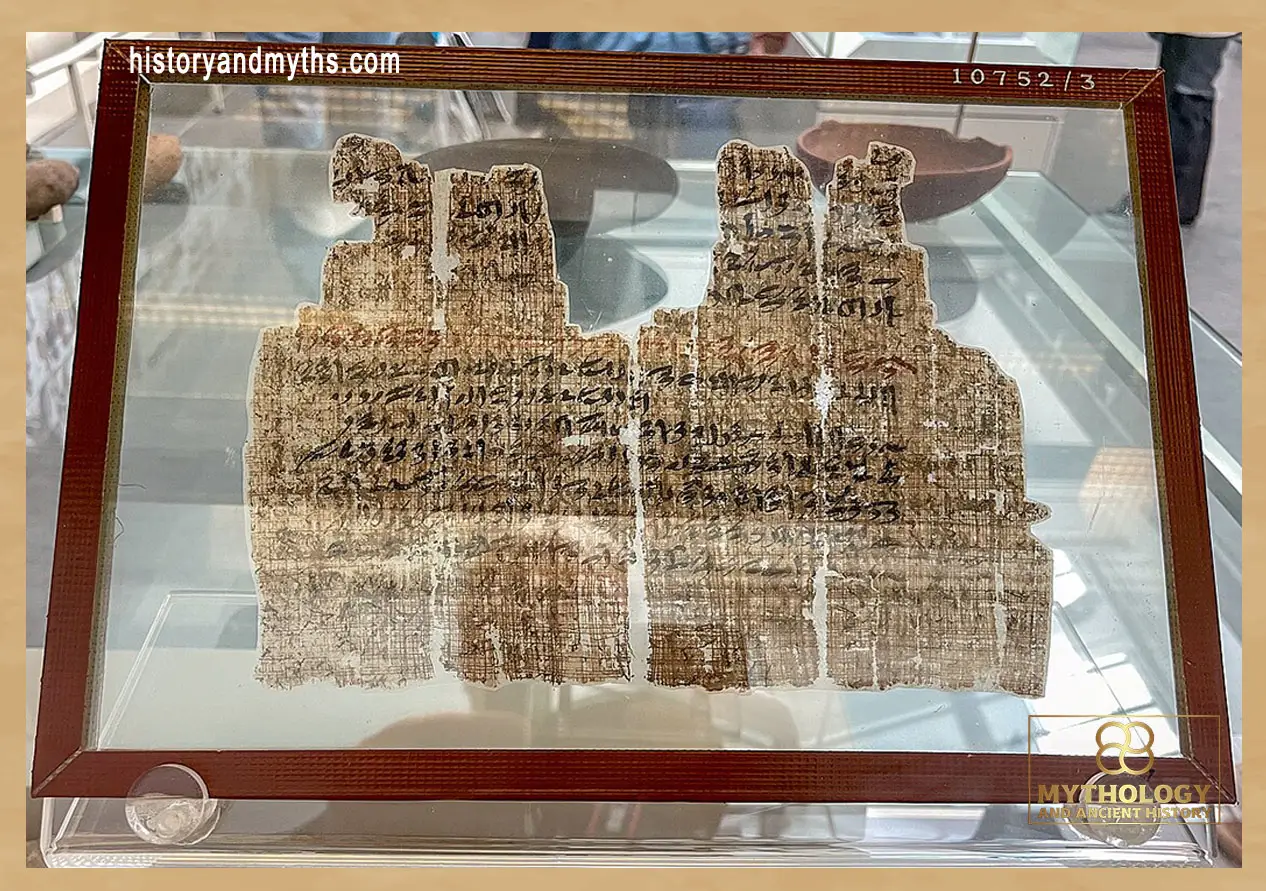
Image: The Semna Despatches (EA10752/3), British Museum, photo by Mike Peel, 9 June 2024 — Source: Wikimedia Commons (CC BY-SA 4.0)
Borders Were Not Lines: Egypt Controlled Gateways
Ancient Egypt did not defend its territory as a clean line drawn across the desert. It defended gateways. The geography of the Nile made this possible. Movement was concentrated into predictable corridors, and the state focused its control where people had to pass.
In the south, the Nile itself created natural choke points around the cataracts. Whoever controlled those narrow passages controlled access between Egypt and Nubia. This is why southern frontier policy was not just “military.” It was logistical. A fort positioned at a bottleneck could watch traffic, intercept threats, and supervise exchange without needing to patrol endless open land.
In the east, Sinai functioned as Egypt’s exposed doorway to the Levant. Unlike the Nile corridor, the routes were broader and more uncertain. That made control more dependent on organized checkpoints, garrisoned posts, and monitoring of movement rather than one unbeatable stronghold. The goal was early warning and regulation, not just combat.
In the west, the situation was different again. The desert did not allow large invading forces to move easily, but it enabled raids, smuggling, and sudden disruption. Border control here was often about surveillance and response rather than permanent heavy fortification. The state needed awareness more than mass.
This gateway approach reveals the logic behind Egypt’s frontier system. Egypt did not try to defend everywhere equally. It defended where geography forced movement to become visible. That is the core principle that made border control workable in an ancient state with limited manpower.
Border Control in Ancient Egypt (Quick Framework)
| Frontier Zone | Main Risk | Control Tools | State Goal |
|---|---|---|---|
| South (Nubia) | Strategic corridor and resource pressure | Forts at choke points, garrisons, patrols | Hold crossings, manage trade, project power |
| East (Sinai) | Fast movement, infiltration, raids | Route control, garrisoned posts, early warning | Manage entry and protect the Delta gate |
| West (Desert) | Raids, smuggling, sudden disruption | Surveillance, patrol response, deterrence | Control risk without exhausting manpower |
| Administration | Information gaps and late reaction | Reports, patrol logs, written monitoring | Make movement legible to the center |
| Trade control | Unregulated goods and loss of revenue | Checkpoint filtering and supervision | Extract value and reduce strategic leakage |
Forts Did More Than Fight: They Filtered People, Goods, and Risk
Egyptian forts were not only built to withstand attacks. They were built to control flow. A frontier fort was a physical tool for filtering movement, separating what the state allowed from what it considered dangerous or disorderly.
Military defense was only the obvious function. A garrison could repel raids and hold a strategic point, but its daily work was often administrative. Forts managed storage, supplies, and predictable routines that allowed officials to monitor the frontier as a controlled space rather than a chaotic edge. This is what turned a border into something governable.
Trade control was part of that logic. Goods moving through frontier zones were valuable, taxable, and politically sensitive. If the state could track movement, it could extract value from commerce and prevent rivals from gaining resources. Border control was therefore economic policy as much as security policy. A fort was where trade became legible to the state.
Forts also reduced uncertainty. They created fixed points where messengers could report, patrols could rotate, and local intelligence could be gathered. Without those nodes, the state would always be reacting late. With them, it could respond earlier, and sometimes prevent a problem before it formed.
This is why the fortress system matters historically. Egypt did not merely “defend itself.” It organized its borders the same way it organized taxation and labor: by turning movement into something the state could measure, regulate, and manage.
Border Control Needed Paperwork: Reports, Patrols, and Surveillance
Border control is not effective if it exists only as stone walls and armed men. The real strength of Egypt’s frontier system was that it produced information. The state cared about movement because movement could become danger, but it could also become profit. To manage either, Egypt needed surveillance and reporting.
This is where administration becomes the hidden weapon. Patrols were valuable not only because they could fight, but because they could observe. They tracked unfamiliar groups, noted crossings, and confirmed whether the frontier was stable. A patrol that returns with accurate information is often more useful than a patrol that returns with trophies.
Written reporting transformed the border from a distant edge into a readable system. When officials recorded who moved, when they moved, and why they moved, the border became legible to the center. That legibility is power. It allows the state to decide what to permit, what to stop, and where to concentrate resources next.
Surveillance also worked through routine. The value of border control was not one dramatic victory. It was consistent control over time. Regular reporting created predictability, and predictability reduced panic. It is easier to govern an empire when the frontier is quiet, not because it is empty, but because it is monitored.
This is why Egypt’s border system should be read as bureaucracy in action. Forts provided physical control, but paperwork created strategic control. The frontier did not simply exist. It was managed through observation, documentation, and steady pressure.
Southern Border Strategy: Nubia, Choke Points, and Long-Term Control
The southern frontier was Egypt’s most strategically structured border because it combined geography with resources. Nubia was not only a threat corridor. It was also a region tied to gold, trade routes, and political influence. That made control a long-term investment rather than a short-term defensive reaction.
The Nile narrowed options. Large movements had to follow the river, and key stretches could be dominated by fortified positions. This is why Egypt placed strongholds where control could be concentrated. A fort on the right point did not need to chase enemies across open land. It could restrict passage, observe movement, and serve as a fixed anchor for administration.
Southern forts were also instruments of occupation. They allowed Egypt to project authority beyond its traditional boundary and maintain pressure on local power structures. That pressure could be military, but it was often logistical and administrative. The fort did not only threaten violence. It controlled supplies, controlled crossings, and controlled the rhythm of contact between Egypt and the communities further south.
This is where border control merges with imperial policy. In Nubia, Egypt’s aim was not simply “keep them out.” It was often “hold the corridor.” A stable southern frontier meant secure access to resources and secure movement of goods. When the south was controlled, Egypt could think beyond survival and toward dominance.
Eastern Border Strategy: Sinai as Egypt’s Most Vulnerable Gate
If the south was Egypt’s most organized frontier, the east was often its most anxious one. Sinai and the routes toward the Levant exposed Egypt to movement that could be fast, unpredictable, and difficult to contain. Trade caravans, migrants, emissaries, and hostile groups could all approach from the same corridors. That forced the state to treat the eastern border as a managed gate rather than a distant battlefield.
Eastern border control relied on controlling routes, not empty desert. The state could not seal the whole landscape, but it could supervise the points where movement became practical. That meant forts, garrisons, and organized stations that supported patrols and created early warning. The real purpose was detection and regulation before a threat gathered momentum.
This frontier also had a political function. The eastern routes connected Egypt to diplomacy, tribute, and imperial ambition. When Egypt projected power into the Levant, the border stopped being only defensive. It became a supply channel. Keeping the gate stable meant keeping campaigns possible, protecting merchants, and ensuring information moved without interruption.
This is why the east mattered so much even when no war was active. The state had to control entry because the risk was not only invasion. It was infiltration, opportunistic raids, and instability spreading into the Delta. A quiet eastern border was one of the conditions for internal stability in the heartland.
Continue Reading
Western Desert Control: Surveillance, Raids, and the Limits of Forts
The western frontier posed a different problem. Unlike the Nile corridor or the Sinai routes, the western desert did not channel movement into a few predictable gateways. That made it harder to control with forts alone. The state could build strongpoints, but it could not realistically lock down the entire desert edge.
So the logic shifted from blocking to monitoring. Western border control leaned toward surveillance, response, and deterrence. The main threat was often not a large organized invasion. It was smaller raids, sudden theft, and disruption of travel routes. These threats required speed and local awareness more than heavy static walls.
This is where patrol culture becomes essential. The state needed eyes and movement across open terrain. Information mattered, and so did the ability to react quickly when a threat appeared. In practical terms, the west was less about permanent barriers and more about controlling risk through visibility and punishment.
The western frontier also reveals the limits of ancient border control. Egypt could project power, but it could not eliminate uncertainty. The desert always allowed movement that was hard to track. Border control here was therefore a balancing act: enough presence to discourage attacks, enough intelligence to avoid surprise, and enough flexibility to respond without exhausting the state’s manpower.
Border Control Was a System, Not a Wall
Ancient Egypt secured its frontiers by controlling movement through forts, monitored routes, and written reporting. The aim was early detection, regulated entry, and stable trade corridors, not constant full-scale warfare.
The Bottom Line: Egypt Controlled Borders by Controlling Movement
Ancient Egypt did not secure its frontiers by trying to guard every mile of desert. It secured them by controlling the places where movement became unavoidable and visible. Forts were built at chokepoints, routes were monitored through patrols, and frontier zones were treated as managed spaces rather than empty edges.
The most important point is that border control was not only military. It was administrative. Egypt wanted to know who was moving, why they were moving, and what they were carrying. That information allowed the state to block threats early, regulate trade, and keep the heartland stable without constant large-scale warfare.
This is why Egypt’s border system lasted for so long across different periods. It worked with the landscape instead of fighting it. Where geography created corridors, Egypt installed control. Where geography created uncertainty, Egypt relied on surveillance and response. The result was a frontier strategy that functioned as security policy, economic policy, and imperial infrastructure at the same time.
Key Takeaways
- Egypt controlled gateways and routes, not long empty border lines.
- Forts filtered movement and managed risk, not only combat.
- Written reporting and patrol surveillance made borders governable.
- The southern frontier relied on Nile choke points and long-term control.
- The eastern frontier focused on early warning and controlled entry routes.
FAQ
Did Ancient Egypt have border checkpoints?
Yes. Key routes and gateways were managed through fortified points, garrisons, and supervised crossings.
Were Egyptian forts only military bases?
No. Many forts also acted as control nodes for movement, storage, trade filtering, and frontier administration.
Why was Nubia so important to Egypt’s border strategy?
Because it combined strategic passageways with resources and trade corridors, making long-term control valuable.
How did Egypt monitor people moving across borders?
Through patrol observation, written reports, and routine surveillance tied to garrisoned frontier nodes.
What made the eastern border more vulnerable?
Sinai routes allowed unpredictable movement, so Egypt relied on early warning and managed entry points.
Was border control mainly about stopping invasions?
Not only. Border control also regulated trade, limited raids, and kept movement visible to the state.
Why didn’t Egypt build one continuous wall?
Because geography made route control more efficient than attempting to guard every mile of desert.
Sources & Rights
- Kemp, Barry J. Ancient Egypt: Anatomy of a Civilization. 2nd ed. London: Routledge, 2006.
- Shaw, Ian, ed. The Oxford History of Ancient Egypt. Oxford: Oxford University Press, 2000.
- Spalinger, Anthony J. War in Ancient Egypt: The New Kingdom. Malden, MA: Blackwell Publishing, 2005.
- Van De Mieroop, Marc. A History of Ancient Egypt. Malden, MA: Wiley-Blackwell, 2011.
- Willems, Harco. Historical and Archaeological Aspects of Egyptian Forts and Frontiers. Leiden: Brill, 2011.
- O’Connor, David. Ancient Nubia: Egypt’s Rival in Africa. Philadelphia: University of Pennsylvania Museum of Archaeology and Anthropology, 1993.
Written by H. Moses — All rights reserved © Mythology and History