Greek Naval Power: How Athens Built a Dominant Navy in Ancient Greece
Greek naval power was not just about ships—it was the system that allowed Athens to control trade, alliances, and ultimately political decisions across the Greek world. In a region defined by coastlines and islands, dominance at sea meant controlling movement, supply, and communication.
The key question is how Athens built and sustained that dominance. The answer lies in a coordinated system of funding, organization, and continuous deployment—supported by the Delian League. This article explains how Greek naval power actually worked, why Athens led it, and how control of the sea became the foundation of its wider influence.
What Was Greek Naval Power in Ancient Greece?
Greek naval power was a structured system for projecting force, securing routes, and controlling movement across the Aegean. It was not defined by individual ships, but by the ability to build, maintain, and deploy fleets continuously.
In practice, naval power meant control over three linked functions. First, mobility—the ability to move troops and supplies faster than land-based forces. Second, access—the ability to reach islands, coastal cities, and trade routes that were otherwise disconnected. Third, denial—the ability to block opponents from using the same routes.
This made the sea a strategic domain, not a secondary one. In a region of fragmented geography—peninsulas, islands, and narrow passages—land control alone could not guarantee influence. Any state that lacked naval capacity was limited in reach and vulnerable to isolation.
Naval power also required continuity. Fleets had to be maintained, crews trained, and operations coordinated over time. This turned naval strength into an ongoing system, not a temporary military effort.
From a system perspective, Greek naval power was the ability to control movement and access across the maritime network, shaping both military and political outcomes beyond what land-based power alone could achieve.
| System Element | Function | Impact on Power |
|---|---|---|
| Fleet (Triremes) | Fast naval deployment | Control of movement and routes |
| Crew System | Trained rowers and coordination | Operational efficiency |
| Funding | Continuous financial support | Sustained naval dominance |
| Alliance Support | Resources from allies | Expansion of naval capacity |
| Sea Control | Access and denial of routes | Political and economic influence |
| System Outcome | Maritime dominance | Indirect control over regions |
Why Naval Power Was Critical in Ancient Greece
Naval power was essential in ancient Greece because the geography made land control incomplete. The region was fragmented by coastlines, islands, and narrow sea routes, which meant that movement, trade, and communication depended on access to the sea.
Control of the sea determined who could move and who could not. A state with a strong fleet could transport troops, reinforce allies, and project power beyond its immediate territory. Without that capacity, even strong land forces were restricted in reach.
It also determined economic stability. Trade routes across the Aegean carried essential goods—grain, metals, and resources that many city-states could not produce locally. Securing these routes required naval presence. Losing control at sea meant risking supply shortages and economic pressure.
Naval power further shaped strategic flexibility. Land campaigns were slow and constrained by terrain. Fleets allowed rapid repositioning and the ability to strike distant targets or defend scattered territories.
This is why Athens invested heavily in naval strength. Its position, combined with its reliance on maritime trade and alliances, made sea control central to its survival and expansion.
From a system perspective, naval power was critical because it connected geography, economy, and military capability into a single operational network, making control of the sea a prerequisite for sustained influence.
How Athens Built Its Naval Power
Athens did not become a naval power by scale alone, but by building a system that could sustain fleets over time. The key was continuity—ships, crews, and funding had to be available not just in war, but permanently.
The first layer was infrastructure. Athens developed shipyards and fortified harbors, especially at the Piraeus, allowing ships to be built, repaired, and deployed efficiently. This created a stable base for naval operations.
The second layer was manpower. A trireme required a large, trained crew working in coordination. Athens maintained a pool of citizens and residents who could serve as rowers, turning naval service into a repeatable function rather than an ad hoc effort.
The third layer was organization. Command structures, scheduling, and maintenance were managed systematically. Fleets were not assembled from scratch each time—they were part of an ongoing operational system.
The final and most critical layer was funding. Sustaining ships and crews required continuous financial input. This is where the Delian League became central. Contributions from allied states provided the resources needed to maintain naval readiness at scale.
These elements worked together:
- infrastructure enabled deployment
- manpower enabled operation
- funding enabled continuity
From a system perspective, Athens built naval power by creating a self-sustaining maritime system, where resources, organization, and continuous operation reinforced each other over time.
The Trireme System: Ships, Crew, and Speed
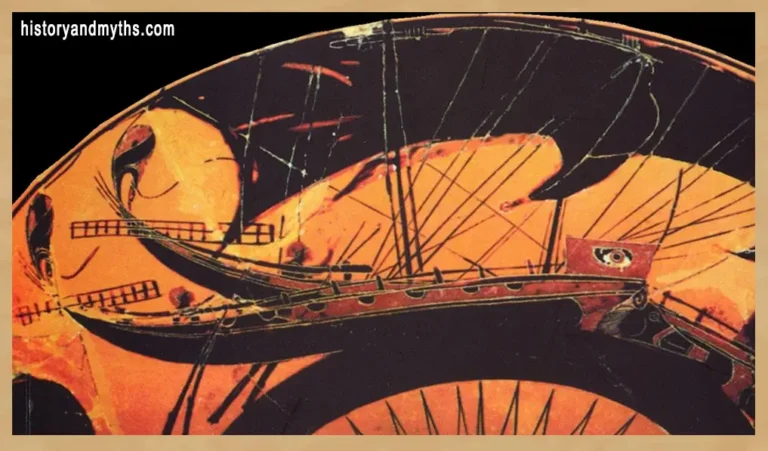
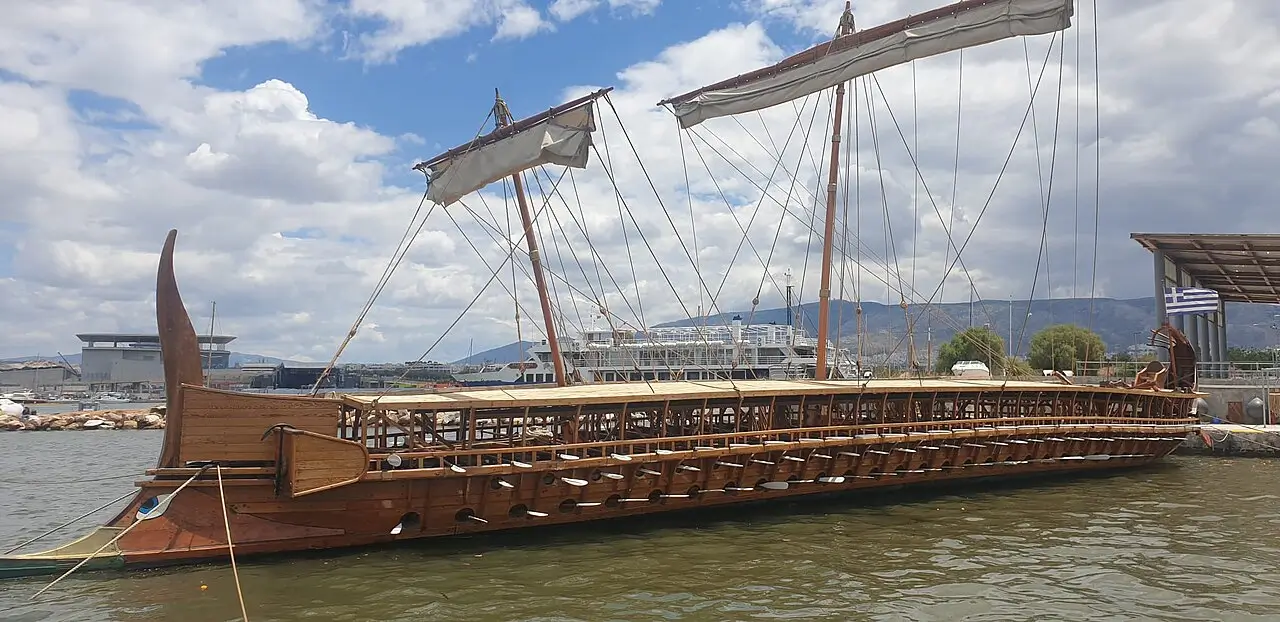
The trireme was the core unit of Greek naval power, but its importance was not in design alone—it was in how it functioned as a coordinated system of speed and precision.
A trireme depended on a large, synchronized crew. Rowers, officers, and commanders had to operate in exact coordination to maintain speed and maneuverability. This made training essential. A fleet’s effectiveness was determined less by the number of ships and more by the discipline and cohesion of its crews.
Speed was the defining advantage. Triremes were built for rapid movement and quick turns, allowing them to outmaneuver heavier or less organized opponents. This shifted naval combat away from brute force toward positioning and timing.
The ship itself was only one part of the system. What mattered was how ships operated together. Fleets moved in formation, executed coordinated maneuvers, and relied on communication between vessels. This turned individual ships into a collective fighting unit.
Maintenance was equally critical. Triremes required constant upkeep to remain effective. This reinforced the need for infrastructure and funding, linking naval capability directly to the broader system that supported it.
From a system perspective, the trireme was not just a ship—it was part of a highly coordinated operational network, where speed, training, and collective action determined success at sea.
The Economic Engine Behind Athenian Naval Power
Athenian naval dominance depended on continuous funding. Fleets could not be maintained through occasional resources—they required a steady financial system that supported construction, maintenance, and manpower.
The central source of this funding was the Delian League. Member states contributed money or ships, but over time, more shifted to financial payments. This created a stable flow of resources that Athens could control and allocate.
This funding supported multiple layers at once. It paid for shipbuilding and repairs, covered the cost of crews, and sustained ongoing operations. Unlike systems that mobilized only during war, Athens maintained a permanent naval capacity.
Control over funds translated directly into control over the fleet. Because Athens managed the treasury, it determined how resources were used and where naval power was deployed. This turned economic input into strategic authority.
The system reinforced itself:
- tribute funded fleets
- fleets protected the alliance
- protection justified continued tribute
From a system perspective, Athenian naval power was sustained by an economic engine that converted financial contributions into continuous military capability, making long-term dominance possible.
How Greek Naval Power Actually Worked
- Built on continuous fleets, not temporary mobilization
- Relied on trained crews and coordinated operations
- Funded through stable economic systems and alliances
- Controlled trade routes and movement across the Aegean
- Extended influence beyond land-based territories
- Functioned as a system of indirect political control
© historyandmyths.com — Educational use
Naval Power and Political Control
Control of the sea did more than secure trade routes—it reshaped political relationships across the Greek world. A state that controlled naval movement could influence decisions beyond its own territory.
For Athens, naval power created leverage over its allies. Protection at sea meant access to trade and security. Losing that protection meant isolation. This made naval strength a tool for enforcing alignment without direct occupation.
The fleet also determined who could act independently. Cities without strong naval capacity depended on Athenian support to maintain connections and supply lines. This dependency limited their ability to oppose decisions or withdraw from the system.
Naval control extended to communication. Movement of goods, people, and information passed through routes that Athens could monitor or restrict. This allowed influence over both economic and strategic choices across the alliance.
The result was a shift in how power operated. Authority was not based only on territory—it was based on control of movement and access.
From a system perspective, naval power functioned as a mechanism of indirect control, where dominance at sea translated into political influence over allied and dependent states.
Why Athens Dominated the Sea
Athenian dominance at sea was the result of a system that combined continuity, scale, and control. It was not based on isolated victories, but on the ability to sustain naval operations over time without interruption.
The first factor was continuity. Athens maintained fleets even in periods of relative stability. Ships were kept ready, crews remained active, and operations did not depend on emergency mobilization. This created a constant presence at sea.
The second factor was integration of resources. Through the Delian League, Athens secured a steady flow of funding. This allowed it to expand and maintain fleets beyond what a single city-state could normally support.
The third factor was organizational consistency. Training, command structure, and maintenance were managed as part of a long-term system. This ensured that naval operations were predictable and reliable, not improvised.
The fourth factor was strategic focus. Athens prioritized naval power as its primary means of influence. While other states divided their resources, Athens concentrated on building and controlling maritime capacity.
These elements reinforced each other:
- continuous funding supported continuous fleets
- continuous fleets reinforced control
- control secured continued resources
From a system perspective, Athens dominated the sea because it built a self-reinforcing naval system, where funding, organization, and strategy operated together to maintain long-term superiority.
The Strategic Impact of Naval Power in Greek Warfare
Naval power changed how wars were fought in ancient Greece by shifting conflict beyond land boundaries. Control of the sea allowed states to choose where and when to engage, rather than being limited by geography.
For Athens, this created a strategic advantage. Fleets could move forces quickly, strike distant targets, and avoid direct confrontation with stronger land armies. This made warfare less predictable and more flexible.
Naval power also extended the battlefield. Coastal cities, islands, and trade routes became part of the conflict zone. States could disrupt supply lines, isolate opponents, and pressure allies without needing to capture territory directly.
Another key impact was asymmetry. A state strong at sea could challenge a stronger land power by avoiding its strengths. This is why naval warfare played a central role in conflicts between Athens and its opponents—it allowed different types of power to compete on separate terms.
From a system perspective, naval power transformed warfare into a multi-domain system, where control of the sea could offset limitations on land and reshape the balance between competing states.
Continue Reading
The Limits of Greek Naval Power
Despite its advantages, naval power in ancient Greece had structural limits that prevented it from being a complete solution to dominance.
The first limitation was cost. Maintaining fleets required continuous funding—ships, crews, maintenance, and infrastructure. Even for Athens, this created long-term pressure. Naval strength depended on sustained economic input, and any disruption to funding directly affected operational capacity.
The second limitation was dependency on manpower. Triremes required large, trained crews working in coordination. Without consistent training and availability of rowers, naval effectiveness declined quickly. This made the system dependent on stable population and organization.
The third limitation was geographical constraint. Naval power was effective along coasts and sea routes, but it could not replace control over land. States still needed armies to secure territory and defend inland regions.
Another critical weakness was vulnerability to disruption. Loss of ships, disruption of funding, or internal instability could rapidly weaken naval capacity. Because the system relied on continuity, breaks in that continuity had immediate impact.
From a system perspective, Greek naval power was strong but conditional. It required constant resources, coordination, and stability to function effectively.
What Greek Naval Power Reveals About Ancient Power Systems
Greek naval power shows that control in the ancient world was not only about territory—it was about managing systems of movement, resources, and coordination.
Naval dominance allowed a state like Athens to extend influence beyond its land borders. By controlling access to trade routes and communication lines, it shaped decisions across multiple city-states without direct occupation.
This reveals a broader principle:
power can be exercised indirectly through systems, not just through direct control of land or populations
At the same time, it highlights the importance of balance. Systems that rely on continuous input—like funding and manpower—can create strong influence, but they are also vulnerable to disruption.
From a system perspective, Greek naval power represents a model where control is built on coordination and access, showing that the structure behind power can be as important as the force itself.
Key Takeaways
- Greek naval power was a system, not just ships or battles.
- Athens dominated through continuous funding and organization.
- The trireme system relied on speed, coordination, and training.
- Control of the sea meant control of trade and movement.
- Naval power enabled indirect political influence over allies.
- The system required constant resources and stability to function.
Frequently Asked Questions
What was Greek naval power?
Greek naval power was the ability to control movement, trade routes, and military operations across the sea.
Why was Athens strong at sea?
Athens built a continuous naval system supported by funding, trained crews, and strong organization.
What was a trireme?
A trireme was a fast warship powered by rowers, designed for speed and maneuverability in naval combat.
How was the Athenian navy funded?
It was supported by resources from alliances, especially the Delian League.
Why was naval power important in Greece?
Because geography made sea routes essential for trade, communication, and military movement.
Did naval power guarantee dominance?
No. It required continuous funding, manpower, and coordination to remain effective.
Sources & Rights
- Casson, Lionel. The Ancient Mariners. Princeton University Press.
- Coates, John F., and Rankov, Boris. Ships and Seamanship in the Ancient World. Princeton University Press.
- Morrison, J. S., and Williams, R. T. Greek Oared Ships. Cambridge University Press.
- Hanson, Victor Davis. A War Like No Other. Random House.
- Kagan, Donald. The Peloponnesian War. Penguin Books.
- Hornblower, Simon. The Greek World 479–323 BC. Routledge.
- Thucydides. History of the Peloponnesian War. (Primary source).
- Meiggs, Russell. The Athenian Empire. Oxford University Press.
- Osborne, Robin. Greece in the Making. Routledge.
- Pomeroy, Sarah B. Ancient Greece: A Political, Social, and Cultural History. Oxford University Press.
Written by H. Moses — All rights reserved © Mythology and History