Ancient Greek Athletics and Training: How They Trained
Athletics in ancient Greece was not built around competition—it was built around training. Before any public contest, there was a structured system focused on developing strength, endurance, and control. Most physical activity took place in the gymnasium, where training followed routines rather than events.
This system started early. Young males were introduced to running, wrestling, and body exercises as part of their formation, not as optional sport. The goal was not just performance, but discipline—learning how to manage the body under effort and repetition.
Public competition came later. What defined Greek athletics was the daily process that shaped the body long before it was tested in front of others.
The Core System: Training Before Competition
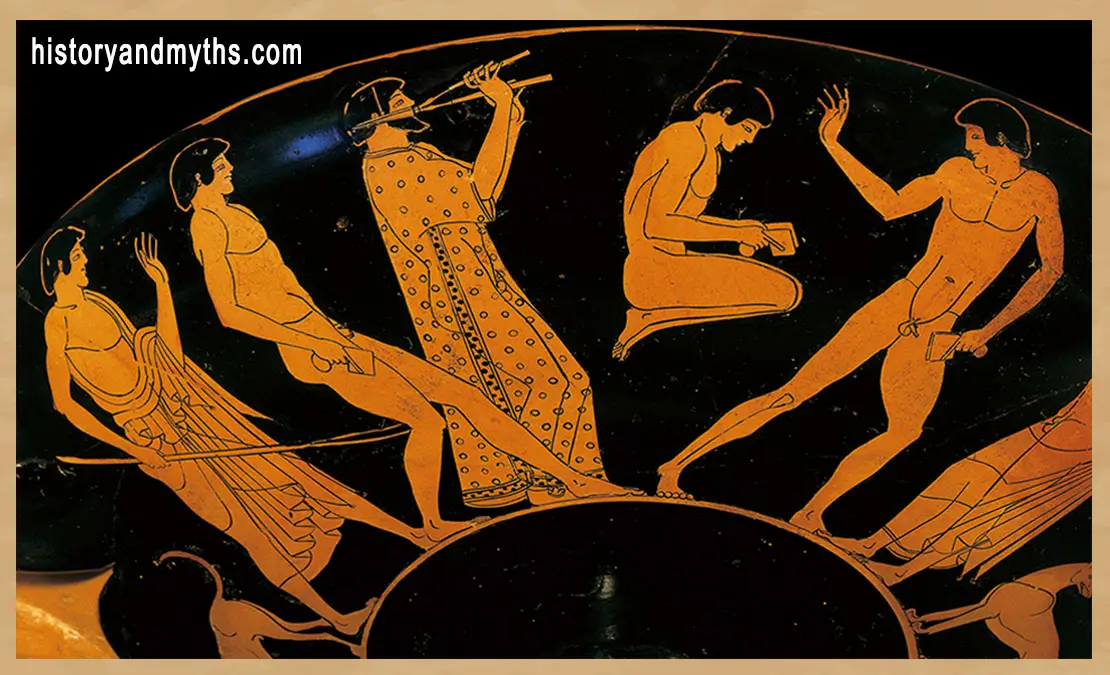
Greek athletics begins with routine, not with events. Training is organized as a daily practice that develops the body in stages—strength, endurance, coordination—before any public test. What matters is repeatability. Exercises are chosen because they can be done consistently and improved over time.
The system is progressive. Runners build distance and pace in measured steps. Wrestlers repeat holds and counters until movement becomes automatic. Conditioning—pulling, pushing, carrying—supports both. Nothing is random; each activity feeds another.
Time and place are fixed. Training happens at set hours and in dedicated spaces, which creates rhythm and expectation. Missing sessions breaks continuity, so consistency becomes part of the discipline. Improvement is tracked informally—through performance in drills, not through medals.
Tools are minimal and purposeful. Simple equipment—strigils for cleaning, oil for the skin, weights for strength—supports the routine without defining it. The body does most of the work; the environment just enables it.
Instruction ties the system together. Experienced trainers set sequences, correct form, and control intensity. They decide when to increase load and when to hold it. This keeps progress steady and reduces risk of injury.
The result is a stable training cycle: repeatable exercises, gradual progression, and constant supervision. Competition, when it comes, draws from this base, but the system exists independently of it.
| Component | Purpose | Outcome |
|---|---|---|
| Gymnasium | Structured training space | Consistent practice environment |
| Daily Routine | Repeated exercises | Gradual physical development |
| Coaching | Guidance and correction | Improved technique and control |
| Discipline | Consistency and control | Reliable performance |
| Youth Training | Early development | Long-term physical formation |
The Gymnasium: Where Training Took Shape
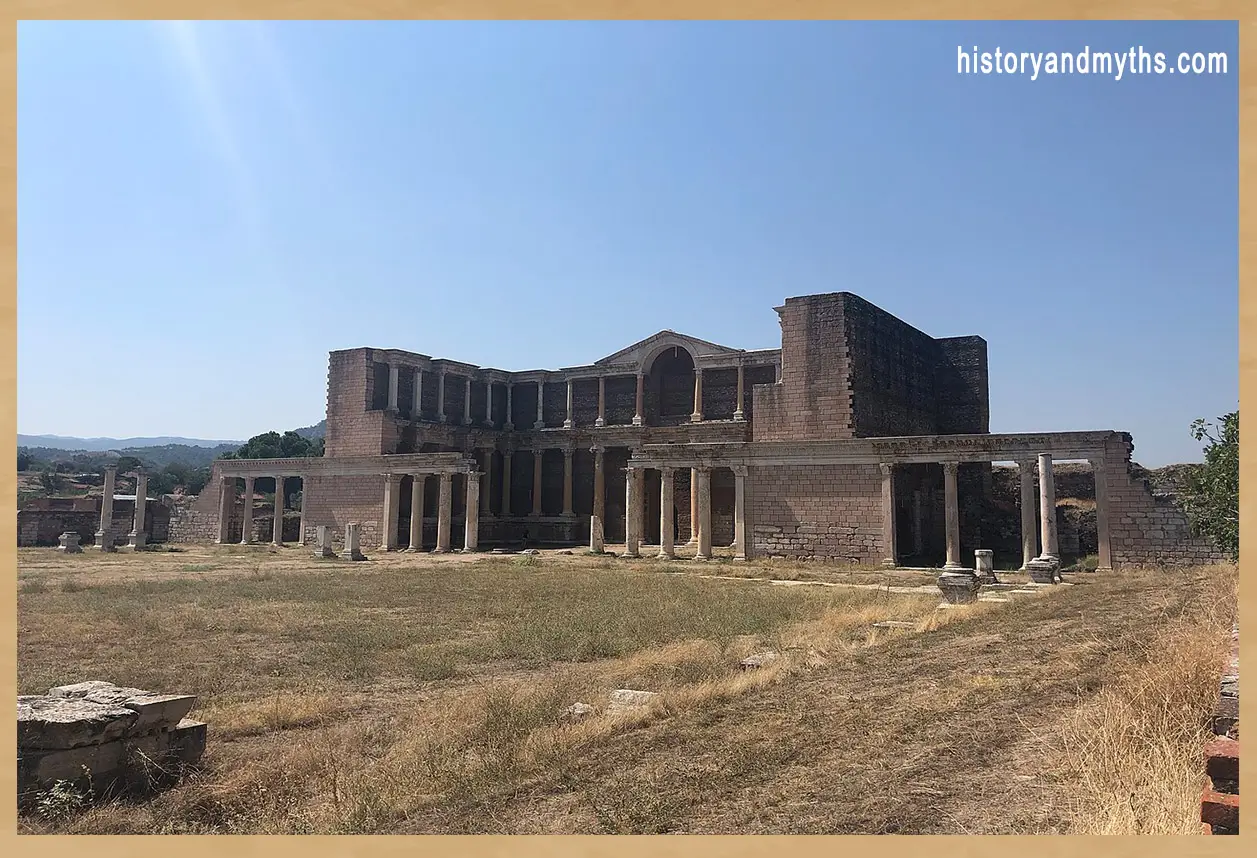
Training needed a fixed environment to work, and that role belonged to the gymnasium. It was not just a place to exercise. It organized movement, time, and instruction into a single routine. Once inside, activity followed a structure rather than improvisation.
Space was divided by function. Open areas allowed running and drills that required distance. Other sections were used for wrestling and close-contact training. Surfaces mattered—firm ground for footwork, softer areas for grappling. This separation prevented overlap and kept training focused.
The sequence of use was consistent. Athletes prepared the body, trained, then recovered. Oil was applied before exercise to protect the skin and improve movement. After training, it was removed with a strigil, clearing sweat and dirt. The process repeated daily, creating a stable cycle.
Supervision was built into the setting. Trainers and attendants were present to guide practice, correct technique, and manage intensity. Their role was not optional. Without control, repetition loses value and injury becomes likely.
The gymnasium also imposed rhythm. Set times meant athletes trained together, which reinforced discipline and comparison. Progress became visible through daily interaction, not through formal scoring.
Nothing in the space was decorative. Every part supported the same goal: maintain a controlled environment where training could be repeated, adjusted, and sustained over time.
Daily Training Practices: Repetition Over Variety
Training did not depend on a wide range of exercises. It relied on a small set of movements repeated until they became controlled and efficient. The goal was not to introduce new techniques constantly, but to refine a limited number of actions under pressure.
Running formed the base. It built endurance and pacing, and it could be adjusted easily short bursts for speed, longer distances for stamina. Wrestlers worked through repeated grips, holds, and counters, focusing on balance and control rather than force alone. Strength came from bodyweight drills—lifting, carrying, resisting—integrated into the same routine.
Sequence mattered. Exercises were arranged to build from simple to demanding. Warm-up movements prepared the body, followed by more intense work, then a gradual reduction. This order reduced strain and allowed consistent repetition without breakdown.
Variation existed, but within limits. Trainers adjusted intensity, duration, or pairing rather than changing the exercise itself. This kept the system stable while still allowing progression.
The effect of this approach is cumulative. Improvement does not come from novelty. It comes from controlled repetition, where each session builds directly on the last.
Discipline and Control: The Purpose Behind Training
Training is built to enforce control. Strength and speed matter, but they are secondary to the ability to maintain form under effort. Exercises are repeated until movement is stable, not just successful. Losing structure under pressure counts as failure, even if the outcome is achieved.
This is why intensity is managed. Effort increases gradually so the body can adapt without breaking form. Pushing beyond control does not improve performance; it disrupts it. Trainers monitor this balance, adjusting load to keep technique intact.
Endurance is treated the same way. Long sessions are not about exhaustion for its own sake. They test whether the athlete can sustain movement without collapse in posture or timing. The goal is consistency across time, not a single peak effort.
Discipline extends beyond the session. Regular attendance, adherence to routine, and acceptance of correction are part of the process. Skipping steps or ignoring instruction breaks continuity and slows progress.
What the system produces is not just physical capacity. It produces reliability. The athlete can repeat the same action with the same quality, even when conditions change.
Athletics in ancient Greece was not defined by competition but by training. Daily routines, structured spaces, and constant supervision created a system that shaped the body through repetition, discipline, and long-term development.
© historyandmyths.com — Educational use
Training from Youth: Early Formation, Not Late Preparation
Training begins before competition is even relevant. Young males are introduced to physical exercise as part of their development, not as a specialized path. The early focus is basic—running, simple drills, controlled movement—but it establishes habits that carry forward.
The system is staged. Younger trainees work on coordination and balance before moving into strength and resistance. This prevents overload and allows the body to adapt in sequence. Progression is expected, but it is controlled. Skipping stages weakens the foundation.
Instruction at this level is direct. Movements are corrected early so they do not become fixed errors. Repetition builds familiarity, but supervision ensures that repetition is accurate. The aim is not volume alone; it is precision over time.
As trainees age, intensity increases. Exercises become more demanding, and pairing with others introduces pressure and variation. By this point, the routine is already established. Training expands, but it does not change direction.
What results is continuity. Later performance is not built from scratch; it extends a process that has been in place for years.
Trainers and Coaching: Structured Guidance, Not Self-Practice
Training is not left to the individual. Coaches—known as paidotribai and gymnastai—organize the work, set sequences, and correct execution. Their role is to keep training consistent and controlled, not to introduce constant variation.
Instruction is practical. Movements are demonstrated, then repeated under supervision. Errors are corrected immediately to prevent them from becoming fixed habits. This keeps progress aligned with the system rather than drifting into ineffective patterns.
Load and intensity are managed externally. Coaches decide when to increase difficulty and when to hold it steady. This prevents overuse and maintains the quality of movement across sessions. The focus remains on sustained improvement, not short-term gains.
Pairing is also controlled. Athletes are matched based on ability so that practice remains productive. Too much imbalance reduces value; controlled opposition improves it. This applies especially in wrestling and other contact training.
Coaching extends beyond the session. Diet, rest, and daily routine are monitored to support training. The athlete’s performance is treated as a continuous process, not a set of isolated efforts.
The system works because guidance is constant. Training is shaped from the outside, ensuring that repetition leads to measurable progress.
The Athletic Body Ideal: Form Built Through Training
The trained body in Greek society is not defined by size alone. It is defined by proportion, control, and visible balance between strength and movement. Development aims for a form that can perform consistently, not one that simply appears powerful.
Muscle is shaped through repetition rather than maximum load. The result is even development across the body—shoulders, back, legs—without excessive concentration in a single area. This supports multiple activities instead of specializing too early.
Posture and movement are part of the same ideal. Standing, walking, and transitioning between actions must remain controlled. Training reinforces this by emphasizing alignment and stability under effort. The body is expected to maintain structure during and after exertion.
Endurance contributes to the same outcome. The ability to sustain effort without visible breakdown becomes part of how the body is judged. Fatigue is expected, but loss of control is not.
This ideal is not separate from the system that produces it. It is the direct result of consistent training applied over time, where form and function develop together.
Athletics Beyond Competition: A Daily Practice, Not an Event
Most training has no audience. It happens in routine, away from festivals and prizes, and it continues whether or not an athlete ever competes. The system is built to operate without the need for public validation.
This changes the purpose of exercise. It is not tied to a single date or outcome. Progress is measured in consistency—how well movements are repeated, how stable the body remains under effort, how reliably the routine is maintained.
Participation is also broader than competition. Not everyone enters contests, but many follow the same training patterns at a basic level. Physical preparation becomes part of daily life, especially for young males moving through stages of development.
The environment reinforces this continuity. Shared spaces and fixed schedules make training a regular activity rather than an occasional one. The presence of others supports repetition and comparison without formal scoring.
Competition draws attention, but it does not define the system. What matters is the ongoing process that shapes the body and maintains discipline over time.
- Greek athletics was built on training, not competition.
- The gymnasium organized physical development through routine and structure.
- Exercises were repeated to improve control, not variety.
- Coaches played a central role in managing progress and technique.
- Training began early and followed a staged system.
- The athletic body reflected discipline and consistency, not just strength.
Frequently Asked Questions
What was the purpose of athletics in ancient Greece?
The main purpose was physical training and discipline, not just competition.
Where did Greeks train for athletics?
Training took place in gymnasiums, which provided structured spaces for exercise and instruction.
Did all Greeks participate in athletics?
Training was common among young males, though not everyone competed in public events.
What types of exercises were used in training?
Running, wrestling, and strength exercises formed the core of daily training routines.
What role did trainers play?
Trainers guided practice, corrected technique, and managed the intensity of exercises.
Was competition the main goal of training?
No, competition was secondary to the long-term process of physical development.
Sources & Rights
- Miller, Stephen G. Ancient Greek Athletics. Yale University Press, 2004.
- Golden, Mark. Sport and Society in Ancient Greece. Cambridge University Press, 1998.
- Scanlon, Thomas F. Eros and Greek Athletics. Oxford University Press, 2002.
- Poliakoff, Michael B. Combat Sports in the Ancient World. Yale University Press, 1987.
- Cartledge, Paul. Ancient Greece: A History in Eleven Cities. Oxford University Press, 2009.
- Osborne, Robin. Greece in the Making. Routledge, 1996.
- Hansen, Mogens Herman. The Athenian Democracy. Blackwell, 1991.
- Garland, Robert. Daily Life of the Ancient Greeks. Greenwood Press, 1998.
- Pomeroy, Sarah B. Goddesses, Whores, Wives, and Slaves. Schocken Books, 1975.
- Snodgrass, Anthony. An Archaeology of Greece. University of California Press, 1987.
- Whitley, James. The Archaeology of Ancient Greece. Cambridge University Press, 2001.
- Finley, Moses I. The Ancient Economy. University of California Press, 1999.
- Morris, Ian. Archaeology as Cultural History. Blackwell, 2000.
- Ault, Bradley A. The Houses at Halieis. Indiana University Press, 2005.
- Allison, Penelope M. The Archaeology of Household Activities. Routledge, 1999.
- Sealey, Raphael. A History of the Greek City States. University of California Press, 1976.
- Young, David C. A Brief History of the Olympic Games. Blackwell, 2004.
- Kyle, Donald G. Sport and Spectacle in the Ancient World. Wiley-Blackwell, 2007.
- Harris, H.A. Greek Athletes and Athletics. Hutchinson, 1964.
- Spivey, Nigel. The Ancient Olympics. Oxford University Press, 2004.
Written by H. Moses — All rights reserved © Mythology and History