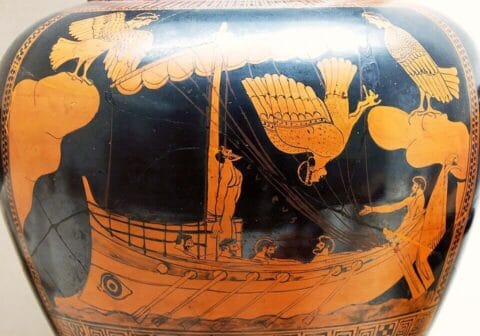
Typhon: The Greatest Enemy of Zeus in Greek Mythology
In Greek mythology, Typhon was not simply the largest or most terrifying monster. He was the greatest threat the cosmos had ever faced. Ancient sources describe him as a force powerful enough to challenge Zeus himself and overturn the divine order established after the defeat of the Titans. If Zeus represented stability, kingship, and cosmic balance, Typhon represented the possibility that all of it could collapse.
The famous conflict between Zeus and Typhon was therefore more than a battle between a god and a monster. It was a struggle between order and chaos, one that would determine who controlled the universe. Greek storytellers portrayed Typhon as the ultimate enemy because no other creature came so close to challenging Zeus’s authority and reshaping the world according to destructive forces.
Understanding Typhon helps explain how the Greeks viewed power, chaos, and the fragile balance of the cosmos. His story is not merely about a monstrous creature defeated by a hero. It is about the moment when the newly established order of the gods faced its greatest test and nearly lost everything.
Who Was Typhon?
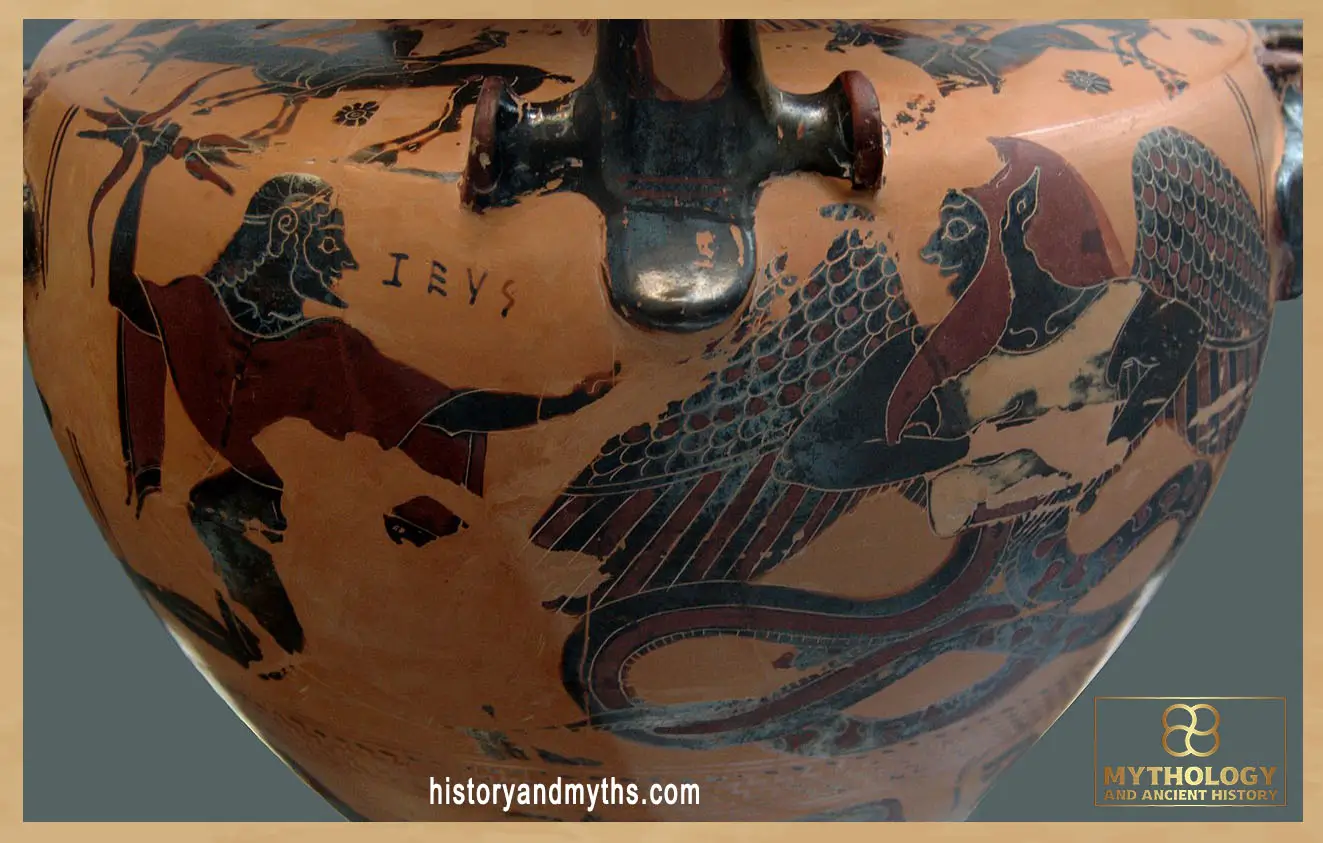
Typhon was one of the most powerful and feared beings in Greek mythology. Ancient writers describe him as a monstrous offspring of Gaia and Tartarus, born after the Olympian gods had already defeated the Titans. Unlike many other monsters, Typhon was not created to threaten individual heroes or isolated regions. His purpose was far larger: he challenged the rule of Zeus and the stability of the entire cosmos.
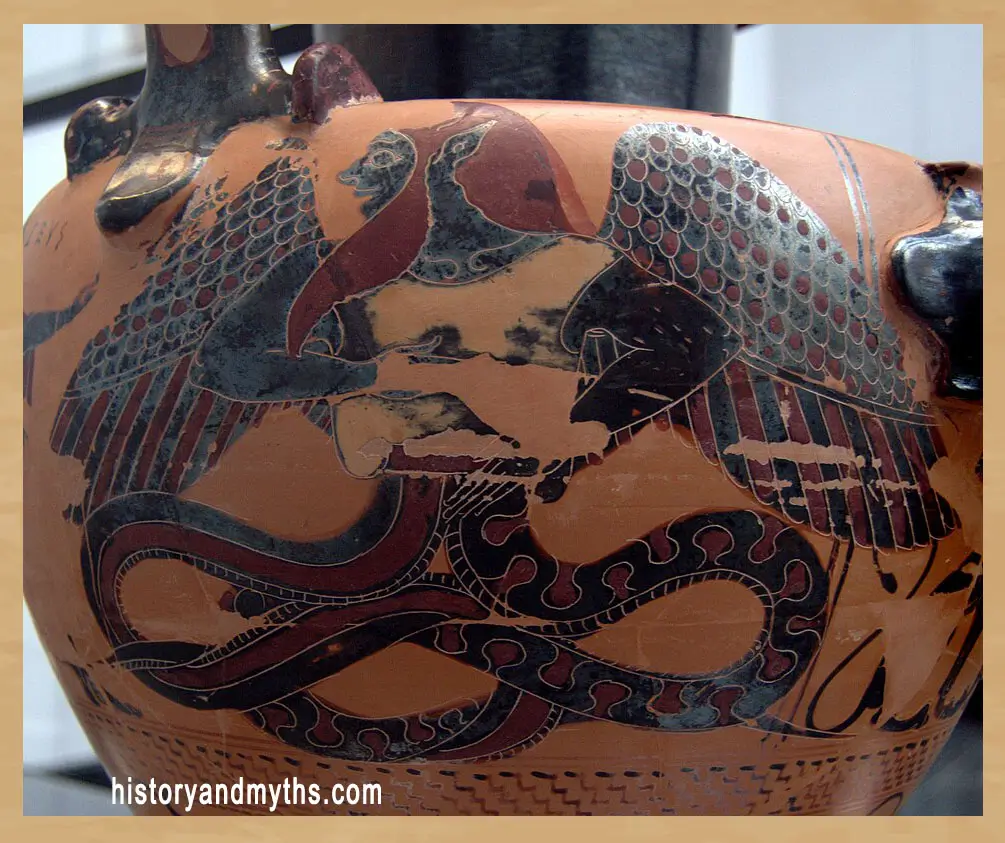
Descriptions of Typhon vary across ancient sources, but they consistently emphasize his extraordinary nature. He is often portrayed as a gigantic creature whose form combines human and monstrous features, with serpentine elements appearing throughout his body. His terrifying appearance was intended to communicate more than physical strength. It signaled that Typhon belonged to the forces of chaos that existed outside the normal order of gods and humans.
What makes Typhon unique is his position within Greek mythology. Most monsters threaten travelers, cities, or individual heroes. Typhon threatened Olympus itself. He was powerful enough to confront Zeus directly, making him the closest thing Greek mythology has to a final adversary capable of overturning the rule of the gods.
For this reason, Typhon occupies a special place in Greek tradition. He is not remembered simply as a monster defeated in battle. He is remembered as the greatest enemy Zeus ever faced and the ultimate symbol of chaotic power resisting divine order.
| Aspect | Typhon | Other Greek Monsters |
|---|---|---|
| Main Threat | Cosmic order itself | Heroes, cities, or regions |
| Primary Opponent | Zeus | Mortal heroes |
| Symbolism | Chaos and disorder | Specific dangers or fears |
| Scale of Conflict | Universal | Local or regional |
| Legacy | Greatest enemy of Zeus | Challenges overcome by heroes |
Why Typhon Was Different from Other Monsters
Greek mythology contains many dangerous creatures, but most of them operate on a limited scale. The Minotaur terrorizes a labyrinth, the Hydra threatens a region, and the Chimera devastates nearby lands. However terrifying they may be, their influence remains local. Typhon is different because his threat extends far beyond any single place.
Unlike ordinary monsters, Typhon challenges the highest authority in the universe. His enemy is not a wandering hero but Zeus himself. This immediately places him in a different category. The outcome of his struggle affects not just a city or a kingdom but the entire cosmic order established by the Olympian gods.
Typhon is also unusual because he combines immense physical power with symbolic meaning. He represents forces that resist structure, authority, and stability. Greek myths often portray monsters as obstacles that must be overcome, but Typhon embodies the possibility that order itself could fail. He is less a creature to be defeated than a crisis that must be contained.
This distinction explains why ancient sources describe him with such extraordinary language. Typhon is not remembered as the most dangerous beast in Greek mythology simply because of his size or strength. He is remembered because he came closer than any other monster to overturning the rule of Zeus and returning the world to chaos.
Typhon and the Threat to Cosmic Order
To understand why Typhon mattered so much, it is necessary to look beyond his appearance and focus on what he threatened. Greek mythology often revolves around the idea that the universe functions because certain boundaries are maintained: gods rule Olympus, humans live in the mortal world, and natural forces remain under control. Typhon represented a direct challenge to that arrangement.
His rise threatened to undo everything Zeus had achieved after the Titanomachy. The victory over the Titans had established a new order with Zeus as king of the gods. Typhon’s appearance suggested that this order was not permanent. If he succeeded, the balance that governed gods, humans, and nature could collapse.
This is why ancient sources portray the conflict as more than a battle for power. The struggle concerns the future of the cosmos itself. Zeus is not merely defending his throne; he is defending the structure of the world. Typhon, by contrast, embodies forces that reject stability and resist control.
The myth reflects a broader Greek concern about the fragility of order. Civilization, law, and divine authority may appear strong, but they can never be taken for granted. Typhon serves as a reminder that chaos remains a constant possibility, waiting for an opportunity to return. His threat is frightening not because he is monstrous, but because he represents the destruction of the very system that makes life and society possible.
The War Between Zeus and Typhon
The battle between Zeus and Typhon was one of the largest and most dramatic conflicts in Greek mythology. Ancient sources describe a struggle so intense that it affected both heaven and earth. Unlike the challenges faced by heroes, this was a confrontation between two forces capable of shaping the fate of the entire cosmos.
The details vary from one source to another, but the central idea remains the same: Typhon came dangerously close to defeating Zeus. Some traditions even describe moments when the king of the gods was temporarily overwhelmed before recovering and continuing the fight. These episodes emphasize how serious the threat truly was. Victory was not guaranteed.
The conflict eventually turned in Zeus’s favor through the use of his thunderbolts, the symbol of his authority and power. By defeating Typhon, Zeus proved that the Olympian order could survive even the greatest challenge imaginable. The victory confirmed his position as ruler of gods and men and removed the last major threat to his supremacy.
What makes this battle significant is not simply its scale. It marks the moment when the new cosmic order established by Zeus was tested and survived. After the Titans had fallen and Typhon had been defeated, no force remained capable of mounting a comparable challenge to Olympian rule. The war therefore serves as the final confirmation of Zeus’s authority over the universe.
Typhon and the Survival of the Cosmos
Typhon was not simply a monster in Greek mythology. He represented the greatest threat ever faced by the Olympian gods. His battle with Zeus symbolized a struggle between cosmic order and destructive chaos, making him unique among all mythical creatures.
- Born from Gaia and Tartarus after the Titanomachy.
- Challenged Zeus directly for control of the cosmos.
- Represented chaos rather than ordinary monstrosity.
- Forced even the gods to flee in some traditions.
- Was eventually defeated and imprisoned beneath Mount Etna.
- Became the ultimate symbol of disorder in Greek myth.
© historyandmyths.com
What Would Have Happened If Typhon Had Won?
Greek mythology never provides a detailed alternative history in which Typhon defeats Zeus, but the implications are clear. A victory for Typhon would have meant the collapse of the order established by the Olympian gods. The structures that governed the relationship between gods, humans, and nature would no longer have been secure.
This possibility helps explain why the myth presents the conflict as so important. The issue was not simply who would rule Olympus. The issue was whether the cosmos would remain stable at all. Zeus represented law, authority, and the organization of the universe. Typhon represented forces that resisted control and threatened to undo that organization.
From a symbolic perspective, Typhon’s victory would have marked the triumph of chaos over order. Natural forces would no longer be restrained, divine authority would be broken, and the boundaries that separated different parts of the cosmos could disappear. The myth does not need to describe every consequence because its audience already understood what was at stake.
By imagining the possibility of Typhon’s success, the Greeks highlighted the importance of Zeus’s victory. The battle mattered because defeat was conceivable. Order survived not because it was inevitable, but because it successfully overcame its greatest challenge.
Why Zeus’s Victory Mattered
Zeus’s victory over Typhon was important because it accomplished more than the defeat of a powerful enemy. It demonstrated that the Olympian order could withstand the most serious challenge it would ever face. After years of conflict against the Titans and other primordial forces, this battle confirmed that Zeus’s rule was stable and legitimate.
In many Greek myths, victory establishes authority. A ruler proves worthy of power by overcoming rivals and protecting the world under their control. The defeat of Typhon served exactly this purpose. Zeus was no longer simply the strongest of the gods; he became the defender of the cosmic order on which gods and mortals depended.
The myth also explains why Zeus occupies such a dominant position in later Greek tradition. After Typhon’s defeat, there is no comparable threat to Olympian rule. Heroes continue to battle monsters, and gods continue to disagree with one another, but no enemy again comes close to overturning the structure of the cosmos itself.
For Greek audiences, this victory carried an important message. Order is not valuable because it is permanent or effortless. It is valuable because it has been tested, threatened, and preserved. The story of Zeus and Typhon reminds us that stability exists only because powerful forces have prevented chaos from taking its place.
Typhon as the Embodiment of Chaos
Typhon is often described as a monster, but his role in Greek mythology goes far beyond that label. He serves as a personification of chaos itself—a force that exists outside the structures that make the world orderly and predictable. This symbolic role explains why his conflict with Zeus carries such importance.
Greek myths frequently present the universe as a balance between opposing forces. On one side stand law, hierarchy, and stability. On the other stand disorder, unpredictability, and destruction. Typhon belongs to the second category. His challenge is not directed at a single god or hero but at the system that holds the cosmos together.
This symbolism also helps explain his extraordinary appearance in ancient descriptions. Typhon’s monstrous form reflects the idea that chaos does not fit within normal categories. He combines different creatures, powers, and natural forces into a single being that defies order. The image itself communicates disruption.
By portraying chaos as a living adversary, Greek mythology transformed an abstract idea into a dramatic story. The battle between Zeus and Typhon became a way of exploring a larger question: can order survive when confronted by forces determined to destroy it? The answer given by the myth is yes—but only after a struggle that nearly changed the fate of the world.
Typhon’s Legacy in Greek Mythology
Although Typhon was defeated, his influence did not disappear from Greek mythology. Ancient writers continued to treat him as the ultimate example of a force capable of threatening the established order of the world. His story became the standard against which later monsters and enemies were measured.
Typhon also occupies an important place in the genealogy of monsters. Many traditions identify him and Echidna as the parents of some of the most famous creatures in Greek myth, including Cerberus, the Hydra, the Chimera, and other beings that later confronted heroes. This connection reinforces the idea that many monstrous threats ultimately trace their origins back to the same source of chaos.
His legacy extends beyond mythology itself. Typhon became a symbol of destructive natural power, particularly in later interpretations that associated him with volcanic activity, violent storms, and other forces that seemed capable of overwhelming human control. These associations helped keep his image relevant long after the original myths were composed.
More importantly, Typhon’s story established one of the central themes of Greek mythology: order is never assumed to be permanent. It must be defended against forces that seek to undo it. Even after his defeat, Typhon remained a reminder of what could happen if those forces ever prevailed.
Why the Gods Fled from Typhon
Several ancient traditions describe the gods fleeing when Typhon appeared. Some myths even claim that they transformed into animals to escape him. Whether taken literally or symbolically, these stories emphasize the same idea: Typhon was not merely another monster. He was a threat so great that even the gods feared the consequences of confronting him.
Where Was Typhon Imprisoned After His Defeat?
After defeating Typhon, Zeus is said in some traditions to have trapped him beneath Mount Etna in Sicily. Ancient Greeks used this story to explain volcanic eruptions and earthquakes, believing that the imprisoned monster still struggled beneath the earth. The myth allowed natural disasters to be interpreted as signs of a defeated but not entirely silent force of chaos.
Why Typhon Was Feared More Than the Titans
The Titans fought Zeus for control of the cosmos, but they still belonged to the existing structure of the divine world. Typhon represented something more dangerous. He threatened the stability of that structure itself. While the Titans challenged who would rule, Typhon challenged whether order would survive at all. This distinction helps explain why Greek mythology remembers him as the greatest enemy Zeus ever faced.
Typhon occupies a unique place in Greek mythology because he was more than a powerful monster. He represented the greatest challenge ever faced by the Olympian order and the closest the cosmos came to falling back into chaos. His conflict with Zeus was not simply a battle for power but a struggle over the future structure of the universe itself.
The myth explains why Typhon was feared in a way that other monsters were not. Creatures such as the Hydra or Cerberus threatened individuals and heroes, but Typhon threatened the foundations of divine authority. If Zeus represented stability, law, and cosmic balance, Typhon embodied the forces capable of destroying all three.
His defeat therefore marked a turning point in Greek mythology. By overcoming Typhon, Zeus proved that the Olympian order could survive even its most dangerous test. The victory secured his position as king of the gods and reinforced one of the central messages of Greek myth: order exists because chaos has been confronted and overcome.
For this reason, Typhon remains one of the most important figures in Greek mythology. He is remembered not merely as a monster, but as the ultimate symbol of chaos and the greatest enemy Zeus ever faced.
Key Takeaways
- Typhon was the greatest enemy Zeus ever faced.
- He symbolized chaos threatening the entire cosmic order.
- Unlike other monsters, Typhon challenged the rule of the gods themselves.
- The war between Zeus and Typhon determined the future of the cosmos.
- Some myths describe the gods fleeing from Typhon in fear.
- Typhon was later imprisoned beneath Mount Etna.
- His defeat confirmed Zeus’s authority and secured Olympian rule.
Frequently Asked Questions
Who was Typhon in Greek mythology?
Typhon was a monstrous offspring of Gaia and Tartarus and is considered the greatest enemy Zeus ever faced.
Why was Typhon so dangerous?
He threatened the entire cosmic order rather than a single hero, city, or kingdom.
Did Typhon fight Zeus?
Yes. The battle between Zeus and Typhon is one of the most important conflicts in Greek mythology.
Was Typhon stronger than the Titans?
Ancient myths often portray him as a greater threat because he challenged the stability of the cosmos itself.
Why did the gods fear Typhon?
Some traditions describe the gods fleeing because of the immense power and destructive potential he possessed.
Where was Typhon imprisoned?
Many sources state that Zeus trapped him beneath Mount Etna after his defeat.
What did Typhon symbolize?
Typhon symbolized chaos, disorder, and the forces that oppose divine authority.
Who defeated Typhon?
Zeus defeated Typhon using his thunderbolts and secured the rule of the Olympian gods.
Sources & Rights
- Hesiod. Theogony. Translated by M. L. West. Oxford University Press.
- Apollodorus. Bibliotheca. Loeb Classical Library.
- Pindar. Pythian Odes. Loeb Classical Library.
- Nonnus. Dionysiaca. Loeb Classical Library.
- Burkert, Walter. Greek Religion. Harvard University Press.
- Graf, Fritz. Greek Mythology: An Introduction. Johns Hopkins University Press.
- Buxton, Richard. The Complete World of Greek Mythology. Thames & Hudson.
- Hard, Robin. The Routledge Handbook of Greek Mythology. Routledge.
- West, M. L. The East Face of Helicon. Oxford University Press.
- Gantz, Timothy. Early Greek Myth. Johns Hopkins University Press.
- Ogden, Daniel. Dragons, Serpents, and Slayers in the Classical and Early Christian Worlds. Oxford University Press.
- Dowden, Ken. The Uses of Greek Mythology. Routledge.
- Kirk, G. S. The Nature of Greek Myths. Penguin Books.
- Nilsson, Martin P. A History of Greek Religion. Oxford University Press.
- Edmonds, Radcliffe G. Greek Mythology: A Reader. Hackett Publishing.
Written by H. Moses — All rights reserved © Mythology and History