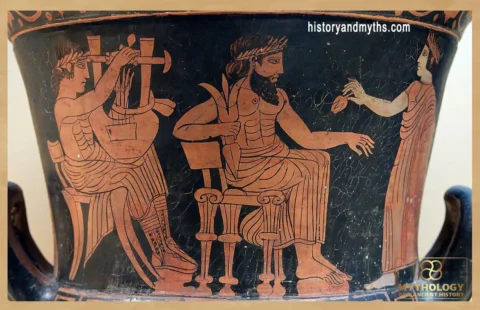
The Sphinx and the Power of Deadly Knowledge in Greek Mythology
In Greek mythology, the Sphinx was one of the few monsters who did not rely on physical strength to defeat her victims. Instead, she used a riddle. Travelers approaching the city of Thebes were forced to answer a question, and those who failed paid with their lives. The danger came not from claws or teeth alone, but from the knowledge required to survive the encounter.
This detail makes the Sphinx unique among Greek monsters. Heroes usually overcome threats through courage, weapons, or divine assistance. The Sphinx demanded something different: understanding. To pass safely, a traveler had to recognize the answer hidden within the riddle. In this myth, intelligence became more important than force.
The story is therefore about more than a creature guarding a road. It explores the relationship between knowledge and power, asking why a simple question could become more deadly than any monster. By examining the Sphinx, we gain insight into how the Greeks viewed wisdom, human limitations, and the belief that understanding the world could be a matter of survival.
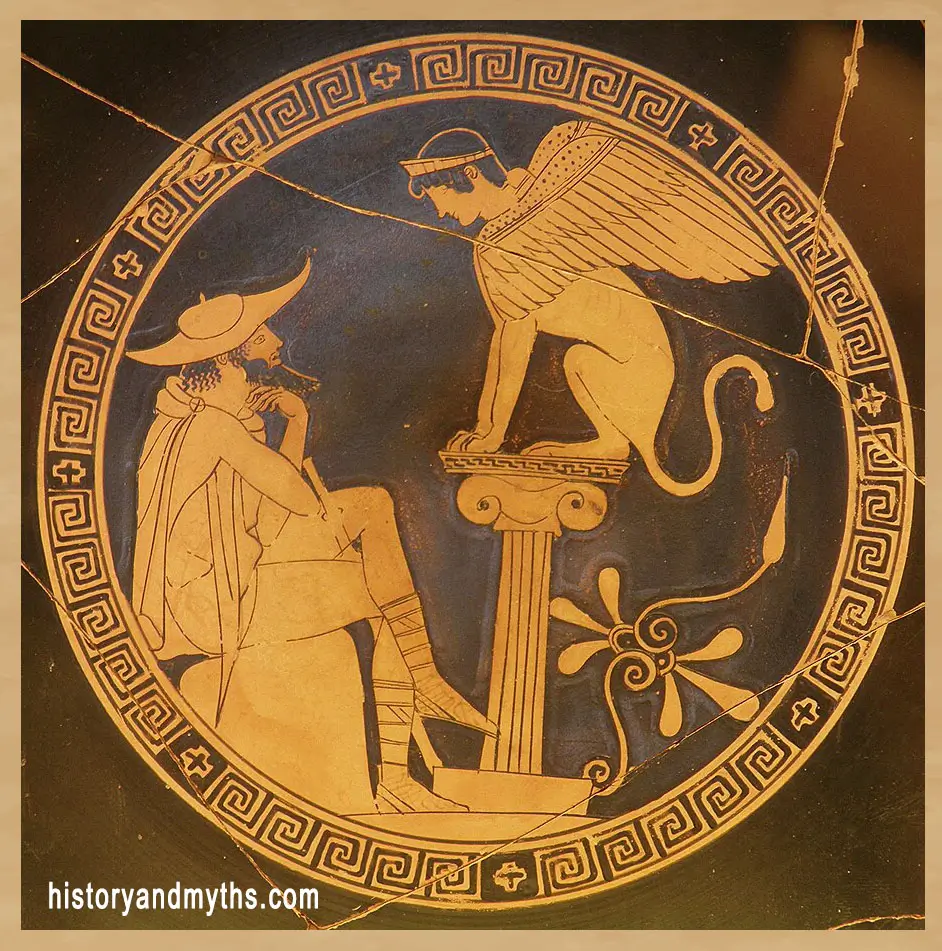
Who Was the Sphinx?
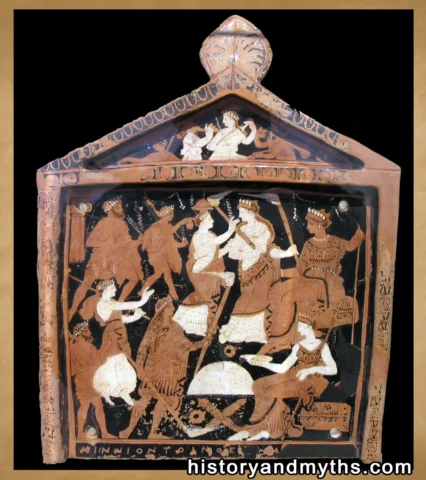
The Sphinx was a mythical creature associated with the city of Thebes and is best known for challenging travelers with a deadly riddle. Ancient Greek sources usually describe her as a hybrid being with the body of a lion, the wings of a bird, and the head of a woman. Unlike many monsters that relied on physical violence alone, the Sphinx occupied a unique position in Greek mythology because her greatest weapon was intellectual rather than physical.
According to the myth, she waited near Thebes and stopped those who attempted to pass. Each traveler faced the same challenge: answer her riddle correctly or die. The encounter was therefore less a battle and more a test. Strength, courage, and noble birth offered no protection if the question remained unsolved.
This role distinguishes the Sphinx from creatures such as the Minotaur, Hydra, or Cerberus. Those monsters created fear through direct confrontation. The Sphinx created fear through uncertainty. Victims knew the danger existed, yet survival depended on understanding something they did not know.
For this reason, the Sphinx is best understood not simply as a monster but as a guardian of knowledge. Her presence transforms intelligence into a matter of life and death, making her one of the most unusual and intellectually significant figures in Greek mythology.
| Aspect | The Sphinx | Typical Greek Monsters |
|---|---|---|
| Primary Weapon | Knowledge and riddles | Physical strength |
| Challenge | Answer correctly | Survive combat |
| Path to Victory | Understanding | Force or weapons |
| What Is Tested? | Intelligence | Courage and strength |
| Core Symbolism | Deadly knowledge | Physical danger |
Why the Riddle Was More Dangerous Than the Monster
The most feared part of the Sphinx was not her appearance but the challenge she presented. A traveler who encountered her was given a chance to survive, yet that chance depended entirely on answering a question correctly. The danger came from ignorance rather than physical weakness.
This made the riddle unusually powerful. A sword could not solve it. Wealth could not solve it. Social status could not solve it. Every traveler faced the same requirement: understand the answer or face the consequences. The Sphinx created a situation in which knowledge became the only meaningful form of protection.
The myth also changes the way danger operates. Most monsters attack first and ask nothing of their victims. The Sphinx demanded participation. People were forced to think, reason, and confront a problem before they could continue their journey. Failure was not random; it resulted from an inability to understand what was being asked.
By making a question more dangerous than a weapon, the story suggests that ignorance can be just as threatening as any physical enemy. This idea helps explain why the Sphinx remained one of the most memorable figures in Greek mythology. Her power came not from overwhelming force, but from turning knowledge itself into a test of survival.
The Question That Killed Travelers
The Sphinx’s riddle is famous because it appears deceptively simple. She asked: What walks on four legs in the morning, two at noon, and three in the evening? The answer, of course, is a human being—crawling as an infant, walking upright as an adult, and using a staff in old age.
What matters is not the answer itself but what the question required. The riddle forced people to think about human life as a whole rather than focus on immediate details. Those who searched for an animal or a mythical creature missed the deeper pattern hidden within the question.
This reveals why so many travelers failed. The challenge was not a test of memory but a test of interpretation. Success depended on seeing connections that were not obvious at first glance. The Sphinx punished those who thought too narrowly and rewarded the person who could recognize the larger meaning.
In this way, the riddle reflects an important idea in Greek thought: wisdom involves understanding patterns beneath appearances. The travelers who died were not necessarily foolish. They simply could not see beyond the surface of the problem. The myth suggests that knowledge becomes powerful when it allows people to understand reality in a deeper and more complete way.
Knowledge as a Matter of Survival
In most Greek myths, survival depends on physical ability. Heroes win battles, monsters are defeated, and danger is overcome through strength or courage. The story of the Sphinx follows a different path. Here, survival depends on understanding. A person who could answer the riddle lived, while a stronger person who could not might die.
This idea reflects the high value that Greek culture often placed on intelligence. Wisdom was not viewed as a luxury reserved for philosophers. It could have practical consequences. The ability to think clearly, recognize patterns, and reach sound conclusions was considered a powerful advantage in an uncertain world.
The myth also reminds us that information alone is not enough. The travelers who faced the Sphinx all heard the same question. What separated success from failure was the ability to interpret it correctly. Knowledge became useful only when combined with insight.
By presenting understanding as a tool for survival, the story elevates intelligence to the same level as courage. The lesson is simple but enduring: some dangers cannot be overcome through force. They require the ability to think, learn, and see what others fail to notice.
Why Oedipus Succeeded Where Others Failed
Many travelers encountered the Sphinx, yet only Oedipus solved her riddle. His success did not come from superior strength or special weapons. It came from his ability to approach the problem differently. While others focused on finding a quick answer, Oedipus understood the deeper meaning hidden within the question.
This distinction is important because the myth does not portray him as the strongest person to face the Sphinx. Instead, it highlights qualities such as observation, reasoning, and intellectual flexibility. He recognized that the riddle was describing the stages of human life rather than a specific creature.
The episode also reinforces a recurring theme in Greek mythology: intelligence can succeed where force cannot. Many heroes become famous for defeating monsters through combat. Oedipus becomes famous because he defeats one through understanding. The victory takes place in the mind before it takes place in the world.
For ancient audiences, this carried an important lesson. Knowledge is valuable not only because it helps people understand reality, but because it can change outcomes. Oedipus survives because he sees what others overlook. In a myth centered on deadly knowledge, that ability makes all the difference.
Why the Sphinx Was Different
Most monsters in Greek mythology threatened people with violence. The Sphinx threatened them with a question. Her power came from turning knowledge into a test of survival, making intelligence more important than physical strength.
- She challenged travelers with a deadly riddle.
- Failure resulted from misunderstanding rather than weakness.
- The riddle tested interpretation, not memory.
- Oedipus succeeded through insight rather than combat.
- The Sphinx acted as a guardian of knowledge.
- The myth links wisdom directly to survival.
© historyandmyths.com
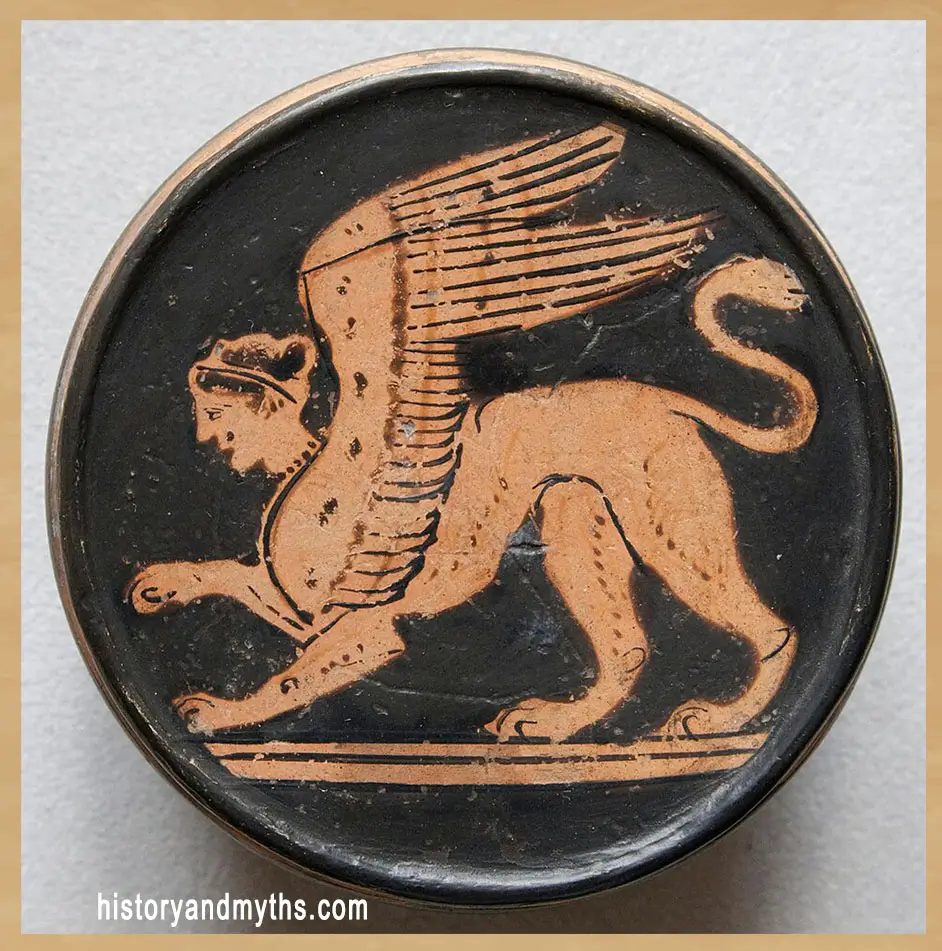
The Sphinx as a Guardian of Forbidden Knowledge
The Sphinx did not stand on the road simply to attack travelers. Her role was to prevent passage until a specific challenge had been met. In this sense, she resembles a guardian who controls access to something valuable rather than a monster seeking destruction for its own sake.
Many ancient myths contain figures that protect sacred places, hidden truths, or restricted knowledge. The Sphinx fits this pattern. Her riddle acts as a barrier separating those who understand from those who do not. Only a person capable of solving the puzzle can move forward.
This makes the encounter symbolic as well as dangerous. The road to Thebes becomes a test of readiness. Knowledge is presented as something that must be earned rather than freely given. The traveler is required to demonstrate understanding before gaining access to what lies beyond.
Seen this way, the Sphinx represents a broader idea found in many cultures: important knowledge carries responsibilities and challenges. The myth suggests that wisdom is not merely acquired. It must be proven. The Sphinx stands at the threshold between ignorance and understanding, ensuring that only those who can answer the question are allowed to pass.
What the Myth Says About Intelligence
The story of the Sphinx presents intelligence as more than the ability to remember facts. The travelers who faced her all received the same information, yet only one person reached the correct conclusion. The difference lay in how they interpreted what they heard.
This distinction reflects a broader Greek view of wisdom. Knowledge was valuable, but judgment was equally important. A person needed to recognize patterns, connect ideas, and understand meanings that were not immediately obvious. Intelligence was measured by insight as much as by learning.
The myth also challenges a common assumption about power. In many stories, the strongest character wins. Here, physical strength provides no advantage. The decisive factor is the ability to think clearly under pressure. The person who understands survives; the person who does not fails.
For this reason, the Sphinx myth remains relevant long after its original context. It suggests that some of life’s most important challenges cannot be solved through force, status, or resources alone. They require understanding. The story turns intelligence into a practical tool for navigating difficult situations, making wisdom not merely admirable but necessary.
Why Greek Heroes Usually Fought Monsters but Oedipus Solved One
Most Greek monster stories follow a familiar pattern. A dangerous creature threatens a community, a hero confronts it, and the conflict is resolved through physical action. Heracles defeats the Hydra, Perseus kills Medusa, and Theseus slays the Minotaur. Victory usually comes through combat.
The Sphinx story breaks that pattern. Oedipus does not defeat the creature with a weapon. He defeats her by answering a question. The decisive moment is intellectual rather than physical, making the encounter unusual within Greek mythology.
This difference reveals that the Greeks did not view all problems in the same way. Some threats could be overcome through courage and strength, while others required understanding. The Sphinx represents a challenge that cannot be solved by force because the obstacle is fundamentally a problem of knowledge.
The contrast also explains why the story remained memorable. Oedipus succeeds in a way that few heroes do. His victory demonstrates that intelligence can be as heroic as physical bravery. In a mythology filled with battles and monsters, the Sphinx stands out because the most important weapon is the ability to think.
The Legacy of the Sphinx
The Sphinx survived long after the original myth because she represents an idea that remains relevant across different cultures and periods. While many monsters are remembered for their strength or appearance, the Sphinx is remembered for a question. Her story demonstrates how knowledge, interpretation, and understanding can shape outcomes just as powerfully as physical force.
Over time, the Sphinx became a symbol of mysteries that demand thought rather than action. In literature, art, and popular culture, she often appears whenever hidden truths, difficult questions, or intellectual challenges are involved. The image of a guardian who tests understanding before granting passage continues to resonate because it reflects experiences that extend far beyond mythology.
The myth also left a lasting influence on the way people think about wisdom. The central lesson is not that every problem has a simple answer, but that careful reasoning can reveal solutions that are invisible at first glance. Oedipus succeeds because he looks beyond the surface of the riddle and recognizes its deeper meaning.
For this reason, the Sphinx remains one of the most distinctive figures in Greek mythology. She transforms knowledge into a source of power, danger, and transformation. More than a monster, she represents the idea that understanding can determine who moves forward and who remains trapped by what they fail to see.
The Sphinx occupies a unique place in Greek mythology because she turns knowledge into the central source of danger. Unlike monsters that rely on strength, she challenges travelers with a question that can determine whether they live or die. The threat lies not in physical confrontation but in the consequences of misunderstanding.
This makes the myth fundamentally different from many other Greek monster stories. Oedipus does not survive because he is stronger than the Sphinx. He survives because he understands what others cannot. His victory demonstrates that intelligence, insight, and interpretation can be as important as courage.
The story also reflects a broader Greek interest in wisdom and human understanding. The riddle forces people to look beyond appearances, recognize deeper patterns, and think carefully about the nature of human life. In doing so, it transforms a simple question into a test of perception itself.
More than two thousand years later, the Sphinx remains relevant because the challenge she represents has never disappeared. People continue to face problems that cannot be solved through force alone. The myth endures because it reminds us that knowledge is powerful—and that understanding can sometimes be the difference between failure and success.
Key Takeaways
- The Sphinx was one of the few Greek monsters defeated through intelligence rather than force.
- Her riddle transformed knowledge into a matter of life and death.
- The myth emphasizes interpretation and insight rather than memorization.
- Oedipus survived because he understood the deeper meaning of the question.
- The Sphinx functioned as a guardian who controlled access through knowledge.
- The story reflects the Greek belief that wisdom has practical power.
- The myth remains relevant because many challenges require understanding rather than strength.
Frequently Asked Questions
Who was the Sphinx in Greek mythology?
The Sphinx was a monster associated with Thebes who challenged travelers with a deadly riddle.
What was the Sphinx’s riddle?
She asked what walks on four legs in the morning, two at noon, and three in the evening. The answer is a human being.
Why was the Sphinx dangerous?
Those who failed to answer her riddle correctly were killed.
Who solved the Sphinx’s riddle?
Oedipus successfully solved the riddle and ended the Sphinx’s reign of terror.
What does the Sphinx symbolize?
She symbolizes the power of knowledge, wisdom, and the consequences of ignorance.
Why is the Sphinx different from other Greek monsters?
She challenged intelligence rather than physical strength, making her threat intellectual as well as physical.
What lesson does the myth teach?
The story suggests that understanding and insight can be more valuable than force when confronting difficult challenges.
Why is the Sphinx still famous today?
Because her myth explores timeless themes of knowledge, mystery, and the search for understanding.
Sources & Rights
- Sophocles. Oedipus Rex. Loeb Classical Library.
- Apollodorus. Bibliotheca. Loeb Classical Library.
- Pausanias. Description of Greece. Loeb Classical Library.
- Hyginus. Fabulae. University of Kansas Publications.
- Burkert, Walter. Greek Religion. Harvard University Press.
- Graf, Fritz. Greek Mythology: An Introduction. Johns Hopkins University Press.
- Buxton, Richard. The Complete World of Greek Mythology. Thames & Hudson.
- Hard, Robin. The Routledge Handbook of Greek Mythology. Routledge.
- Gantz, Timothy. Early Greek Myth. Johns Hopkins University Press.
- Vernant, Jean-Pierre. Myth and Thought Among the Greeks. Zone Books.
- Johnston, Sarah Iles. The Story of Myth. Harvard University Press.
- Dowden, Ken. The Uses of Greek Mythology. Routledge.
- Kirk, G. S. The Nature of Greek Myths. Penguin Books.
- Edmonds, Radcliffe G. Greek Mythology: A Reader. Hackett Publishing.
- Segal, Charles. Oedipus Tyrannus: Tragic Heroism and the Limits of Knowledge. Oxford University Press.
Written by H. Moses — All rights reserved © Mythology and History