House of Atreus: Why Revenge Destroyed Greece’s Most Cursed Family
Many Greek myths are remembered for their heroes, gods, and legendary battles, but few stories are as relentlessly tragic as the House of Atreus. Across several generations, members of the same family murdered one another, betrayed their closest relatives, and passed unresolved conflicts to their children. As a result, the House of Atreus became one of the most infamous dynasties in Greek mythology.
Yet the power of this myth does not come from a supernatural curse alone. What makes the story remarkable is the way violence seems to reproduce itself. Each attempt to settle an old crime creates a new grievance, and every act of revenge becomes the starting point for another act of revenge. The family’s history unfolds less like a series of separate tragedies and more like a chain reaction that nobody can stop.
For the Greeks, the House of Atreus was not simply a tale about a cursed bloodline. It was a myth about inherited violence, blood guilt, and the fear that some wrongs can survive across generations. By following the downfall of this family, Greek mythology explored a difficult question that remains relevant today: why do cycles of revenge continue long after the original crime has been committed?
The First Crime That Poisoned the Family
The tragedy of the House of Atreus did not begin with Agamemnon or Clytemnestra. Long before the Trojan War, the family had already become associated with betrayal, vengeance, and acts of violence that refused to remain in the past. Greek myth traces the origins of the disaster to a series of crimes committed by earlier generations, each one creating consequences that the next generation would inherit.
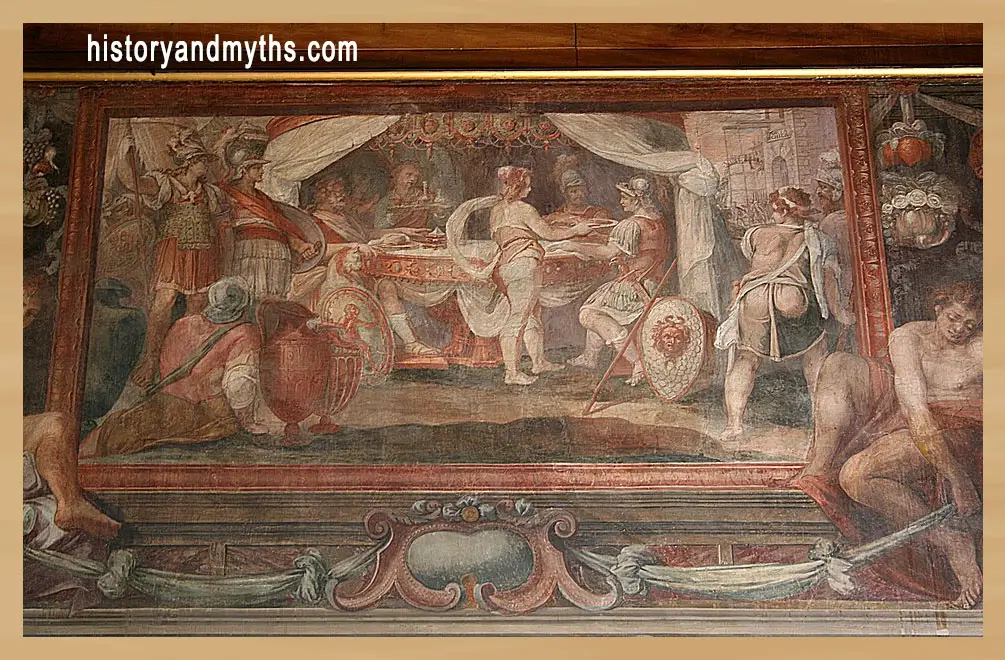
One of the most important figures in this history is Atreus, the king of Mycenae. His conflict with his brother Thyestes became one of the darkest episodes in Greek mythology. After discovering that Thyestes had betrayed him, Atreus chose revenge rather than reconciliation. Instead of ending the dispute, he escalated it by committing an act so shocking that later Greek writers treated it as the moment the family crossed a moral boundary from which it could never fully return.
What makes this story significant is not simply its brutality. Greek mythology contains many acts of violence. The difference is that the crime between Atreus and Thyestes did not remain a conflict between two individuals. Their actions reshaped the future of the entire family. Children, grandchildren, and later descendants became entangled in consequences created before they were born.
This idea reflects a recurring concern in Greek thought. Some actions were believed to generate a form of moral contamination that could spread beyond the original offender. A crime might appear finished, yet its effects continued to influence relationships, loyalties, and decisions for years or even generations. In the House of Atreus, violence became part of the family’s inheritance.
For this reason, the earliest crimes in the dynasty matter more than their immediate victims. They established a pattern that would define the family’s future. Every later tragedy—from Agamemnon’s murder to Orestes’ revenge—can be traced back to the moment when revenge replaced justice and conflict became a legacy passed from one generation to the next.
| Generation | Act of Violence | Consequence |
|---|---|---|
| Atreus & Thyestes | Betrayal and revenge | A blood feud begins |
| Agamemnon | Sacrifice of Iphigenia and wartime decisions | Hatred within the family |
| Clytemnestra | Murder of Agamemnon | A new demand for revenge |
| Orestes | Revenge against his mother | Continuation of blood guilt |
| The Dynasty as a Whole | Repeated retaliation | Endless cycle of violence |
Why Revenge Never Solved Anything in the House of Atreus
The House of Atreus stands out in Greek mythology because revenge never achieves what its characters hope it will achieve. Each act of retaliation is intended to settle an old grievance, restore honor, or punish a wrongdoing. Instead, it creates a new injury that demands another response. The result is a cycle in which violence appears justified at every stage while simultaneously making the situation worse.
This pattern can be seen throughout the family’s history. Atreus takes revenge on Thyestes, but the conflict survives. Agamemnon returns from Troy expecting to reclaim his place as king, yet he becomes the target of another act of vengeance. Orestes then avenges his father’s murder, only to find himself pursued for committing a crime of his own. Every participant believes they are correcting an injustice. None of them succeeds in bringing lasting peace.
What makes these stories powerful is that Greek mythology rarely portrays revenge as irrational. The characters usually have understandable motives. They seek justice for a murdered relative, punishment for betrayal, or repayment for past suffering. The problem is that their enemies often possess equally convincing reasons for retaliation. As a result, the distinction between victim and offender becomes increasingly blurred.
The House of Atreus suggests that revenge has a tendency to transform those who pursue it. Individuals who begin as victims gradually become perpetrators, creating new victims in turn. By focusing on this transformation, the myth shifts attention away from a single crime and toward the larger process that allows violence to reproduce itself.
For Greek audiences, this was one of the family’s most disturbing lessons. The danger was not only that revenge caused suffering. The danger was that revenge could become self-sustaining. Once a cycle of retaliation began, every attempt to end it risked becoming another reason for it to continue.
Blood Guilt and Inherited Violence in Greek Mythology
One reason the House of Atreus remained so important in Greek mythology is that the family’s tragedies were never treated as isolated events. Later generations were forced to confront the consequences of crimes they had not personally committed. This idea is often described as blood guilt—the belief that acts of violence can continue to affect a family long after the original offender is gone.
Greek myths do not suggest that descendants automatically share responsibility for an ancestor’s actions. Instead, they show how old crimes shape the world into which later generations are born. Children inherit broken relationships, unresolved conflicts, and enemies created by decisions they never made. In the House of Atreus, every generation enters a family history already burdened by violence.
This helps explain why the dynasty’s tragedies seem unavoidable. Characters are not trapped by fate alone. They are trapped by circumstances created by earlier acts of revenge. Agamemnon inherits the consequences of conflicts that began before his birth. Orestes faces choices shaped by crimes committed by both his parents and grandparents. The past remains active because its effects have never been resolved.
The concept reflects a broader concern found in Greek tragedy. Human actions rarely affect only the people directly involved. Decisions made in one generation can influence the lives of those who come afterward, creating problems that become increasingly difficult to separate from their original causes. The longer the cycle continues, the harder it becomes to identify where the responsibility truly began.
Through the House of Atreus, Greek mythology explores a fear that extends beyond individual wrongdoing. The real danger is not a single crime but the possibility that violence can become embedded within a family’s history, shaping future generations who inherit its consequences without inheriting any simple way to escape them.
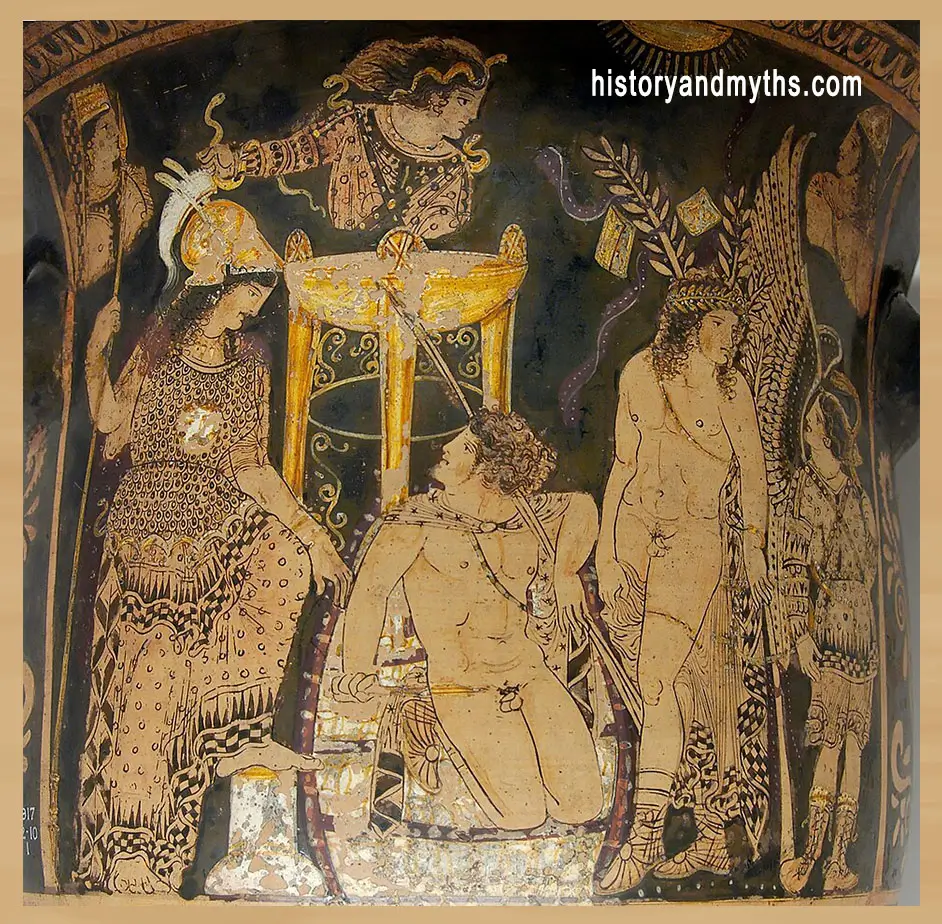
Why the House of Atreus Matters
The House of Atreus is often described as a cursed family, but Greek mythology uses the dynasty to explore a deeper idea. The true horror is not a magical curse. It is the way violence survives across generations, transforming victims into perpetrators and turning revenge into an endless cycle that no family member can fully escape.
© historyandmyths.com — Educational Use
How Every Generation Repeated the Same Pattern
Although the members of the House of Atreus lived in different circumstances and faced different conflicts, their stories follow a remarkably similar pattern. Each generation inherits a crisis created by the previous one, responds through violence, and unintentionally passes a new conflict to those who come after. The details change, but the structure remains the same.
This repetition is what makes the family’s history feel so relentless. Atreus believes revenge will settle his dispute with Thyestes. It does not. Agamemnon’s actions during and after the Trojan War create new grievances within his own household. Orestes then faces an impossible choice between competing obligations to his father and mother. In every case, a decision intended to resolve a problem becomes the source of another tragedy.
Greek mythology uses this pattern to illustrate how cycles of violence sustain themselves. The characters are not repeating the same crime because they fail to learn from the past. In many cases, they understand the dangers perfectly well. The problem is that they are operating within a system where every available choice carries consequences. Attempting to honor one duty often requires violating another.
This idea gives the House of Atreus a depth that goes beyond a simple family curse. The dynasty becomes a study of how destructive patterns survive over time. Individuals may change, but unresolved conflicts remain. New generations find themselves confronting problems that have already been shaped by decades of hostility, mistrust, and retaliation.
By presenting the family’s history in this way, Greek mythology shifts attention from individual villains to recurring behaviors. The true threat is not a single person but a pattern that continually reproduces itself. The House of Atreus remains memorable because it shows how difficult it can be to break a cycle once violence becomes the accepted response to conflict.
The House of Atreus as a Myth About Endless Retaliation
The House of Atreus endured in Greek culture because it addressed a problem that extended far beyond mythology. The story asks what happens when retaliation becomes the primary way of responding to injustice. Rather than presenting revenge as a solution, the myth repeatedly demonstrates how it can transform a single offense into a conflict that lasts for generations.
What makes the dynasty remarkable is that no clear ending exists within the cycle itself. Each act of vengeance can be defended as a response to an earlier wrong. At the same time, each act creates new victims who possess their own claim to justice. As a result, the conflict continually renews itself. The desire to correct past suffering becomes the mechanism that produces future suffering.
This theme helps explain why the family appears so often in Greek tragedy. Playwrights were not interested only in shocking crimes. They were interested in the social and moral consequences of retaliation. The House of Atreus provided a framework for exploring questions about justice, responsibility, and whether violence can ever truly repair the damage caused by previous violence.
The myth also reflects a broader Greek concern about the stability of communities. If every injury demands repayment and every repayment creates another injury, conflict can continue indefinitely. In this sense, the family’s tragedy is not merely personal. It becomes a warning about what happens when societies rely on revenge without finding a way to end the cycle.
By the time later Greek audiences encountered these stories, the House of Atreus had become more than a famous bloodline. It had become a symbol of endless retaliation itself—a reminder that violence often survives not because people forget the past, but because they remain trapped within it.
What the Greeks Feared in Stories of Family Curses
At first glance, the House of Atreus appears to be a story about a cursed family. Yet Greek audiences were likely less interested in the supernatural aspect of the curse than in what the curse represented. The family’s history gave shape to a deeper fear: the possibility that some conflicts can grow beyond the people who started them and continue influencing lives long after the original cause has been forgotten.
This fear appears throughout Greek tragedy. Characters often discover that they are living within circumstances created by earlier generations. They inherit obligations, rivalries, and consequences that limit their choices before they have done anything themselves. The House of Atreus transforms this concern into an extreme example, showing what happens when violence is allowed to accumulate over time without resolution.
The myth also reflects Greek anxieties about justice. If every crime demands punishment, but every punishment creates another crime, where can the process end? The House of Atreus offers no easy answer. Instead, it exposes the danger of allowing justice to become indistinguishable from revenge. Once that distinction disappears, restoring order becomes increasingly difficult.
For this reason, the family’s story remained influential for centuries. It was not remembered simply because it contained murders, betrayals, and dramatic reversals of fortune. It endured because it explored a problem that many societies have struggled to solve: how to break cycles of violence before they become part of a community’s inheritance.
In the end, the House of Atreus is not merely a myth about a cursed bloodline. It is a myth about the long shadow cast by unresolved wrongdoing. Through the downfall of one family, Greek mythology examined how violence spreads, why retaliation often fails to heal old wounds, and why breaking destructive patterns can be far more difficult than creating them.
The House of Atreus remains one of the most powerful family stories in Greek mythology because its tragedies are connected by more than blood. Across multiple generations, the family demonstrates how violence can survive long after the people who initiated it are gone. Murders are answered with revenge, revenge creates new grievances, and each attempt to restore justice leaves behind another reason for conflict.
Rather than presenting a simple tale of a cursed dynasty, Greek mythology uses the House of Atreus to examine the consequences of unresolved wrongdoing. The family’s downfall suggests that the greatest danger is not a single crime but the creation of patterns that future generations continue to repeat. Through this story, the Greeks explored a question that extends far beyond myth: how can a cycle of violence be broken once it has become part of a family’s history?
Key Takeaways
- The House of Atreus is one of the most tragic dynasties in Greek mythology.
- The family’s story focuses on inherited violence rather than a simple supernatural curse.
- Every act of revenge creates a new grievance that fuels future conflicts.
- Greek mythology uses blood guilt to explain how old crimes continue affecting later generations.
- The dynasty illustrates how retaliation can become self-sustaining.
- The myth explores justice, responsibility, and the difficulty of ending cycles of violence.
Frequently Asked Questions
Who were the House of Atreus?
The House of Atreus was a royal family in Greek mythology associated with betrayal, murder, revenge, and tragic conflict across multiple generations.
Why was the House of Atreus considered cursed?
Greek myths portray the family as trapped in a cycle of violence in which one crime repeatedly led to another.
Who were the most famous members of the House of Atreus?
Important figures include Atreus, Thyestes, Agamemnon, Clytemnestra, Orestes, and Electra.
What is blood guilt in Greek mythology?
Blood guilt refers to the lasting consequences of violent crimes that continue to affect later generations.
Why is Agamemnon important to the story?
His murder became one of the central events in the family’s cycle of revenge.
What role did Orestes play?
Orestes avenged his father’s death, continuing the pattern of retaliation that defined the dynasty.
What does the House of Atreus symbolize?
It symbolizes inherited violence, unresolved wrongdoing, and the destructive nature of endless revenge.
Why did Greek tragedians focus on this family?
The dynasty allowed playwrights to explore justice, responsibility, revenge, and the consequences of human actions across generations.
Sources & Rights
- Homer. Iliad.
- Homer. Odyssey.
- Aeschylus. Oresteia.
- Sophocles. Electra.
- Euripides. Electra.
- Euripides. Orestes.
- Apollodorus. Library.
- Pausanias. Description of Greece.
- Hyginus. Fabulae.
- Pindar. Pythian Odes.
- Burkert, Walter. Greek Religion.
- Dodds, E. R. The Greeks and the Irrational.
- Vernant, Jean-Pierre. Myth and Tragedy in Ancient Greece.
- Knox, Bernard. The Heroic Temper.
- Gantz, Timothy. Early Greek Myth.
- Buxton, Richard. The Complete World of Greek Mythology.
- Powell, Barry B. Classical Myth.
- Johnston, Sarah Iles. Ancient Greek Religion.
- Bremmer, Jan N. Greek Religion.
- Parker, Robert. On Greek Religion.
- Seaford, Richard. Reciprocity and Ritual.
- Winnington-Ingram, R. P. Studies in Aeschylus.
Written by H. Moses — All rights reserved © Mythology and History