The Odyssey Explained: Odysseus’ Journey Back to Ithaca
The Odyssey is one of the most famous stories to survive from ancient Greece, but its plot is often reduced to a simple image: Odysseus wandering from island to island, fighting monsters on his way home.
After the Trojan War, Odysseus, king of Ithaca, tries to return to his wife Penelope and his son Telemachus. The voyage should not have taken ten years. It becomes a decade-long struggle because of disastrous choices, hostile gods, lost companions and long periods when Odysseus is unable to continue his journey.
Along the way he encounters the Cyclops Polyphemus, Circe, the Sirens, Scylla and Charybdis, the cattle of Helios and other dangers. Athena repeatedly helps him, while Poseidon works against his return.
But The Odyssey is not simply a catalogue of monsters. At its core, it is a story about homecoming, identity, survival and the consequences of human decisions, ending not with another adventure at sea, but with Odysseus finally returning to Ithaca and fighting to reclaim his home.
What Is The Odyssey?
The Odyssey is an ancient Greek epic poem traditionally attributed to Homer. It tells the story of Odysseus’ attempt to return to Ithaca after the Trojan War.
The poem is divided into 24 books and follows two connected stories. One follows Odysseus as he struggles to reach home after years of wandering. The other follows his son Telemachus, who is searching for news of his father while a group of suitors occupies the royal household and pressures Penelope to remarry.
Although The Odyssey is often treated as a sequel to The Iliad, it is not simply the next chapter of the Trojan War. Its focus shifts away from the battlefield and toward what happens after war: the difficulty of returning home, rebuilding authority and recovering a life that has changed during years of absence.
Who Was Odysseus?
Odysseus was the king of Ithaca, husband of Penelope and father of Telemachus. In Greek epic tradition, he is remembered less for overwhelming strength than for intelligence, adaptability and the ability to survive situations that defeat other warriors.
He fought in the Trojan War alongside figures such as Achilles, Agamemnon and Menelaus, but The Odyssey begins after Troy has fallen. By then, the challenge is no longer winning a war. It is getting home.
Odysseus succeeds through more than combat. He lies when necessary, hides his identity, plans escapes and reads the intentions of both enemies and allies. Those qualities save him repeatedly, but his pride and poor decisions also create some of the dangers that prolong his journey.
The Odyssey Does Not Begin at the Start of the Journey
One reason The Odyssey can feel confusing at first is that Homer does not tell Odysseus’ journey in chronological order.
The poem opens years after the fall of Troy. Odysseus is already stranded on Calypso’s island, while Penelope and Telemachus are still waiting for him in Ithaca.
Much of what happened earlier comes later, when Odysseus reaches the Phaeacians and tells them about his travels. That is where the reader learns about the Cyclops, Aeolus, Circe, the Underworld, the Sirens and Scylla and Charybdis.
So when the journey is retold from Troy to Ithaca, as it often is in modern summaries, the events are being rearranged into chronological order. Homer’s poem itself begins much later in Odysseus’ absence.
Why Did Odysseus Take Ten Years to Reach Ithaca?
Odysseus did not spend ten years continuously sailing toward Ithaca. His return was repeatedly delayed by divine hostility, mistakes made during the voyage and long periods when he could not continue home.
Poseidon became his greatest divine enemy after the blinding of Polyphemus, while poor decisions by Odysseus and his crew repeatedly cost them opportunities to return.
Much of the decade was also spent in enforced or prolonged stays rather than at sea. Odysseus remains with Circe for about a year and is held on Calypso’s island for seven years before the gods finally allow him to leave.
The ten-year journey was therefore a mixture of wandering, disaster and long delays, not ten straight years of travel.
Odysseus’ Journey from Troy to Ithaca
Odysseus leaves Troy with a fleet and a clear destination: Ithaca. Many of the setbacks that follow come not only from monsters and gods, but from decisions made by Odysseus and his crew.
The Cicones and the Lotus-Eaters
The first major disaster comes at Ismarus, home of the Cicones. Odysseus and his men raid the city, but instead of leaving immediately, the crew stays too long. The Cicones return with reinforcements, and Odysseus loses men before escaping.
Soon after, storms drive the ships to the land of the Lotus-Eaters. The danger there is very different. Men who eat the lotus lose their desire to return home and want to remain where they are.
Odysseus forces them back to the ships and leaves quickly. Nothing attacks him, but the episode introduces a different kind of threat: the temptation to forget Ithaca and abandon the journey altogether.
Polyphemus and the Anger of Poseidon
One of the most important episodes in The Odyssey begins when Odysseus and his men enter the cave of Polyphemus, a Cyclops and son of Poseidon.
Polyphemus traps the Greeks inside and begins killing them. Odysseus escapes by blinding him with a sharpened stake, then hiding his men beneath the Cyclops’ sheep as they leave the cave.
The plan works, but Odysseus makes a costly mistake once he is safely at sea. Instead of leaving anonymously, he reveals his real name.
Polyphemus calls on Poseidon to punish him. From that point on, the sea god becomes the greatest divine obstacle to Odysseus’ return.
The episode captures both sides of Odysseus. His intelligence saves the survivors, but his pride creates consequences that follow him for years.
Aeolus, the Laestrygonians and Circe
After escaping Polyphemus, Odysseus reaches Aeolus, keeper of the winds. Aeolus gives him a bag containing the dangerous winds and leaves only the one needed to carry the ships toward Ithaca.
The plan nearly works. Ithaca comes into sight, but while Odysseus sleeps, his crew opens the bag, believing it contains treasure. The released winds drive the ships back across the sea, turning one of the journey’s best chances of returning home into another failure.
Soon after, the Laestrygonians, a race of giant cannibals, destroy almost the entire fleet. Odysseus escapes with only one ship.
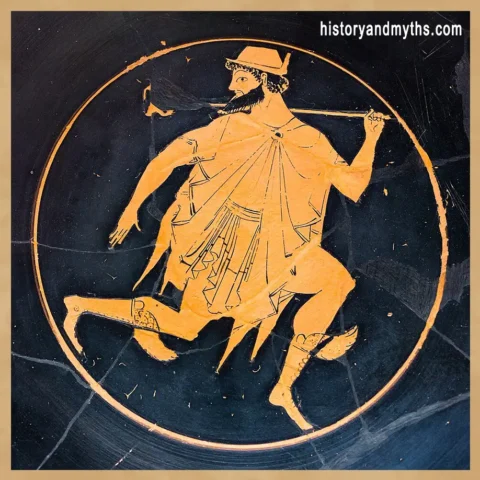
The survivors then reach the island of Circe, who transforms some of the crew into pigs. With help from Hermes, Odysseus resists her magic and forces her to restore them. Circe eventually becomes an ally, but the men remain on her island for a full year before continuing their journey.
Aeolus: Greek God and Keeper of the Winds
The Journey to the Underworld
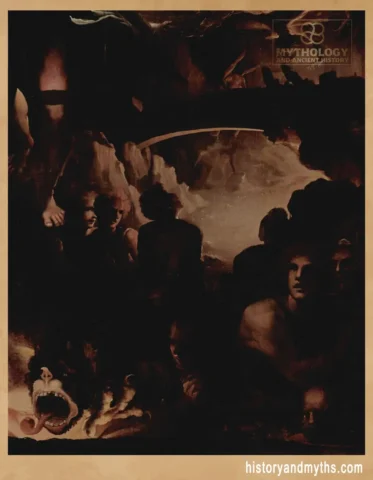
Before Odysseus can continue home, Circe tells him that he must first seek the prophet Tiresias in the world of the dead.
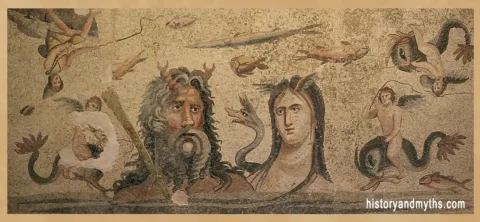
Odysseus travels to the edge of Ocean and performs the rites needed to speak with the dead. There he meets Tiresias, who warns him about the dangers still ahead, especially the sacred cattle of Helios. He also learns that reaching Ithaca will not end every difficulty.
The journey becomes personal as well. Odysseus encounters the shade of his mother, Anticleia, and discovers that she died while he was away. He also speaks with figures from the Trojan War, including Agamemnon and Achilles, whose experiences offer very different views of glory, death and returning home.
Odysseus leaves the Underworld with more than warnings about the road ahead. He also understands more clearly what his long absence has already cost him.
The Sirens, Scylla and Charybdis
After leaving the Underworld, Odysseus faces dangers that cannot all be overcome by force.
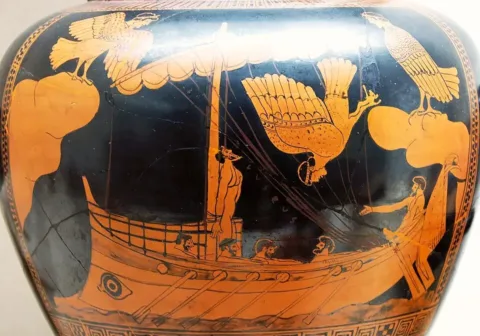
First come the Sirens, whose song draws sailors toward destruction. Following Circe’s warning, Odysseus orders his crew to block their ears with wax. He wants to hear the song himself, so they tie him to the mast and refuse to release him no matter how much he begs.
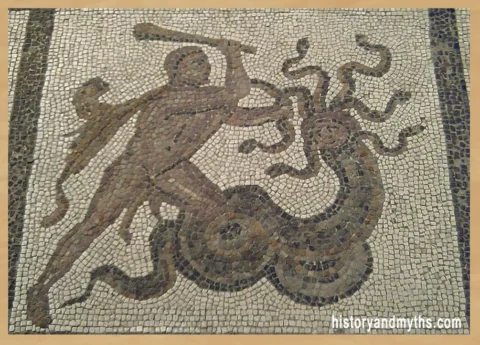
The next danger offers no safe choice. Odysseus must pass between Scylla, a monster that seizes sailors from the ship, and Charybdis, a deadly whirlpool capable of swallowing the vessel.
He chooses the route past Scylla because losing several men is less disastrous than risking the entire ship.
The episode strips away the idea that Odysseus can outsmart every danger. Some threats can only be managed, not escaped without loss.
Scylla and Charybdis in Greek Mythology
The Cattle of Helios and the Loss of the Crew
The next disaster comes on Thrinacia, the island where the sacred cattle of Helios graze.
Odysseus has already been warned not to harm them. He tells his men the same, but bad weather traps the crew on the island and their supplies begin to run out.
While Odysseus is away, the men kill some of the cattle and eat them.
Helios demands justice, and Zeus destroys the ship with a thunderbolt after the crew leaves the island. Every man dies except Odysseus.
This marks a decisive change in the journey. Until now, Odysseus has been trying to bring a crew home. From this point onward, he is the only survivor left to reach Ithaca.
Helios: The Greek Sun God of Light and Oaths
Calypso, the Phaeacians and the Final Voyage Home
After the destruction of his ship, Odysseus eventually reaches the island of Calypso, where he remains for seven years. She offers him comfort and even immortality, but he still wants to return to Ithaca.
The gods finally intervene. Zeus sends Hermes to order Calypso to release him, and Odysseus builds a raft and sets out alone.
Poseidon nearly ends the journey with another storm, but the sea goddess Leucothea gives Odysseus a protective veil that helps him survive and reach the land of the Phaeacians.
There he is treated as a guest and tells the story of the travels that brought him to this point. The Phaeacians then provide the final passage to Ithaca, carrying him home while he sleeps.
After years of wandering, Odysseus finally reaches his own island. But returning physically to Ithaca is only the beginning. He still has to reclaim his household, his family and his position as king.
Athena and Poseidon: The Gods Shaping the Journey
The gods do not simply watch Odysseus’ journey. Two of them shape it more than anyone else: Athena and Poseidon.
Athena supports Odysseus because she values the qualities that define him, especially intelligence, planning and self-control. She helps Telemachus search for news of his father, protects Odysseus at key moments and later assists him once he reaches Ithaca.
Poseidon stands on the opposite side. After the blinding of Polyphemus, he becomes the main divine force delaying Odysseus’ return through storms and continued hostility at sea.
Yet the poem never makes the journey entirely a struggle between competing gods. Divine intervention matters, but Odysseus and his crew still suffer many of the consequences of their own decisions.
What Was Happening in Ithaca While Odysseus Was Gone?
While Odysseus is struggling to return home, Ithaca is facing a crisis of its own.
A large group of suitors has taken over the royal household, assuming that Odysseus is dead and competing to marry Penelope. They consume his livestock, occupy his halls and steadily drain the household’s wealth and authority.
Penelope resists them for years. Her most famous tactic is the weaving of a burial shroud for Odysseus’ father, Laertes. She promises to choose a husband when the work is finished, but secretly unpicks it each night until the deception is discovered.
At the same time, Telemachus is growing into adulthood without his father. Encouraged by Athena, he travels in search of news about Odysseus and begins to challenge the suitors’ control.
By the time Odysseus reaches Ithaca, simply returning is not enough. His household has been occupied, his authority weakened, and his family forced to survive years of uncertainty.
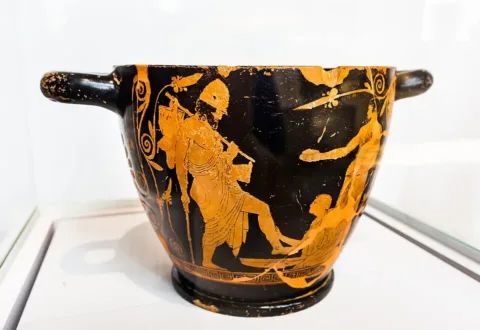
How Odysseus Returned to Ithaca
When Odysseus finally reaches Ithaca, he does not walk straight into his palace.
Athena disguises him as an old beggar so he can observe what has happened in his absence without revealing himself to the suitors. This gives him time to learn who is still loyal and who has turned against his household.
His first important reunion is with Telemachus. After Athena reveals Odysseus’ identity to his son, the two begin planning how to deal with the suitors together.
Odysseus then enters his own home in disguise. Most of the people inside do not recognize him. His old dog Argos does, and later the servant Eurycleia identifies him by a scar while washing his feet.
By remaining hidden, Odysseus is able to judge the situation inside his own household before revealing himself openly.
How Does The Odyssey End?
The final confrontation begins with a contest arranged by Penelope. She brings out Odysseus’ bow and declares that she will marry the man who can string it and shoot an arrow through a row of axe heads.
None of the suitors can do it.
Still disguised as a beggar, Odysseus takes the bow, strings it with ease and completes the shot. He then reveals himself.
With Telemachus and a small number of loyal servants beside him, Odysseus kills the suitors who have occupied his household.
He still has to convince Penelope that he is truly her husband. She tests him by referring to their marriage bed, whose construction contains a secret known only to them. His response finally confirms his identity.
The story continues beyond their reunion. Odysseus visits his father Laertes, while the relatives of the dead suitors prepare to take revenge. A final clash begins, but Athena intervenes and brings the conflict to an end.
The poem closes with peace restored in Ithaca. Odysseus has not only returned home; he has recovered his family, household and authority.
Can Odysseus’ Journey Really Be Mapped?
Only partly.
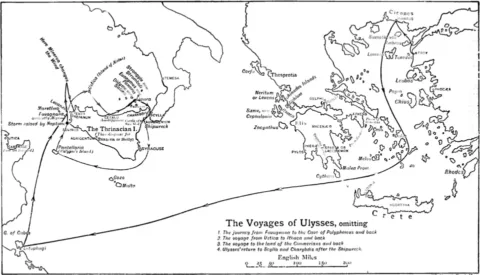
Some places in The Odyssey belong to the real Greek world. Troy and Ithaca, for example, can be placed on a modern map. Other locations in the poem are far more difficult to identify.
Scholars have long tried to match the lands of the Cyclopes, Circe, the Sirens, Scylla and Charybdis, and other stops with real places around the Mediterranean. Different routes have been proposed, often placing episodes around Italy, Sicily and the western Mediterranean.
The problem is that Homer does not give enough geographical detail to prove most of these identifications. Some episodes also move into an openly supernatural landscape where ordinary geography becomes less useful.
Modern maps of Odysseus’ journey are therefore best treated as reconstructions, not exact itineraries. They can help readers visualize one possible route, but no single route has been definitively established.
Did Every Adventure Come from Homer?
Not every story now associated with Odysseus appears in Homer’s Odyssey.
The poem contains the major episodes of his return from Troy, including Polyphemus, Circe, the Underworld, the Sirens, Scylla and Charybdis, the cattle of Helios and Calypso. Later Greek and Roman writers, artists and storytellers continued to expand his legend.
Modern retellings may therefore combine episodes from The Odyssey with later traditions, or alter them for dramatic effect.
For readers trying to separate Homeric material from later additions, The Odyssey remains the central surviving account of Odysseus’ homecoming, while the wider mythology around him continued to develop long after the poem.
What Is The Odyssey Really About?
The Greek idea of nostos, or homecoming, runs through the poem. Odysseus is not simply trying to reach a place on a map. He is trying to recover his family, identity and position in Ithaca after years of war and wandering.
The poem also asks what makes a successful hero. Odysseus survives less through physical strength than through judgment, deception and adaptability. Yet his intelligence does not protect him from pride or poor decisions.
Another major theme is xenia, the code of hospitality between host and guest. Good hospitality repeatedly helps Odysseus survive, while violations of it bring serious consequences. The suitors in Ithaca provide the clearest example: they abuse Odysseus’ household while competing to take his place.
The gods influence events throughout the poem, but divine intervention never removes human responsibility. Odysseus and his crew repeatedly face warnings, choices and consequences of their own.
The Odyssey is therefore not simply a tale of monsters and shipwrecks. Its central concern is what it takes to return home after both the traveler and the world he left behind have changed.
Why The Odyssey Still Matters
The Odyssey has remained influential because its story proved remarkably adaptable.
For centuries, writers, artists and later filmmakers have returned to Odysseus’ journey, reshaping its episodes for new audiences while preserving its central image: a traveler struggling to find his way home after years of danger and loss.
Its influence reaches beyond mythology. The word odyssey itself entered modern language as a term for a long, difficult and eventful journey.
That adaptability helps explain why The Odyssey remains culturally alive rather than simply preserved as an ancient text. Its characters, episodes and even its title continue to provide a language for describing difficult journeys, uncertainty and discovery.
Academic Sources
This article draws on Homer’s Odyssey together with modern academic scholarship on its narrative structure, characters, mythology, homecoming, identity and social values.
- Homer.
The Odyssey.
Edited and translated by A. T. Murray. Loeb Classical Library, 2 vols., William Heinemann and G. P. Putnam’s Sons, 1919.
Primary source for Odysseus’ journey, Polyphemus, Circe, the Underworld, the Sirens, Scylla and Charybdis, Helios’ cattle, Calypso, the return to Ithaca and the final events of Book 24.
- Irene J. F. de Jong.
A Narratological Commentary on the Odyssey.
Cambridge University Press, 2001.
Major scholarly commentary on the poem’s narrative structure, chronology, characterization, speeches, recognition scenes and the way earlier adventures are told retrospectively.
- Robert Fowler, ed.
The Cambridge Companion to Homer.
Cambridge University Press, 2004.
Broad academic reference on Homeric epic, the gods, heroism, society, narrative technique, reception and the distinctive structure of the Odyssey.
- Bruce Louden.
Homer’s Odyssey and the Near East.
Cambridge University Press, 2011.
Scholarly study of the poem’s mythic structures, hospitality scenes, divine intervention, the Underworld, Thrinacia, the suitors and the larger patterns that shape Odysseus’ journey.
- Sheila Murnaghan.
Disguise and Recognition in the Odyssey.
Princeton University Press, 1987.
Important study of Odysseus’ disguise, recognition by Telemachus, Penelope and others, and the recovery of identity and status after his return to Ithaca.
- M. I. Finley.
The World of Odysseus.
New York Review Books, 2002 edition.
Classic scholarly study of Homeric society, household, authority, hospitality, wealth and the social values that provide the background to Odysseus’ return.