Ancient Greek Harbors and Ports: How Maritime Trade Worked
Greek harbors and ports were the infrastructure that made long-distance trade possible. Without them, the movement of goods—especially bulk cargo like grain, oil, and wine—would have been severely limited by geography and overland constraints.
Why were they essential? Because the Greek world depended on the sea. Coastal cities used ports to receive imports, export local products, and maintain stable supply. This made harbors not just entry points, but controlled systems where docking, unloading, storage, and redistribution were organized.
Ports also concentrated activity. Ships, merchants, officials, and labor all operated within the same space, allowing trade to function continuously rather than sporadically. This turned the harbor into a working system rather than a simple landing area.
This article explains how Greek ports actually worked: how ships were handled, how goods moved through the system, and how harbors supported trade, control, and connectivity across the ancient Greek world.
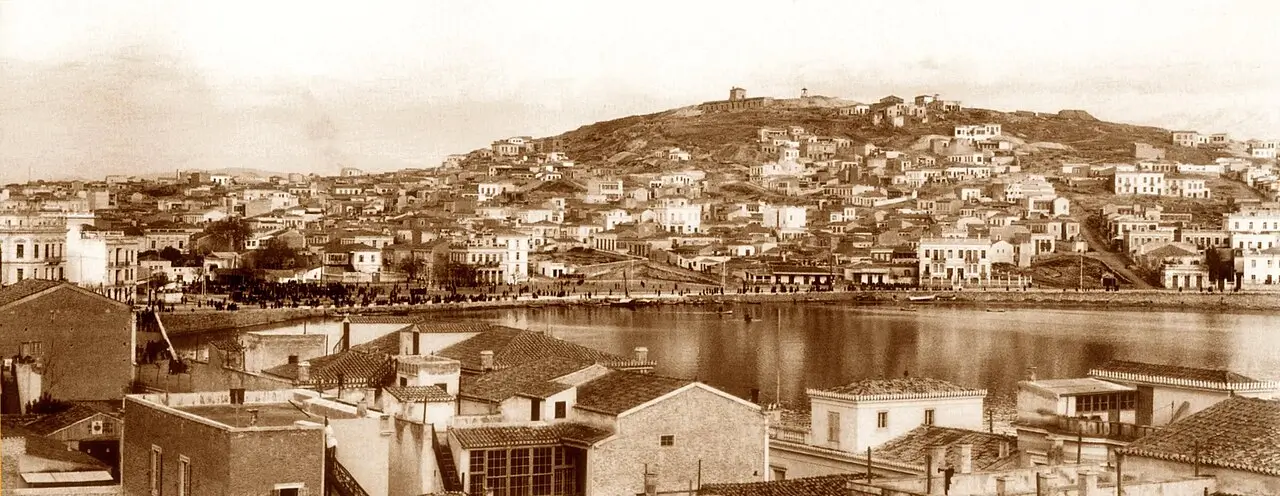
What Were Greek Harbors and Ports?
Greek harbors and ports were structured coastal zones designed to handle the movement of ships, goods, and people. They were not just natural inlets; they were organized spaces where maritime activity was managed.
A harbor referred to the physical shelter—a protected area where ships could anchor safely. This could be a natural bay or a modified coastline that reduced exposure to wind and waves. Its primary function was protection.
A port went further. It included the operational side of maritime activity—docking areas, loading and unloading zones, storage facilities, and administrative control. The port turned a safe anchorage into a working system for trade and movement.
Not every harbor functioned as a full port. Some locations provided shelter without supporting large-scale exchange, while major centers combined both roles to handle continuous traffic.
Location was critical. Ports were positioned where access to inland routes and urban centers was possible, linking sea movement with internal distribution. This made them points of connection between maritime and land-based systems.
The key point is that Greek harbors provided safety, while ports organized activity. Together, they created the framework that allowed maritime trade to operate reliably.
| Aspect | Greek Ports | Land Transport |
|---|---|---|
| Capacity | Handled bulk goods efficiently | Limited by terrain and distance |
| Speed | Faster over long distances | Slower and labor-intensive |
| Cost | Lower for large cargo | Higher due to effort required |
| Reliability | Affected by weather | Affected by terrain |
| Scale | Moderate within harbor limits | Low scalability |
| Connectivity | Linked regions across sea | Local and regional only |
Why Ports Were Essential to Greek Life
Ports were essential because the Greek landscape limited overland movement and local production. Mountains fragmented the land, and agriculture could not reliably meet demand, especially in larger cities. Sea transport became the most efficient way to move goods at scale.
This created dependency. Cities relied on ports to import what they lacked—particularly grain—and to export what they produced, such as oil and wine. Without consistent maritime access, supply would become unstable.
Ports also reduced cost and effort. Moving goods by sea required fewer resources than transporting them across difficult terrain. This made long-distance exchange practical, not exceptional.
They connected regions. Instead of operating as isolated communities, cities became part of wider networks. Goods, information, and people moved through ports, linking local economies to external sources.
Stability depended on this system. Regular access to imports prevented shortages, while exports sustained economic activity. When port access was disrupted, the effects were immediate.
The key point is that ports were not optional infrastructure. They were the mechanism that allowed Greek cities to function beyond the limits of their land.
The Port of Piraeus as a Model
The port of Piraeus shows how a Greek harbor could operate as a fully developed system rather than a simple docking area. It was designed to handle continuous maritime activity and connect directly to the city it served.
Structure was the key advantage. Piraeus was not a single harbor but a network of enclosed basins, each with defined use. This separation allowed multiple ships to dock, unload, and depart without interfering with one another. It increased capacity without requiring complex technology.
Access was controlled. Entrances to the harbor were narrow and defensible, allowing movement to be monitored. This supported both economic regulation and security, ensuring that traffic remained organized.
Facilities supported the flow of goods. Warehouses, ship sheds, and working areas were positioned close to docking points. This reduced handling time and kept cargo moving through the system efficiently.
Connection to the city completed the model. Roads linked the port directly to Athens, allowing goods to move inland quickly. This integration turned the port into an extension of the urban economy rather than a separate zone.
Scale distinguished Piraeus from smaller ports. It handled higher volumes and more regular traffic, showing how the same basic system could be expanded within its limits.
The key point is that Piraeus demonstrates how Greek ports could be organized for continuous operation. It combined structure, control, and connection to support large-scale maritime activity within the constraints of the time.
- Ports connected maritime trade to inland distribution
- Harbors provided protection, while ports organized activity
- Goods moved through structured stages: docking, unloading, storage
- Trade depended on reliable access to maritime routes
- Ports supported both economic and military operations
- The system was efficient but limited by capacity and conditions
Trade, Goods, and Movement
Greek ports handled a steady flow of goods that followed clear patterns of demand. The most critical imports were bulk staples—especially grain—brought in to stabilize food supply. In contrast, exports focused on goods that held value over distance, such as oil, wine, and finished products.
Movement depended on packaging and durability. Liquids were transported in sealed containers like amphorae, which allowed them to be stacked and moved efficiently. Bulk goods required careful handling during unloading to prevent loss, making labor coordination essential.
Routes were not random. Ships followed established maritime paths that connected major ports, allowing predictable movement between regions. This reduced uncertainty and supported regular exchange rather than isolated journeys.
Timing mattered. Sailing seasons affected when goods could move, creating cycles of activity. Ports had to manage periods of high traffic followed by slower intervals, which influenced storage and distribution patterns.
Flow continued beyond the port. Once goods were unloaded, they moved into local markets or along inland routes. This extended maritime trade into the wider economy, ensuring that imported and exported goods reached their destinations.
The key point is that trade through Greek ports followed structured movement. Goods were selected, packaged, transported, and distributed according to practical constraints, creating a consistent flow rather than irregular exchange.
Control and Administration of Ports
Greek ports were not open, unregulated spaces. Movement of ships and goods was monitored to maintain order, protect supply, and ensure that economic activity remained predictable.
Entry and exit could be supervised. Ports often had defined access points, which made it possible to observe incoming ships and manage traffic. This reduced congestion and allowed authorities to maintain basic control over movement.
Goods were recorded. Cargo passing through the port could be counted and tracked, especially when it was intended for trade. This made it easier to manage supply and identify what entered or left the city.
Taxes and duties were part of the system. Imported goods could be subject to charges, providing revenue and regulating the flow of trade. This linked port activity directly to the financial structure of the polis.
Officials played a role in maintaining order. They oversaw procedures, resolved issues, and ensured that activity followed established practices. This prevented disruption and kept the system functioning smoothly.
Control also supported stability. By monitoring supply—especially essential goods—cities could respond to shortages or disruptions more effectively than if movement were uncontrolled.
The key point is that ports functioned under supervision. Regulation did not eliminate movement; it made it consistent and manageable within the limits of the system.
Military and Strategic Role of Ports
Greek ports were critical to naval power. They provided secure bases where fleets could be stationed, maintained, and deployed. Without protected harbors, ships could not be preserved or organized for sustained operations.
Protection was the first requirement. Enclosed or well-positioned harbors reduced exposure to attack and weather, allowing ships to remain ready for use. Controlled entrances made it possible to defend access points and limit enemy movement.
Ports also supported maintenance. Warships required regular care—repairs, cleaning, and preparation—which could only be done effectively in stable, accessible locations. This made the port an operational base, not just a parking area.
Deployment depended on proximity. Ports located near key routes or contested areas allowed faster response. Fleets could move quickly from harbor to open sea, giving a strategic advantage in both defense and offense.
Coordination was essential. Keeping ships, crews, and supplies in one location allowed organized action rather than scattered effort. This turned naval activity into a controlled system.
The key point is that ports enabled naval capability. They made it possible to maintain fleets, protect assets, and respond to threats within a structured environment.
- Greek ports were essential for trade and supply stability
- Harbors provided safety, while ports enabled organized exchange
- Goods moved through structured processes from ship to land
- Ports linked local economies to wider trade networks
- They also supported naval power and strategic control
- Capacity, weather, and infrastructure limited performance
Frequently Asked Questions
What were Greek ports used for?
They were used to manage the movement of ships, goods, and trade across the sea.
What is the difference between a harbor and a port?
A harbor provides shelter for ships, while a port organizes trade and activity.
Why were ports important in ancient Greece?
They enabled trade, supported supply, and connected regions across the Mediterranean.
How did goods move through a port?
Goods were unloaded, stored, and then distributed inland or to markets.
Did ports support military activity?
Yes, they served as bases for naval fleets and strategic operations.
What limited Greek ports?
Capacity, weather conditions, and basic infrastructure restricted performance.
What is an example of a major Greek port?
Piraeus was one of the most important ports, serving Athens.
Sources & Rights
- Blackman, David. Ancient Harbours in the Mediterranean. Oxford.
- Casson, Lionel. Ships and Seamanship in the Ancient World.
- Harris, Edward. The Ancient Greek Economy. Cambridge.
- Bresson, Alain. The Making of the Ancient Greek Economy.
- Finley, M.I. The Ancient Economy.
- Morrison, J.S. Greek and Roman Oared Warships.
- Hansen, Mogens Herman. Polis: An Introduction.
- Osborne, Robin. Classical Greece.
- Cartledge, Paul. Ancient Greece.
- Thucydides. History of the Peloponnesian War.
- Herodotus. Histories.
- Strabo. Geography.
- Diodorus Siculus. Library of History.
- Xenophon. Oeconomicus.
- Aristotle. Politics.
- Rankov, Boris. Trireme Olympias: The Final Report.
- Meiggs, Russell. The Athenian Empire.
- Sealey, Raphael. A History of the Greek City States.
- Hornblower, Simon. The Greek World 479–323 BC.
- Shipley, Graham. The Greek World After Alexander.
Written by H. Moses — All rights reserved © Mythology and History