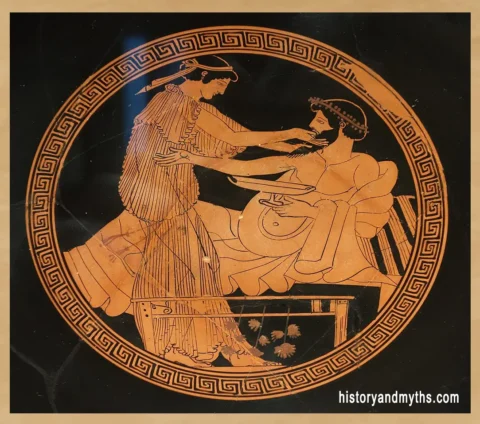
Ancient Greek Rhetoric: How Public Speech Shaped Power
In ancient Greek cities, decisions were not issued from closed offices. They were argued in public. If you wanted to pass a law, defend yourself in court, or influence policy, you had to speak—and speak well enough to convince others.
That is what rhetoric was for. It wasn’t decorative language or academic theory. It was a working tool used in assemblies and courts where outcomes depended on persuasion. A weak argument didn’t just sound bad; it failed in practice. A strong one could shift votes, win cases, and build reputation.
This matters because Greek political life had no substitute for speech. There were no professional bureaucracies making decisions behind the scenes. Citizens had to present, explain, and defend positions in front of other citizens. The process was direct. The stakes were real.
So the question is not what rhetoric meant in theory, but how public speech actually produced decisions, distributed influence, and shaped power inside Greek society.
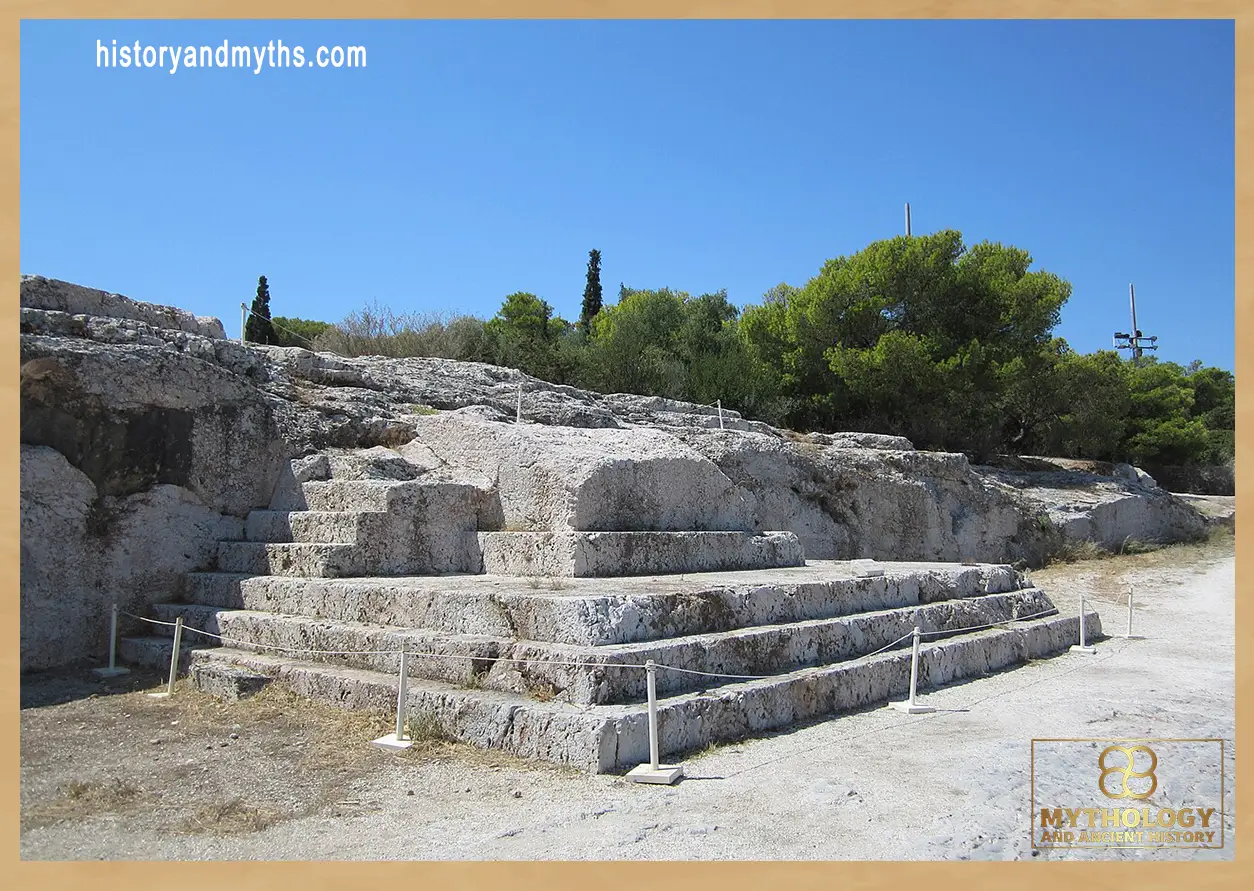
What Greek Rhetoric Actually Was
Greek rhetoric was a practical method for getting results in public settings. It wasn’t about sounding impressive. It was about moving a group toward a decision—a vote, a verdict, or a course of action.
The structure was simple in principle and demanding in execution. A speaker had to present a claim, support it with reasons, anticipate objections, and hold the audience’s attention long enough to carry the argument through. If any of these steps failed, the outcome usually followed.
This is why rhetoric developed as a set of repeatable techniques. Speakers learned how to establish credibility (ethos), frame the issue so it made sense to the audience (logos), and use timing and tone to maintain engagement (pathos). These weren’t abstract categories. They were tools used under pressure, in front of people who could agree or reject the argument immediately.
Context shaped everything. In an assembly, the target was a large group with mixed interests. The argument had to be clear, structured, and adaptable. In a court, the audience was smaller but the standard was stricter. A case had to be built step by step, with evidence, sequence, and control over detail.
Preparation mattered. Speakers didn’t rely on improvisation alone. They planned openings, transitions, and conclusions. They chose what to emphasize and what to leave out. The goal was not completeness. It was effectiveness within limited time.
In practice, Greek rhetoric was not a theory of language. It was a method for producing decisions in environments where speech determined outcomes.
| Element | Function | Outcome |
|---|---|---|
| Public Speech | Presenting and defending arguments | Decision-making |
| Assembly Debate | Persuading large audiences | Policy outcomes |
| Court Speech | Structured argument and defense | Verdicts |
| Rhetorical Techniques | Organizing and delivering arguments | Effective persuasion |
| Audience Response | Evaluating arguments | Acceptance or rejection |
Why Public Speech Was Necessary
Public speech was not optional in Greek cities. It was the only way decisions could be made in many situations. Laws were debated in assemblies. Cases were argued in courts. Policies were accepted or rejected based on what people heard and how they responded.
There was no layer of officials handling everything behind the scenes. If a proposal mattered, it had to be presented, explained, and defended in front of others. Silence meant losing influence. Poor argument meant losing the outcome.
This created a direct link between speech and action. A decision did not exist until it had been argued and accepted. That made persuasion a requirement, not an advantage. Anyone who wanted to affect public life had to engage through speech, not through position alone.
The structure also forced clarity. An idea that could not be explained in a way others understood would not pass. Complex issues had to be broken down into arguments that could be followed and judged. That process shaped how people thought, not just how they spoke.
Time pressure played a role. Public discussions were limited. Speakers had to make their case efficiently. There was no space for extended explanation without direction. The argument had to move quickly toward a conclusion.
Speech in the Assembly
The assembly was where proposals turned into decisions. A speaker stood in front of a large, mixed audience and had to move it from hesitation to agreement. There was no private negotiation to fall back on. What worked had to work in the open.
The constraint was scale. Different interests, different levels of knowledge, limited time. An effective speech had to be structured so the audience could follow it quickly: state the issue, define what is at stake, present a clear course of action, then support it with reasons that matter to the crowd in front of you.
Framing mattered as much as content. The same policy could be accepted or rejected depending on how it was presented—risk vs benefit, short term vs long term, cost vs necessity. Good speakers chose a frame that aligned the proposal with what the audience already valued, then reinforced it with examples and consequences.
Anticipation was part of the method. Objections were not ignored; they were brought forward and answered before opponents could use them. That reduced uncertainty and limited the impact of counter-arguments.
Delivery was controlled. Not theatrical for its own sake, but precise enough to hold attention and signal confidence. If the audience lost the thread, the argument lost momentum.
Speech in the Courts
In Greek courts, speech did not support the case—it was the case. There were no professional lawyers presenting on behalf of others in the modern sense. The individual had to stand, explain, and defend their position directly. The outcome depended on how well that was done.
The structure here was tighter than in the assembly. A case had to be built in sequence: what happened, why it matters, and why the audience should accept this version over any alternative. Missing a step weakened the entire argument.
Evidence was used, but not in isolation. Facts had to be connected into a coherent narrative. A list of details was not enough. The speaker had to show how those details fit together and support the claim being made. If the connection was unclear, the argument lost force.
Another constraint was credibility. The audience had to trust the speaker’s position. That was established through consistency, tone, and how the argument was handled under pressure. Contradictions or overstatements could undermine the entire case.
Time limits made precision necessary. There was no space for unnecessary detail. The argument had to move efficiently, focusing only on what strengthened the position and addressing only the objections that could affect the outcome.
- Rhetoric was a practical tool for producing decisions
- Public speech determined political and legal outcomes
- Persuasion functioned as a form of power
- Techniques were developed through real use, not theory alone
- The system relied on audience response and public judgment
© historyandmyths.com — Educational use
Rhetoric and Power
In Greek public life, influence did not come only from status or position. It came from the ability to shape how others understood a situation. That is where rhetoric operated. It turned speech into a practical form of power.
A speaker who could organize an issue, define what mattered, and guide the audience toward a conclusion had an advantage that position alone could not guarantee. Authority was not automatic. It had to be produced in front of others. Each appearance was a test.
This created a pattern. Influence accumulated through repeated success. If a speaker consistently presented arguments that held under scrutiny, their credibility increased. That credibility then made future arguments easier to accept. Power, in this sense, was built through performance over time.
Control over framing played a central role. The same facts could lead to different outcomes depending on how they were arranged. A skilled speaker decided which elements to emphasize, which to reduce, and in what order they should appear. That structure guided the audience’s interpretation before any final decision was made.
There was also a limit. Influence depended on continued effectiveness. A speaker who failed to deliver convincing arguments would lose standing. Power was conditional, tied to the ability to perform under public scrutiny.
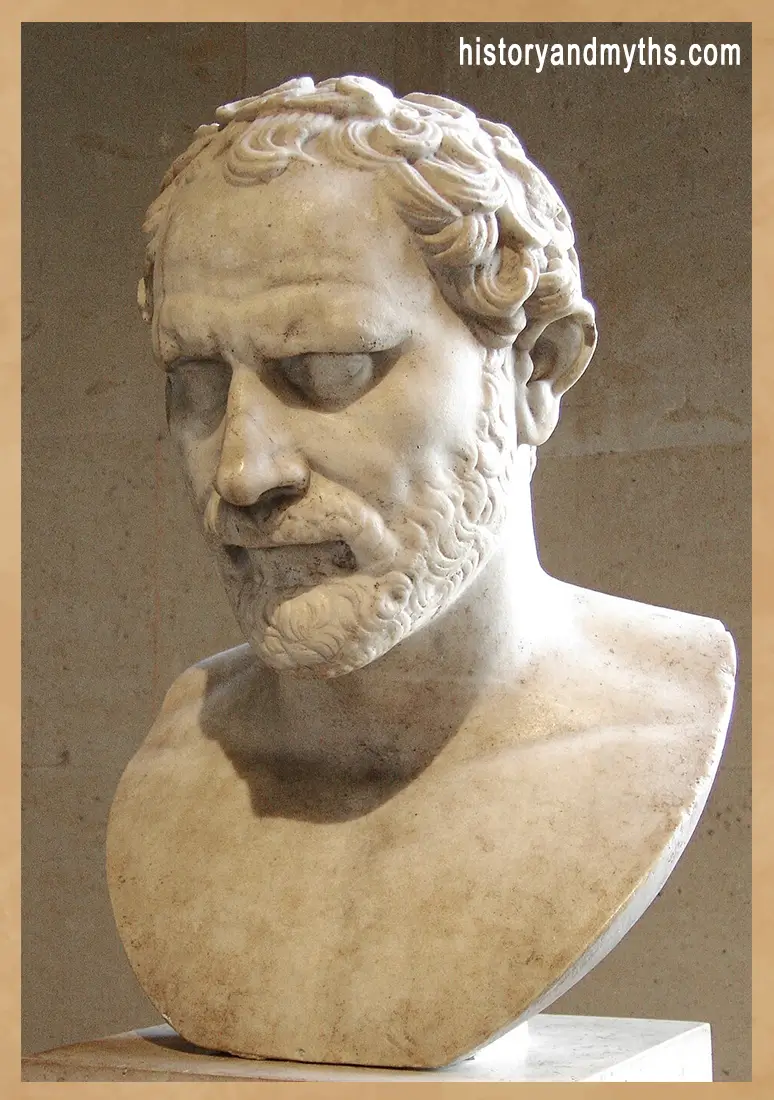
Training and Techniques
Rhetoric in Greece was learned because it had to work under pressure. Training focused on producing arguments that hold in front of an audience, not on memorizing definitions.
Preparation started with structure. A speaker organized the case into a clear sequence: opening to define the issue, body to build the argument, closing to fix the conclusion. This wasn’t stylistic. It was functional. If the order was wrong, the audience lost the thread and the argument weakened.
Technique came from use. Speakers practiced how to establish credibility, how to present reasons that make sense to the audience, and how to keep attention long enough to carry the argument through. The familiar terms—ethos, logos, pathos—describe this, but in practice they were decisions about what to say, when to say it, and how to connect it to the audience’s expectations.
Another part of training was anticipation. Effective speakers did not wait for objections. They identified the strongest counterpoints in advance and addressed them inside the argument. That reduced uncertainty and limited the impact of opposition.
Delivery was controlled, not decorative. Voice, pace, and emphasis were adjusted to keep the argument clear and continuous. If delivery distracted from the structure, it worked against the speaker.
Practice mattered. Arguments were tested, refined, and reused. Over time, speakers developed patterns that could be adapted to different situations—not fixed scripts, but frameworks that held under variation.
In practical terms, rhetorical training produced repeatable methods for constructing and delivering arguments that could influence decisions in real conditions.
Limits of Rhetoric
Rhetoric worked because it could move decisions. That also meant it could move them in the wrong direction. The same techniques that clarified an issue could be used to reframe it in a misleading way.
The first limitation is dependence on the audience. Decisions were made by people with different levels of knowledge and attention. An argument did not have to be correct to succeed; it had to be convincing in that moment. That gap created space for manipulation—selective use of facts, emphasis on immediate impact, and framing that favors one outcome over another.
Another limitation is time. Public settings did not allow for unlimited examination. Speakers worked within constraints, which meant complex issues were often compressed into simpler forms. That made decisions possible, but it also increased the risk of oversimplification.
This tension was recognized and criticized. Plato argued that rhetoric could produce belief without knowledge. Aristotle responded differently, treating it as a tool that could be used well or poorly depending on the speaker. Both positions reflect the same point: rhetoric has power, but not built-in accuracy.
There was also a practical boundary. Influence depended on continued effectiveness. If an audience felt misled or unconvinced over time, the speaker’s position weakened. Rhetoric could produce results, but it could not sustain authority without credibility.
In practice, rhetoric made decision-making possible, but it did not guarantee good decisions. It introduced a system where outcomes depended on how arguments were constructed and received, which carried both strength and risk.
Rhetoric as a System (Not Just a Skill)
Greek rhetoric only makes sense when seen as part of a larger system. It connected training, public spaces, decision-making, and social expectations into one continuous process. The skill of speaking was just one element inside that structure.
The system worked because everything depended on it. Assemblies required arguments to pass decisions. Courts required structured speech to reach verdicts. Individuals needed rhetorical ability to participate at all, not just to stand out. Without it, the process stalled.
This created alignment. Training focused on what public life demanded. Techniques were shaped by real conditions—time limits, mixed audiences, immediate judgment. There was no separation between theory and use. The system trained people to perform in the environments where outcomes were decided.
It also maintained itself. Each public interaction reinforced the need for effective speech. Successful arguments became models. Failed ones were discarded. Over time, this produced a shared understanding of what worked, even without a central authority enforcing it.
Another feature is continuity. Rhetoric did not end with a single speech or event. It operated across repeated situations—debates, cases, discussions—where individuals applied and adjusted their approach. The system stayed active because it was constantly used and tested.
Seen clearly, rhetoric in Greek society was not an optional skill. It was a core mechanism that enabled decisions, distributed influence, and kept the public system functioning.
- Greek rhetoric was a method for influencing decisions
- Public speech was essential in assemblies and courts
- Persuasion determined political and legal outcomes
- Rhetorical skill created and maintained influence
- Techniques were practical and shaped by real conditions
- Rhetoric had limits and could be misused
- It functioned as a system, not just a skill
Frequently Asked Questions
What was Greek rhetoric?
It was the practice of using speech to influence decisions in public settings.
Why was rhetoric important in ancient Greece?
Because decisions in politics and law depended on persuasion.
Where was rhetoric used?
Primarily in assemblies and courts where public decisions were made.
Did Greeks have professional lawyers?
No. Individuals often had to present their own arguments.
What are ethos, pathos, and logos?
They are methods used to build credibility, logic, and emotional appeal in arguments.
Could rhetoric be misleading?
Yes. It could influence decisions even when arguments were not fully accurate.
What is the significance of Greek rhetoric today?
It laid the foundation for modern communication, law, and political speech.
Sources & Rights
- Aristotle. Rhetoric. Translated by W. Rhys Roberts. Mineola, NY: Dover Publications, 2004.
- Plato. Gorgias. Translated by Donald J. Zeyl. Indianapolis: Hackett Publishing, 1987.
- Kennedy, George A. A New History of Classical Rhetoric. Princeton: Princeton University Press, 1994.
- Kennedy, George A. Classical Rhetoric and Its Christian and Secular Tradition. Chapel Hill: University of North Carolina Press, 1999.
- Yunis, Harvey, ed. Persuasion: Greek Rhetoric in Action. London: Routledge, 2003.
- Ober, Josiah. Mass and Elite in Democratic Athens. Princeton: Princeton University Press, 1989.
- Ober, Josiah. Democracy and Knowledge: Innovation and Learning in Classical Athens. Princeton: Princeton University Press, 2008.
- Hansen, Mogens Herman. The Athenian Democracy in the Age of Demosthenes. Norman: University of Oklahoma Press, 1991.
- Worthington, Ian. Persuasion: Greek Oratory in Action. London: Routledge, 1994.
- MacDowell, Douglas M. The Law in Classical Athens. Ithaca: Cornell University Press, 1978.
- Cartledge, Paul. Ancient Greece: A Very Short Introduction. Oxford: Oxford University Press, 2011.
- Osborne, Robin. Greece in the Making: 1200–479 BC. London: Routledge, 1996.
- Hornblower, Simon, and Antony Spawforth, eds. The Oxford Classical Dictionary. 4th ed. Oxford: Oxford University Press, 2012.
- Carey, Christopher. Trials from Classical Athens. London: Routledge, 1997.
- Demosthenes. Selected Speeches. Translated by Ian Worthington. Austin: University of Texas Press, 2000.
- Lysias. Selected Speeches. Translated by Stephen C. Todd. Austin: University of Texas Press, 2000.
- Isocrates. Antidosis. Translated by George Norlin. Cambridge, MA: Harvard University Press, 1929.
- Connor, W. Robert. The New Politicians of Fifth-Century Athens. Princeton: Princeton University Press, 1971.
- Rhodes, P. J. A History of the Classical Greek World. Oxford: Wiley-Blackwell, 2005.
- Finley, M. I. Politics in the Ancient World. Cambridge: Cambridge University Press, 1983.
Written by H. Moses — All rights reserved © Mythology and History