Ancient Greek Food and Diet: What People Ate in Daily Life
Ancient Greek food was simple, but not by choice. What people ate was shaped by limited farmland, a dry climate, and the need to sustain the household over time. The typical diet relied on grain, olives, and wine—not because they preferred it, but because these were the most reliable resources available.
Meals were structured around survival and stability. Meat was rare and usually tied to religious events, while daily eating focused on foods that could be produced, stored, and distributed efficiently. What you see on the table reflects the system behind it: agriculture, labor, and access.
To understand Greek diet, you have to look past the ingredients. It is a direct result of environment, economy, and social structure working together.
The Core System: Diet Shaped by Environment, Not Choice
Greek food looks simple because the system behind it leaves little room for variation. Most regions had thin soil, uneven rainfall, and limited space for large-scale farming. That set the boundaries early. You grow what survives, and you build your diet around it.
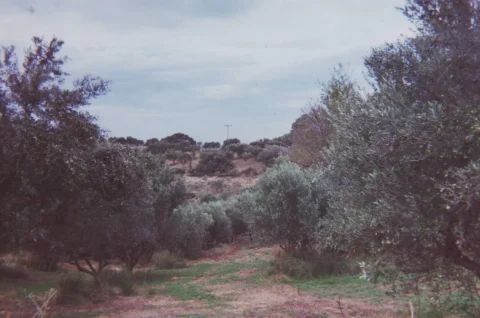
Grain became the base because it could be produced consistently and stored without losing value. Olives followed for the same reason—they tolerate poor soil and provide oil that lasts. Wine comes from grapes that thrive in the same conditions. Together, these are not just common foods; they are the most efficient response to the environment.
This is why variety stays low. Expanding the diet would require stable surplus, and surplus is difficult to maintain under these conditions. Households focus on reliability instead of diversity. What can be grown, preserved, and used over time becomes central. What cannot be sustained remains occasional.
Daily eating reflects that logic. Meals are built from what is available in steady supply, not from preference. Additions—vegetables, fish, or small amounts of dairy—depend on access and season, but they do not replace the core. The structure holds because it is practical.
Across different settings, including Athens and Olynthus, the same pattern appears in agricultural practice and storage. Facilities are designed to keep grain dry, oil contained, and wine preserved. The system is visible in how resources are handled as much as in what is eaten.
| Factor | Constraint | Impact on Diet |
|---|---|---|
| Environment | Poor soil, limited rainfall | Reliance on hardy crops |
| Agriculture | Low surplus production | Limited food variety |
| Economy | Household-based production | Stable but repetitive diet |
| Social Class | Unequal access to resources | Variation in food quality |
| Religion | Controlled meat distribution | Meat consumed occasionally |
The Greek Diet Core: Grain, Oil, and Wine
The Greek diet rests on three elements that the environment can sustain: grain, olives, and wine. They form a stable base because they can be produced regularly, stored for long periods, and used in multiple ways.
Grain—mainly barley and wheat—provides most daily calories. It is consumed as bread or porridge and appears in nearly every meal. Its value lies in consistency. Harvests can be unpredictable, but grain remains the most reliable staple available.
Olives supply oil, which replaces animal fat in cooking and preservation. Oil is used to prepare food, add flavor, and extend shelf life. It is dense in energy and easy to store, making it essential in a system with limited access to meat.
Wine serves as a regular drink rather than a luxury. It is commonly diluted and consumed with meals. Beyond hydration, it offers a safer alternative to uncertain water sources and fits naturally into the agricultural cycle that produces grain and olives.
These three elements are not separate items on a menu. They are the structure of the diet. Other foods—vegetables, legumes, fish—fit around them when available, but they do not replace them.
Agriculture and Limits: Why Variety Stayed Low
Greek agriculture set hard limits on what could appear in daily meals. Most farmland was fragmented, soils were thin, and rainfall was inconsistent. Large, diversified production was difficult to sustain, so households focused on crops that could survive with minimal risk.
This constraint reduces variety by design. Fields are used for what works year after year—grain for stability, olives for long-term value, and vines where conditions allow. Rotating into more demanding crops increases the chance of failure, so it is avoided unless resources are secure.
Seasonality reinforces the pattern. Fresh foods appear briefly and then disappear. Without continuous surplus, there is no way to keep them available year-round. Preservation helps, but it works best with staples like grain and oil, not with a wide range of perishable foods.
Access also depends on location. Coastal areas can add fish more regularly, while inland households rely more heavily on what they produce themselves. Trade can introduce variety, but it does not replace the base diet because it cannot guarantee steady supply for most people.
Evidence from agricultural practices around Athens and settlement patterns in Olynthus shows the same approach: prioritize reliability, limit risk, and build the diet around what can be sustained.
Variety is not absent by accident. It is restricted by the conditions that define what can be grown in the first place.
Meat: Rare, Controlled, and Ritual-Based
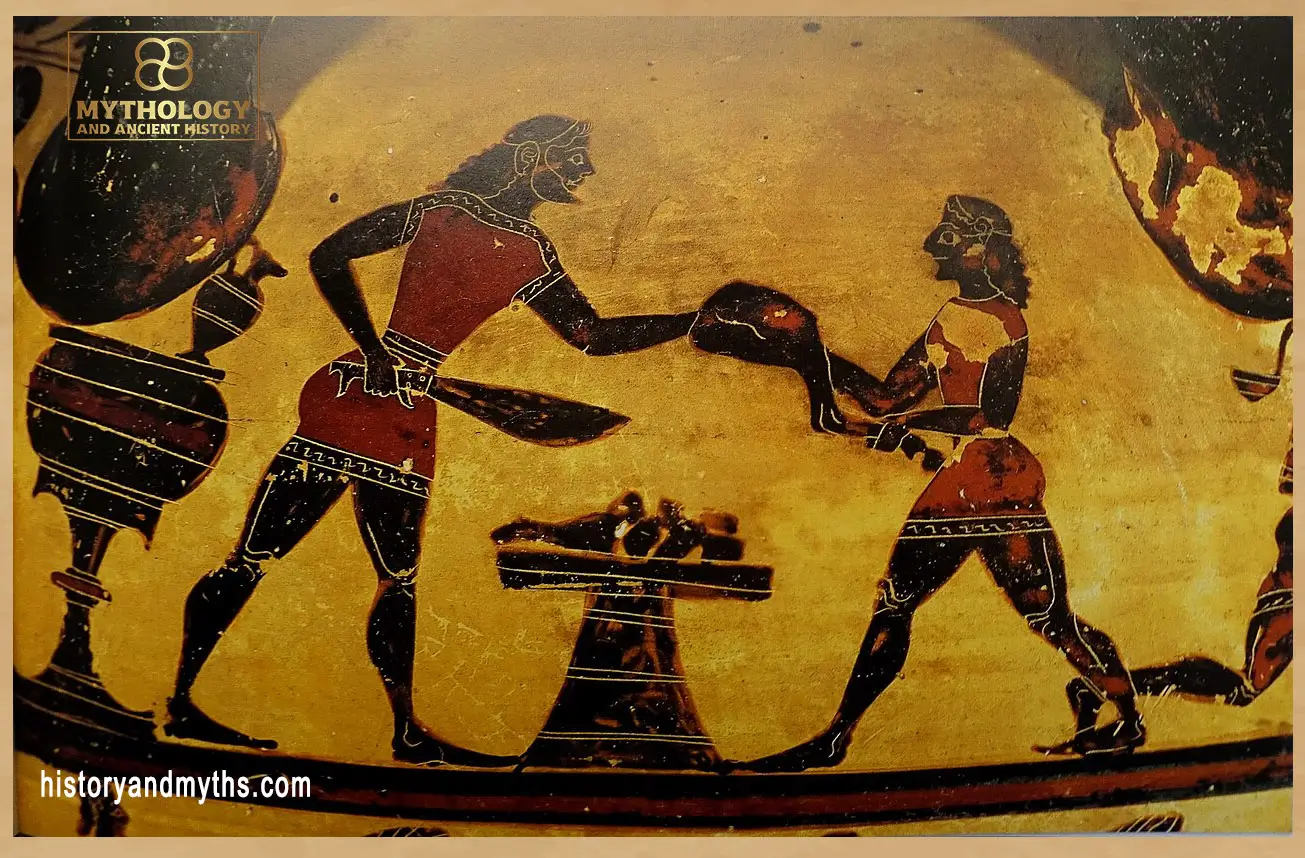
Meat was not part of daily eating. It appeared occasionally, most often through religious sacrifice. Animals offered in rituals were divided, with portions distributed to participants. For many households, this was the main way meat entered the diet.
Regular consumption was limited by cost and supply. Raising livestock requires land and feed that could otherwise support crops. For most families, it was more efficient to rely on grain and oil. Meat becomes an intermittent addition rather than a staple.
This pattern creates a clear distinction. Daily meals remain simple and predictable, while meat is tied to specific events with social or religious meaning. It is not just food—it marks occasions where resources are gathered and redistributed.
Fish could serve as an alternative in coastal areas, but access varied and preservation was not always reliable. Inland households depended less on it and stayed closer to the core diet.
Social Class and Diet Differences
Diet was not uniform across Greek society. Access determined variation. The core—grain, oil, wine—remained constant, but what could be added depended on resources.
Wealth increases frequency and variety, not the base. Households with land and surplus could include more fish, better-quality grain, imported goods, and occasional meat outside ritual contexts. They could also store more, reducing the impact of poor seasons. The structure stays the same; the margins expand.
For lower-income households, the diet tightens. Meals rely more heavily on barley, legumes, and whatever can be produced locally with minimal risk. Additions are seasonal and limited. Preservation matters more because supply is less secure.
Urban context changes access patterns. In Athens, markets make fish and produce more available, but only to those who can pay consistently. In planned settlements like Olynthus, domestic storage and small-scale production remain central, keeping diets closer to the core.
The key point is constraint. Class does not create a different system; it changes how far a household can move away from the base without losing stability.
Daily Meals: Structure, Not Random Eating
Eating followed a simple structure tied to work and daylight, not to variety or indulgence. Most people ate two main meals. The morning meal was light—often bread or barley with a small addition like olives or wine. It was quick and functional, designed to support work rather than interrupt it.
The main meal came later in the day. It remained simple but more complete: grain as a base, with whatever could be added—vegetables, legumes, or fish when available. Preparation focused on efficiency. Cooking methods were basic because fuel and time were limited.
This pattern keeps the household stable. Regular timing reduces waste, and predictable meals make storage and preparation manageable. The system does not allow for frequent changes, so routine becomes an advantage.
In urban settings such as Athens, the same structure holds even with access to markets. Availability may increase, but meals remain organized around the same framework. Evidence from Olynthus shows domestic spaces arranged to support this rhythm—areas for grinding grain, storing oil, and preparing food in a consistent way.
What looks repetitive is intentional. The schedule matches the resources and keeps the system running without strain.
The Greek diet was not built on choice or luxury. It was a structured response to environmental limits, agricultural constraints, and household economy, creating a stable but highly controlled system of food consumption.
© historyandmyths.com — Educational use
Food and Gender Roles
Food production and preparation were not neutral tasks. They followed the same division that organized the household. Women were responsible for turning raw resources into usable food, and that responsibility extended across the entire process—storage, preparation, and distribution within the home.
Grain had to be ground daily. Oil had to be measured and used carefully. Ingredients had to be preserved and rationed so the household could function without interruption. These were not occasional duties. They were continuous, and they required control over time, space, and resources inside the house.
This role connects directly to stability. If food is mismanaged, the system breaks down. Shortages, waste, or inconsistency affect every member of the oikos. The internal economy depends on reliable preparation, not just production.
Men’s involvement appears more at the level of acquisition—farming, trade, or external exchange—but the daily operation remains internal. The division is clear: resources are brought in, but they are organized and sustained within the household.
In places like Athens, where urban life reduces direct access to land, this internal management becomes even more critical. Evidence from Olynthus shows domestic areas structured for grinding, cooking, and storage, reinforcing the same pattern.
Food is not just consumed. It is managed, and that management sits at the center of the household’s function.
Food and the Economy
Food in ancient Greece was not separate from the economy. It was the economy at the household level. What people ate depended on what they could produce, store, or acquire through exchange, and each of these steps was constrained by resources.
Production comes first. Most households relied on small-scale farming to secure grain, olives, and sometimes vines. These crops define both diet and economic stability. If production is consistent, the household can sustain itself. If it fails, everything else is affected.
Storage is the second layer. Surplus, when it exists, is preserved to cover gaps between harvests. Grain is kept dry, oil is stored in containers that prevent loss, and wine is managed over time. This reduces dependence on immediate production and allows the household to operate through periods of scarcity.
Exchange adds flexibility but does not replace the base system. Markets in places like Athens allow households to access fish, imported goods, or additional grain, but only within financial limits. Trade expands options, not guarantees.
The key point is continuity. Food must be available over time, not just in the moment. The system prioritizes stability, and diet reflects that priority at every level.
Symposium: Elite Food Culture
The symposium sits outside the daily diet but reveals how food functioned at the top of the social scale. It was not a regular meal. It was a controlled gathering of elite men where drinking structured the event and food played a supporting role.
Access was restricted. Participation depended on status, not availability. What appears there—better cuts of meat, refined preparation, imported items—does not represent what most people ate. It represents what a small group could afford to display.
The structure is formal. Guests recline, wine is mixed to set ratios, and the sequence of drinking follows rules. Conversation, performance, and display matter as much as consumption. Food marks the occasion, but it does not define it. The focus is on interaction and status.
This creates a contrast with daily meals. In ordinary households, eating is functional and predictable. In the symposium, it becomes selective and visible. The difference is not just quantity; it is purpose. One sustains the system, the other signals position within it.
In urban contexts like Athens, where elites are concentrated, these gatherings are more frequent and more elaborate. Across sites including Olynthus, material evidence—vessels, layouts, and drinking equipment—supports this pattern of controlled social consumption.
The symposium does not change the diet of the majority. It highlights the limits of that diet by showing who can move beyond it, and when.
- The Greek diet was shaped by environmental and economic limits, not preference.
- Grain, olives, and wine formed the core of daily nutrition.
- Meat was rare and mostly linked to religious events.
- Food variety depended on social class and access to resources.
- Meals followed a simple, structured daily pattern.
- Food production and preparation were central to household stability.
Frequently Asked Questions
What did people eat in ancient Greece?
The diet mainly consisted of grain, olives, and wine, with vegetables, fish, and limited meat when available.
Was meat common in ancient Greek diets?
No, meat was rare and usually consumed during religious festivals or special occasions.
Why was Greek food so simple?
Limited farmland, poor soil, and economic constraints restricted food production and variety.
Did social class affect diet in ancient Greece?
Yes, wealthier households had access to better quality food and more variety than poorer families.
How many meals did Greeks eat per day?
Typically two main meals: a light morning meal and a larger evening meal.
What role did women play in food preparation?
Women managed food storage, preparation, and distribution within the household.
Sources & Rights
- Dalby, Andrew. Food in the Ancient World. Routledge, 2003.
- Dalby, Andrew. Sirens’ Feasts: A History of Food and Gastronomy in Greece. Routledge, 1996.
- Garnsey, Peter. Food and Society in Classical Antiquity. Cambridge University Press, 1999.
- Foxhall, Lin. Olive Cultivation in Ancient Greece. Oxford University Press, 2007.
- Hansen, Mogens Herman. The Athenian Democracy. Blackwell, 1991.
- Cartledge, Paul. Ancient Greece: A History in Eleven Cities. Oxford University Press, 2009.
- Osborne, Robin. Greece in the Making. Routledge, 1996.
- Finley, Moses I. The Ancient Economy. University of California Press, 1999.
- Garland, Robert. Daily Life of the Ancient Greeks. Greenwood Press, 1998.
- Pomeroy, Sarah B. Goddesses, Whores, Wives, and Slaves. Schocken Books, 1975.
- Jameson, Michael. “Sacrifice and Animal Husbandry in Ancient Greece.” The Classical Journal, 1988.
- Wilkins, John, and Shaun Hill. Food in the Ancient World. Wiley-Blackwell, 2006.
- Totelin, Laurence. Hippocratic Recipes. Brill, 2009.
- Grant, Mark. Roman Cookery. Serif, 2008.
- Snodgrass, Anthony. An Archaeology of Greece. University of California Press, 1987.
- Whitley, James. The Archaeology of Ancient Greece. Cambridge University Press, 2001.
- Morris, Ian. Archaeology as Cultural History. Blackwell, 2000.
- Ault, Bradley A. The Houses at Halieis. Indiana University Press, 2005.
- Allison, Penelope M. The Archaeology of Household Activities. Routledge, 1999.
- Sealey, Raphael. A History of the Greek City States. University of California Press, 1976.
Written by H. Moses — All rights reserved © Mythology and History