Ancient Greek Clothing and Appearance: What They Wore
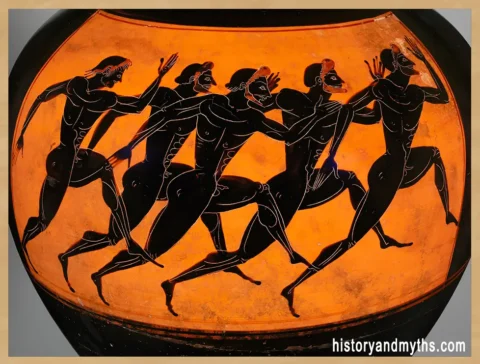
Clothing in ancient Greece was simple in form but precise in meaning. What people wore signaled gender, status, and role within the household and the city. Most garments were based on a few standard pieces—like the chiton and himation—but how they were worn, the quality of the fabric, and the context in which they appeared defined the individual.
Dress was shaped by climate and by function. Lightweight fabrics suited the environment, while the structure of the garment allowed flexibility for work, movement, or public presence. There was no rapid change in fashion; consistency mattered more than variation.
To understand Greek clothing, you have to read it as a system. It identifies the person, fits the environment, and aligns with social expectations at the same time.
The Core System: Clothing as Identity
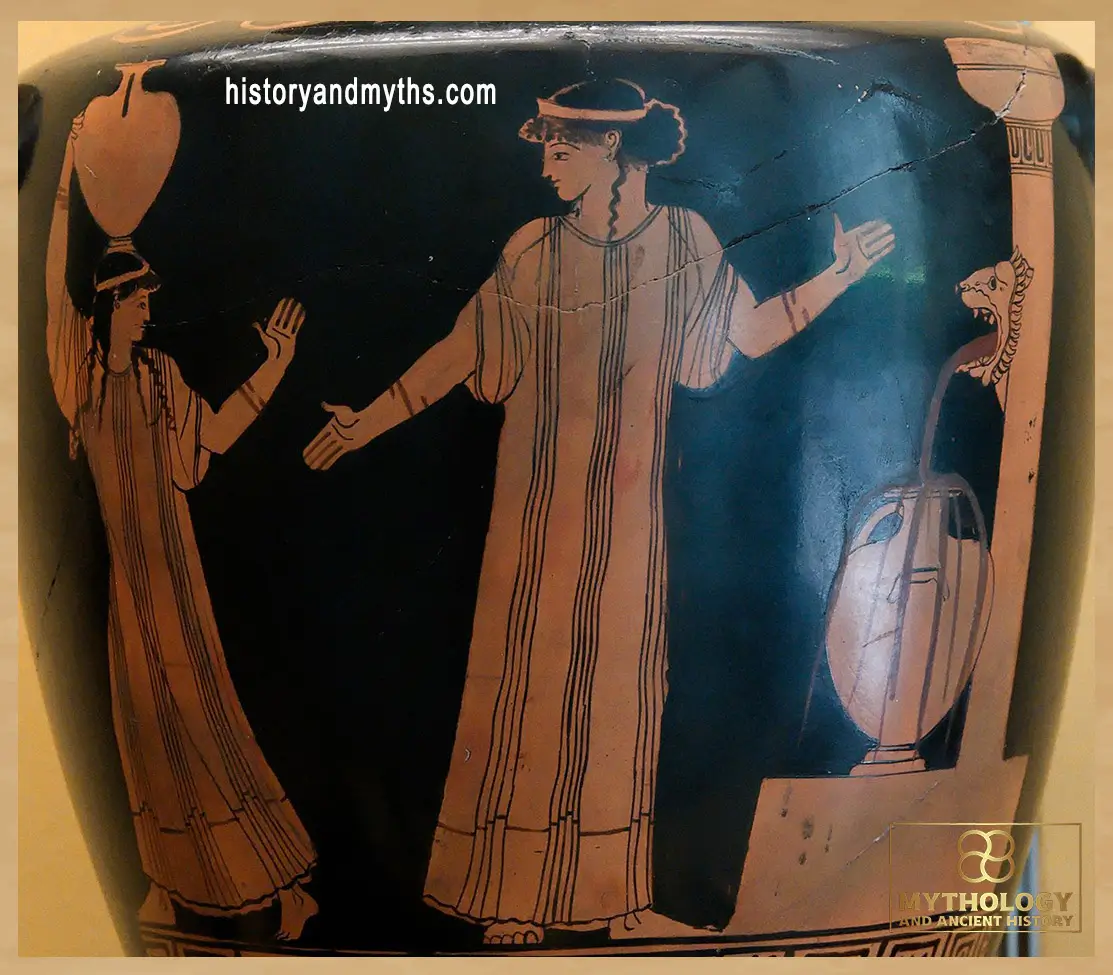
Clothing in ancient Greece worked as a visible code. It identified the wearer without explanation—gender, status, and situation were read directly from how a garment was used rather than from what it was called. The same basic piece could signal different meanings depending on length, drape, and context.
The system is consistent. Garments are not tailored; they are arranged. That makes variation easy to control. A longer drape, cleaner fabric, or more careful fastening indicates resources and time. A shorter, tighter wrap indicates work. The distinction appears in how the cloth is worn, not in a different item.
Gender is built into this code. Men and women may use similar base garments, but the presentation separates them. Coverage, layering, and movement define the difference. This separation is visible at a glance and remains stable across contexts.
Public and private use further refine the signal. The same person appears differently depending on where they are and what they are doing. Adjustments are practical—more secure wrapping for activity, looser for display—but they also communicate role. Dress aligns with expectation.
What holds the system together is repeatability. Materials are limited, forms are stable, and interpretation is shared. People know how to read what they see. Clothing does not change quickly because it does not need to. It already does the job of identifying the individual within the structure.
| Element | Function | Social Signal |
|---|---|---|
| Chiton | Base garment | Defines role and activity |
| Himation | Outer wrap | Signals public presence |
| Fabric Quality | Durability and comfort | Indicates wealth |
| Color & Decoration | Visual variation | Marks status and care |
| Hairstyle & Grooming | Maintenance | Signals identity and maturity |
Basic Garments: Form Follows Function
Greek clothing is built from a small set of garments, but their simplicity is intentional. The chiton serves as the base layer—a rectangular piece of fabric fastened at the shoulders and shaped by the body rather than by cutting. It allows movement, adapts to different activities, and can be adjusted without altering the material itself.
Over it, the himation adds flexibility. It is not fixed in place; it is wrapped and repositioned depending on need. This makes it useful for both protection and presentation. It can cover more of the body in formal settings or be reduced for practical movement.
This approach avoids complexity. There is no dependence on fitted tailoring or permanent structure. The garment remains adaptable, and the wearer controls how it functions. That control becomes part of the signal—how carefully it is arranged reflects attention, status, and context.
The system works because it is efficient. A limited number of forms can cover multiple roles without requiring different wardrobes. What changes is not the garment itself, but its use.
Form is kept simple so function can remain flexible.
Climate and Practical Design
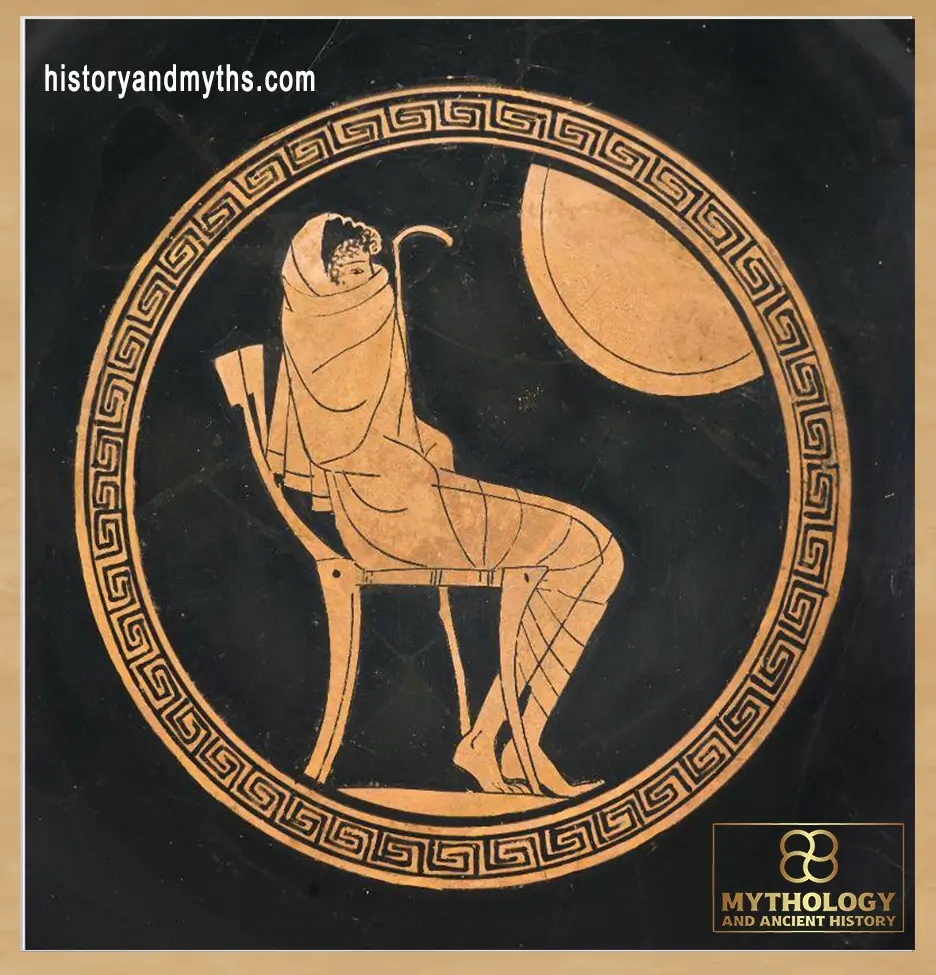
Greek clothing takes its shape from the environment. Heat and strong light favor loose garments that allow air to move and reduce the need for heavy layering. Fabric hangs rather than fits the body, creating space between skin and cloth that helps regulate temperature.
Materials follow the same logic. Linen is used where lightness matters, while wool provides flexibility across seasons. Neither requires complex construction. Both can be produced and maintained within the household or through local exchange, which keeps the system stable.
Design choices remain practical. Sleeves are minimal or absent to allow movement. Fastenings are simple so garments can be adjusted quickly. Length changes depending on activity—shorter for work, longer for formal presence—without altering the garment itself.
The result is not a search for style but a response to conditions. Clothing works because it fits the climate first, and everything else follows from that.
Gender Differences: Defined by Use, Not New Garments
Men and women do not rely on entirely different wardrobes. The distinction comes from how the same pieces are worn. Coverage, length, and fastening create a clear separation without introducing new forms.
For men, the chiton is often shorter and secured for movement. The drape allows the legs to remain free, which fits work, travel, and public activity. The himation can be added or removed depending on setting, but it does not restrict movement when action is required.
For women, the same base garment extends further and is arranged to cover more of the body. The drape is controlled to maintain form and stability rather than mobility. Layering is more consistent, and the presentation remains closer to the body’s full outline.
These differences are not decorative. They map directly to expected roles. Clothing limits or allows movement in ways that match what each group is expected to do. The system does not need separate designs; it uses the same material and adjusts it to enforce distinction.
What you see is not variety. It is controlled variation that makes the difference visible at a glance.
Social Class and Appearance
Clothing separates status without changing the basic form. Most people wear the same types of garments, but quality and condition make the difference clear. Finer fabric, cleaner appearance, and more controlled draping indicate access to resources. Rougher material and practical wear signal limitation.
The distinction appears in details. Wealth allows for better weaving, more consistent dye, and time spent maintaining the garment. It also allows for additional layers when needed. None of this changes the structure of dress, but it changes how it is perceived.
For lower-status individuals, clothing stays functional. Fabric is used longer, repaired more often, and arranged for durability rather than presentation. The goal is continuity, not display.
This creates a visible hierarchy without requiring separate clothing systems. The same garments carry different meanings depending on how they are made, maintained, and worn. Appearance reflects position, even when the form remains the same.
© historyandmyths.com — Educational use
Color, Fabric, and Status
Color and fabric are where status becomes visible without changing the garment itself. Most clothing is made from wool or linen, but the difference lies in processing and finish. Finer thread, tighter weaving, and smoother texture indicate higher cost and better access to production.
Color adds another layer of distinction. Natural tones are common because they require little treatment, while stronger, more consistent dyes require additional resources. Achieving uniform color across a garment takes time and material, which raises its value. Variation in shade or fading signals reuse and longer wear.
Decoration follows the same logic. Patterns or borders do not change the structure of the clothing, but they mark attention and investment. They are applied, not built in, which keeps the base form simple while allowing visible differentiation.
These elements do not operate independently. Fabric quality, color, and finish combine to create a readable signal. The garment stays the same in shape, but its material and treatment define how it is interpreted.
Hairstyles and Grooming: The Extension of Appearance
Clothing does not work alone. Hair and grooming complete the same system of identification, often more immediately than fabric. They require less material but constant maintenance, which makes them effective markers of status and role.
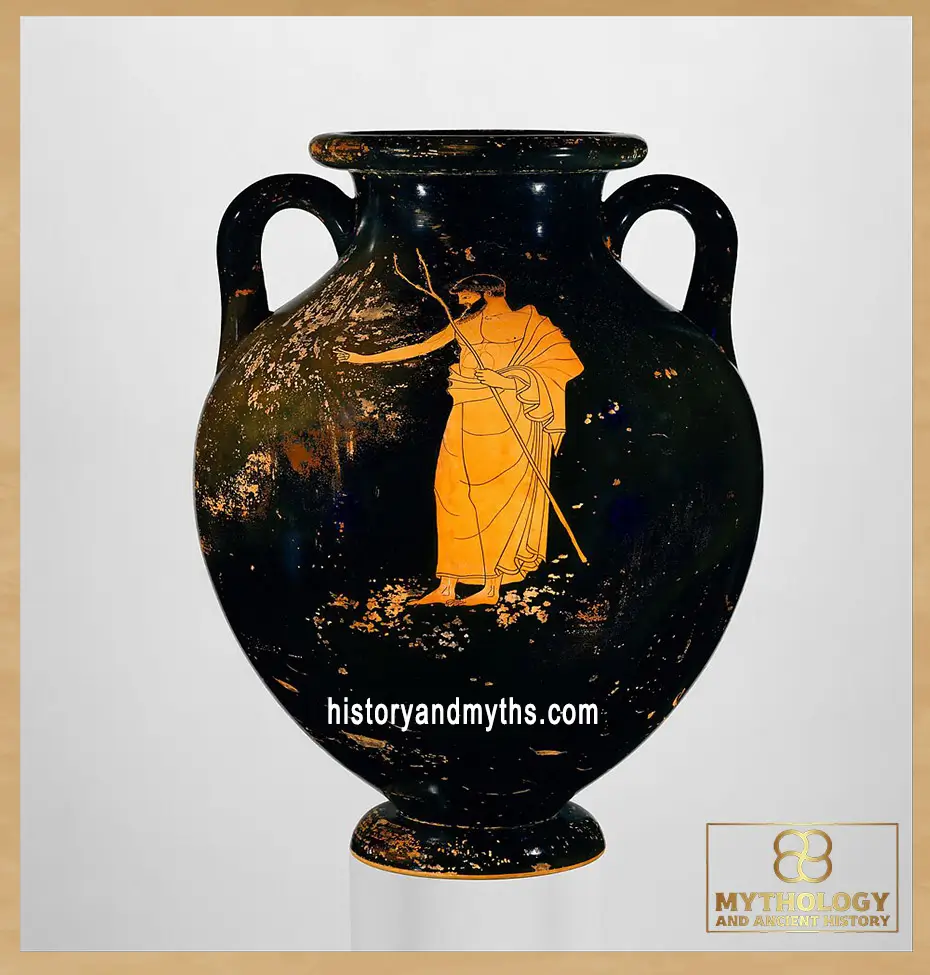
For men, facial hair is a primary signal. A full beard suggests maturity and social standing, while a clean-shaven face can indicate youth or a different stage of life. Hair length and care follow the same pattern—controlled, maintained styles reflect stability, while neglect signals limitation.
For women, hair is managed with equal precision but under different expectations. It is usually arranged, secured, and kept within a defined form. The goal is not variation but consistency. The style supports the same emphasis on controlled appearance seen in clothing.
Tools and accessories—pins, bands, and simple ornaments—hold these arrangements in place. They are functional first, but they also indicate attention and available resources. Like clothing, they do not change the system; they reinforce it.
Grooming works because it is visible at all times. Unlike garments, which can be adjusted or removed, hair and personal care remain constant. Together with clothing, they complete a unified signal of identity.
Clothing in Public and Private Contexts
Clothing changes with context, even when the garment does not. The difference between public and private life is expressed through how the same pieces are worn, secured, and presented.
Inside the household, dress remains practical. Garments are arranged for movement and work, with less attention to display. The drape is tighter, the length adjusted, and layers reduced when necessary. The focus is function.
In public, the same clothing is reconfigured. The himation is arranged more carefully, covering more of the body and creating a controlled outline. The presentation becomes deliberate. It signals awareness of social space and the expectations that come with it.
This shift does not require a different wardrobe. It relies on adjustment. The system is efficient because it uses the same materials to produce different signals depending on setting.
The result is consistency with flexibility. Clothing adapts to context without losing its role as a marker of identity.
Clothing and the Economy
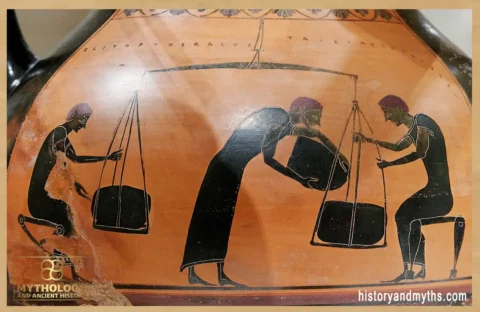
Clothing is produced within the same economic limits that shape food and daily life. Most garments begin as raw materials—wool from livestock or linen from flax—processed through a sequence of tasks that take time and labor. The household often manages part of this process directly, especially spinning and basic weaving.
Production is slow by design. Fabric is not easily replaced, so garments are used for long periods, repaired when needed, and adjusted rather than discarded. This keeps demand predictable and ties clothing to the rhythm of available labor.
Trade adds range but does not change the system. Finished cloth or higher-quality materials can be acquired through exchange, but access depends on resources. For most people, external supply supplements what they produce; it does not replace it.
This creates a stable cycle. Materials are gathered, processed, worn, and maintained within limits set by time and availability. Clothing remains simple in form because the cost of complexity would disrupt that cycle.
What people wear reflects how the economy operates—slow production, controlled use, and minimal waste.
Appearance as a Controlled Signal
Clothing and appearance in ancient Greece are not about variety or fashion cycles. They operate as a controlled system that makes identity visible. A limited set of garments, stable materials, and repeatable ways of wearing them create clear distinctions without requiring constant change.
Everything fits the same logic. Fabric quality indicates access. Color and finish show investment. Draping and length define role and context. Hair and grooming complete the signal. Nothing stands alone; each element supports the others.
This is why the system holds. It does not depend on innovation. It depends on consistency. People recognize what they see because the rules do not shift.
What you wear is not a personal statement. It is a readable position inside the structure.
- Greek clothing was simple in form but structured in meaning.
- The same garments were used across society, but worn differently.
- Clothing signaled gender, status, and social role.
- Fabric quality and color reflected wealth and access to resources.
- Hairstyles and grooming completed the system of appearance.
- Clothing adapted to context without changing its basic structure.
Frequently Asked Questions
What did people wear in ancient Greece?
Most people wore simple garments such as the chiton and himation, adjusted based on role and context.
Did clothing differ between men and women?
Yes, the same garments were worn differently to reflect gender roles and social expectations.
Was Greek clothing influenced by fashion trends?
No, clothing remained stable and was shaped by function, climate, and social structure rather than changing fashion.
What materials were used in Greek clothing?
Wool and linen were the most common materials, chosen for their practicality and availability.
Did clothing show social status in ancient Greece?
Yes, fabric quality, color, and condition indicated wealth and social position.
How did people adjust clothing for different situations?
The same garments were rearranged or layered differently depending on whether a person was at home or in public.
Sources & Rights
- Llewellyn-Jones, Lloyd. Aphrodite’s Tortoise: The Veiled Woman of Ancient Greece. Oxford University Press, 2003.
- Lee, Mireille M. Body, Dress, and Identity in Ancient Greece. Cambridge University Press, 2015.
- Sekunda, Nicholas. Greek Costume: An Illustrated Guide. Osprey Publishing, 2005.
- Stone, Shelley. “The Greek Costume.” In The World of Athens, Cambridge University Press, 1984.
- Cartledge, Paul. Ancient Greece: A History in Eleven Cities. Oxford University Press, 2009.
- Osborne, Robin. Greece in the Making. Routledge, 1996.
- Hansen, Mogens Herman. The Athenian Democracy. Blackwell, 1991.
- Garland, Robert. Daily Life of the Ancient Greeks. Greenwood Press, 1998.
- Pomeroy, Sarah B. Goddesses, Whores, Wives, and Slaves. Schocken Books, 1975.
- Foxhall, Lin. “Household, Gender and Property in Classical Athens.” The Classical Quarterly, 1989.
- Morris, Ian. Archaeology as Cultural History. Blackwell, 2000.
- Whitley, James. The Archaeology of Ancient Greece. Cambridge University Press, 2001.
- Snodgrass, Anthony. An Archaeology of Greece. University of California Press, 1987.
- Ault, Bradley A. The Houses at Halieis. Indiana University Press, 2005.
- Allison, Penelope M. The Archaeology of Household Activities. Routledge, 1999.
- Sealey, Raphael. A History of the Greek City States. University of California Press, 1976.
- Cohen, David. Law, Violence and Community in Classical Athens. Cambridge University Press, 1995.
- Just, Roger. Women in Athenian Law and Life. Routledge, 1989.
- MacDowell, Douglas. The Law in Classical Athens. Cornell University Press, 1978.
- Boardman, John. Greek Art. Thames & Hudson, 1996.
Written by H. Moses — All rights reserved © Mythology and History